
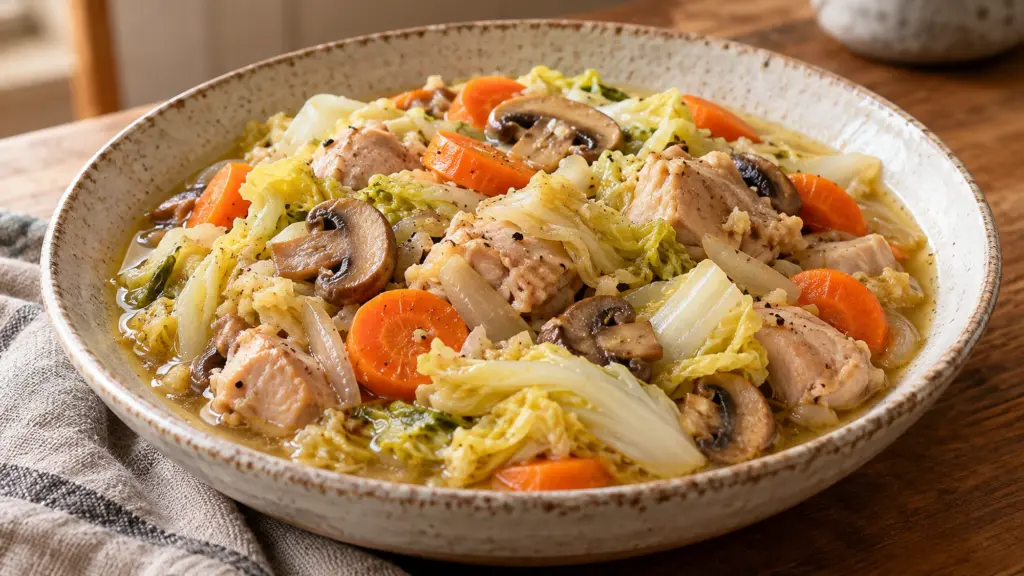
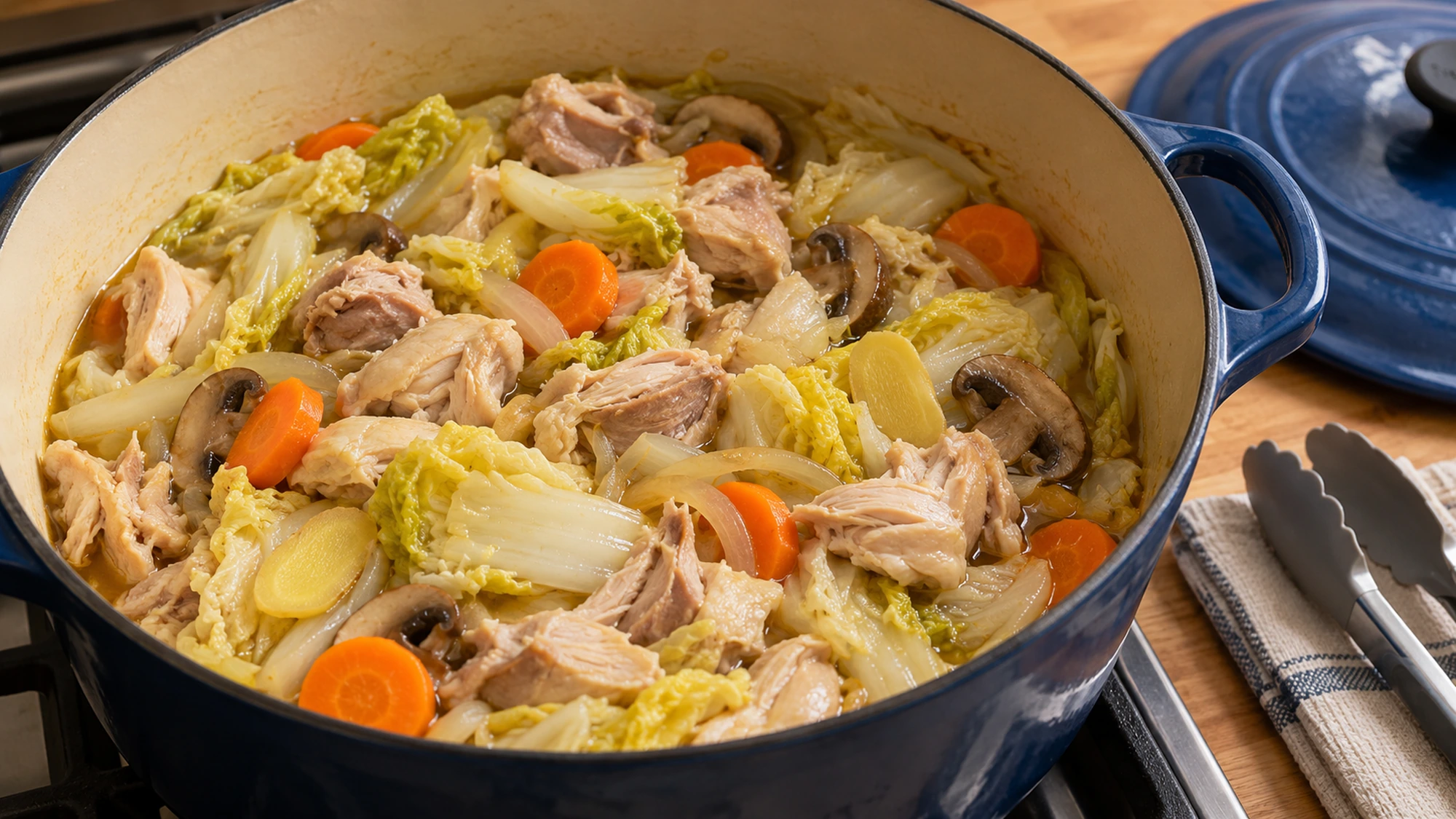
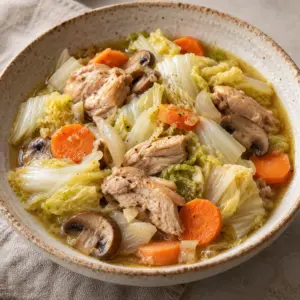
A pot of cabbage can look impossibly full before it begins to soften. In waterless chicken and cabbage soup, that vegetable volume has a job: it releases moisture that becomes a concentrated cooking liquid. Boneless chicken thighs, napa cabbage, mushrooms, carrots, onion, and ginger make a substantial bowl with a modest amount of broth.
Use a heavy pot with a close-fitting lid, soften the vegetables over low heat until juices collect, then cook the chicken gently in that covered environment. The recipe adds no water or stock; the result is concentrated rather than a large pot of thin broth.
I’d think of this as a vegetable-rich chicken bowl with spoonable juices, not a promise that a few leaves will produce a stockpot’s worth of soup. Fresh napa cabbage matters, as does a lid that holds moisture. The name is a description of the method, not a reason to ignore a pan that is running dry.
Serving Suggestions for Waterless Chicken and Cabbage Soup
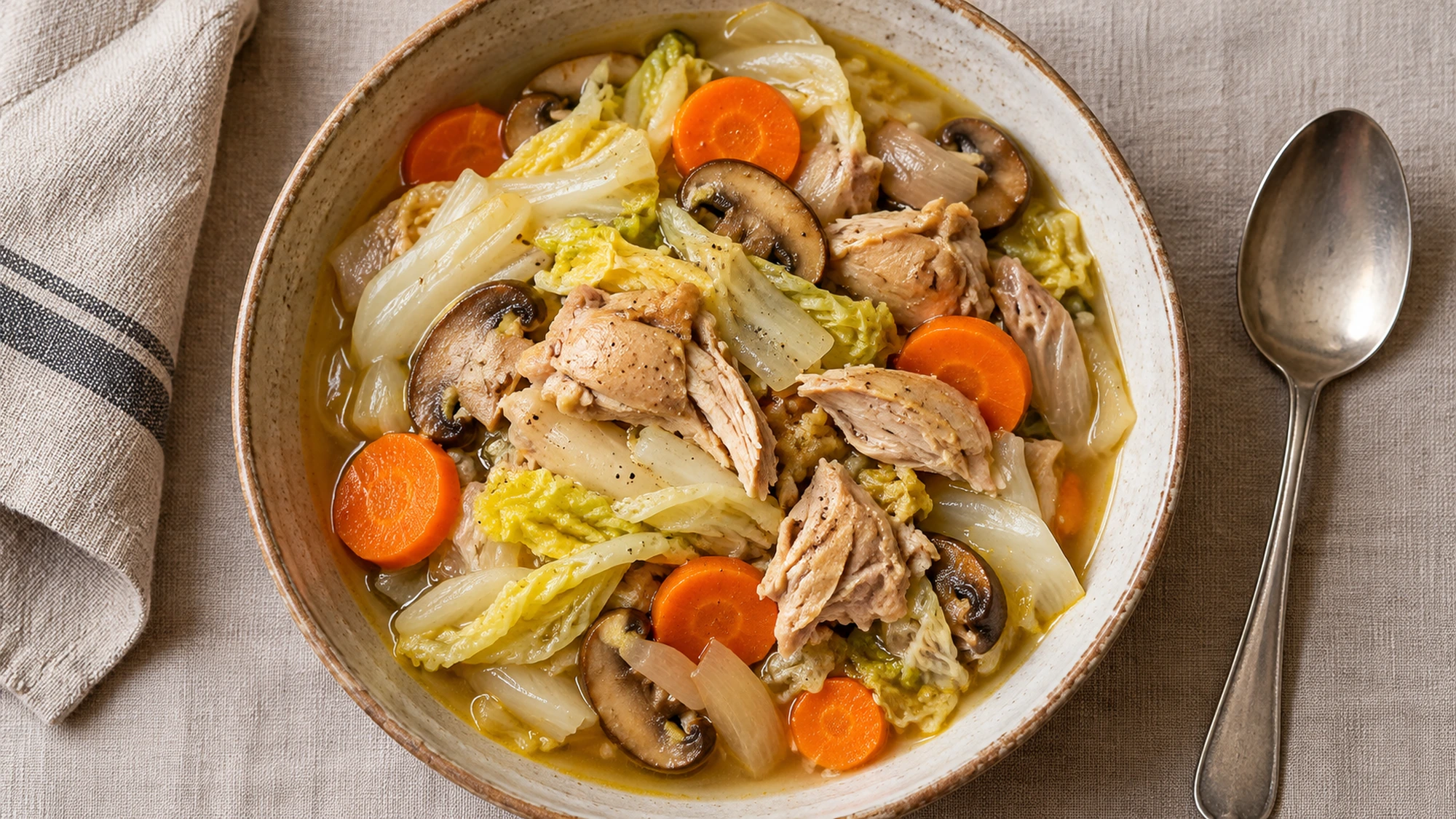
Divide the chicken and vegetables among bowls before spooning over the natural broth. That keeps the first bowl from taking most of the liquid. The chicken should be tender enough to divide into bite-size pieces after cooking, and the cabbage will be soft rather than crisp by the time it has done its work.
| At the table | What to expect |
|---|---|
| A shallow bowl | Chicken and vegetables with a concentrated pool of broth. |
| With bread | Serve a small piece separately for the juices. |
| For leftovers | Divide both solids and liquid evenly into shallow containers. |
A piece of this baguette is useful for the last ginger-scented juices. Plain cooked rice can also sit beside the bowl if that suits the meal, but it is an accompaniment rather than part of the card’s calculation. I’d taste the soup before adding a salty sauce at the table.
- Stir the vegetables gently before portioning so the mushrooms and carrots are distributed.
- Do not expect the same amount of liquid from every cabbage; vegetables vary.
- Use a clean board and utensils for the cooked chicken rather than returning it to the raw-poultry plate.
Portion the chicken, vegetables, and natural broth together, then add a simple accompaniment only if the meal needs one.
Waterless Chicken and Cabbage Soup Variations
This version uses boneless, skinless thighs for a predictable edible weight and easy portioning. Bone-in pieces take a different amount of space and may need a different cooking time. The recipe also uses napa cabbage, whose tender leaves collapse readily; switching to a dense head of green cabbage changes that behavior.
- For a sharper ginger note, keep the slices thin enough to soften and distribute through the pot.
- For a different mushroom, choose an ordinary edible variety you already cook with and slice it evenly.
- For extra heat, a small amount of pepper or chile at serving lets each bowl stay adjustable.
- For a different chicken cut, plan around its thickness and temperature rather than keeping the clock unchanged.
Check for released liquid before nestling in the chicken. If the vegetables catch or smell scorched, remove the pot from the heat and reassess the equipment and heat level instead of continuing with a dry pan. This method depends on retained moisture; repeatedly lifting the lid to admire it works against the goal.
Keep the cabbage, lid, and low heat working together. Ingredient changes matter most when they alter moisture or cooking time.
Health Benefits and Safe Chicken Cooking
Chicken contributes protein, and cabbage, carrots, onion, and mushrooms give the bowl substantial vegetables. Safety still needs a thermometer: FoodSafety.gov specifies 165°F (74°C) for chicken. Soft cabbage or a simmering edge cannot confirm the temperature inside the thickest thigh.
- The estimate covers one-quarter of every measured ingredient and all the retained cooking juices.
- The recipe uses no flour or dairy, but check any ingredient substitutions against the needs of the people eating.
- Adding a bottled sauce can substantially change salt and allergen content; it is not included in the estimate.
Keep raw poultry separate from prepared vegetables and clean equipment between tasks. The FDA’s produce guidance covers that separation. Refrigerate leftovers promptly in smaller containers, and reheat the chicken and vegetables thoroughly before serving again.
Use the whole ingredient list for nutrition decisions and the thermometer for chicken safety; neither depends on the recipe’s unusual name.
Bottom Line
Waterless chicken and cabbage soup works when fresh vegetables release their juices into a tightly covered, gently heated pot. Give the cabbage time to soften, confirm the chicken’s temperature, and expect a concentrated bowl with more vegetables than free-flowing broth.
Waterless Chicken and Cabbage Soup Recipe

Ingredients
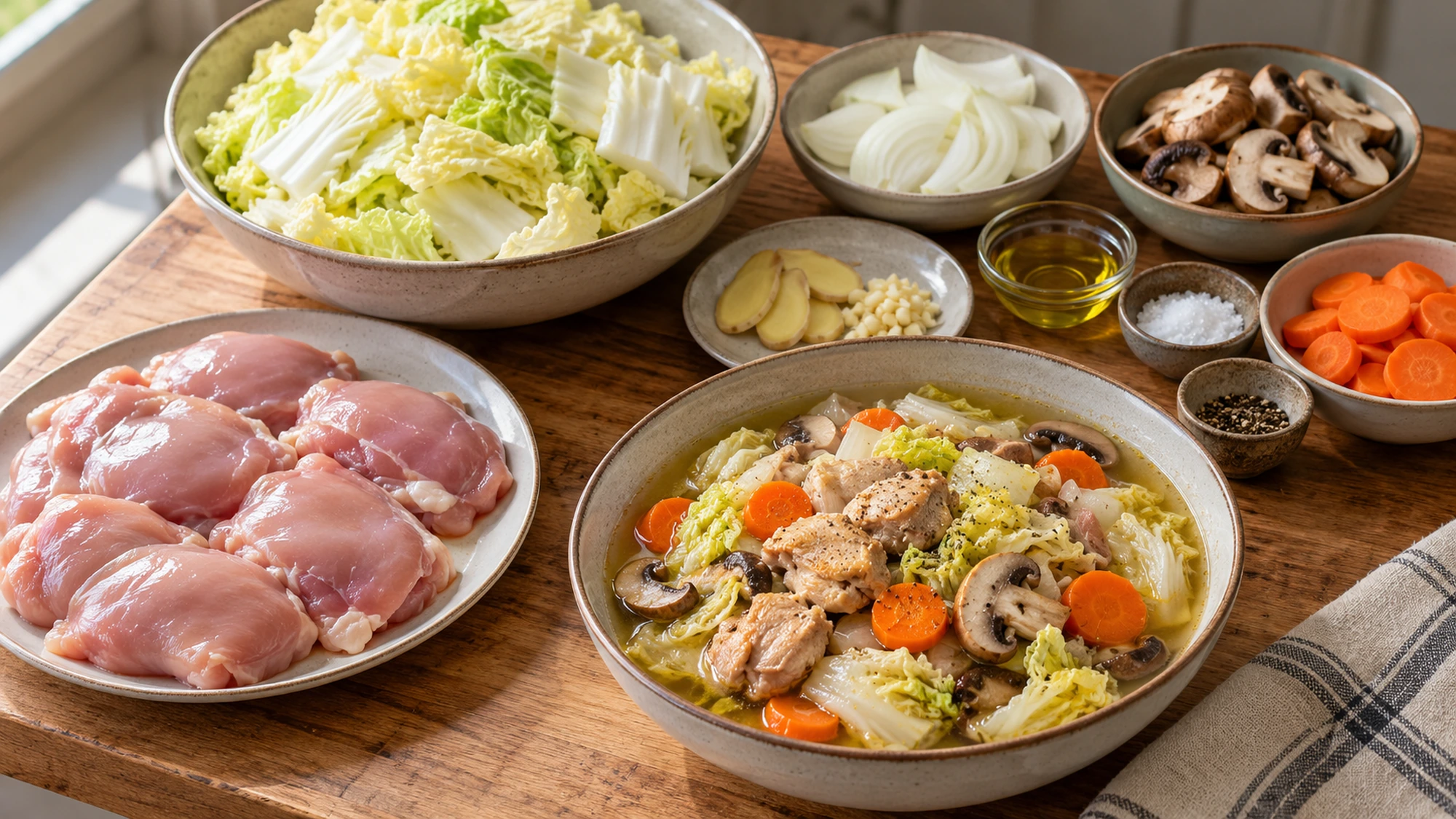
- 1 tablespoon olive oil 13.5 g
- 200 g onion Thinly sliced
- 1000 g napa cabbage Trimmed, washed and cut into wide strips
- 200 g carrots Cut in thin coins
- 200 g cremini mushrooms Cleaned and sliced
- 3 cloves garlic Sliced
- 20 g fresh ginger Thinly sliced
- 1 teaspoon fine salt About 6 g, divided
- 1/2 teaspoon black pepper
- 800 g boneless skinless chicken thighs Thawed, trimmed of large loose fat pieces; do not rinse
Equipment
- 1 Heavy 6-quart Dutch oven Close-fitting lid required
- 1 Instant-read thermometer
- 1 Tongs
Instructions
- Prepare the vegetables and keep the raw chicken on a separate plate. Add the olive oil and onion to a heavy 6-quart pot over medium-low heat. Stir for 2–3 minutes without browning. Add the napa cabbage, carrots, mushrooms, garlic, half the ginger, and half the salt.
- Cover closely and reduce the heat to low. Cook for 12–15 minutes, until the cabbage has collapsed and there is visible liquid at the bottom. Check briefly and stir gently once. If the vegetables remain dry, continue covered on very low heat for another 5 minutes and check again. Do not add the chicken to a pot that is scorching; remove from heat and reassess the pot and heat instead.
- Nestle the chicken thighs among the softened vegetables. Add the remaining ginger, salt, and pepper. Cover tightly and cook at a very gentle simmer over low heat for about 30–40 minutes. Avoid frequent lid lifting, and lower the heat if it boils hard. No water or stock is added.
- Check several thick thighs with a thermometer; chicken must reach at least 165°F (74°C). Continue gently if needed until the chicken is safe and tender. Remove the thighs with clean tongs, divide into bite-size pieces on a clean board, and return them to the pot.
- Stir gently and divide chicken, vegetables, and all the natural juices among four bowls. Expect a concentrated shallow broth, with the amount varying by cabbage and lid fit. Refrigerate leftovers in shallow containers within 2 hours, use within 3–4 days, and reheat to 165°F (74°C).
Nutrition
Video
Notes
Tried this recipe?
Let us know how it turned out!Hi, I’m Emily Pocker! I share recipes and food guides here at Recipes360 to help you find everyday meal inspiration and feel more confident in the kitchen. My goal is to make cooking approachable, enjoyable, and full of flavor.