
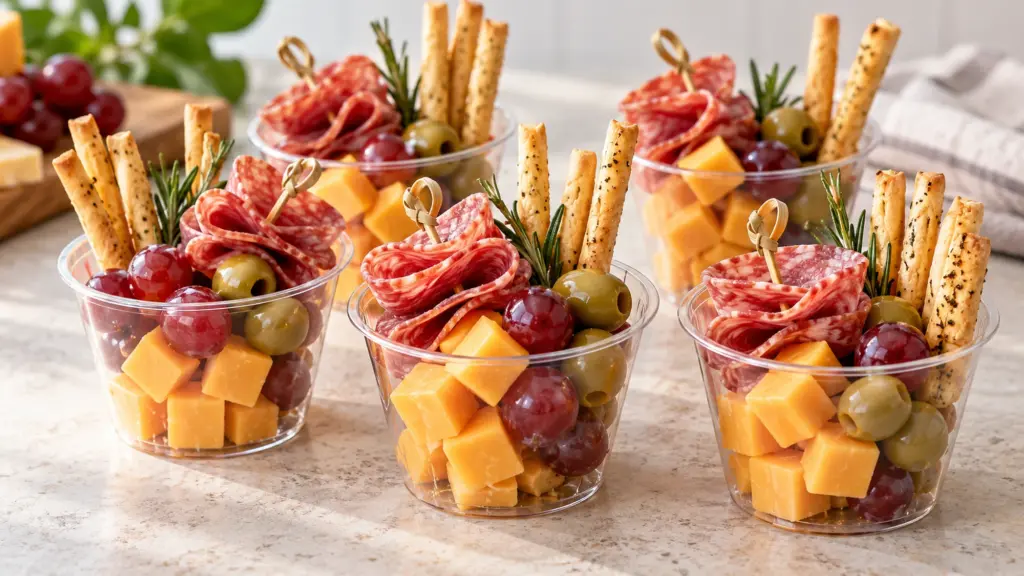
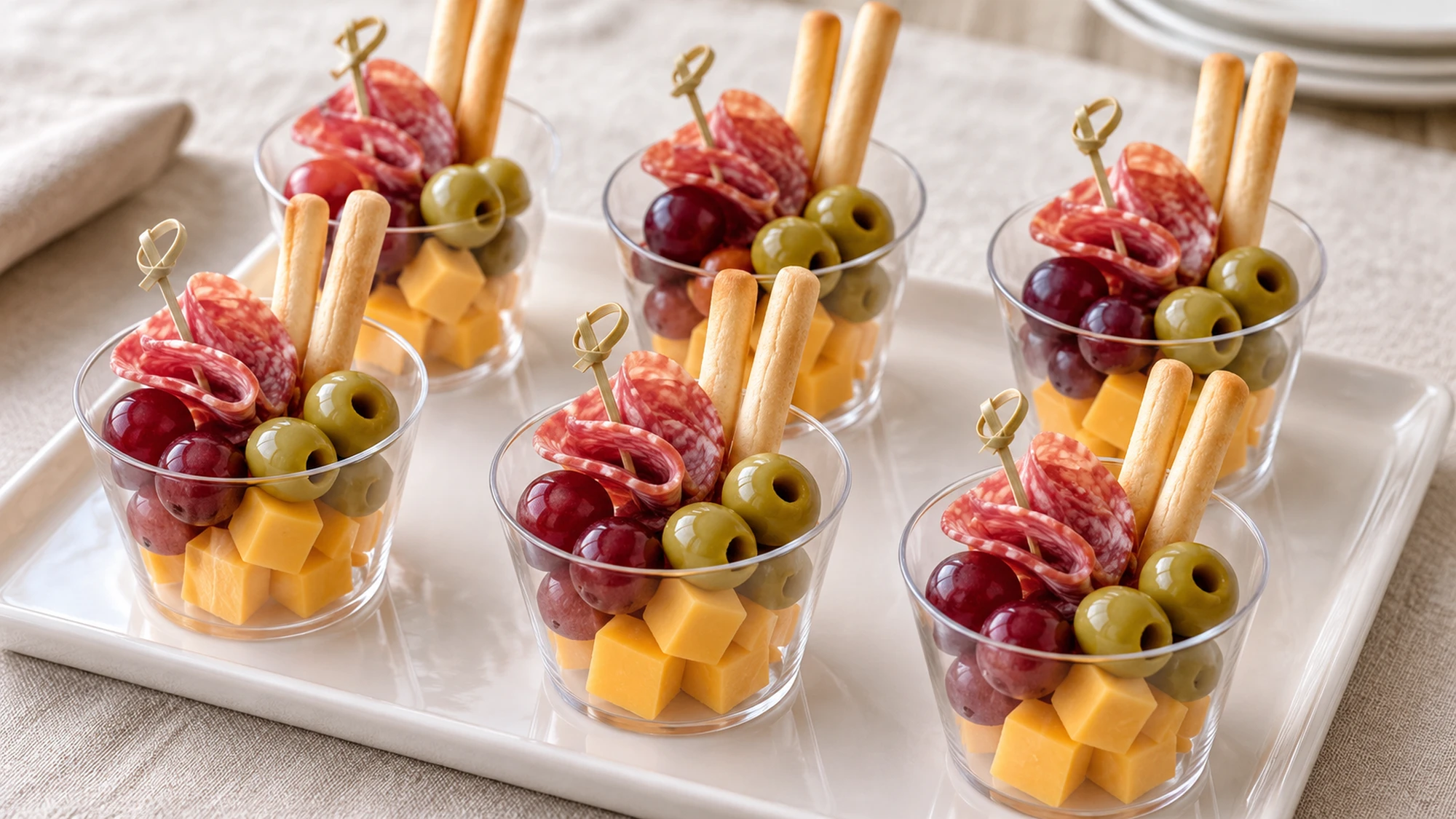
A crowded appetizer table has one small drawback: balancing a plate while trying to choose a little of everything. Charcuterie cups gather salty salami, firm cheese, juicy grapes and a crisp breadstick into one portion you can carry easily. The useful trick is keeping the crunchy pieces separate until the last minute.
Build the cold ingredients first, chill the cups, then add dry breadsticks just before serving. That order protects the contrast between crisp, juicy and creamy bites.
A short pick helps with the folded meat; the remaining pieces should be easy to reach with a small fork.
Serving Suggestions for Charcuterie Cups
Treat each cup as an appetizer alongside other food. For a larger spread, set out a vegetable platter or carrot ribbon salad so guests have something fresh beside the salty meat and cheese. Small plates and napkins nearby are still helpful, especially when breadsticks break.
Arrange the cups on a tray that fits in the refrigerator. The FDA’s safe-buffet guidance recommends keeping cold perishable food at 40°F (4°C) or below and replacing small platters during service rather than continually topping up one warm tray.
- Serve small batches: Keep backup cups chilled and bring out a fresh tray when needed.
- Give crisp food its own moment: Tuck breadsticks in when the cups go to the table, or offer them separately for a longer gathering.
- Keep the portion accessible: Use short picks and leave enough room to reach the cheese and grapes. Remove picks and cut round foods appropriately for young children.
Plan the tray around refrigerator space and serving time. A smaller, freshly chilled batch is easier to manage than a whole party’s food sitting out at once.
Variations and Make-Ahead Choices
The balance matters more than a particular brand: one savory meat, a firm cheese, fresh fruit, something briny and a dry crunch. I prefer mild cheddar here because it holds its shape and lets the salami remain the strongest flavor. Extra-sharp cheddar is a reasonable swap if you want more tang.
This practical comparison keeps substitutions tied to the eating experience. North Dakota State University Extension also describes cup assembly as a flexible way to serve the familiar parts of a charcuterie board; there is no need to turn the ingredient list into a shopping expedition.
| Change | What it adds | What to watch |
|---|---|---|
| Gouda for cheddar | Milder, creamy flavor | Use a firm block that can be cubed |
| Cucumber for olives | Fresh crunch | Dry well; it removes the briny accent |
| Crackers for breadsticks | A wider choice of flavors | Serve separately if they do not fit |
| Omit salami | A meat-free cup | Check cheese labeling if vegetarian suitability matters |
- Prepare components separately: Cube cheese, drain olives and wash and thoroughly dry grapes before assembly.
- Avoid wet additions beside breadsticks: Loose dip or undrained pickles can soften them quickly.
- Label meaningful allergens: This version contains milk and usually wheat; read meat and breadstick labels for other ingredients.
Change one part at a time and preserve the mix of textures. Dry surfaces and last-minute breadsticks do more for the result than elaborate folding.
Health Benefits and Portion Perspective
Cheddar supplies protein and calcium, while grapes add fruit to the cup. NIH’s calcium information explains the mineral’s role in bones, teeth and normal muscle function; that does not make this appetizer a treatment or a nutritional shortcut. The whole serving pattern still matters.
Salami, olives and cheese can contribute substantial sodium, and the meat and cheese bring saturated fat. The card’s nutrition is an estimate for one complete cup, including breadsticks. It is useful for comparing your own ingredients, but package labels are the better guide when sodium or an allergen is a particular concern.
- Keep the fruit: Its juicy texture balances the rich ingredients without needing a sweet sauce.
- Read the salami label: Sodium and serving sizes differ between products.
- Offer choice: Put additional vegetables alongside the cups rather than assuming every guest wants the same portion of cheese or meat.
Enjoy these as a portioned appetizer with a mix of other foods. The cup is a convenient serving format, not a reason to overlook the ingredients inside.
Bottom Line
Charcuterie cups work best when the eating is as simple as the presentation. Keep the portions modest, use firm cheese and dry fruit, and save the breadsticks for serving time. I’d spend the extra minute arranging a clear path to each bite before worrying about a decorative garnish.
Build, chill and finish with crunch. Keep the cold cups safely chilled until needed, and discard perishable food left out beyond two hours, or one hour above 90°F (32°C).
For more on the serving approach, see NDSU Extension’s charcuterie guidance. The FDA’s buffet guidance explains safe cold holding, and NIH’s calcium fact sheet provides nutrient context.
Charcuterie Cups Recipe

Ingredients
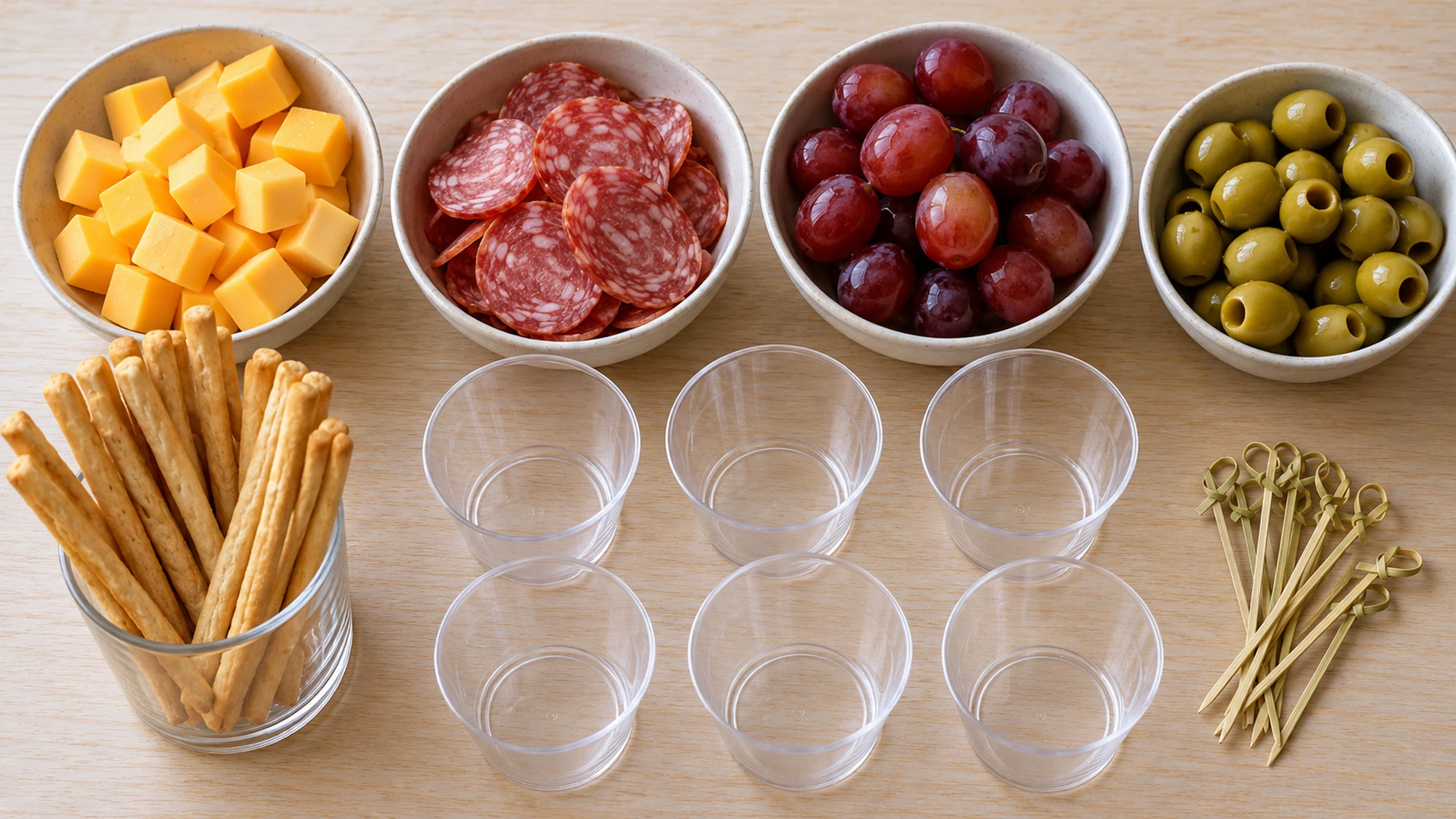
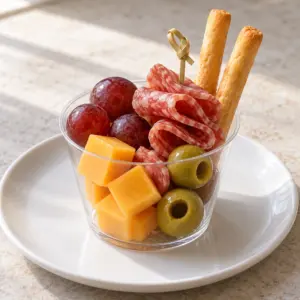
- 168 g cheddar cheese cut into small cubes
- 168 g thinly sliced salami ready to eat
- 300 g red seedless grapes washed and thoroughly dried
- 90 g pitted green olives drained and patted dry
- 60 g thin breadsticks about 12; add at serving
Equipment
- Six 9-ounce food-safe cups
- Short bamboo picks
- Small forks
- Tray
Instructions
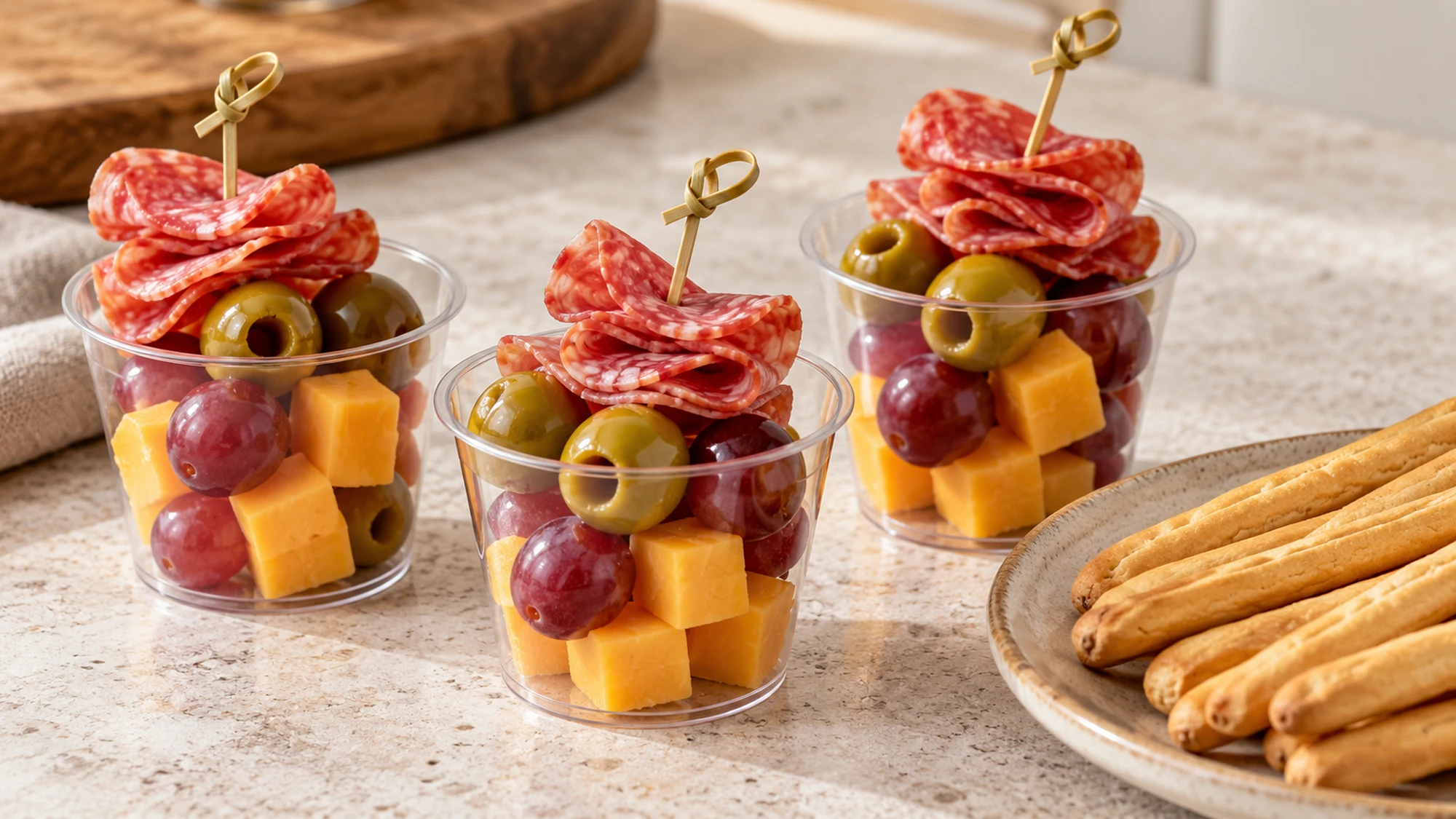
- Wash hands and clean the work surface. Divide cheese and grapes among six clean food-safe cups.
- Fold the salami slices loosely onto short picks and stand one pick in each cup. Divide the drained olives among the cups.
- Cover the tray and refrigerate at 40°F (4°C) or below until serving. Keep breadsticks dry in their own container.
- Just before serving, divide the breadsticks among the cups. Provide small forks and napkins. Serve in small batches, keeping the remaining cups refrigerated.
Nutrition
Video
Notes
Tried this recipe?
Let us know how it turned out!Hi, I’m Emily Pocker! I share recipes and food guides here at Recipes360 to help you find everyday meal inspiration and feel more confident in the kitchen. My goal is to make cooking approachable, enjoyable, and full of flavor.