

A golden cup and a floral scent make chamomile feel like the obvious choice when the day finally slows down. But chamomile tea benefits are easier to understand when you separate a pleasant drink from the promises printed around it.
Chamomile can be an enjoyable caffeine-free drink, but it is not a proven treatment for insomnia or anxiety. Think of the cup as a comforting choice, not a substitute for care.
I’d start with whether you enjoy its gentle flavor. A tea does not need an impressive medical résumé to earn a place in the cupboard.
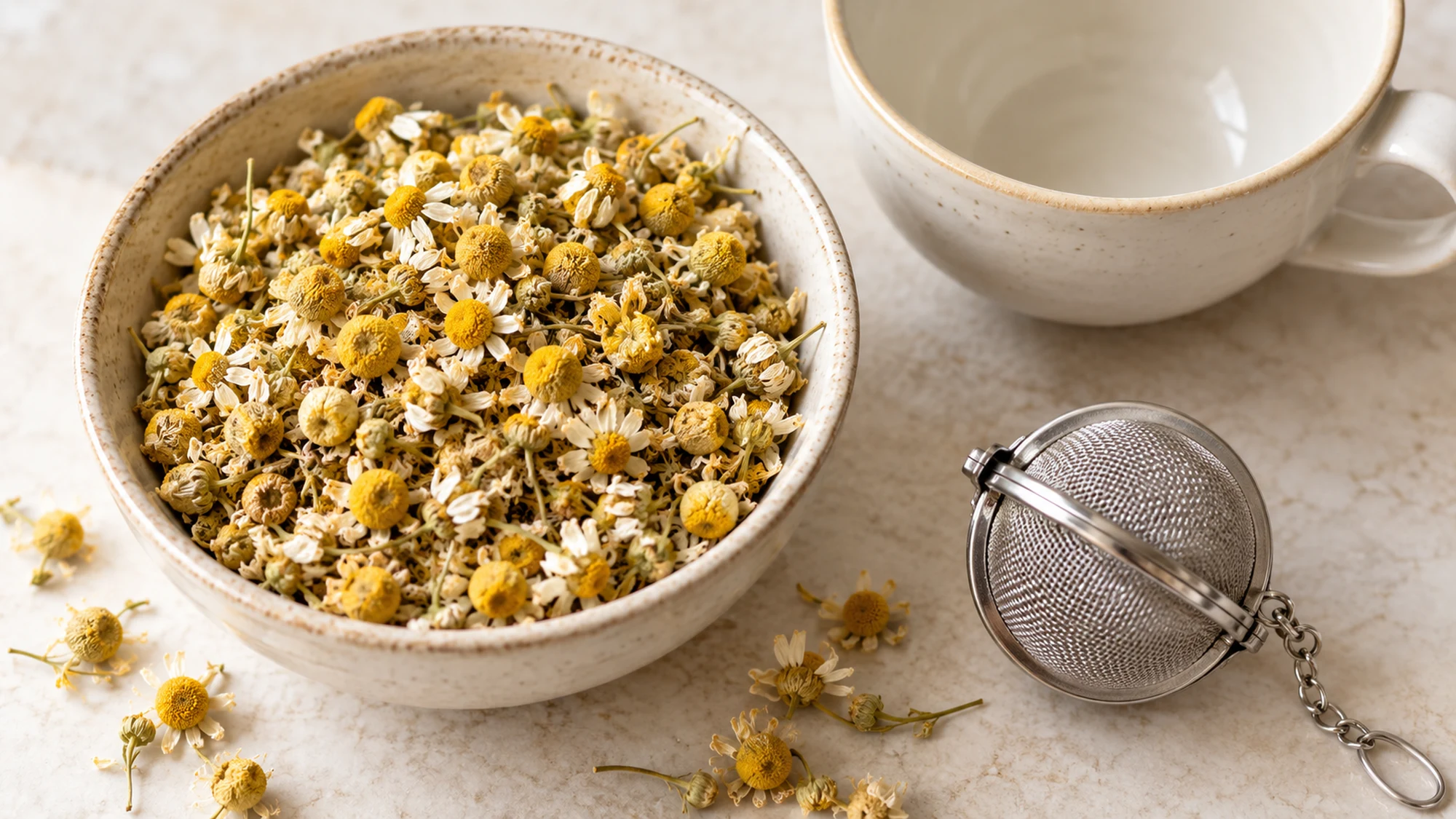
Chamomile tea benefits: what research can really tell us
The National Center for Complementary and Integrative Health’s chamomile overview finds insufficient reliable evidence to establish its usefulness for many promoted conditions. Some studies use extracts or combinations of herbs, rather than the plain tea in your mug.
That distinction matters. A measured supplement, a mixed-herb product and a teabag are not interchangeable. Neither the amount of plant material nor the preparation is necessarily the same, so a headline about one should not become a promise about another.
- Look for the preparation: tea, capsule, extract or several herbs together.
- Check the people studied: results in one small, specific group may not apply to everyone.
- Separate a promising finding from a consistent result repeated in good-quality trials.
Sleep findings are more modest than the bedtime reputation
A 2024 systematic review of ten studies involving 772 participants found improvements in some sleep measures, but not sleep duration, sleep efficiency or daytime functioning. Products and studies varied, and the authors called for more objective measures.
There is also research on tea itself. An 80-person Taiwanese postpartum trial reported short-term improvements in selected sleep and depression measures after two weeks of chamomile tea. At the four-week assessment, the groups were similar. This does not establish a general insomnia treatment or settle breastfeeding safety.
| Question | What to keep in mind |
|---|---|
| Will it reliably make me sleep? | Evidence does not support a guarantee. |
| Does extract research prove tea works? | No; preparation and dose differ. |
| Can a pleasant routine still be worthwhile? | Yes, without calling it treatment. |
| Should persistent sleep trouble be ignored? | No; discuss it with a health professional. |
Enjoy the bedtime ritual if it suits you, while keeping expectations separate from the research.
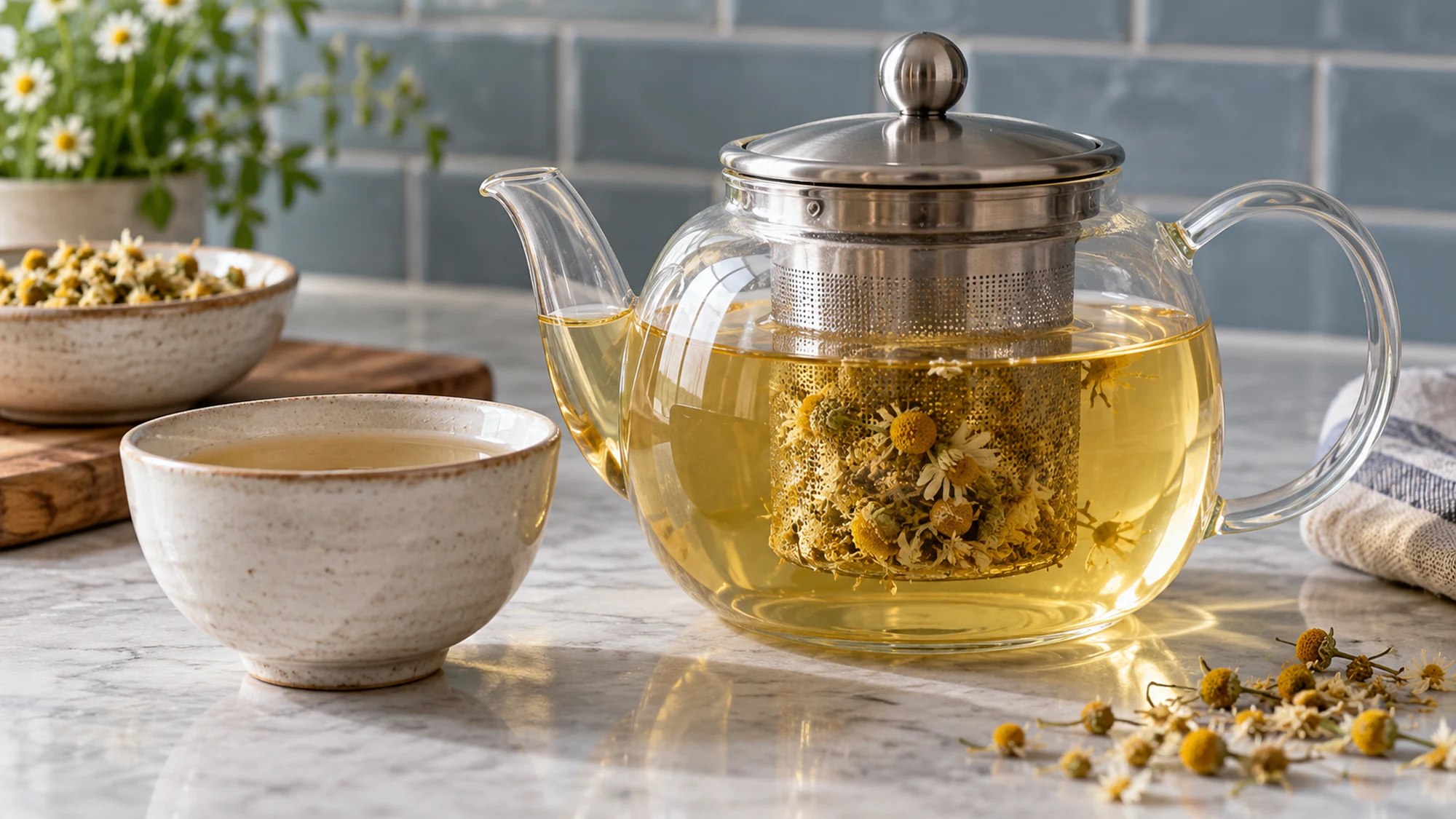
Choose and brew the cup you actually want
Pure chamomile is a herbal infusion rather than black or green tea. For a concrete label example, Twinings Pure Camomile lists 100% camomile and describes the product as naturally caffeine-free; that does not tell you what is in a different brand’s blend.
I’d choose a short ingredient list before a long list of wellness promises. Loose flowers can make a lovely, fragrant cup, while bags are convenient; neither format guarantees stronger health effects.
- Read the entire blend. Black tea, green tea or other added ingredients change what you are drinking.
- Follow the package’s water amount and steeping directions. There is no established therapeutic tea dose to improvise.
- Use a clean infuser for loose flowers and strain the drink before sipping.
- Taste before sweetening. Honey or sugar changes the drink, not the quality of the evidence.
- Let the cup cool to a comfortable temperature rather than rushing the first sip.
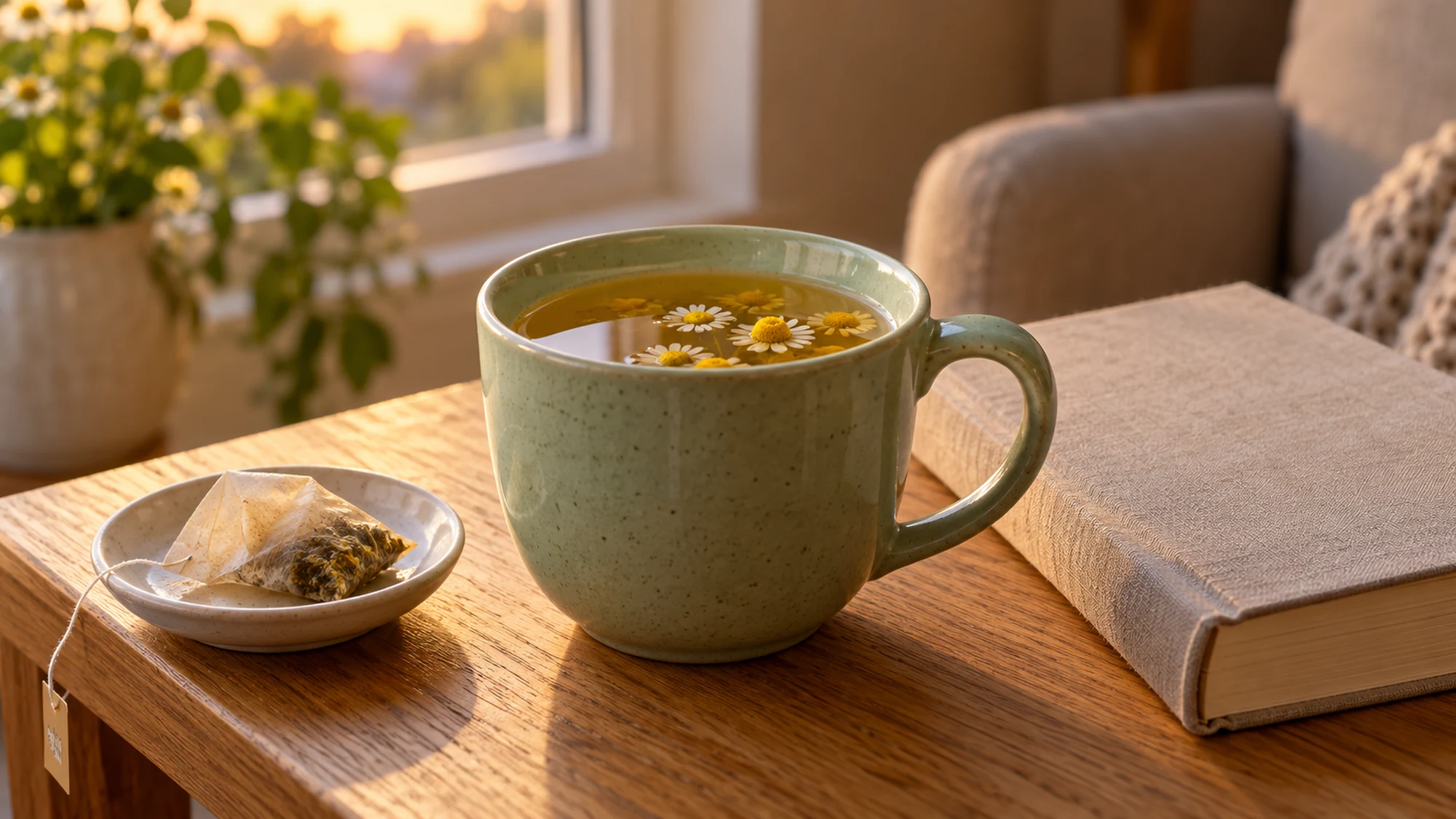
Who should check before drinking it regularly?
According to NCCIH’s safety guidance, usual food and tea amounts are generally considered likely safe, but allergic reactions can occur. People allergic to ragweed and related plants may be more susceptible.
Medication interactions also deserve attention, including reported interactions with warfarin and possible interactions with sedatives. Pregnancy and breastfeeding safety information is limited. A pharmacist or clinician can assess your own circumstances; “herbal” is not a safety clearance.
- If you take medicines, check before making chamomile a regular habit or adding a concentrated supplement.
- If pregnant or breastfeeding, ask your care team rather than relying on a sleep-study headline.
- If a drink causes a reaction, stop using it. Breathing difficulty or throat swelling requires urgent medical help.
- Do not replace prescribed treatment for anxiety, depression or persistent insomnia with tea.
Bottom Line
The most dependable reason to choose chamomile is simple: you like the floral flavor and want a caffeine-free cup. Research leaves room for further study, not sweeping promises. I’d keep the ritual, check the label and any relevant safety concerns, and leave treatment decisions out of the teapot.
For a practical look at loose-herb brewing equipment, this demonstration is by Mountain Rose Herbs. It is a preparation guide, not evidence of a health benefit.
Sources
- NCCIH: Chamomile—usefulness and safety
- 2024 systematic review of chamomile and sleep
- Chang and Chen: postpartum chamomile tea trial
- Twinings: Pure Camomile ingredients and preparation

Hi, I’m Emily Pocker! I share recipes and food guides here at Recipes360 to help you find everyday meal inspiration and feel more confident in the kitchen. My goal is to make cooking approachable, enjoyable, and full of flavor.