
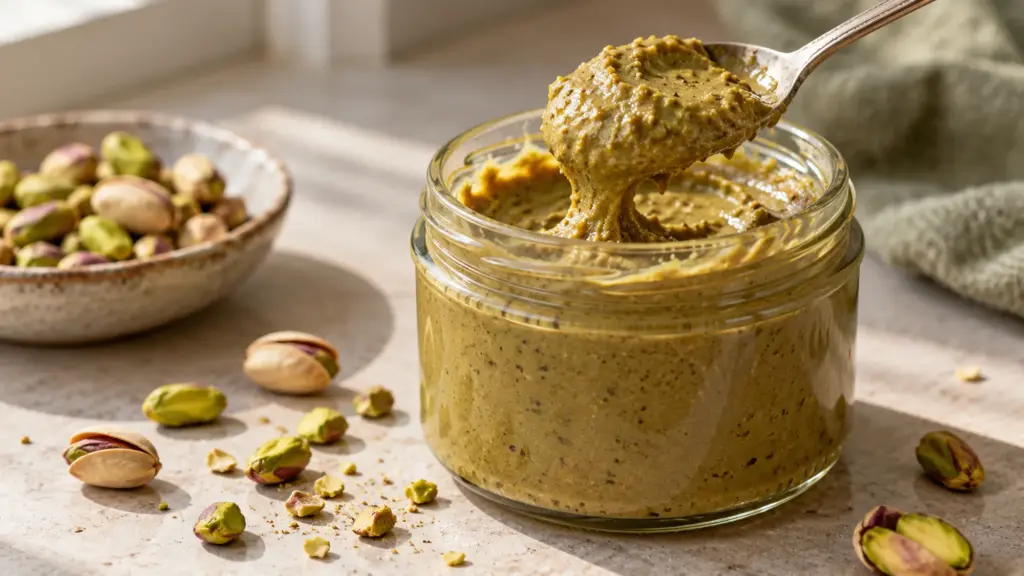
Two green jars can promise very different things. One tastes deeply nutty and barely sweet; the other behaves more like a dessert spread. Before spooning pistachio butter into breakfast or a baking project, it helps to know which kind you have—and what you want it to do.
Pure pistachio butter is made by grinding pistachios until their oils form a spread. Sweet pistachio cream may also contain sugar, added fats, or milk. Read the ingredient list rather than relying on the color or product name.
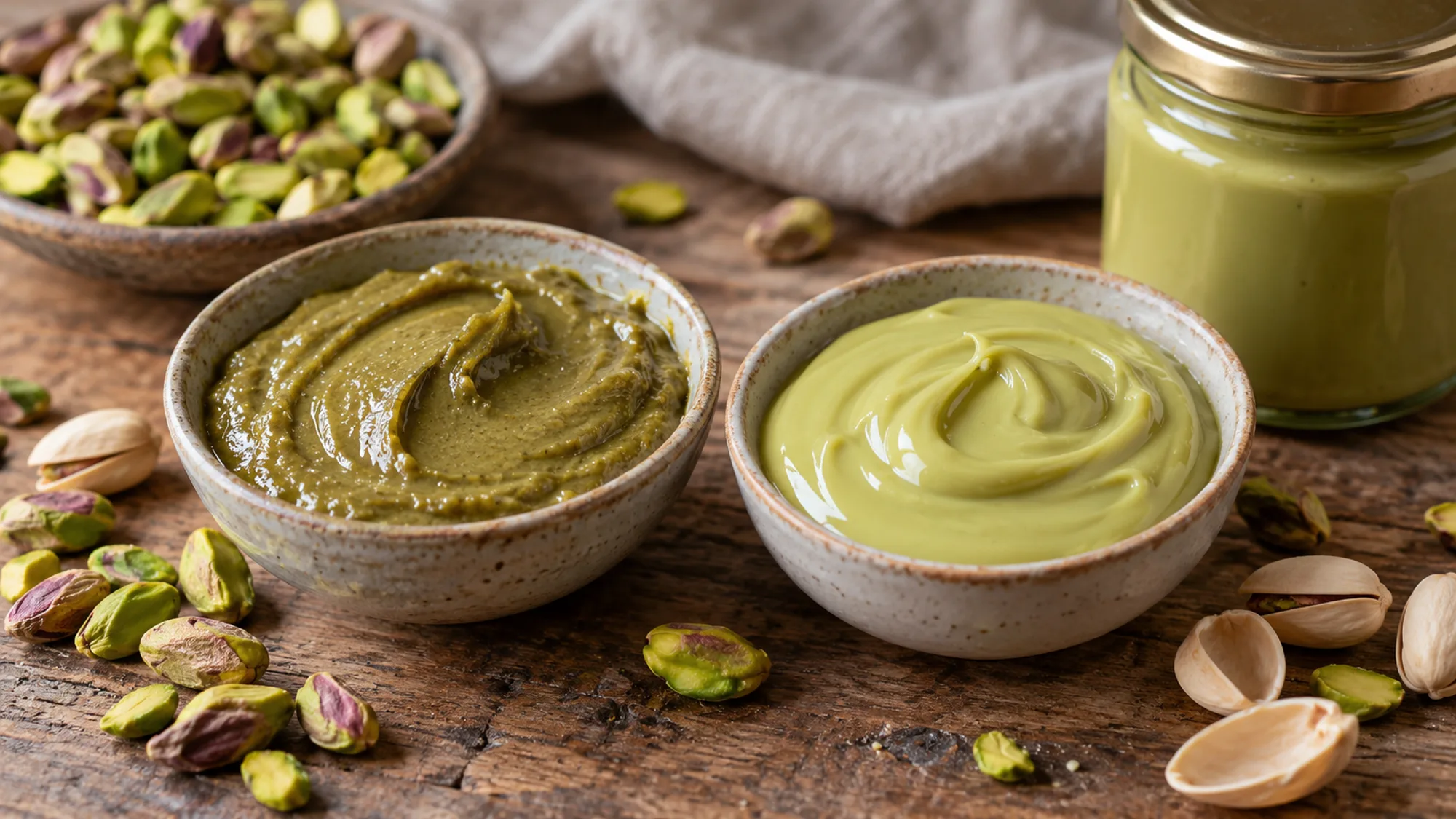
Butter, Paste, and Cream Are Not Identical
The American Pistachio Growers’ ingredient guide describes finely ground pistachios forming a creamy spread as their oil is released. Pure butter is useful when you want to control the sweetness of the finished dish.
Names are not perfectly standardized across brands. One maker may use paste for a very fine culinary product and butter for a thicker spread. The Pistachio Factory, for example, distinguishes its paste and butter by particle size and consistency. That distinction should not be assumed for every other jar.
| Product style | Label clue | Best starting use |
|---|---|---|
| Pure pistachio butter | Pistachios, sometimes salt | Yogurt, toast, savory dressings |
| Fine pistachio paste | Check nut percentage and added sugar | Recipes specifying a smooth nut ingredient |
| Sweet pistachio cream | Sugar, fats, or milk may appear | Dessert filling or sweet topping |
| Pistachio-flavored spread | Ingredient proportions vary widely | Use according to its own label and recipe |
Swapping a sweet cream for unsweetened butter can change both sweetness and texture. In a carefully balanced cake or filling, follow the specified product rather than treating every green spread as equivalent.
What to Look for on the Label
Start with the ingredients, then the serving size. If you want pure nut flavor, look for pistachios as the only ingredient or pistachios plus salt. If you want a dessert spread, added sugar may be intentional rather than a flaw; it simply changes how the jar fits your cooking.
Compare nutrition information using equal amounts. A small printed serving can make one product appear different from another without telling the whole story. Pure nut butter is still a concentrated food, not a low-calorie shortcut or a treatment for a health condition.
Color is a poor quality test on its own. The nuts, their skins, roasting, and other ingredients can produce muted green, olive, or tan shades. Look for a clear ingredient list and suitable packaging rather than expecting every honest pistachio spread to be bright green.
Use a Little Where the Flavor Counts
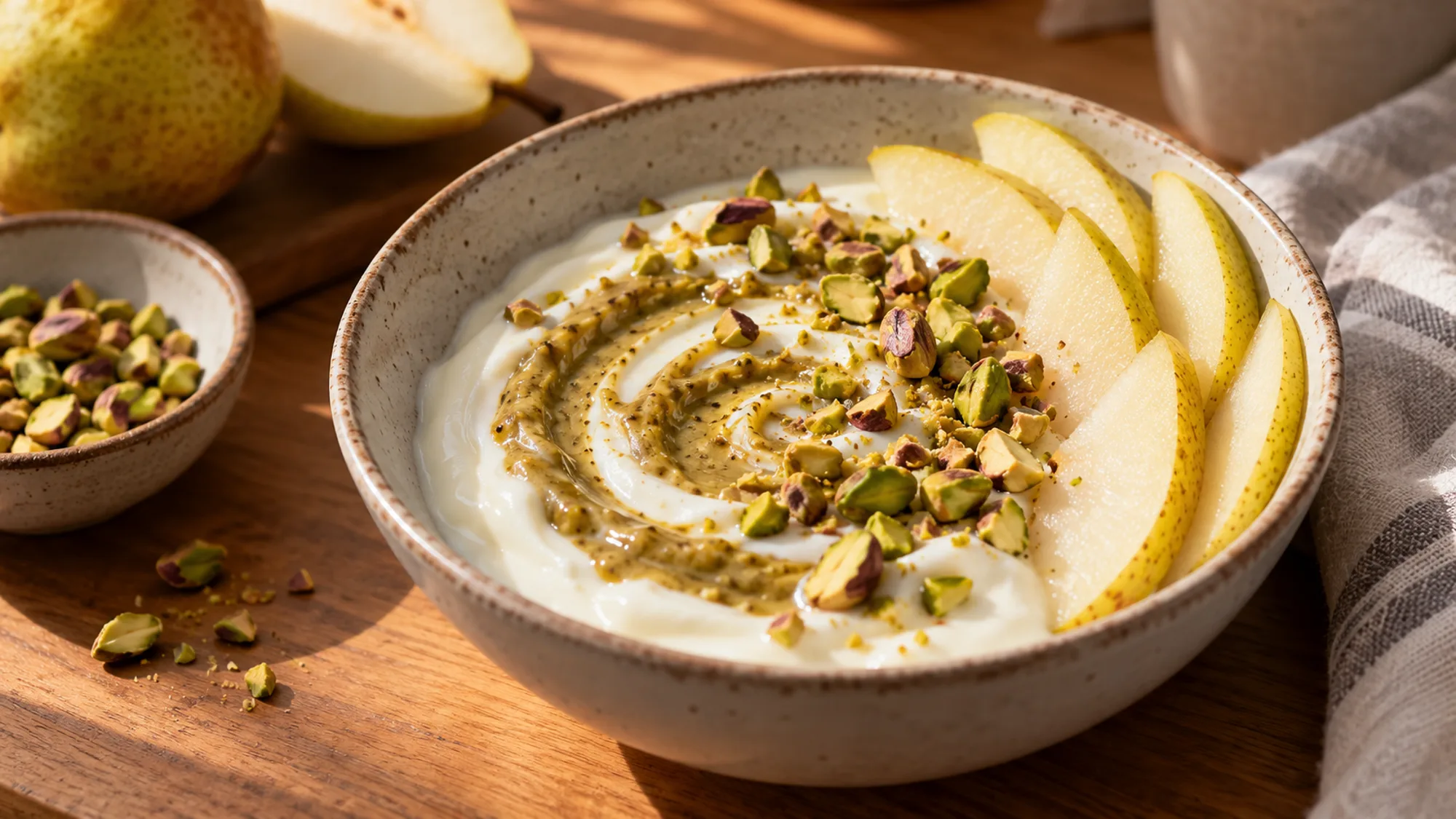
A small swirl through plain yogurt lets the nut flavor remain noticeable. On toast, spread it thinly and add sliced ripe fruit. Stir a spoonful into warm oatmeal, or mix a little with a portion of dressing just before serving instead of committing the whole jar to an experiment.
For a savory use, combine a small amount with lemon and enough water to loosen it into a sauce, then serve immediately or refrigerate the prepared sauce appropriately. Once you add water, yogurt, or other ingredients, it is no longer the shelf-stable product described by the original jar’s storage instructions.
In desserts, start with a recipe developed for the type you own. Taste a small test portion before adding extra sweetener, especially if the jar is labeled cream. The Dubai chocolate bar guide is a useful example of a dessert where the pistachio filling style matters.
Stir, Store, and Check Allergens
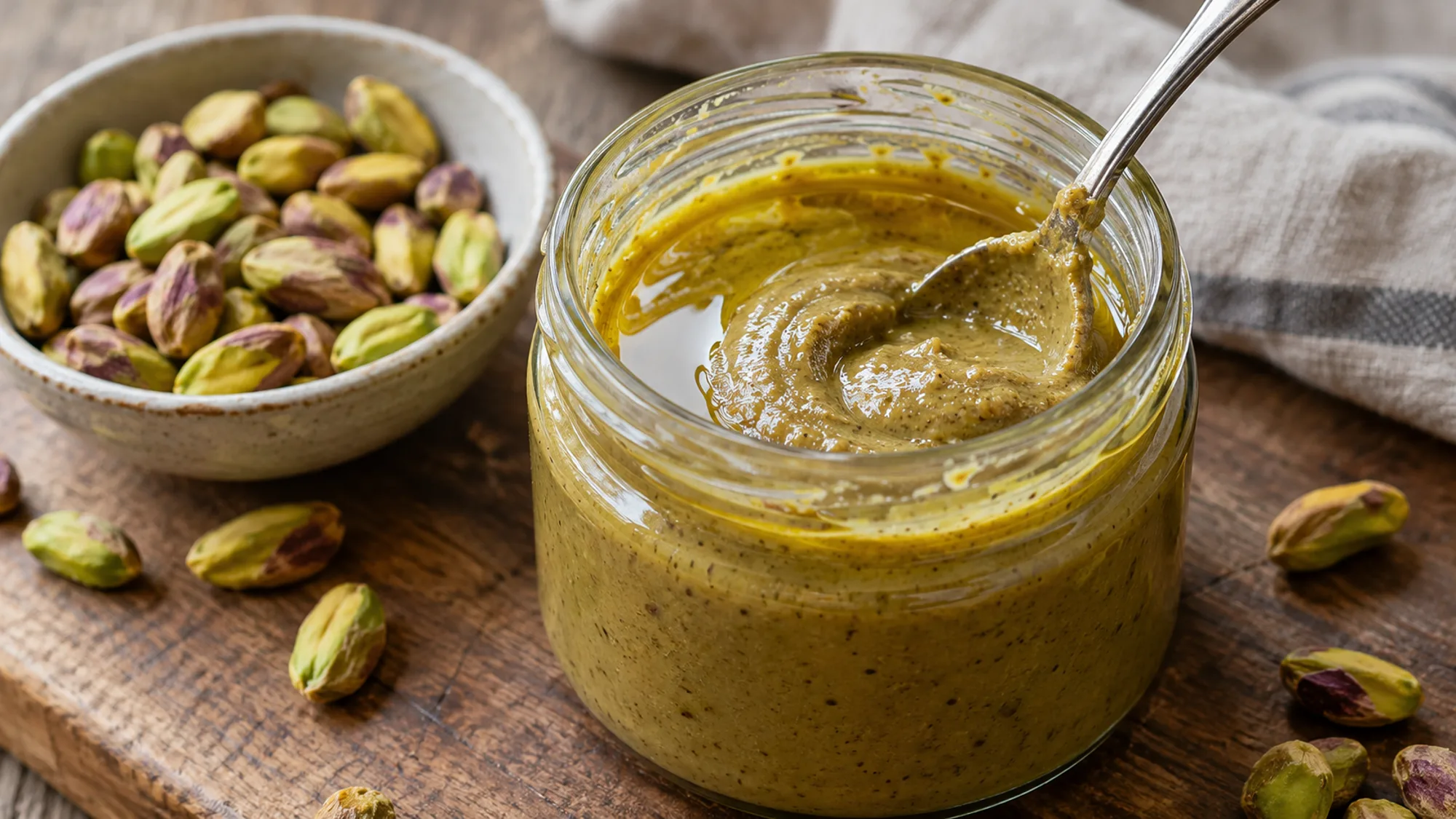
Natural oil separation can occur in a pure nut spread. Stir carefully from the bottom with a clean, dry utensil rather than pouring the oil away and leaving a dry paste. Refrigeration may firm the texture, so follow the maker’s directions for that particular jar.
The Pistachio Factory recommends a tightly closed container in a cool, dry place for its own products and says refrigeration is optional. Other products can differ, particularly sweet creams containing additional ingredients. Follow their instructions and dates; do not apply one manufacturer’s shelf life to homemade butter.
Pistachios are tree nuts. The NSW Food Authority’s allergen guidance includes pistachio among individually identified tree nuts. Read the full label for milk and other allergens too, and do not assume another nut butter is suitable for someone with a diagnosed allergy.
Bottom Line
Choose the jar by ingredients and intended use: pure butter for flexible nut flavor, sweet cream when a dessert spread is what you need. Stir and store it according to its own label, then use a small amount where its flavor can shine instead of expecting it to transform every recipe.
Related video: The Cooking Foodie, Pistachio Paste Recipe | How to Make Homemade Pistachio Butter.
Sources
American Pistachio Growers: Pistachio Paste and Butter
The Pistachio Factory: Product FAQ and Storage
NSW Food Authority: Tree Nuts

Hi, I’m Emily Pocker! I share recipes and food guides here at Recipes360 to help you find everyday meal inspiration and feel more confident in the kitchen. My goal is to make cooking approachable, enjoyable, and full of flavor.