
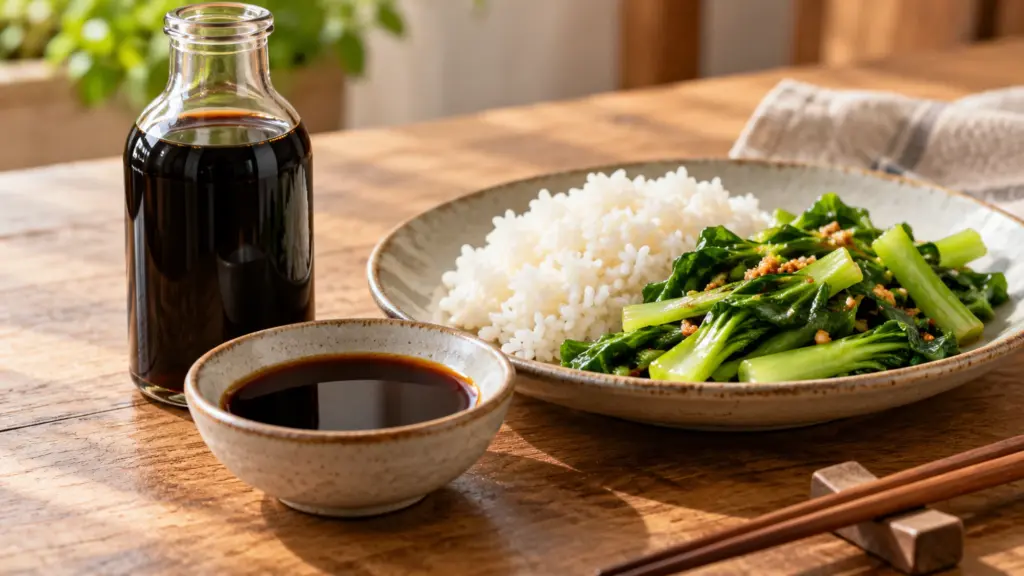
A bowl of rice and crisp vegetables is almost ready, and the soy sauce is within reach. If gluten is off the menu, that last splash deserves a closer look than the rest of the dinner might suggest.
Soy sauce and gluten free cooking can go together, but ordinary wheat-containing soy sauce is not the default choice. Look for a product specifically labeled gluten-free; the words tamari, naturally brewed or less sodium do not replace that check.
I’d make the bottle label the deciding factor, not the sauce’s color or a familiar brand name. Two bottles from the same company can have different ingredients and allergen information.
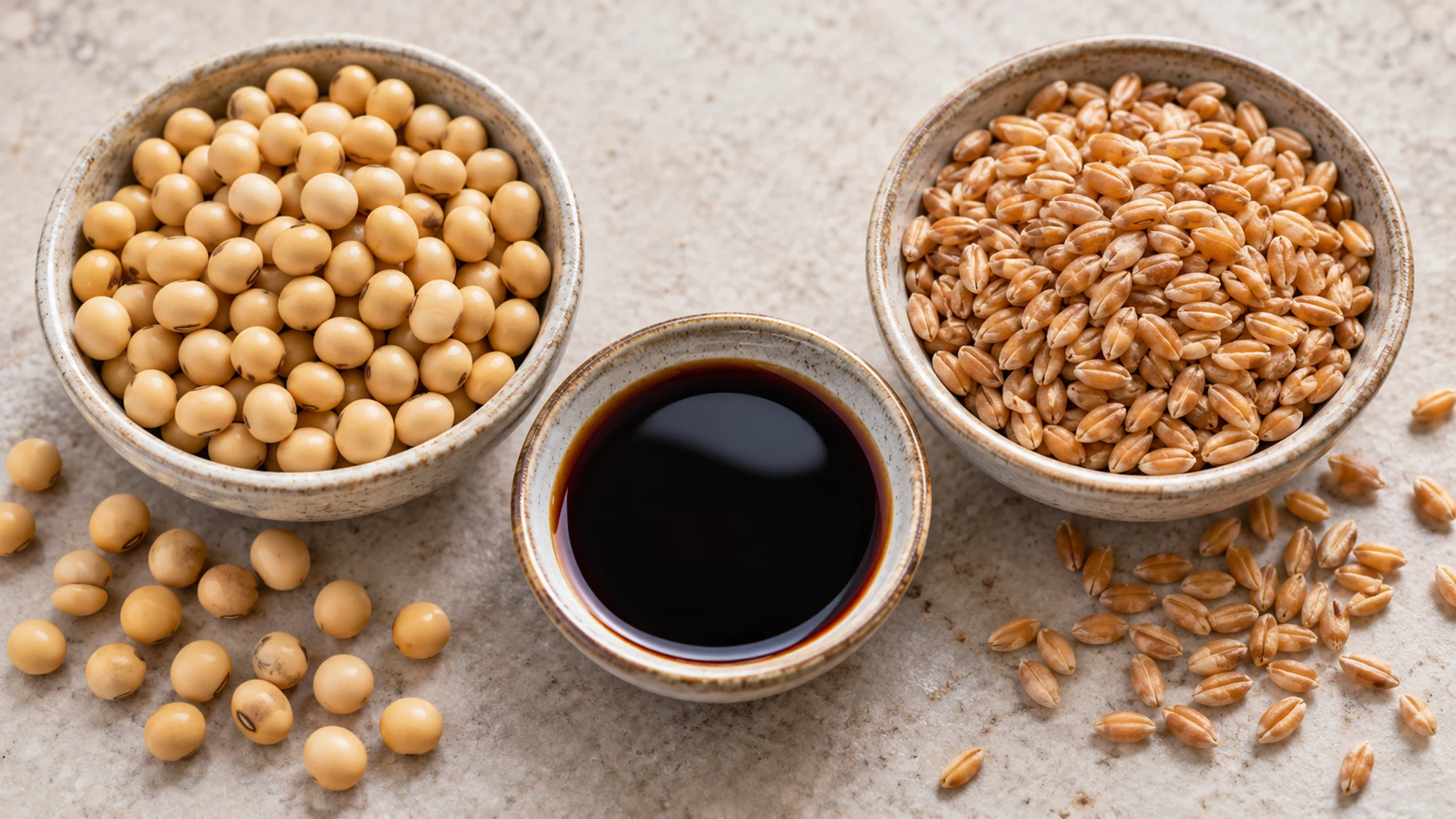
Soy Sauce and Gluten Free Labels: Start Here
The FDA’s gluten-free labeling rules require foods bearing that claim to meet ingredient restrictions and contain less than 20 parts per million of gluten. This is a defined labeling standard, not a promise that a product contains literally zero gluten.
Read the full ingredient list as well as the gluten-free claim. Wheat-free is not the same as gluten-free: barley and rye matter too. If the bottle leaves you uncertain, check the manufacturer’s current information rather than guessing from an online photograph.
- Check the exact product, not just the brand or cap color.
- Keep gluten-free requirements separate from other allergies.
- Recheck replacement bottles; formulas and packaging can change.
Tamari Is a Starting Point, Not a Guarantee
Some tamari is made without wheat, but the name alone is not a gluten-free certification. A concrete example is Kikkoman’s U.S. Gluten-Free Tamari, whose listed ingredients are water, soybeans, salt and sugar. That product information does not apply to every tamari or every Kikkoman sauce.
Use this quick shopping comparison to separate flavor descriptions from dietary claims. I’d rather spend a moment checking now than discover the wrong bottle halfway through a marinade.
| Bottle description | What it tells you | What to check |
|---|---|---|
| Regular soy sauce | Often includes wheat | Ingredients and gluten-free claim |
| Tamari | A soy-sauce style | Explicit gluten-free labeling |
| Less-sodium soy sauce | A sodium comparison | Gluten-free status separately |
| Dark or sweet soy sauce | Color or flavor style | Wheat and other ingredients |
| Gluten-free soy sauce | A regulated dietary claim | Soy and any other relevant allergens |
Gluten-free does not mean soy-free. A sauce made with soybeans is not a suitable substitute for someone who must avoid soy.
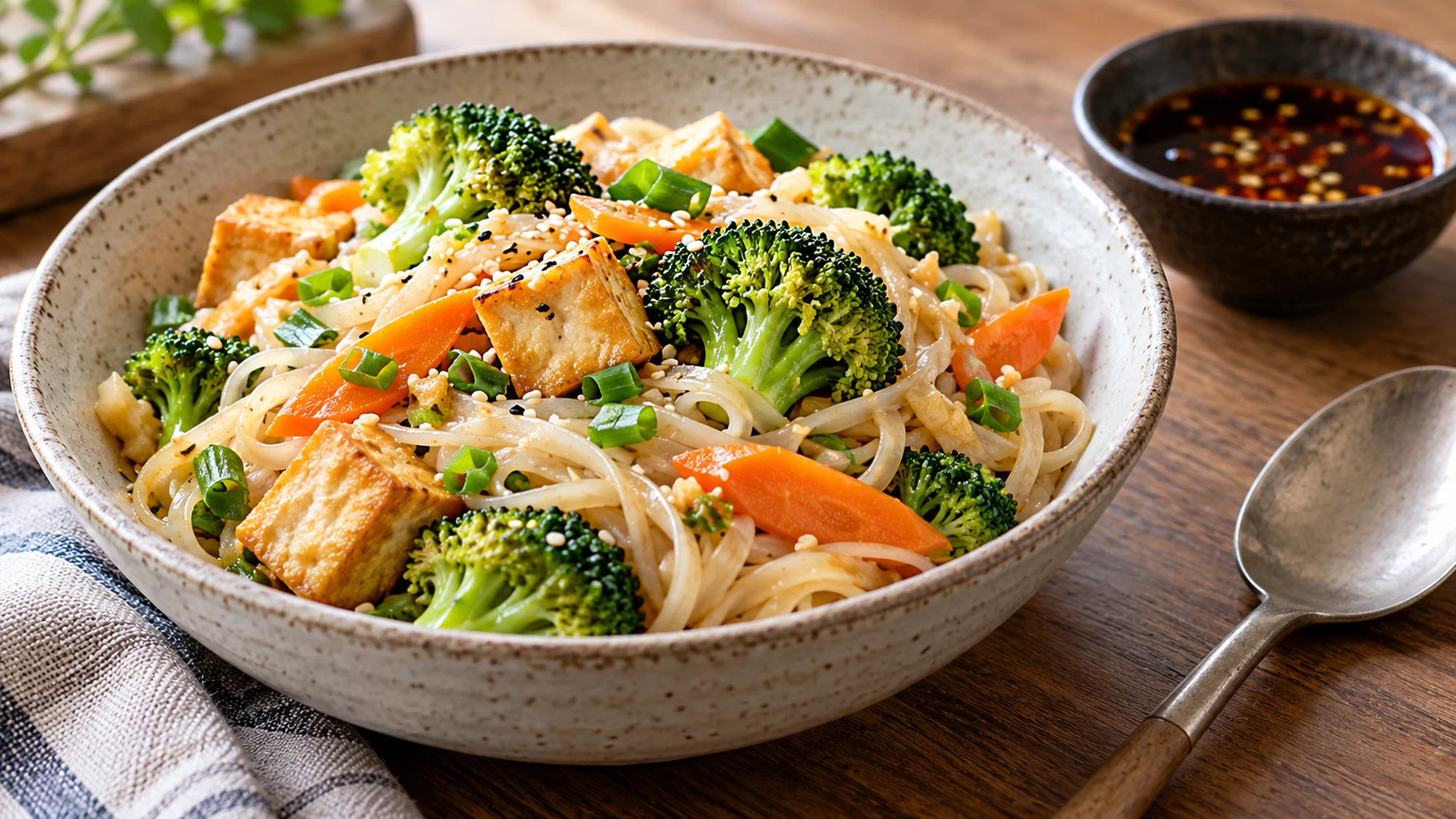
Fermentation Does Not Settle the Question
Fermentation creates soy sauce’s savory character, but it is not a dependable shortcut for deciding whether a wheat-containing sauce belongs in a gluten-free diet. FDA has separate compliance requirements for fermented and hydrolyzed foods, partly because testing broken-down proteins presents challenges.
For these foods, manufacturers making a gluten-free claim need records establishing compliance before fermentation or hydrolysis and appropriate controls. Do not treat “long fermented,” a reassuring comment online, or the absence of a detectable result from an unsuitable test as a replacement for proper labeling.
Choose on the strength of the product’s gluten-free labeling, not the assumption that fermentation makes wheat harmless.
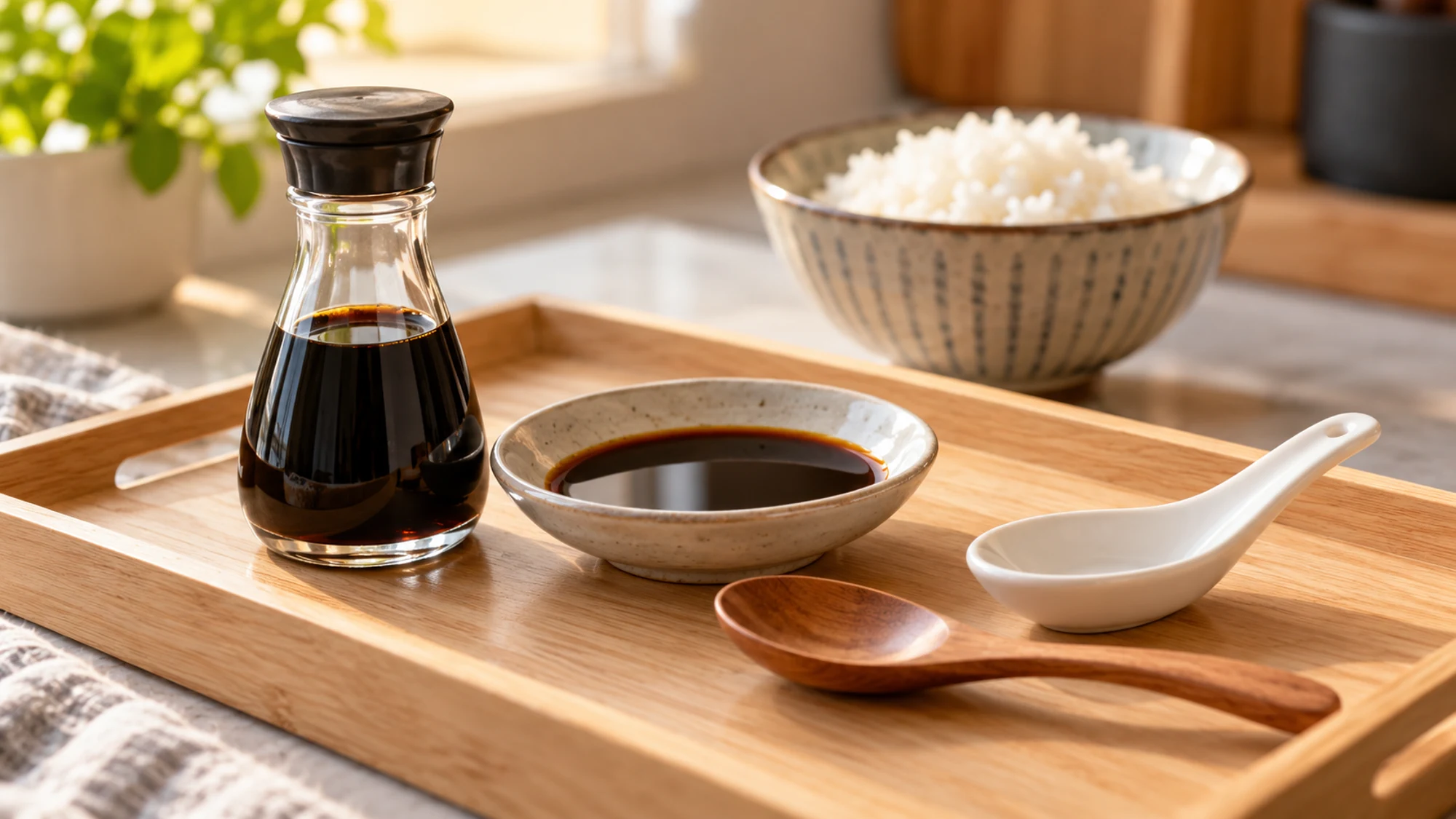
Keep the Whole Meal in View
A suitable sauce cannot undo cross-contact elsewhere. NIDDK’s celiac-disease guidance explains that gluten can transfer during preparation, storage and serving. At a restaurant, ask about the sauce already used in a marinade or wok—not only the bottle offered at the table.
For flavor, add your chosen sauce gradually. Gluten-free products still vary in saltiness and sweetness; there is no universal substitution ratio for every brand and dish. A little ginger, garlic or citrus can give a rice bowl extra character without simply pouring on more sauce.
- Use clean utensils and avoid dipping a spoon back into a shared sauce after it touches gluten-containing food.
- Check noodles, stock, seasoning blends and any additional sauces separately.
- Compare sodium using the same serving size, then taste the finished food before adding more.
- Follow the bottle’s storage directions and keep its identity clear if you use a serving dispenser.
My practical preference is to keep the original labeled bottle nearby and serve sauce with its own clean spoon. It makes a shared table easier to manage.
Bottom Line
Gluten-free soy sauce is a useful pantry option, not a different way of making every soy sauce safe. Find an explicitly labeled product, check other allergens, and protect the meal from cross-contact. Tamari can fit the bill—but the label, not the name, gives you the information you need.
For a culinary overview, Pailin’s Kitchen explains different soy-sauce styles in the video below. Use it for flavor context, not as confirmation that any particular bottle meets your gluten-free needs.
Sources
- FDA: Gluten-free food labeling questions and answers
- FDA: Fermented and hydrolyzed foods
- NIDDK: Eating and nutrition for celiac disease
- Kikkoman: U.S. Gluten-Free Tamari product information

Hi, I’m Emily Pocker! I share recipes and food guides here at Recipes360 to help you find everyday meal inspiration and feel more confident in the kitchen. My goal is to make cooking approachable, enjoyable, and full of flavor.