
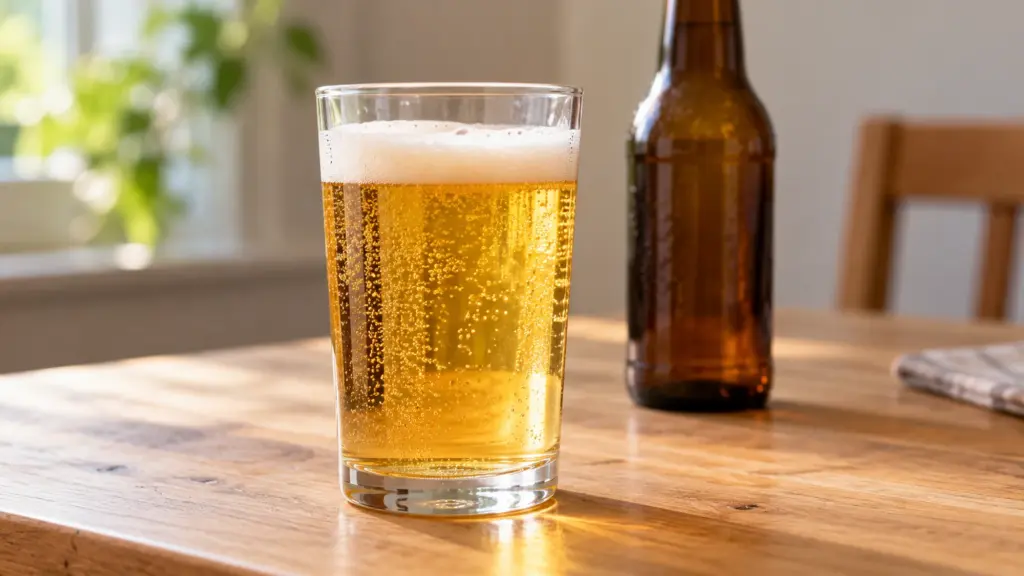
Shopping for beers that are low in calories gets confusing when one shelf lists numbers per bottle and another offers oversized cans. A fair comparison starts with the same volume, the exact product name and its alcohol by volume, or ABV. This guide focuses on reading U.S. beer labels so a small number on the package means something useful.
Two lower-calorie examples are Yuengling FLIGHT at 95 calories and Coors Light at 102 calories per 12 fl oz, both at 4.2% ABV. These are product-specific figures, not a claim that either beer is healthy or risk-free. Check the package in your market.
Compare Beers Using the Same Serving Size
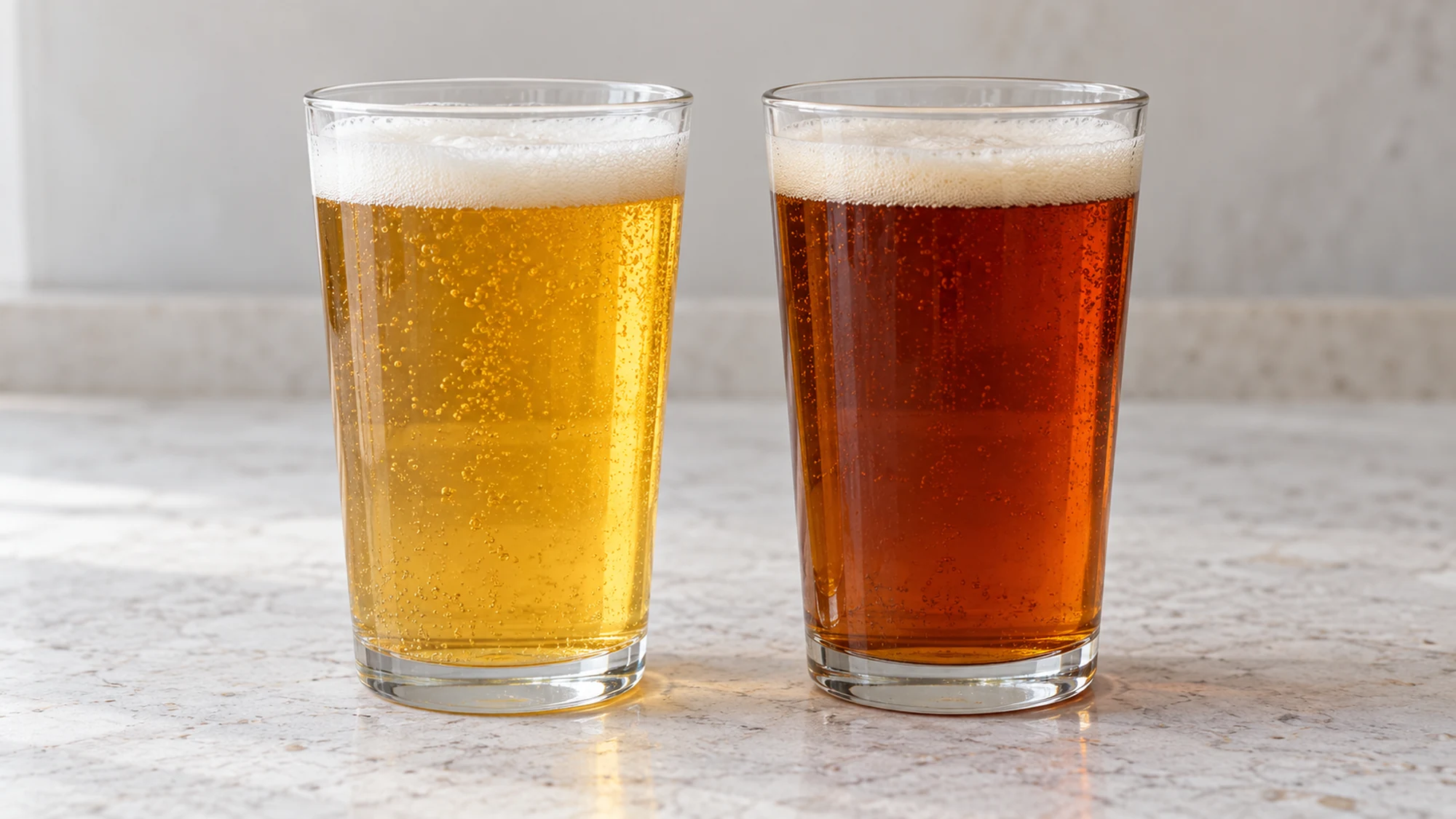
The table uses 12 U.S. fluid ounces, approximately 355 mL. These are two verified examples rather than a ranking of every beer available. The photographs illustrate beer and packaging; they do not depict or identify these branded products.
| U.S. product | Serving | Calories | Carbohydrate | ABV |
|---|---|---|---|---|
| Yuengling FLIGHT | 12 fl oz / about 355 mL | 95 | 2.6 g | 4.2% |
| Coors Light | 12 fl oz / about 355 mL | 102 | 5 g | 4.2% |
Yuengling’s menu specifies FLIGHT’s calories and carbohydrate per 12 oz; its brewer announcement supplies the 4.2% ABV. Coors provides serving size, calories, carbohydrate and ABV together on its product page. Comparing the two shows why calorie and carbohydrate numbers belong in separate columns.
I’d use a table like this to narrow a label search, then check the actual container. Availability, package size and similarly named products can make an online comparison less useful at the shelf.
Larger Cans Change the Total
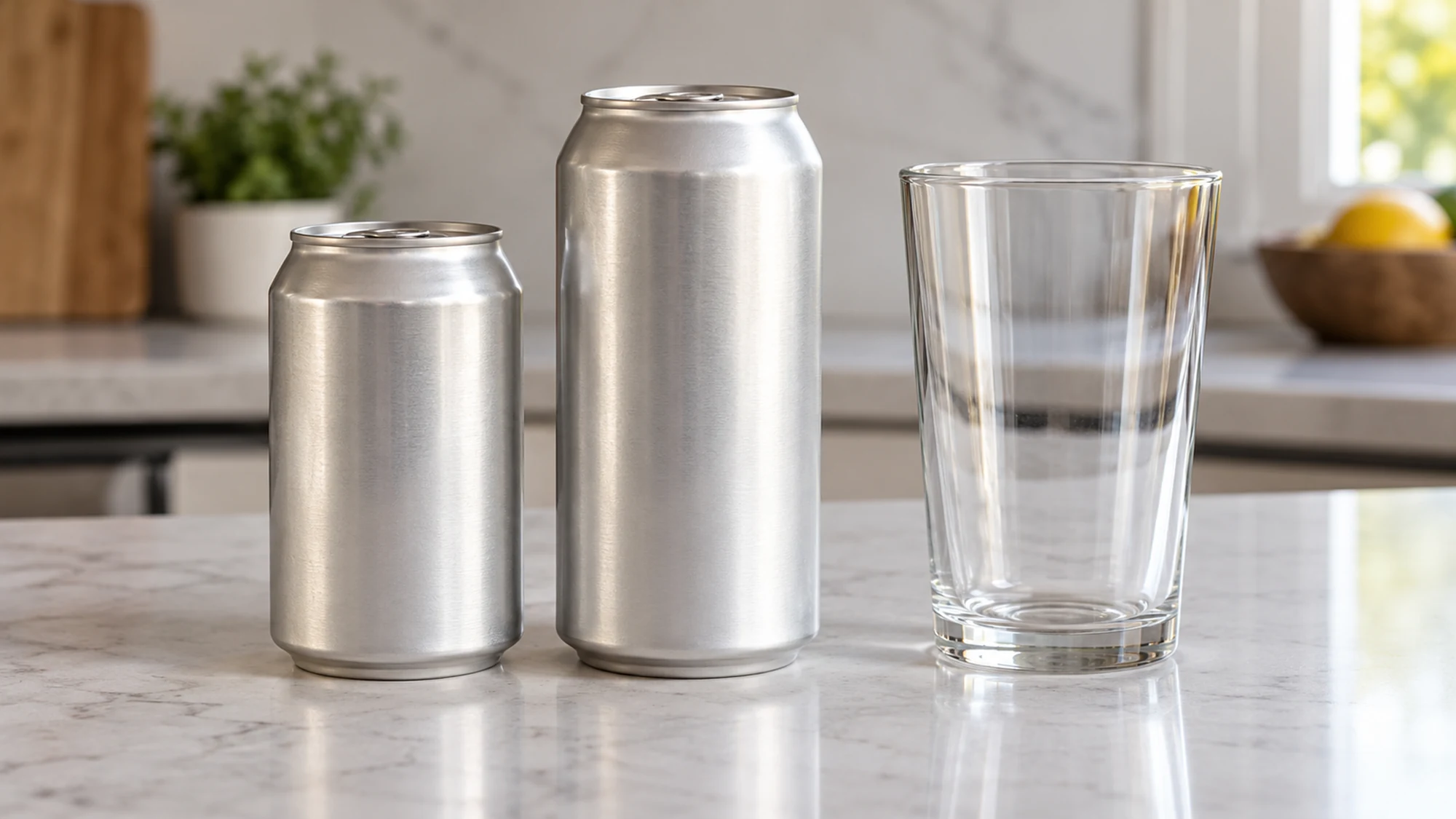
A 12 fl oz nutrition figure does not automatically describe an entire larger can. First find the container’s volume, then check whether the listed calories apply to that whole container or to a smaller serving.
For example, scaling Coors Light’s 102 calories per 12 fl oz to 16 fl oz gives an estimated 136 calories: 102 × 16 ÷ 12. That is a calculated illustration, not a separate brewer label claim. Use the actual package’s total when it is provided.
The same principle applies to a draft pour. Ask for its size and exact beer rather than treating every glass as one serving. A larger amount contains more total alcohol even when the ABV stays unchanged.
Read the Exact Product Name
Treat the full name as part of the nutrition information. A brand’s original lager, light version, flavored drink and stronger variation are different products. Do not transfer one version’s calorie count to another because the logo looks familiar.
- Check the product name and country or market on the package.
- Compare equal volumes before comparing calorie totals.
- Read ABV alongside calories, especially when changing package sizes.
- Use the product’s ingredient and allergen information for dietary needs.
Low calorie also does not establish gluten-free status. For example, Coors Light lists barley malt among its ingredients. A calorie comparison cannot answer a separate allergy or celiac-disease question. I’d check that requirement first rather than assume the word “light” settles it.
For a broader comparison across beer, wine and spirits, see the separate guide to alcohol calorie comparisons. Keep serving sizes consistent there, too.
Calories Are Separate From Alcohol Risk
ABV describes alcohol concentration. The CDC’s U.S. standard-drink reference uses 12 fl oz of 5% beer as one example of a drink containing 14 g of pure alcohol. Different strengths and pour sizes change the amount; “one can” is not a universal alcohol measure.
A smaller calorie total is not evidence of lower health risk. NIAAA explains that drinking any amount can carry health risks, and risks generally increase with the amount consumed. A seven-calorie difference between these labels is not a reason to drink another beer.
Do not drink before driving or operating machinery, during pregnancy, or if you are under 21 in the United States. NIAAA also advises avoiding alcohol with interacting medicines, certain medical conditions, or when recovering from alcohol use disorder or unable to control intake. Choose an alcohol-free drink when alcohol is unsuitable; check its own label rather than assuming a calorie count.
Bottom Line
Compare the exact U.S. product, equal serving sizes and ABV together. FLIGHT and Coors Light provide two concrete lower-calorie examples, but the container in your hand is the final label to check. Calorie savings do not remove alcohol’s risks or justify drinking more.
Sources
- Yuengling beer menu: FLIGHT nutrition and serving size
- Yuengling: FLIGHT product announcement and ABV
- Coors Light: U.S. nutrition and ingredients
- CDC: standard drink sizes
- NIAAA: alcohol drinking patterns and health risks
- University of Virginia Gordie Center: standard drink education

Hi, I’m Emily Pocker! I share recipes and food guides here at Recipes360 to help you find everyday meal inspiration and feel more confident in the kitchen. My goal is to make cooking approachable, enjoyable, and full of flavor.