
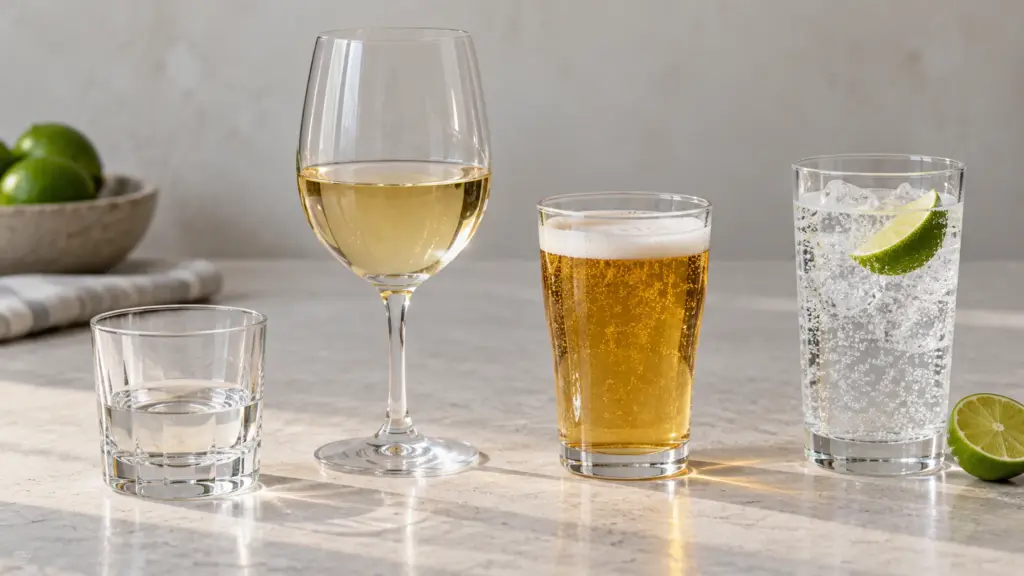
A small glass can contain more alcohol than a tall one, and a drink with no added sugar can still contain plenty of calories. That is why the search for the lowest calorie alcohol needs two details before a useful answer appears: the actual serving size and the alcohol strength.
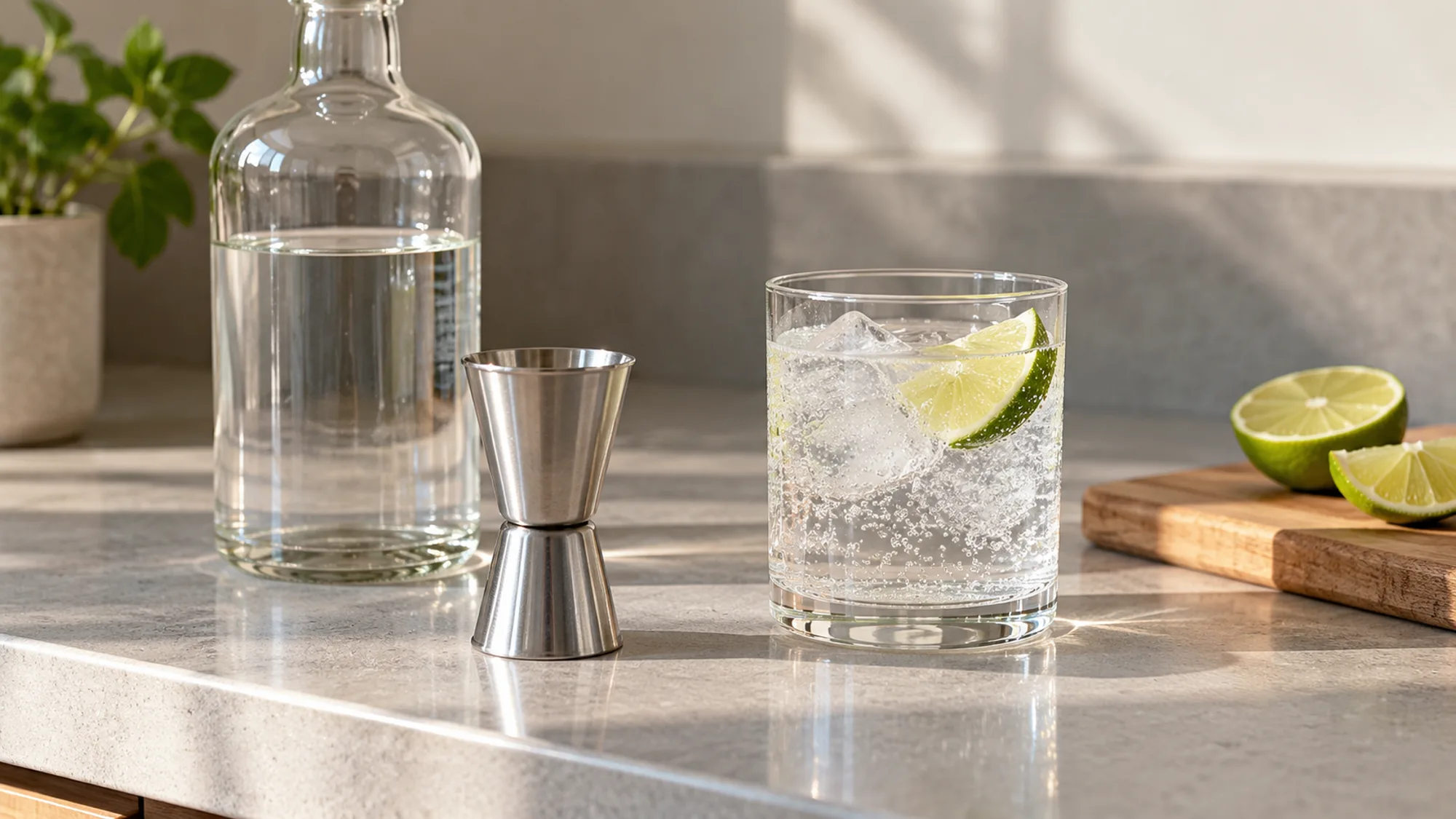
A measured 1.5-ounce serving of an unflavored 80-proof spirit is about 97 calories before mixers. Some light beers are around 103 calories per 12 ounces. These are comparisons, not health recommendations; lower-calorie alcohol is not risk-free alcohol.
Compare Measured Servings First
The MedlinePlus calorie reference lists approximate values for common drinks. Brands, recipes, and pours vary, so use the table as a reference point and the product label when one is available.
| Drink | Measured serving | Approximate calories |
|---|---|---|
| Unflavored 80-proof gin or vodka | 1.5 fl oz | 97 |
| Light beer | 12 fl oz | 103 |
| White table wine | 5 fl oz | 121 |
| Red table wine | 5 fl oz | 125 |
| Regular beer | 12 fl oz | 153 |
These portions are not interchangeable promises about alcohol content. A stronger beer, a larger wineglass pour, or a cocktail containing two shots changes the comparison. Nor does a category name guarantee a number: flavored spirits and sweetened drinks need their own label or recipe information.
At home, measure once to see what your usual glass really holds. In a restaurant, ask about the pour and ingredients instead of assuming that a short ingredient list means a small serving. A double spirit with soda is not equivalent to the single measure in this table.
Alcohol Strength Changes the Answer
In the United States, NIAAA defines a standard drink as about 14 grams of pure alcohol: for example, 12 ounces of 5% beer, 5 ounces of 12% wine, or 1.5 ounces of 40% spirits. This is a measurement tool, not a safe-dose guarantee.
Alcohol itself supplies energy. The NHS explains that it provides seven calories per gram, so a sugar-free label cannot make an alcoholic drink calorie-free. Higher proof can raise the calories of an otherwise similar spirit pour.
Read the alcohol-by-volume percentage alongside the container size. A tall can may hold more than the serving used in a comparison chart. Splitting a drink across two glasses does not change the amount of alcohol or energy in the original container.
Mixers Can Matter as Much as the Base
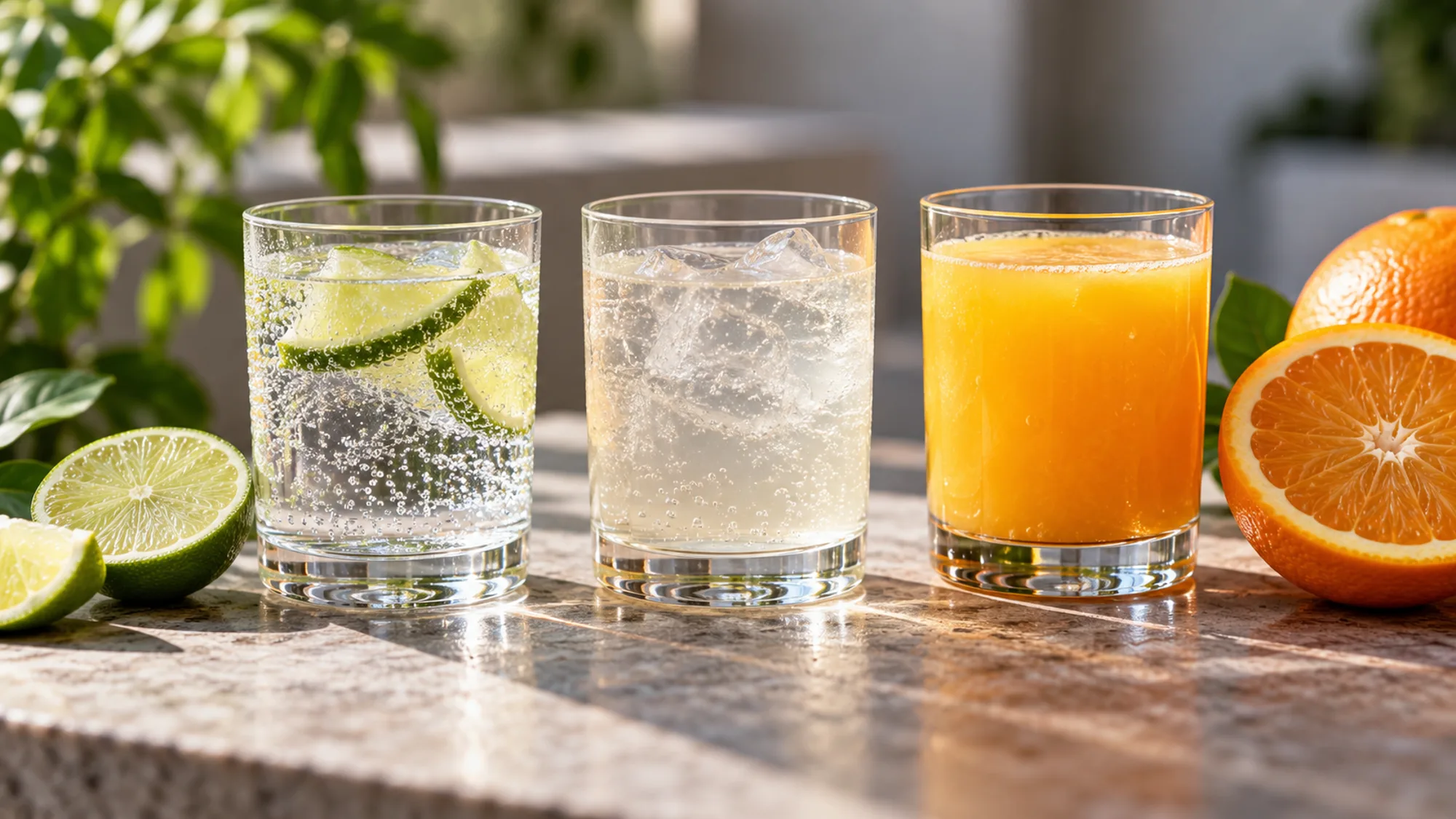
Plain sparkling water adds no calories, while juice, regular tonic, syrups, and sweetened soda can add them. Tonic and soda water are not the same product; check the label rather than relying on their similar appearance. Our simple syrup guide illustrates why even a small amount of a sweet mixer needs to be counted as part of the drink.
If you already choose to drink, a clearly measured pour with a labeled mixer is easier to understand than a large cocktail with several ingredients. That is a transparency advantage, not a reason to drink more. A low-calorie mixer does not reduce the alcohol already in the glass.
Compare the complete finished drink. Include all measures of spirits, sweeteners, and juice, then consider how many drinks are actually being served. There is little value in choosing a lower-calorie first glass if it encourages an extra round.
Keep Calories Separate From Health Risk
CDC guidance links alcohol with several cancers and explains that drinking less or not drinking reduces risk. Choosing a lower-calorie version does not remove that connection. This guide is for adult label comparison, not advice to begin drinking or a weight-loss strategy.
Do not skip meals or compensate with exercise to make room for alcohol. Avoid alcohol when pregnant, before driving, or when a medicine or medical condition makes it unsuitable; ask your clinician or pharmacist when unsure. If cutting back feels difficult, professional support is more useful than chasing a different drink brand.
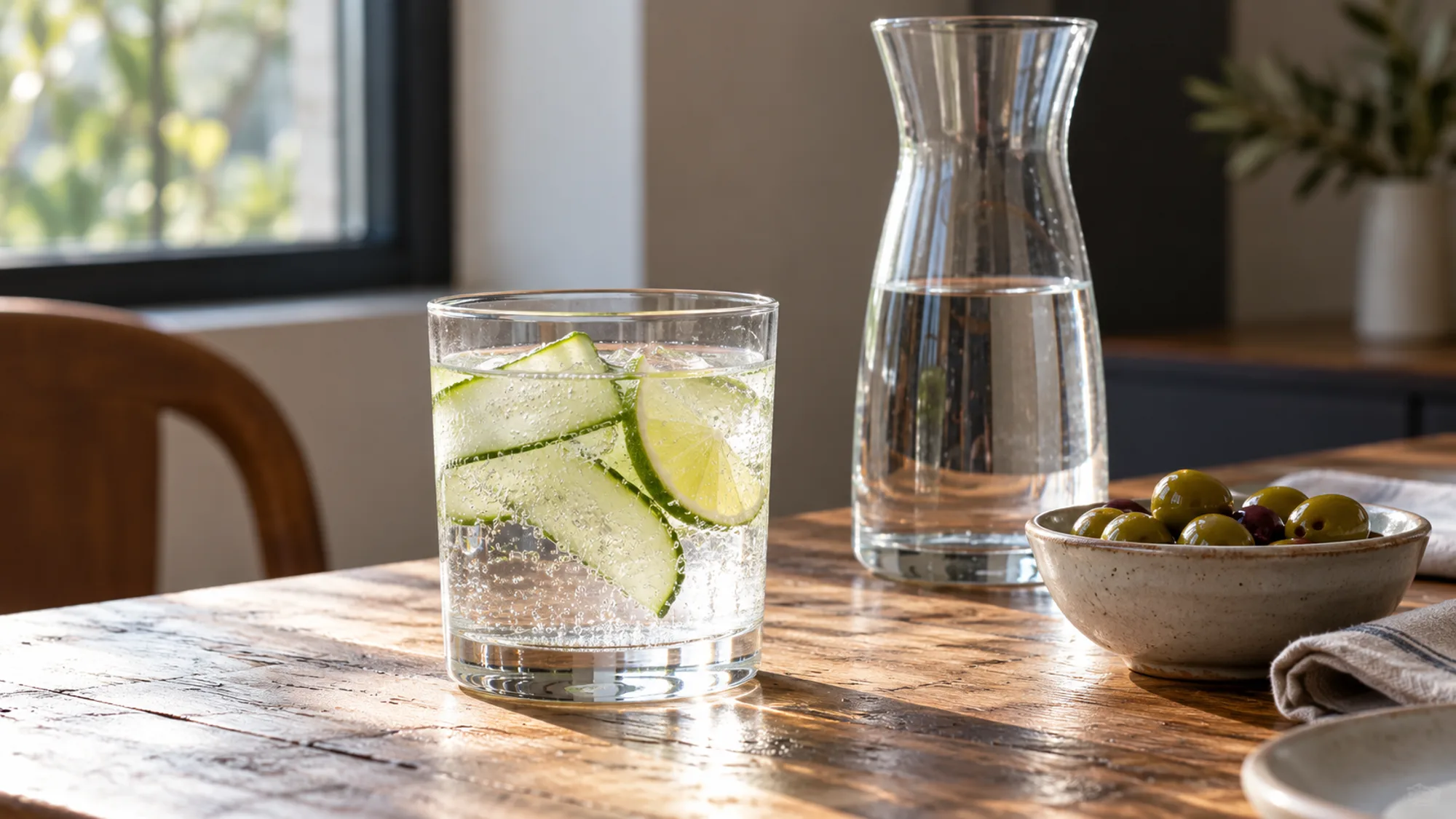
For a genuinely alcohol-free alternative, plain sparkling water with citrus is an uncomplicated choice. Other alcohol-free drinks can still contain sugar and calories, and some products labeled nonalcoholic contain small amounts of alcohol. Check the actual label when complete avoidance matters.
Bottom Line
The lowest number depends on the portion, strength, and additions—not whether a drink looks light or carries a wellness-style label. Use measured comparisons if you already drink, but do not confuse fewer calories with safety. Choosing no alcohol remains a valid option without needing any justification.
Related video: University of Virginia Gordie Center — What is a Standard Drink?
Sources
MedlinePlus: Alcoholic Beverage Calories
NIAAA: What Is a Standard Drink?
NHS: Calories in Alcohol
CDC: Alcohol and Cancer

Hi, I’m Emily Pocker! I share recipes and food guides here at Recipes360 to help you find everyday meal inspiration and feel more confident in the kitchen. My goal is to make cooking approachable, enjoyable, and full of flavor.