
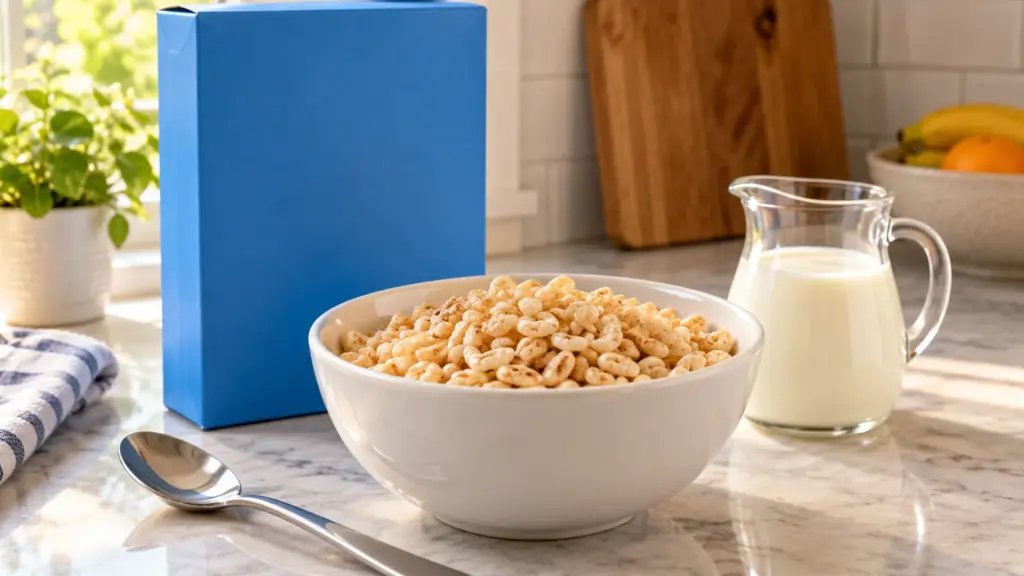
A box of rice cereal looks like an easy answer when someone needs to avoid gluten. But are Rice Krispies gluten free? The original U.S. cereal is not a gluten-free choice: its ingredient list includes malt flavor. The rice itself is only part of the product.
Do not assume Rice Krispies are gluten free because they are made with rice. Check the exact product and country: original formulations contain gluten-related ingredients, while specifically labeled gluten-free versions in some markets are separate products.
Are Rice Krispies gluten free in the United States?
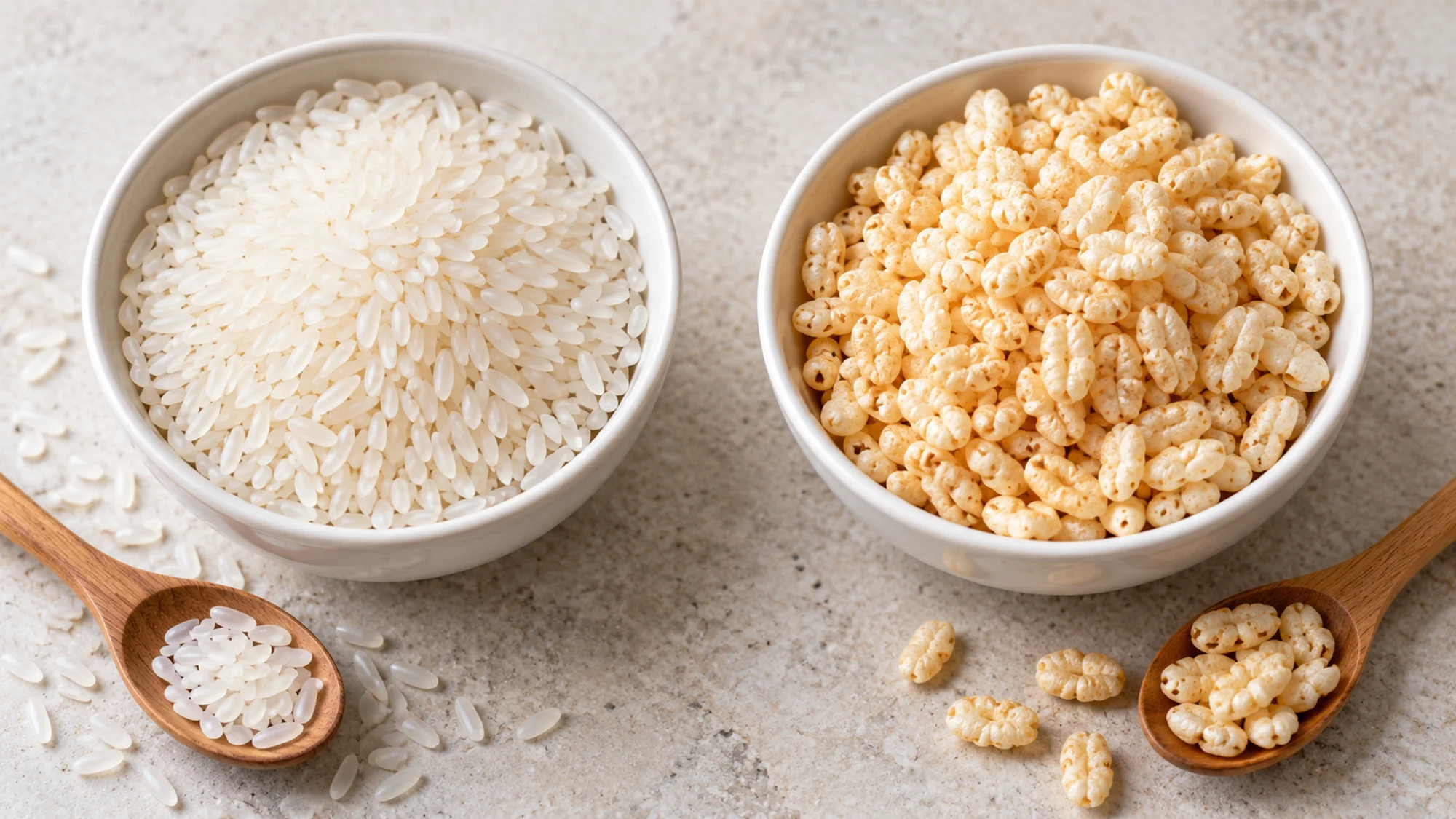
The U.S. original Rice Krispies product page lists rice, sugar, salt and malt flavor, followed by vitamins and minerals. The manufacturer’s SmartLabel for the 0.62-ounce pack also lists malt flavor. Neither the rice base nor the absence of a wheat warning establishes gluten-free suitability.
The Celiac Disease Foundation’s explanation of traditional crispy rice treats identifies malt flavoring, typically derived from barley, as the problem. For a gluten-free cereal purchase, I’d look for a clearly suitable product rather than try to work around malt in the original formulation.
- Start with the full name: cereal, flavored cereal and ready-made treats are different products.
- Keep the market in view: a foreign product photo does not verify a U.S. box.
- Read again at purchase: formulations can change even when packaging looks familiar.
Why country and version change the answer
The current U.K. Rice Krispies page lists barley malt extract and wheat gluten. In Australia, Rice Bubbles Gluten Free is a distinct 315-gram product listing white rice, sugar, salt and vitamins. Coeliac Australia lists that named product as endorsed. That is not evidence that every Rice Bubbles or Rice Krispies box is gluten free.
| Product and market | Verified detail | Decision |
|---|---|---|
| U.S. original Rice Krispies cereal | Lists malt flavor | Do not treat as gluten-free |
| U.K. Rice Krispies cereal | Current page lists barley malt extract and wheat gluten | Contains gluten ingredients |
| Australia: Rice Bubbles Gluten Free | Distinct labeled gluten-free product | Check this exact pack |
| Ready-made cereal treats | Separate ingredients and formulations | Check the bar’s own label |
Treat the table as a way to identify what needs checking, not as a permanent shopping guarantee. An online listing can help narrow the choice, but the product in your hand should match it. I’d keep the country, full product name and package details together when asking a manufacturer a question.
Read beyond the wheat allergen statement
The FDA’s gluten-free labeling questions and answers explain that U.S. foods carrying a gluten-free claim must meet specific ingredient requirements and contain less than 20 parts per million of unavoidable gluten. The agency also says barley malt extract cannot be used in foods bearing that claim.
- Look for the claim: gluten-free wording has a defined meaning for FDA-regulated packaged foods.
- Read ingredients: check wheat, barley, rye and relevant derivatives; wheat-free is not the same as gluten-free.
- Check the exact pack: do not transfer a claim from another flavor, size or market.
- Resolve uncertainty: contact the manufacturer with the package details instead of guessing from appearance.
Third-party certification and a regulated gluten-free claim are related but different. Certification is not required for a U.S. manufacturer to use the claim, and a shared-facility statement does not automatically cancel a valid gluten-free claim. Follow any additional advice from the person’s celiac care team.
Check treats and shared-kitchen handling separately
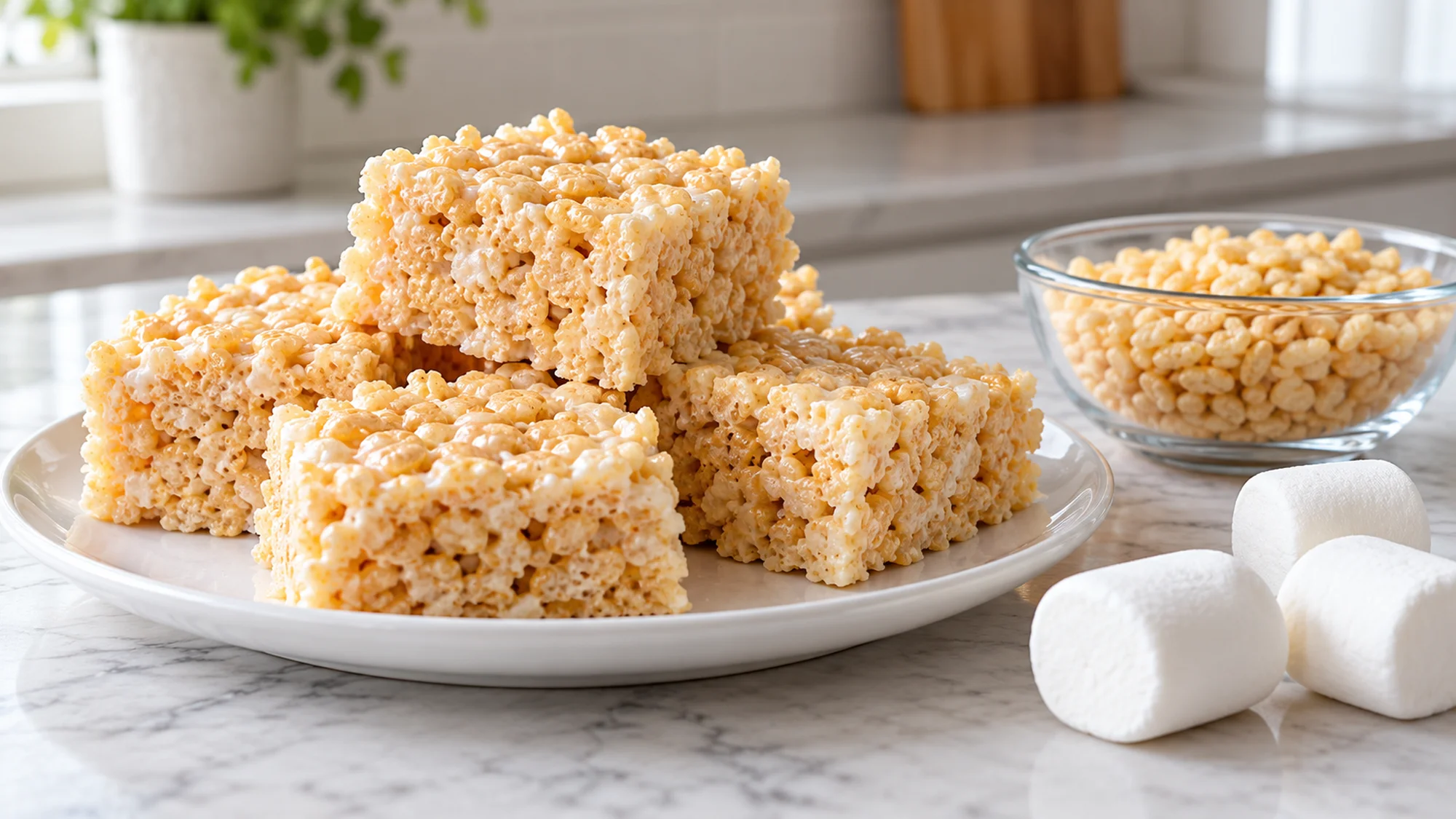
A marshmallow square inherits the ingredients you put into it. Changing the butter or marshmallows does not remove gluten from an unsuitable cereal. Ready-made bars need their own label check, including other allergens. Our rice krispie squares recipe explains the dessert’s texture and method; its name alone does not establish gluten-free suitability.
- For homemade treats: choose suitable cereal and verify every addition, including coatings and decorations.
- For storage: keep gluten-free foods separate and retain their product information.
- For utensils: use clean equipment and avoid transferring crumbs through shared scoops or spreads.
The NIDDK’s celiac-disease guidance recommends separate storage and preparation to prevent cross-contact. Celiac Canada’s kitchen advice also highlights utensils and shared condiments. A little organization is more useful here than judging cereal by its color or crunch.
Bottom Line
Original U.S. Rice Krispies should not be treated as gluten free. Choose by the exact product label and market, verify every ingredient in treats, and prevent cross-contact. A familiar rice-cereal name is not a gluten-free guarantee.
Sources
- Rice Krispies U.S.: original cereal ingredients
- WK Kellogg SmartLabel: 0.62-ounce cereal pack
- Kellogg’s U.K.: Rice Krispies ingredients
- Kellogg’s Australia: Rice Bubbles Gluten Free
- Coeliac Australia: named-product endorsement
- Celiac Disease Foundation: malt in cereal treats
- FDA: gluten-free labeling
- NIDDK: eating with celiac disease
- Celiac Canada: cross-contact

Hi, I’m Emily Pocker! I share recipes and food guides here at Recipes360 to help you find everyday meal inspiration and feel more confident in the kitchen. My goal is to make cooking approachable, enjoyable, and full of flavor.