
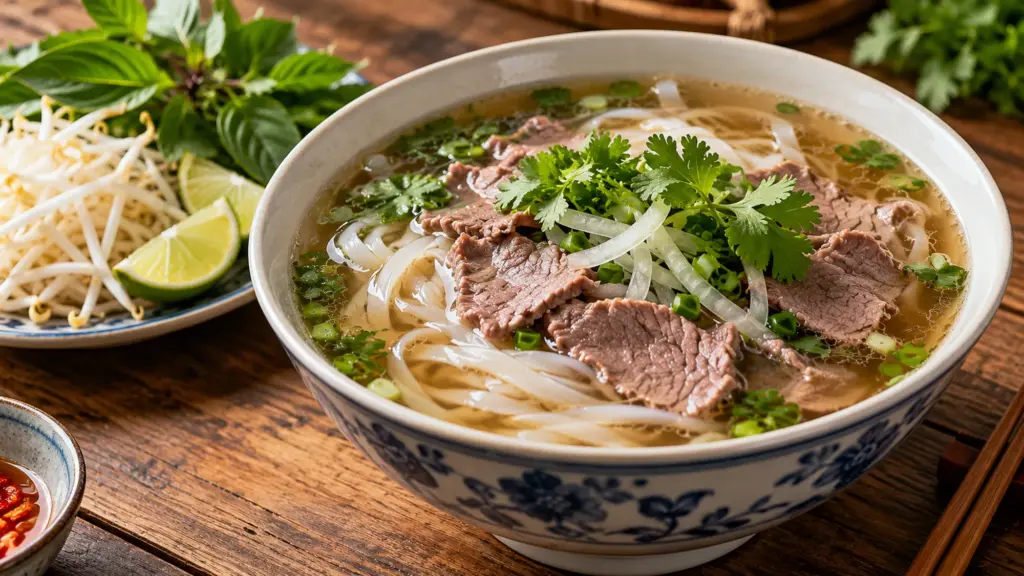
A bowl arrives with fragrant broth, a tangle of pale noodles and a plate of herbs beside it. It looks generous, but a first-time diner may still wonder what belongs in the soup—and whether every condiment needs to go in.
Pho is a Vietnamese dish best known as a fragrant soup with flat rice noodles, broth and usually beef or chicken. The broth is the foundation; herbs, lime, chili and other accompaniments vary with the cook and regional style.
I’d begin with a spoonful of broth before adding anything. That simple pause makes the rest of the bowl easier to understand, especially when the table offers more sauces than you know what to do with.
What Is Pho Made Of?
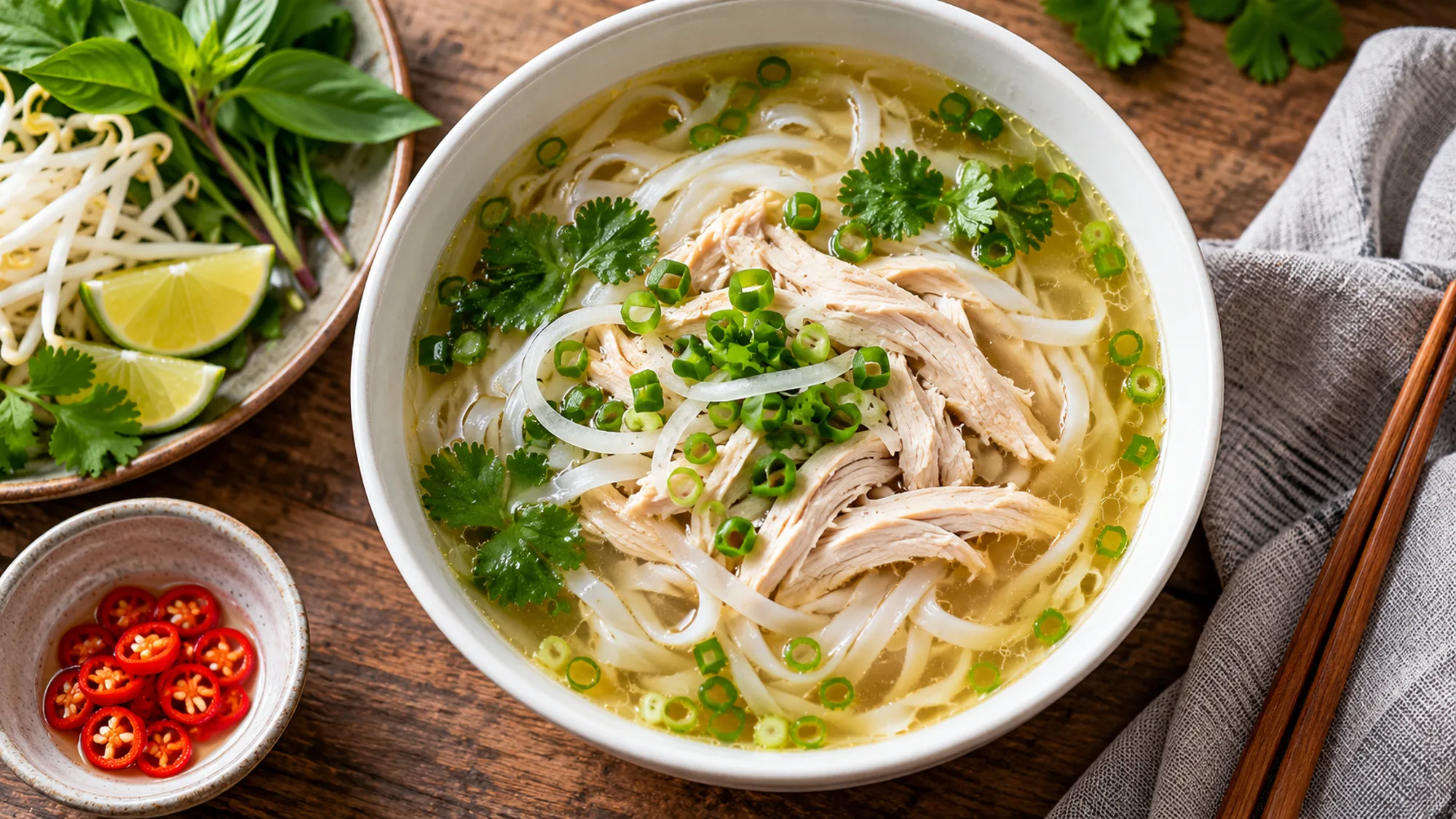
The familiar soup brings together three parts: a carefully seasoned broth, flat rice noodles and toppings. Vietnam’s tourism authority describes beef and chicken versions, with aromatics and warm spices contributing to the broth’s fragrance.
Think of the components as a conversation rather than separate meals in one bowl. The noodles should remain recognizable beneath the broth, the protein adds substance, and fresh garnishes provide contrast. A generous pile of herbs does not replace the broth’s job.
| Part of the bowl | What to notice | Useful first step |
|---|---|---|
| Broth | Savory depth and aromatic fragrance | Taste before adding sauces |
| Flat rice noodles | Soft ribbons rather than wheat spaghetti | Lift a small portion with chopsticks |
| Beef or chicken | The cut and preparation listed on the menu | Ask if an unfamiliar topping is included |
| Herbs and citrus | Fresh aroma and a brighter finish | Add gradually to suit your taste |
If you are comparing noodle dishes, the noodle itself is a useful clue. Pho’s characteristic flat rice ribbons are different from the wheat noodles commonly associated with ramen. Neither name is a catch-all for every bowl of noodle soup.
Beef, Chicken and Regional Differences
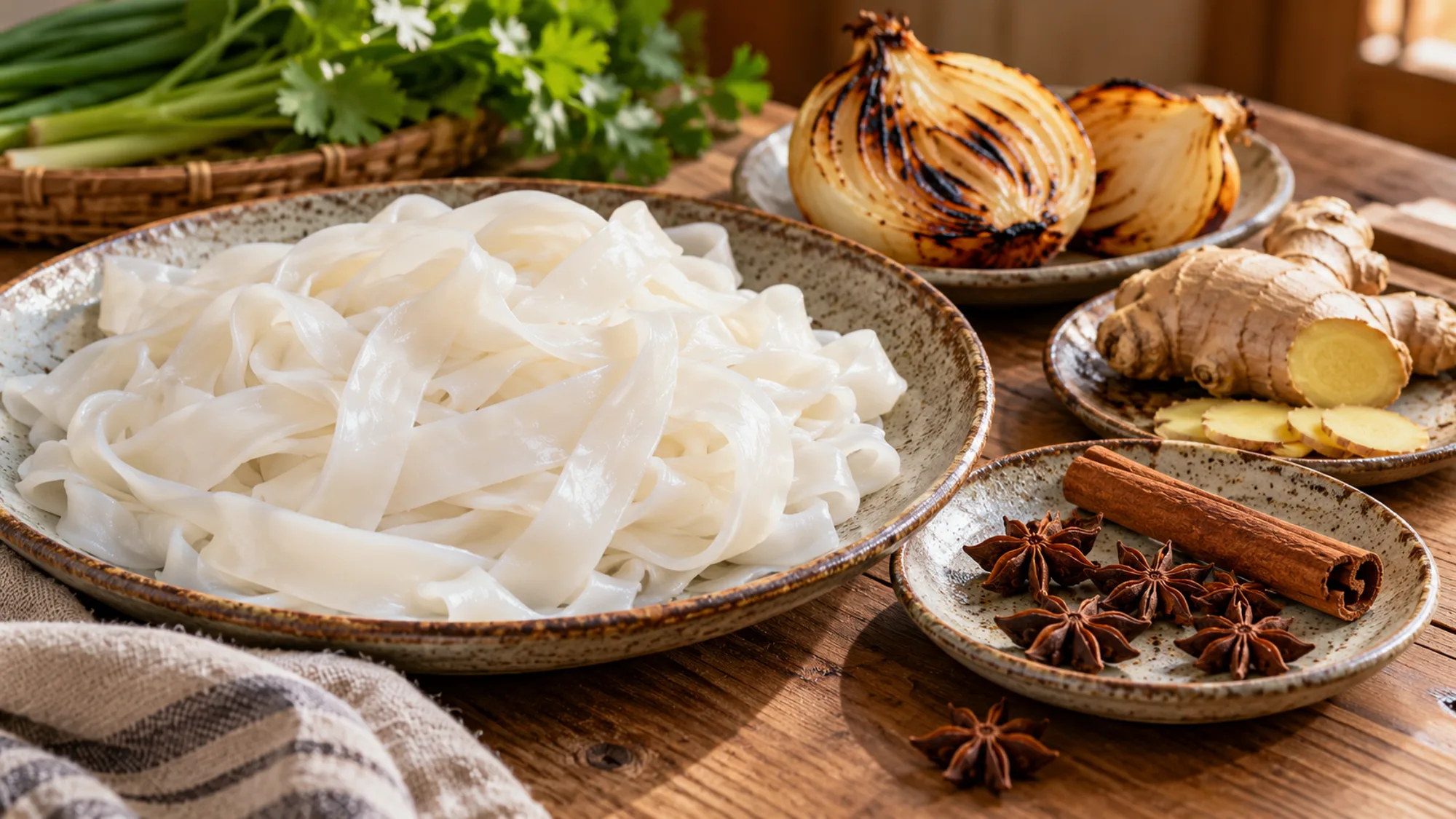
On many menus, phở bò means beef pho and phở gà means chicken pho. Beef bowls may offer different cuts and textures rather than one standard topping. The restaurant’s description matters more than assuming every combination includes the same meat.
Vietnam Tourism’s history of pho describes northern styles with fewer garnishes and southern versions with more accompaniments and a sweeter profile. These are broad patterns, not rules that every restaurant follows.
- Choose chicken if that is the flavor you want, not because the word automatically guarantees a particular nutrition profile.
- Ask what a combination bowl includes if tendon, tripe or meatballs are unfamiliar.
- Treat a vegetarian bowl as its own version, and ask about the broth and seasoning rather than judging by visible toppings.
- Let the restaurant explain its style; a shorter garnish plate does not mean something is missing.
I like using the menu as a starting point for a question, not a test of expertise. “Which bowl has fully cooked beef and a simpler set of toppings?” is a perfectly useful order.
How to Add Toppings Without Losing the Broth
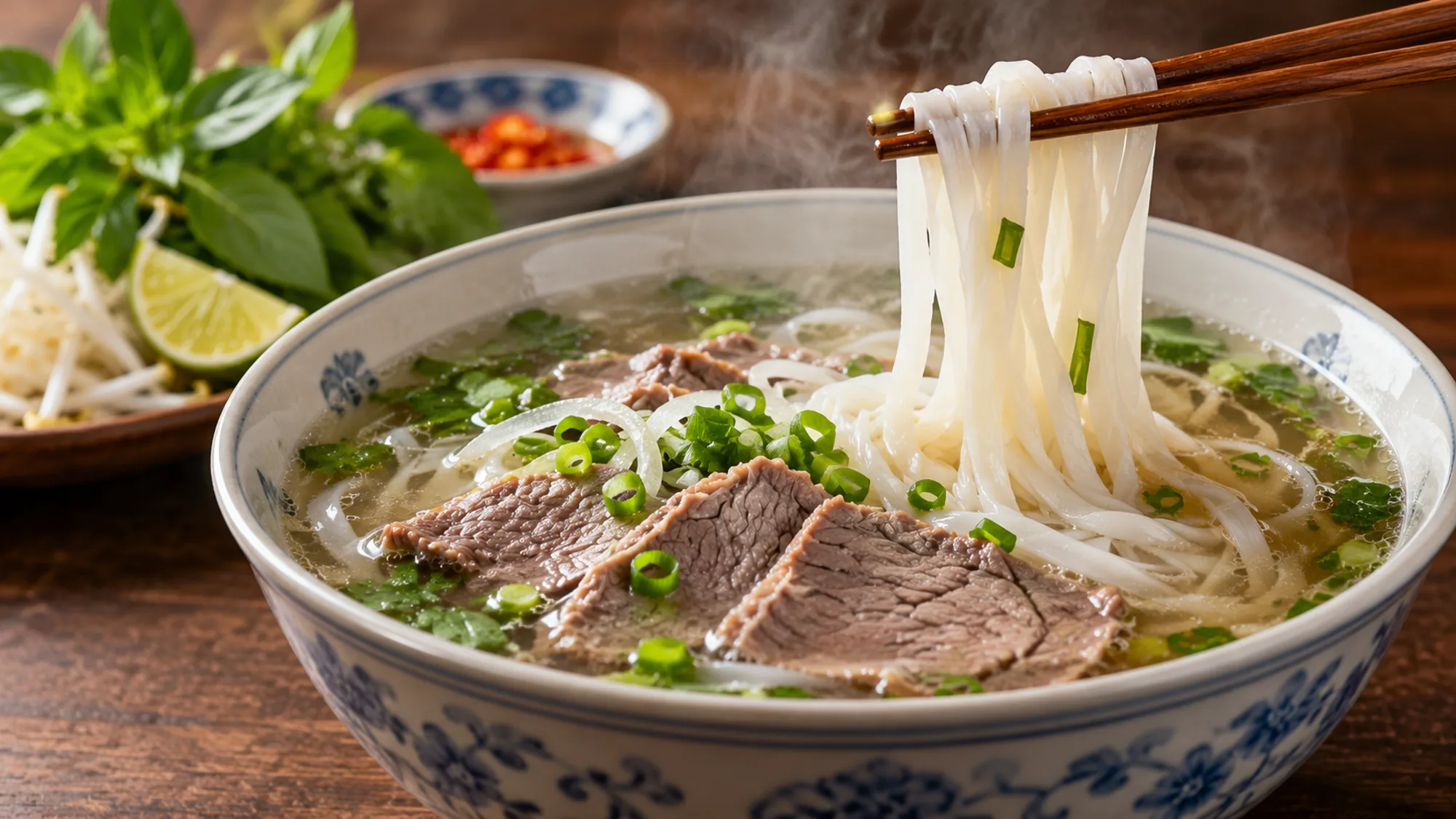
Start small. A little citrus changes acidity, fresh herbs add aroma, and chili changes heat. Adding everything at once makes it harder to tell which adjustment you actually wanted.
For some diners, a separate dish for a dipping sauce is preferable to mixing it throughout the broth. Others enjoy a more heavily seasoned bowl. I’d keep the first few spoonfuls simple, then decide which direction tastes right to me.
- Taste the broth on its own while it is comfortably cool enough to sip.
- Add a small amount of one accompaniment and taste again.
- Keep some herbs or citrus back rather than using the whole plate immediately.
- Use the spoon for broth and chopsticks for manageable portions of noodles; there is no prize for lifting the largest possible tangle.
Check Dietary Needs Before Ordering
Rice noodles do not establish that the whole meal is gluten-free. Broth ingredients, prepared meatballs, seasoning sauces and shared preparation all deserve a check. The FDA’s gluten-free labeling guidance explains why an ingredient’s identity and the finished food are different questions. Our gluten-free noodle guide offers a useful comparison when choosing packaged noodles.
Fish sauce may be used in preparation, and sauces can introduce other allergens. For example, Kikkoman’s Fish Sauce ingredient information identifies anchovy. Ask the restaurant directly about your specific allergy, required exclusions and cross-contact; simply leaving a condiment off the table may not address the broth.
For a vegetarian or vegan meal, confirm both broth and seasonings. If you want fully cooked meat, request it explicitly. Those questions are more useful than assuming a bowl’s appearance tells the whole story.
Bottom Line
What is pho? It is a Vietnamese rice-noodle dish whose familiar soup form puts fragrant broth at the center. Choose a bowl that suits you, taste before dressing it, and add herbs or sauces thoughtfully rather than automatically.
Sources
- Vietnam Tourism: Must-try noodles in Vietnam
- Vietnam Tourism: The story of Vietnamese pho
- FDA: gluten-free labeling questions and answers
- Kikkoman: Fish Sauce ingredient information

Hi, I’m Emily Pocker! I share recipes and food guides here at Recipes360 to help you find everyday meal inspiration and feel more confident in the kitchen. My goal is to make cooking approachable, enjoyable, and full of flavor.