
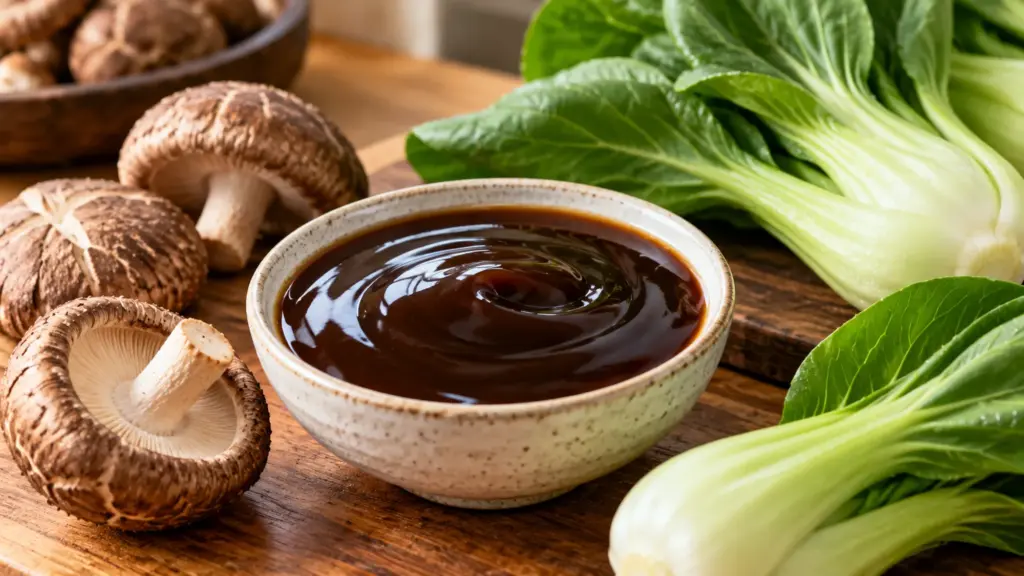
The vegetables are ready, the pan is warming, and the oyster sauce bottle is empty. Before reaching for another dark sauce, think about what the missing spoonful was supposed to do: season, sweeten, or help a glossy coating cling.
A mushroom-based vegan oyster-style sauce is usually the closest starting point. Soy sauce adds savory saltiness but less body; hoisin brings thickness with a noticeably sweeter, spiced flavor. The right oyster sauce substitute depends on the dish—and the label.
I’d choose by function rather than color. Two brown sauces can behave very differently, especially when one is meant to coat noodles and another is a concentrated seasoning. Here is how to make that choice without turning dinner into a guessing game.
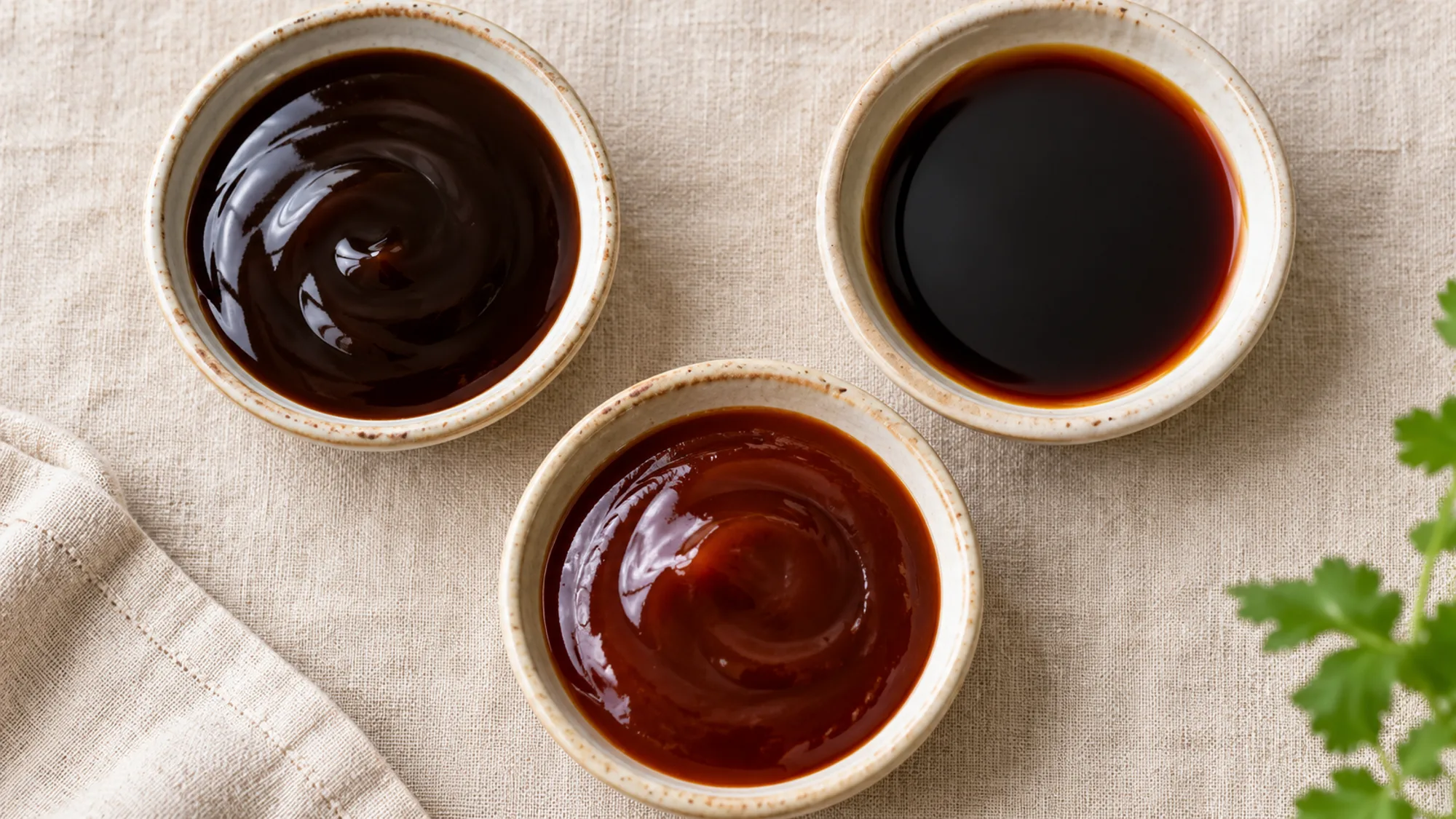
Choose an Oyster Sauce Substitute by Its Job
A purpose-made alternative takes the least improvisation. Lee Kum Kee’s current U.S. Vegan Oyster Flavored Sauce, for example, uses soy sauce, starch and dried mushrooms and is marketed as a vegan, gluten-free alternative. That describes this particular product, not every mushroom sauce on the shelf.
Use the comparison below as a decision aid, not a promise that every brand tastes alike. If the recipe relies heavily on oyster sauce, the substitute becomes part of the dish’s personality rather than an invisible replacement.
| Option | Useful when you need | What changes |
|---|---|---|
| Vegan oyster-style sauce | Savory flavor and a coating texture | Mushroom character; check the precise formula |
| Soy sauce or tamari | A savory seasoning in a larger sauce | Usually thinner; saltiness needs attention |
| Hoisin | A thick, sweet-savory glaze or dip | More sweetness and a different spice profile |
| Fish sauce | A small savory accent | Thin and distinctly fish-based; not a vegan swap |
I’d favor the first option for glossy vegetables or noodles. For a soup or a sauce with several other ingredients, a carefully adjusted savory seasoning may be enough. For a dipping sauce, taste the substitute with a bite of the food it will accompany; a condiment tasted alone can seem more intense than it does in the meal. For a glaze, look at how it coats the spoon. Those two checks help separate flavor problems from texture problems before either becomes harder to adjust.
Balance Salt, Sweetness and Texture
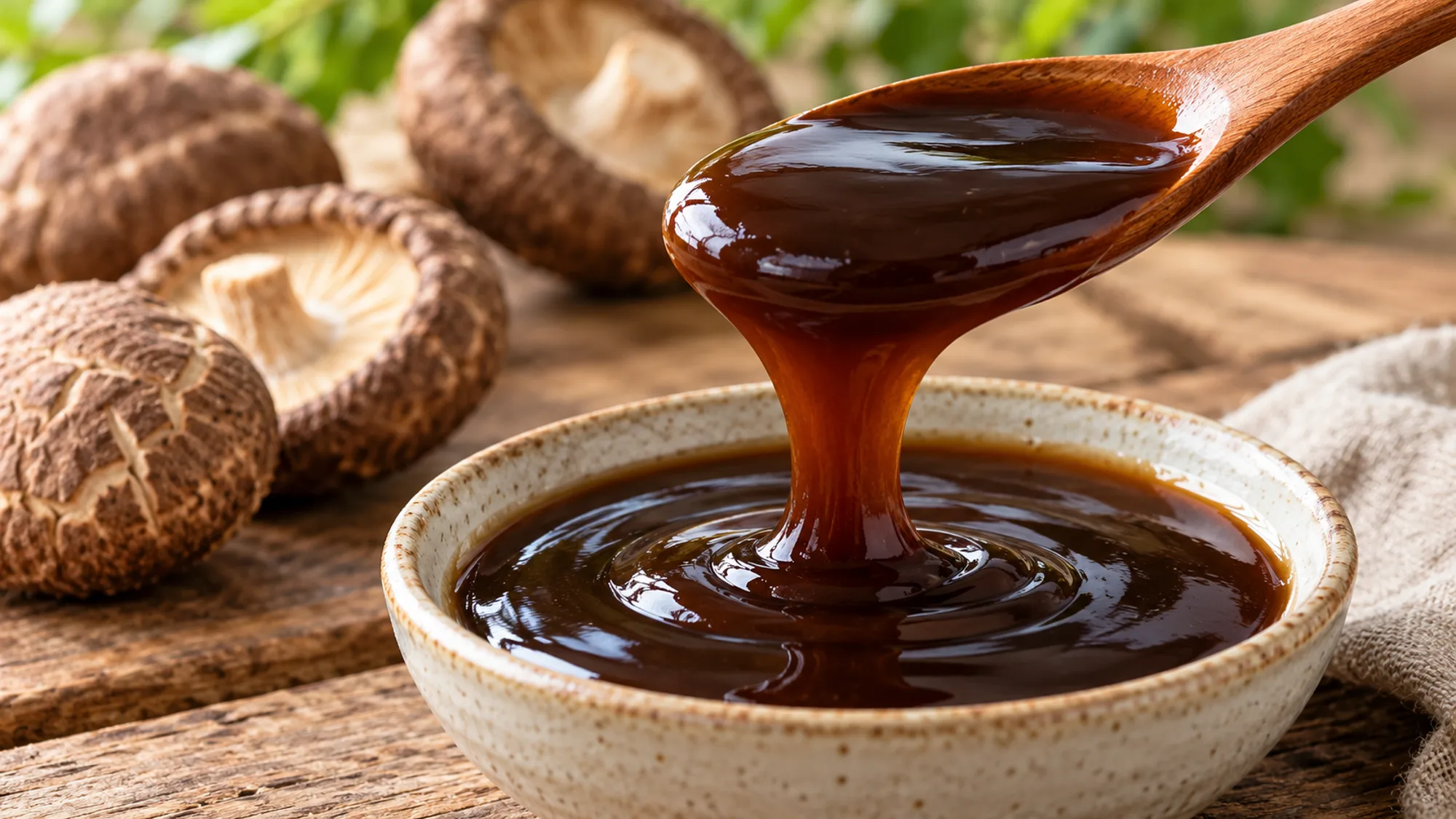
Soy sauce is not simply oyster sauce without the oysters. Adding it spoon for spoon can change both seasoning and consistency. Start conservatively, combine it with the other sauce ingredients, then assess the finished balance before adding more.
Hoisin travels in another direction. Lee Kum Kee describes its Vegetarian Hoisin Sauce as sweet and made with spices and soybeans. It may suit a glaze, but it will not preserve a delicate sauce’s original flavor.
- Read the whole recipe first: existing soy sauce, sugar and starch affect the adjustment.
- Mix a small separate sample before committing a strong substitute to the whole pan.
- Taste only a sample that has not touched raw meat, poultry or seafood.
- If the coating becomes too thick, loosen it gradually with the recipe’s appropriate liquid rather than adding another salty condiment.
There is no reliable universal ratio covering all these products. I’d rather make one measured adjustment than chase an oversalted sauce with three more ingredients.
Vegan Does Not Automatically Mean Gluten-Free
Similar names can hide different formulas. The manufacturer lists soybeans as an allergen in its current retail Vegan Oyster Flavored Sauce, while its separate foodservice Vegetarian Stir-Fry Sauce lists soybeans and wheat. The Vegetarian Hoisin Sauce linked above lists soybeans, wheat and sesame.
Check the bottle in your hand, including the ingredient list and dietary claim. For a wheat or gluten concern, our guide to soy sauce and gluten-free labels explains why a familiar sauce name is not enough.
- For vegan cooking, look for a clearly suitable product rather than assuming any dark sauce is plant-based.
- For gluten avoidance, check the specific gluten-free labeling; do not infer it from a mushroom ingredient.
- For an allergy, consider every declared ingredient and ask the manufacturer about relevant cross-contact when the label leaves questions.
Be Careful With Seafood-Based Alternatives
Fish sauce is not a shellfish-free guarantee and certainly is not a vegan substitute. Kikkoman Fish Sauce, for instance, contains anchovy and declares fish. Its role is seasoning, not reproducing oyster sauce’s thick texture.
Oysters are mollusks. FDA allergen guidance distinguishes molluscan shellfish from the legally defined major-allergen category of crustacean shellfish. That labeling distinction does not make oysters safe for someone allergic to them: read the entire ingredient list, not only a bold “Contains” statement.
Bottom Line
For the closest practical oyster sauce substitute, start with a clearly labeled mushroom-based oyster-style sauce. Use soy sauce, hoisin or fish sauce only when their different flavor and texture suit the dish, and let your dietary needs—not the bottle’s color—make the final decision.
Sources
- Lee Kum Kee: Vegan Oyster Flavored Sauce
- Lee Kum Kee: Vegetarian Stir-Fry Sauce
- Lee Kum Kee: Vegetarian Hoisin Sauce
- Kikkoman: Fish Sauce ingredients
- FDA: food allergen labeling guidance

Hi, I’m Emily Pocker! I share recipes and food guides here at Recipes360 to help you find everyday meal inspiration and feel more confident in the kitchen. My goal is to make cooking approachable, enjoyable, and full of flavor.