
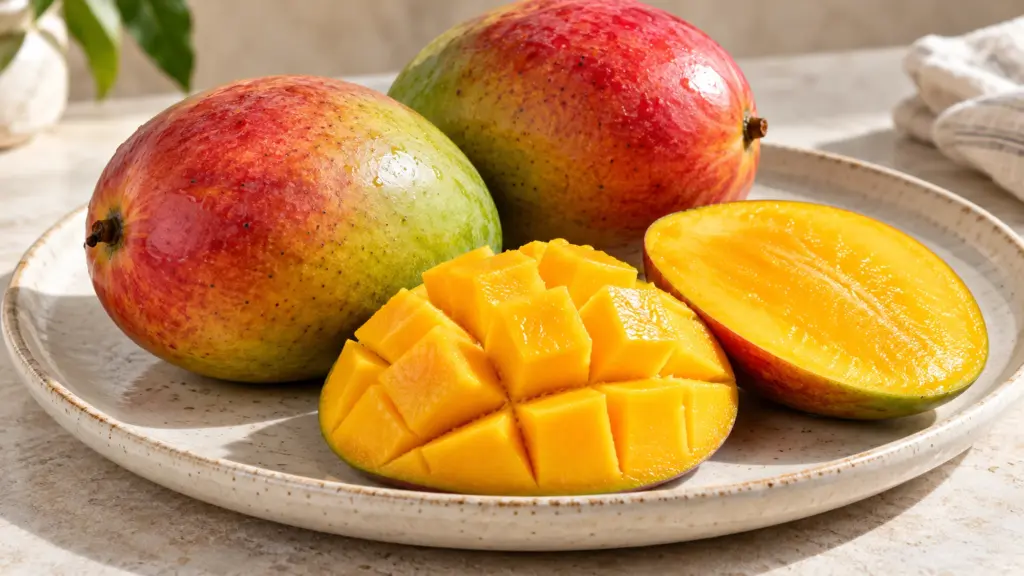
A red mango can look ready for the fruit bowl and still be stubbornly firm inside. Mangos are easier to choose when you pay attention to gentle pressure rather than peel color: a ripe fruit yields slightly, while a hard one needs more time.
Choose mangos for when you plan to eat them. Let firm whole fruit ripen at room temperature, refrigerate it once ripe, and cut down either side of the long, flat seed.
How to Choose Ripe Mangos
The National Mango Board’s choosing guide recommends a light squeeze. You want a little give for eating now; firm fruit is useful when you are shopping ahead. Red blush does not reliably indicate ripeness, so the brightest mango is not automatically the sweetest choice.
I’d choose one ready-to-eat mango and one firmer fruit if they are intended for different days. That gives you a little breathing room without asking the whole fruit bowl to ripen on schedule.
- For today: Look for slight softness without collapsed, leaking or damaged areas.
- For later: Choose firmer fruit and check it as it ripens.
- For a particular dish: Consider the texture you need before choosing the softest mango.
- For precut fruit: Choose a refrigerated package and follow its storage instructions.
Which Variety Fits What You Want?
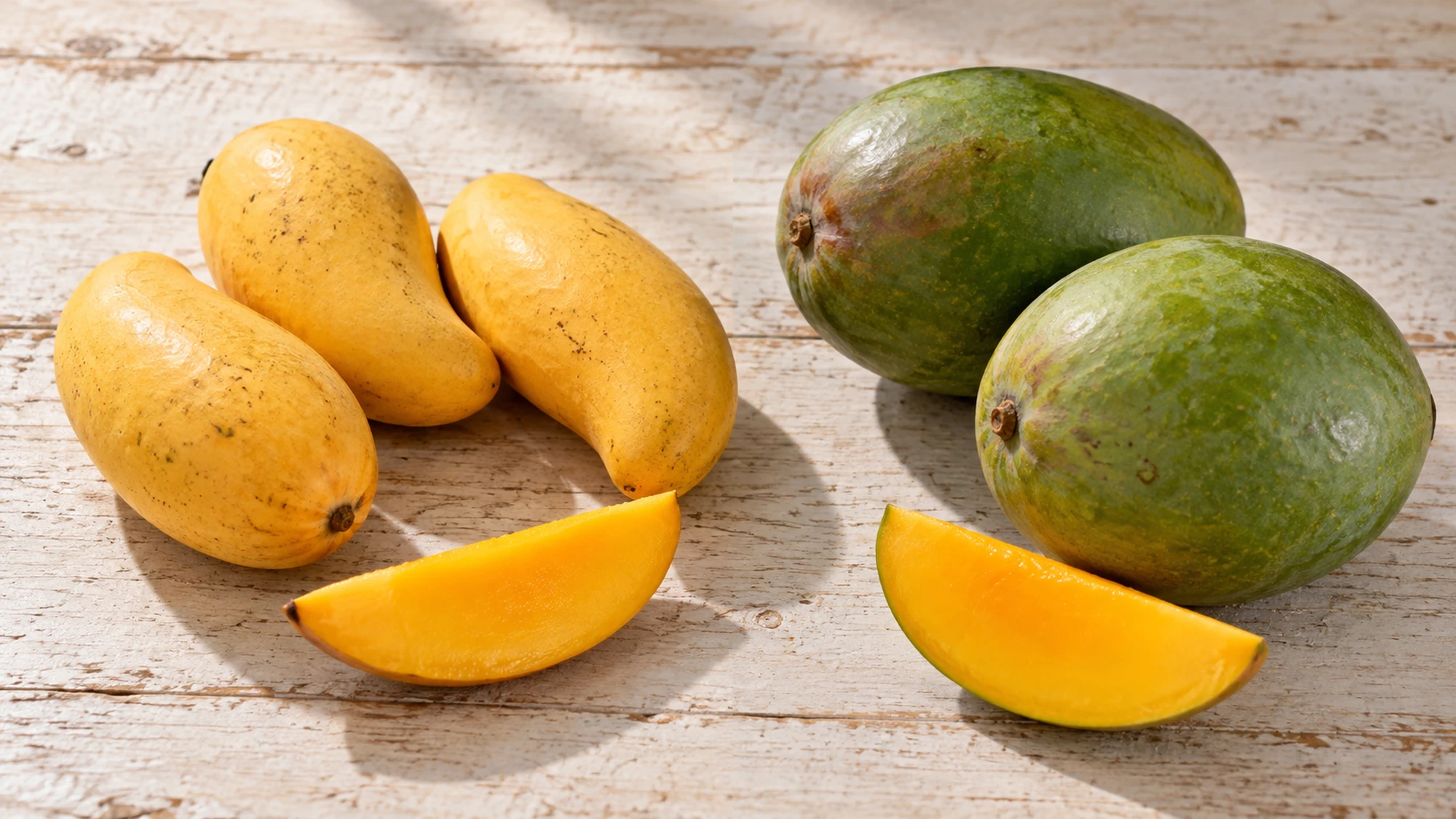
Mangos differ in flavor, fiber and texture. A variety name gives you more useful information than assuming every mango will resemble the last one. The National Mango Board’s variety descriptions distinguish these common choices.
| Variety | What to expect | Practical starting point |
|---|---|---|
| Tommy Atkins | More tart than sweet; noticeable fibers | Choose when a firmer bite appeals |
| Kent | Juicy and sweet; dark green peel | Do not wait for a red peel |
| Honey (Ataulfo) | Yellow peel; sweet-tart flavor | Try for a bright fruit plate |
| Keitt | Firm, juicy flesh; green peel | Judge readiness by feel |
| Haden | Sweet and sour notes | Pair with something mild |
Treat these as variety cues, not promises about every individual fruit. Ripeness and condition still matter. I’d start with the variety the store can identify clearly, then notice whether its texture suits your plans.
Cutting Mangos Around the Seed
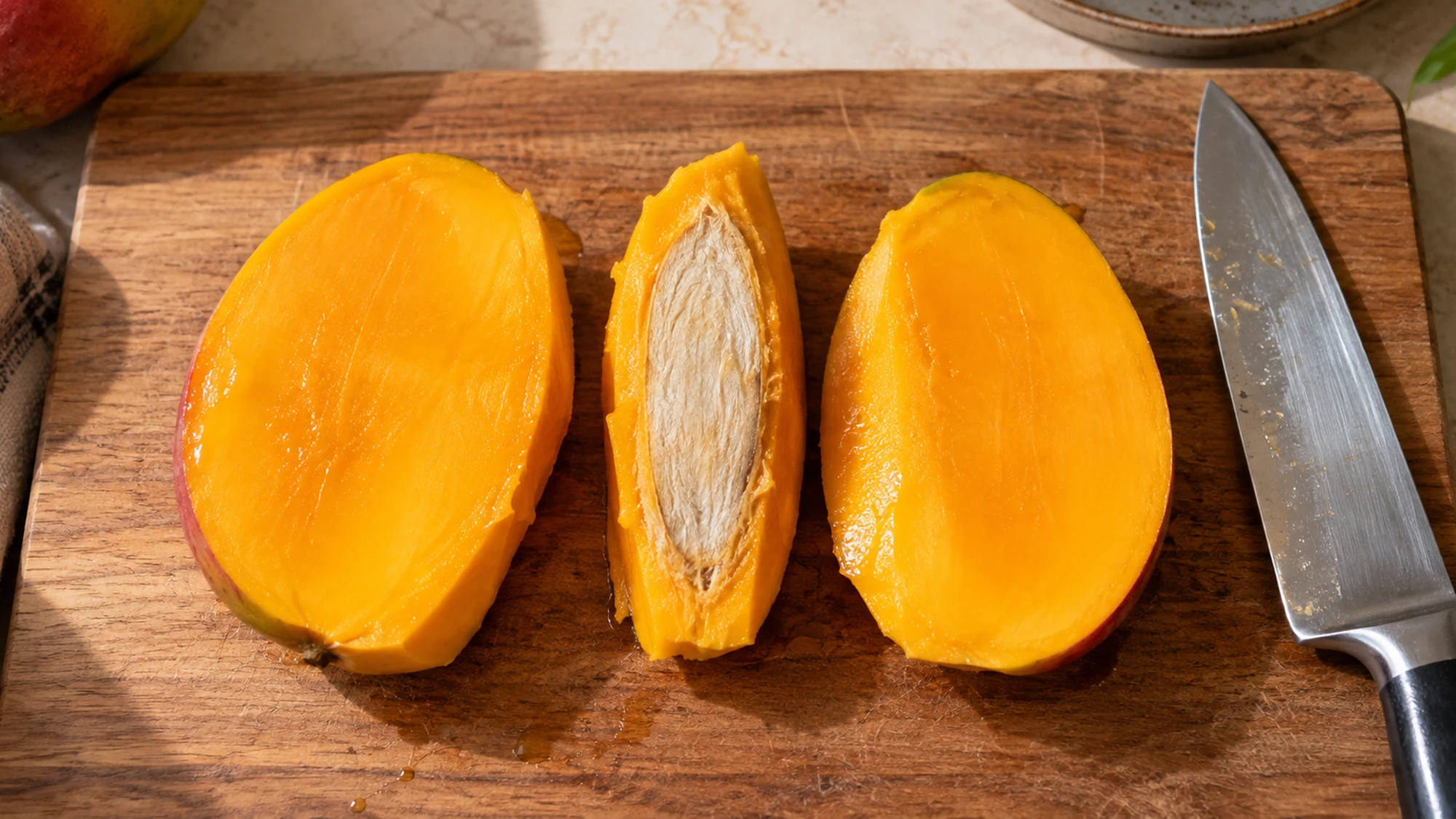
The obstacle is one elongated, flat seed running through the middle. The Mango Board’s cutting instructions show how to remove the two fleshy sides, called cheeks, before making slices or cubes.
- Wash your hands and rinse the whole mango under running water. Dry it, then use a clean board and knife.
- Stabilize the mango on the board and slice down one side of the seed. Repeat on the other side.
- Place each cheek skin-side down. Make shallow parallel cuts for slices or a grid for cubes, keeping the knife from piercing the skin.
- Scoop out the flesh with a spoon. Carefully trim accessible flesh from the seed section.
Keep your fingers away from the blade, and reposition the fruit if it slips. A tidy plate of cubes is optional; a stable cutting surface is essential. The Mango Board advises against pressing fruit over a drinking glass because the glass can break.
Storing and Serving What You Cut
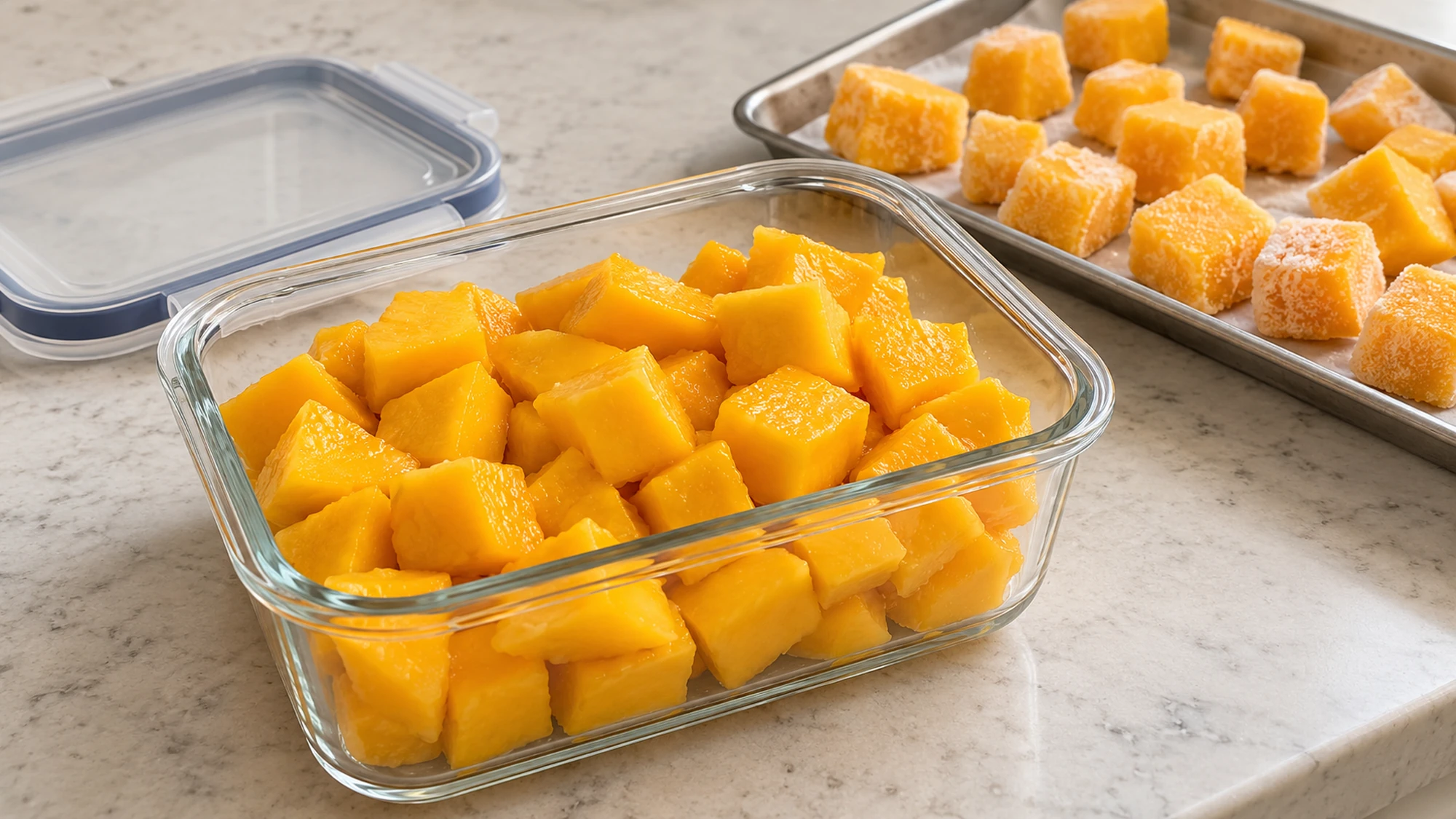
Keep firm whole mangos at room temperature; a paper bag can help them ripen faster. Once ripe, refrigerate them. The Mango Board’s storage guide allows up to five refrigerated days for whole ripe fruit, while its cutting guide recommends up to three days for cut mango in an airtight container.
Freeze extra cubes spread apart on a tray, then transfer them to a sealed freezer container. This makes it easier to take a handful rather than wrestle with a solid block. The Board gives up to six months for frozen mango; label the container so that useful guideline does not disappear into freezer archaeology.
- Breakfast: Add cubes to plain yogurt or oatmeal.
- Something savory: Pair diced mango with lime, onion and herbs.
- A quick snack: Serve slices with a little lime.
- A cold drink: Blend frozen pieces with your preferred liquid.
Mango can accompany pico de gallo when you want a sweet contrast beside the tomato salsa. The FDA’s produce guidance recommends washing fruit even when the peel will be discarded, keeping it separate from raw meat, and refrigerating precut produce. Use running water rather than soap or produce wash, and keep the refrigerator at 40°F/4°C or below.
Bottom Line
Choose mangos by gentle feel and intended use, work around the flat seed, and match storage to ripeness. A little planning delivers useful slices or cubes without making peel color do a job it cannot do.
Sources
- National Mango Board: Choosing mangos
- National Mango Board: Mango varieties
- National Mango Board: Cutting mangos
- National Mango Board: Ripening and storage
- FDA: Selecting and serving produce safely

Hi, I’m Emily Pocker! I share recipes and food guides here at Recipes360 to help you find everyday meal inspiration and feel more confident in the kitchen. My goal is to make cooking approachable, enjoyable, and full of flavor.