
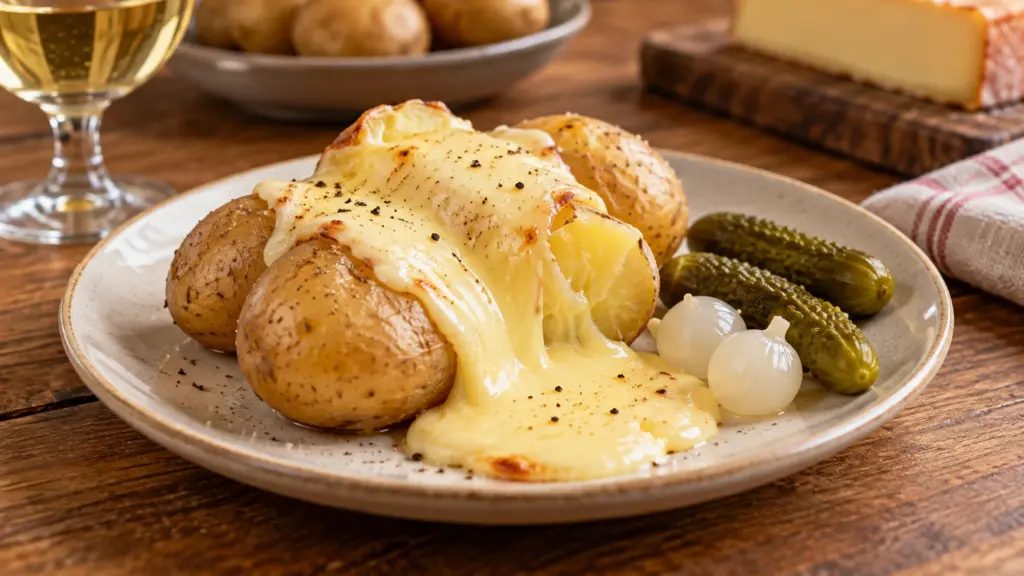
A tray of bubbling cheese can make raclette look like restaurant theater, but the idea is wonderfully straightforward. Raclette is a melting cheese and the meal built around it: warm cheese served over potatoes, usually with sharp little pickles to cut through the richness. You can enjoy the same idea with individual pans or an oven.
Choose raclette cheese for its melting qualities, check whether its milk is pasteurized, and heat only until the cheese is soft and flowing. Potatoes, cornichons and pickled onions give you a practical starting point; a whole wheel and a dramatic scraper are optional.
What raclette means at the cheese counter
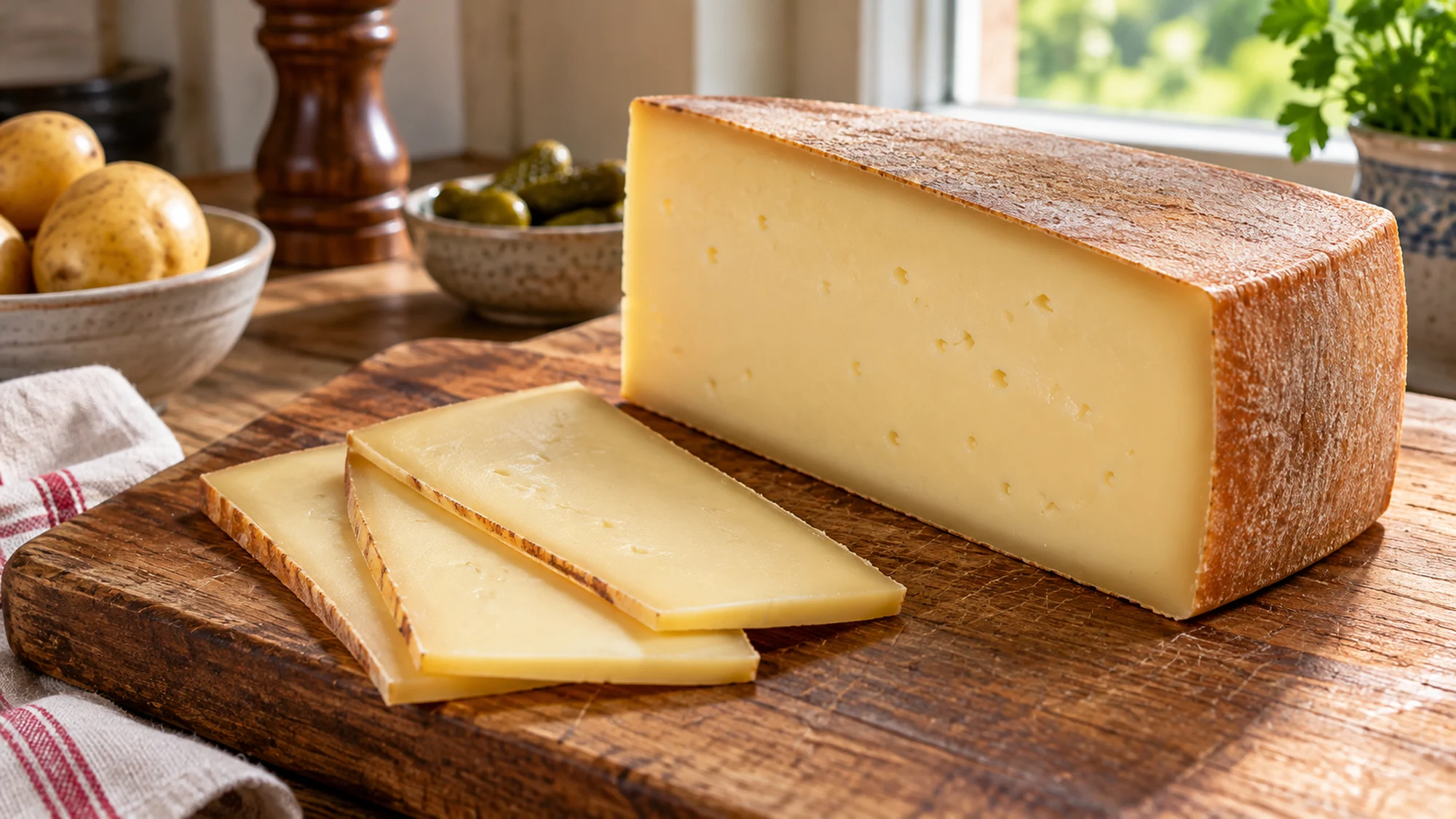
The word can describe the cheese, the melted-cheese dish or the appliance used to serve it. Switzerland’s Federal Department of Foreign Affairs describes the traditional Valais method: heat the cut face of half a wheel, then scrape the melted layer onto a plate. Small pans offer a more compact version of that approach.
Raclette and fondue are different meals. Fondue generally brings cheese together in a shared pot, often with wine; raclette melts a surface or a slice before it meets the food. I’d choose the individual-pan approach for a first supper because portions are easy to manage and everyone can set their own pace.
- Cheese: Buy a product identified for raclette when you want the characteristic melting behavior.
- Meal: Think warm potatoes and melted cheese, with crisp, acidic accompaniments.
- Equipment: Match the cheese format to your grill rather than buying a wheel your appliance cannot hold.
Buying raclette: read the milk and rind information
Raclette equipment maker TTM describes the familiar cow’s-milk cheese as semi-hard and available from raw, thermized or pasteurized milk. These terms are not interchangeable. The protected Raclette du Valais AOP is specifically made with raw milk from its designated region; that does not describe every cheese sold as raclette.
| Format | Useful for | Check first |
|---|---|---|
| Precut slices | Individual melting pans | Slice fits the pan |
| Small wedge | Slicing at home or oven use | Milk treatment and rind advice |
| Half wheel | A compatible wheel holder | Appliance size and instructions |
| Flavored raclette | A different seasoning accent | Full ingredient and allergen label |
Ask the cheesemonger whether the rind is intended to be eaten and whether a coating needs removing. Do not assume that a natural-looking exterior settles the question. If you are comparing cheese styles, our feta cheese guide explains a very different, brined cheese; it is not a direct substitute for a flowing raclette slice.
Melt raclette gently and serve it promptly
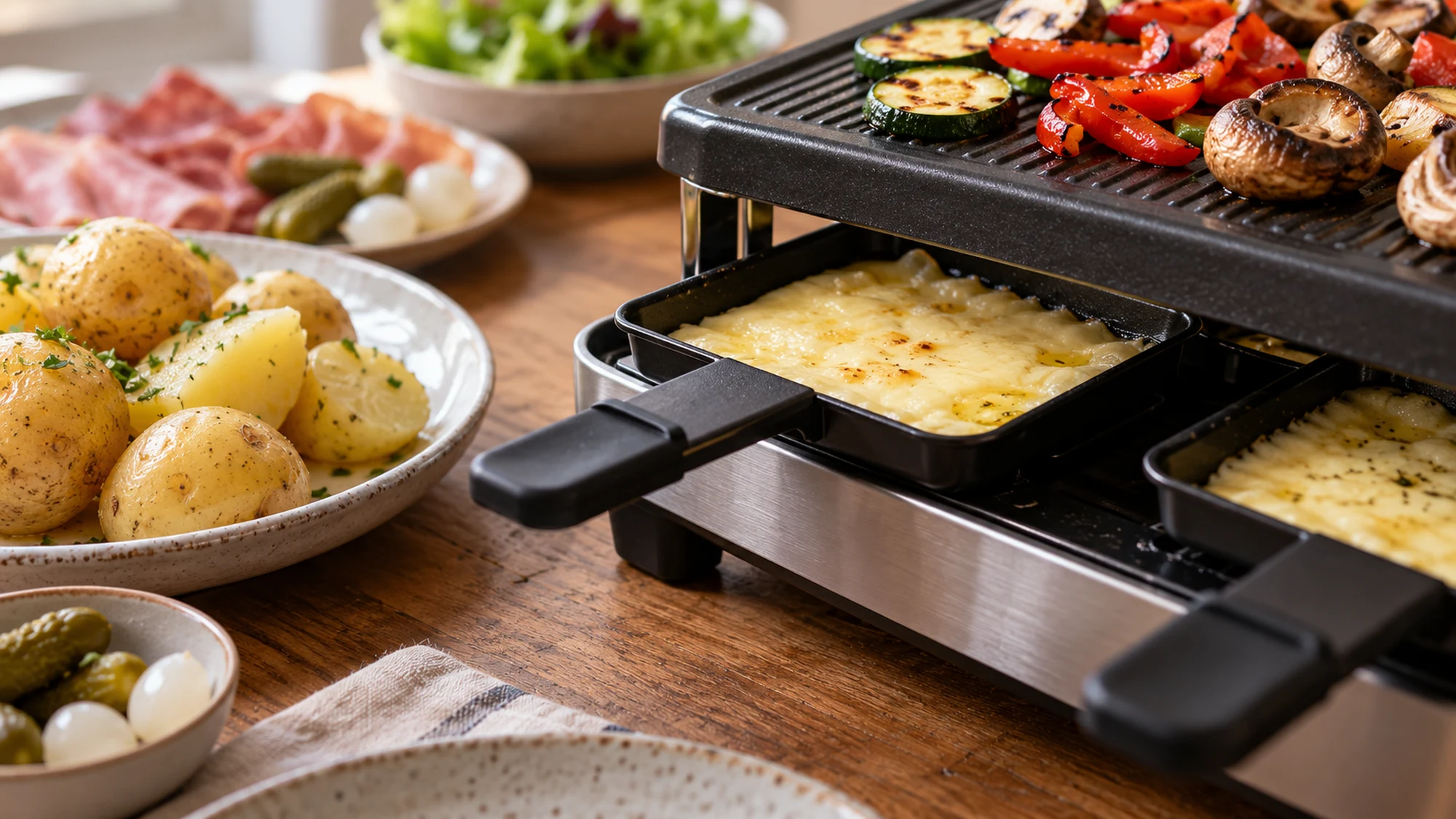
Follow the appliance’s instructions for preheating and pan placement. Look for a softened, flowing surface, then serve while it is hot. Raclette Suisse’s preparation guidance cautions that excessive heating can separate the fat. A dry, oily puddle is a reason to shorten the next round, not to keep waiting.
- With a pan grill: Melt slices in the designated little pans, then slide the cheese onto prepared food.
- With a wheel heater: Use the compatible holder and scraper as directed; keep hands clear of the heating element.
- Without a grill: The Swiss government’s guide allows cheese slices to melt over cooked potatoes in an oven. Use an ovenproof dish.
I’d keep the accompaniments ready before heating the cheese. The appeal is that soft, warm texture, and it fades while you search for plates. You do not need to turn the whole dinner into a race, but the cheese should not spend its best moment waiting in line.
Build a balanced table and handle leftovers carefully
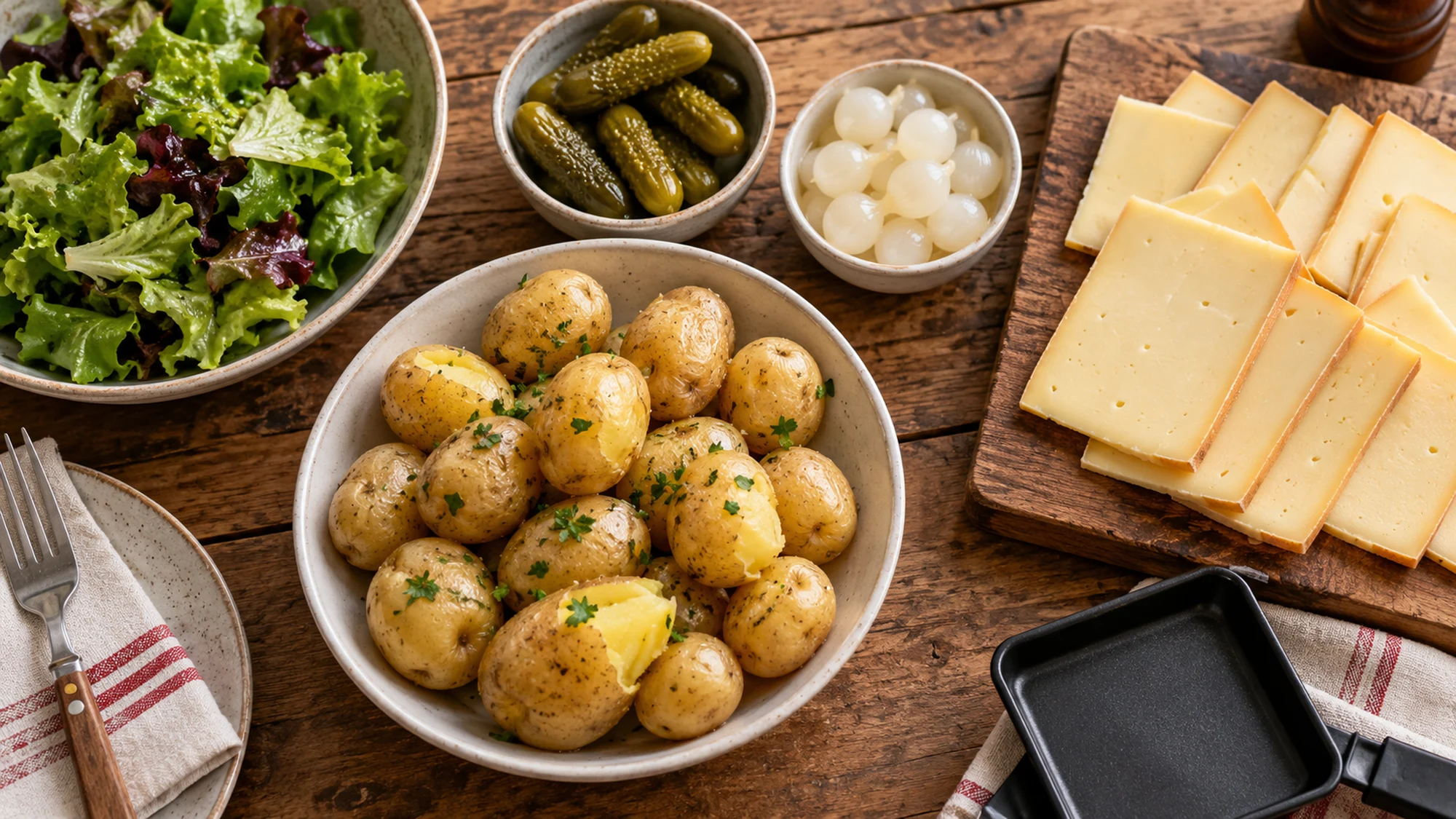
Small potatoes in their skins, cornichons and pickled onions are the traditional foundation. A green salad or cooked vegetables adds contrast without making the cheese compete with a dozen toppings. Set out a modest first platter and replenish it rather than leaving the entire supply beside a warm appliance.
- Keep reserve cheese refrigerated and follow the package’s storage directions and opening guidance.
- Use clean utensils, keep ready-to-eat sides separate from raw foods, and wash produce before preparing it.
- For perishable prepared dishes, follow the FDA’s serving guidance: cold food at 40°F (4°C) or below, hot food at 140°F (60°C) or above; discard perishables held at room temperature beyond two hours, or one hour above 90°F (32°C).
Raclette contains milk proteins even when a particular product is labeled lactose-free. FDA explains that milk proteins cause allergic reactions; milk allergy and lactose intolerance are different issues. For pregnancy or another increased risk of foodborne illness, FDA guidance advises avoiding raw-milk products; select clearly pasteurized cheese rather than treating brief melting as a safety guarantee.
Bottom Line
Raclette works best when you match the cheese to your equipment and keep the serving simple. Check milk treatment and rind instructions, melt in manageable portions, and let warm potatoes and sharp pickles support the cheese rather than bury it.
Sources
- Swiss Federal Department of Foreign Affairs: Switzerland’s national dishes
- TTM: Raclette cheese and milk treatment
- Raclette du Valais AOP: Product and preparation information
- Raclette Suisse: Traditional serving and melting guidance
- FDA: Serving Up Safe Buffets
- FDA: People at Risk of Foodborne Illness
- FDA: Raw Milk Questions and Answers
- Cheesetique: Raclette video

Hi, I’m Emily Pocker! I share recipes and food guides here at Recipes360 to help you find everyday meal inspiration and feel more confident in the kitchen. My goal is to make cooking approachable, enjoyable, and full of flavor.