
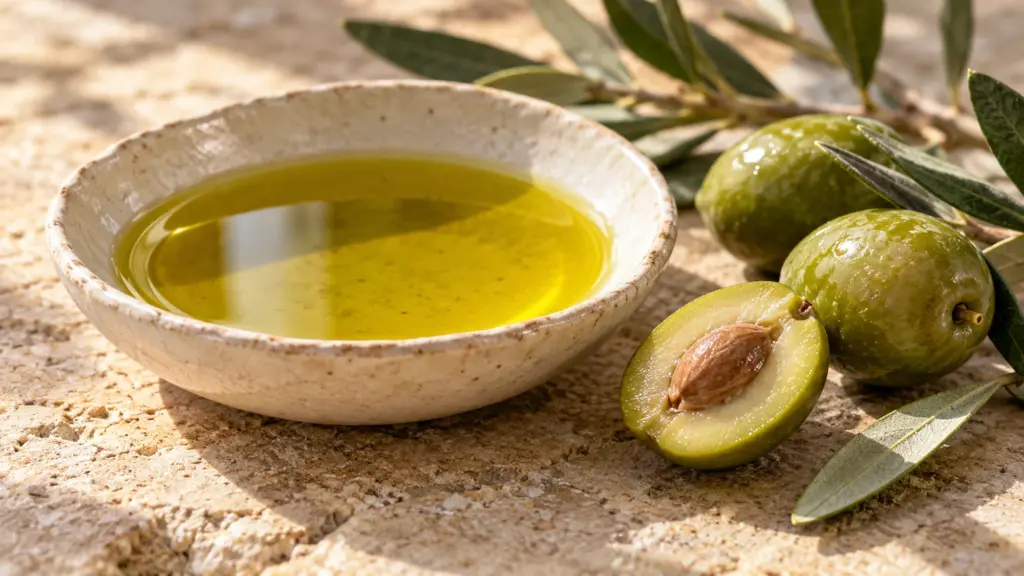
An olive oil bottle can sit beside sunflower and canola oil on the same supermarket shelf, which makes the names feel more confusing than they need to be. If you are wondering, is olive oil a seed oil, the answer starts with the olive itself rather than the cooking-oil aisle.
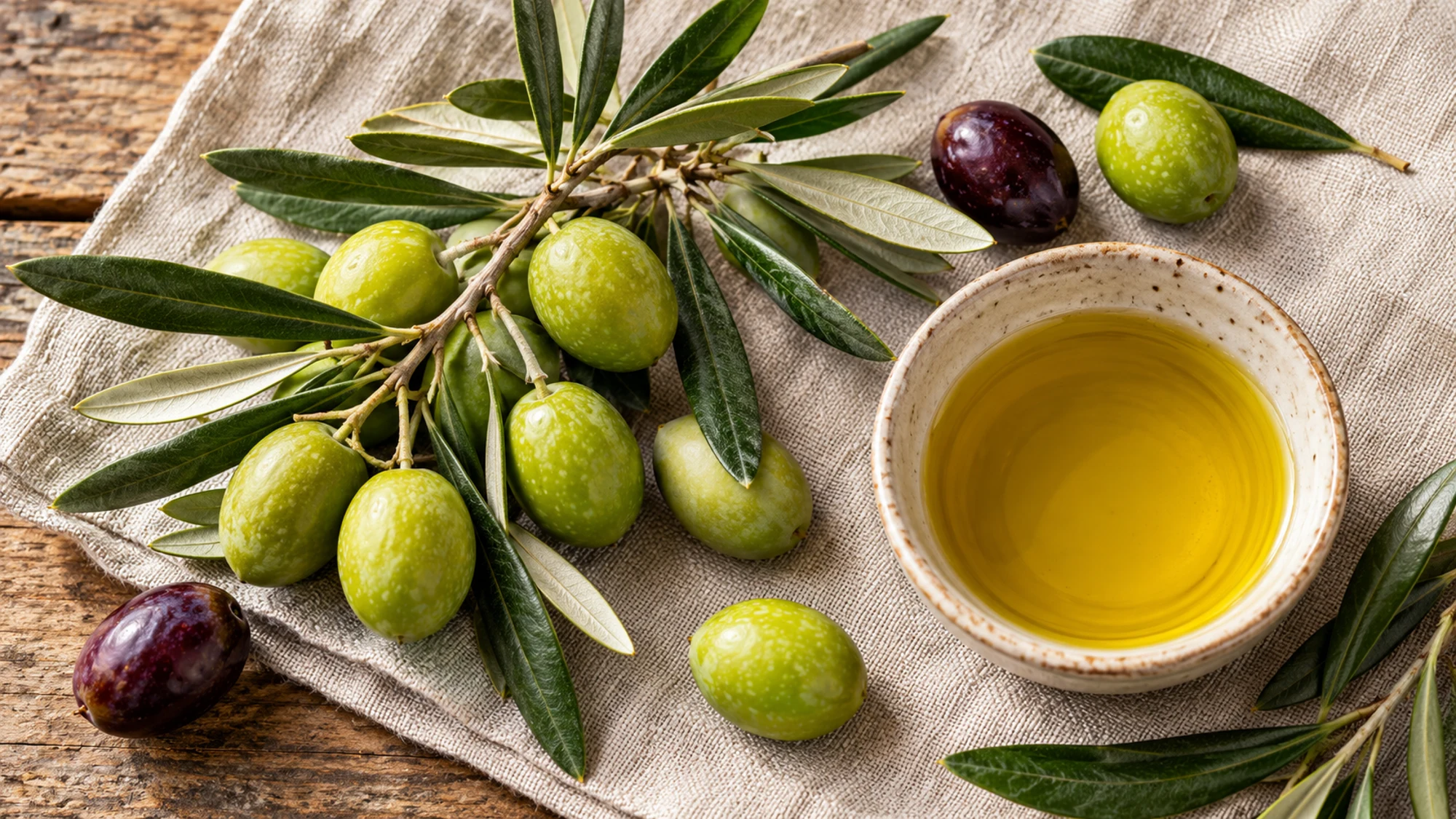
Olive oil is a fruit oil, not a seed oil. Extra virgin and refined olive oils both come from olives; the differences are in processing, flavor and grade. A blend may contain other oils, so check the ingredient list.
Is Olive Oil a Seed Oil? Follow the Fruit
The International Olive Council defines virgin olive oils as oils obtained from olive fruit using mechanical or other physical methods. An olive contains a pit, but that does not turn the familiar culinary oil into an oil extracted specifically from seeds.
It helps to separate two questions: where the oil comes from and what happens to it afterward. Refining can change an olive oil’s aroma and taste without changing its botanical source. I would use that distinction before trying to decode every adjective on the front of a bottle.
- Source: olive fruit is the starting material for olive oil.
- Process: virgin oils are extracted physically; refined olive oil goes through further treatment.
- Product: an olive-oil blend and a blend containing olive oil are not necessarily the same thing. Read the complete ingredient list, not just the largest word.
Fruit or seed describes the starting material. Extra virgin or refined describes a different part of the story.
What Those Bottle Labels Actually Tell You
Extra virgin olive oil meets the IOC’s chemical and sensory criteria, while ordinary olive oil is commonly a blend of refined olive oil and virgin olive oils. The word “blend” therefore does not automatically mean that another plant oil has been added.
Use this comparison as a label-reading aid, not a ranking of every bottle in the store. Two extra virgin oils can taste noticeably different, and a milder option may suit the food you are making.
| Label | What it indicates | What to check |
|---|---|---|
| Extra virgin olive oil | A virgin olive oil meeting its grade requirements | Freshness, origin and flavor |
| Olive oil | Refined olive oil combined with virgin olive oil | Full product name and ingredient list |
| Olive oil plus another named oil | A mixed-source product | Which other oils are included |
| Olive-pomace oil | A separate category made from extraction residue | The exact designation; it is not extra virgin |
Choose for Flavor, Not Fear
Being a seed oil is not, by itself, evidence that an oil is harmful. The American Heart Association lists olive, canola, soybean and sunflower oils among cooking oils that provide more unsaturated fat and less saturated fat than many solid fats. Classification alone cannot tell you the health effect of an entire meal.
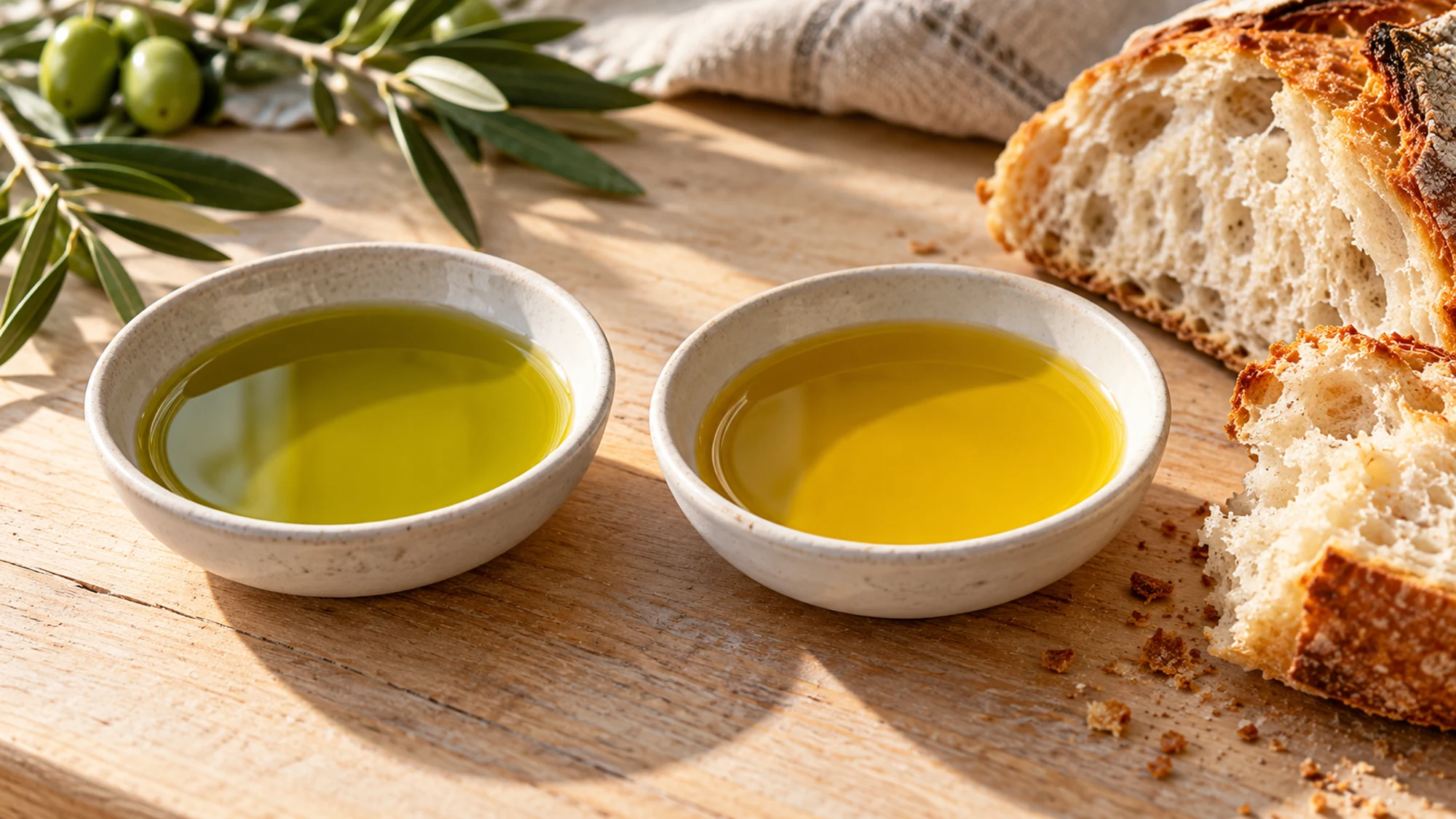
For cooking, I would start with the flavor you want. A peppery oil can be lovely where you want to notice it; a quieter flavor may make more sense when the oil should stay in the background. There is no prize for making every ingredient announce itself. For a practical example, our baked feta pasta uses measured olive oil alongside tomatoes and cheese.
- Dressings and finishing: choose an oil whose taste you enjoy rather than buying solely by color or price.
- Everyday cooking: follow the recipe’s heat guidance and avoid letting the oil smoke.
- Nutrition questions: consider what the oil replaces and the overall eating pattern, rather than treating “seed-free” as a medical promise.
The useful comparison is flavor, freshness and how you cook with it—not a good-oil versus bad-oil label.
Buying and Storing Olive Oil Without the Guesswork
The UC Davis Olive Center’s buying advice emphasizes freshness, a harvest date when available, and cool, dark storage. A bottle beside a sunny window may look charming, but it is not doing the oil any favors.
The production process also explains why freshness deserves attention. The North American Olive Oil Association describes olives being washed, crushed, mixed and separated into oil and other components. Modern centrifuges perform much of that separation; the oil is not simply squeezed from a neatly removed pit.
- Choose a manageable bottle: I would rather finish a smaller bottle while its flavor is lively than keep a large bargain open indefinitely.
- Look beyond the front: check origin information, product designation and any harvest date. Packaging location is not necessarily growing location.
- Protect it at home: close the cap after use and keep the bottle away from heat and direct light.

Bottom Line
Olive oil is not a seed oil, whether the bottle is extra virgin or refined. Check for other named oils if you want a single-source product, then choose a flavor you like and store it carefully. That is a more useful kitchen decision than judging oils by fear.
This production video from the North American Olive Oil Association shows how olives become oil.
Sources
- International Olive Council: olive oil designations
- North American Olive Oil Association: production process
- American Heart Association: cooking oils
- UC Davis: selecting and storing olive oil

Hi, I’m Emily Pocker! I share recipes and food guides here at Recipes360 to help you find everyday meal inspiration and feel more confident in the kitchen. My goal is to make cooking approachable, enjoyable, and full of flavor.