
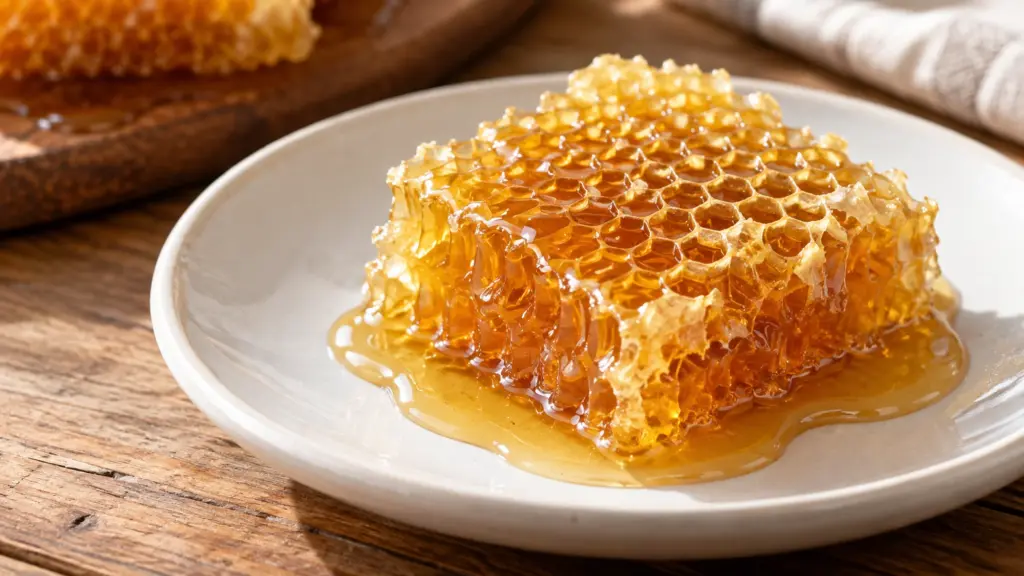
A piece of honey comb looks gorgeous on a cheese board, right up until someone asks what to do with the wax. Spread it? Swallow it? Leave it behind? The useful distinction is that real comb honey is food, while similarly named honeycomb candy is an entirely different, crunchy confection.
Food-grade honey comb is edible, wax included. Start with a small piece, pair it with something crisp or creamy, and keep all honey away from babies younger than one.
I’d treat it as a texture ingredient rather than a fancier way to pour honey. The cells release their sweetness as you bite, leaving soft, chewy wax that behaves quite differently from a spoonful of liquid honey.
What Honey Comb Is—and Whether You Eat the Wax
Bees store honey in beeswax cells. With comb honey, those cells remain intact instead of having the honey extracted. Purdue Extension confirms that both the honey and its comb are edible; the wax is not a wrapper you must painstakingly peel away.
- Expect two textures: the honey flows or softens in your mouth, while the wax stays chewy. It does not dissolve like sugar.
- Try a small corner first: a thin slice is easier to spread or combine with food than a thick block. There is no obligation to enjoy chewing the wax.
- Check what you bought: comb honey is intact honey-filled wax; cut-comb honey may be pieces suspended in a jar of liquid honey. Honeycomb candy has a brittle, aerated texture instead.
If the chewiness isn’t for you, use liquid honey next time. That is a preference, not a failure to appreciate the good stuff. I’d rather choose the texture that suits breakfast than turn a piece of toast into a wax endurance test.
Ways to Serve It Without Overwhelming the Plate
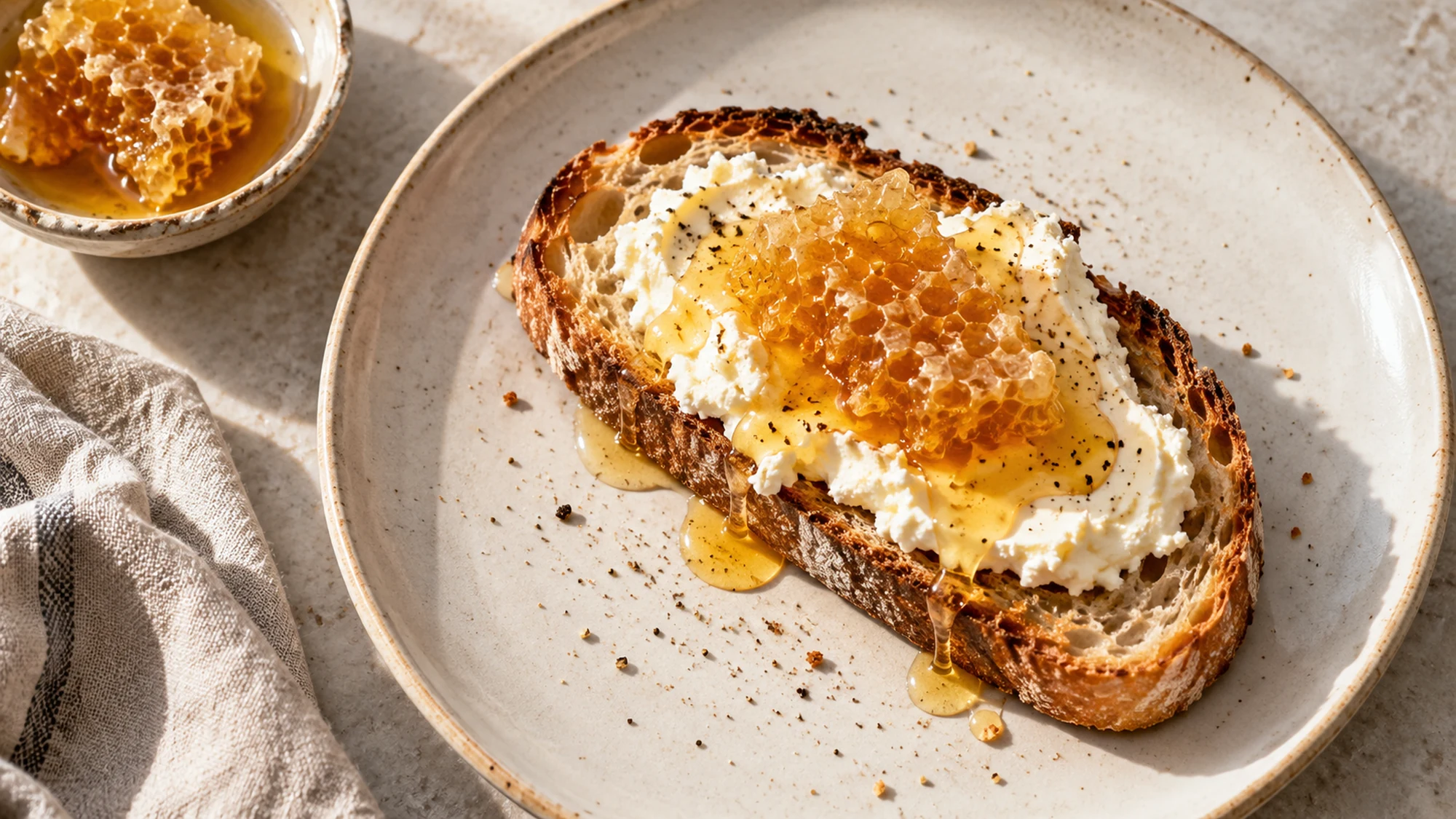
A small piece benefits from contrast: crisp toast, tangy cheese, or juicy fruit gives the sweetness somewhere to go. Comb-honey producer Munro Honey suggests cheese and baguette pairings. Keep the comb visible rather than stirring it into a dish where its chewiness becomes a surprise.
| Pairing | How to use it | Texture to expect |
|---|---|---|
| Toast with soft cheese | Lay a thin piece over the cheese | Crunch, creaminess, then chewy wax |
| Aged cheese and pear | Serve small pieces alongside | Salty cheese and juicy fruit balance sweetness |
| Plain yogurt | Add a small piece just before eating | Soft yogurt makes the wax more noticeable |
| Bread and nuts | Offer comb separately for spreading | Guests control the amount and texture |
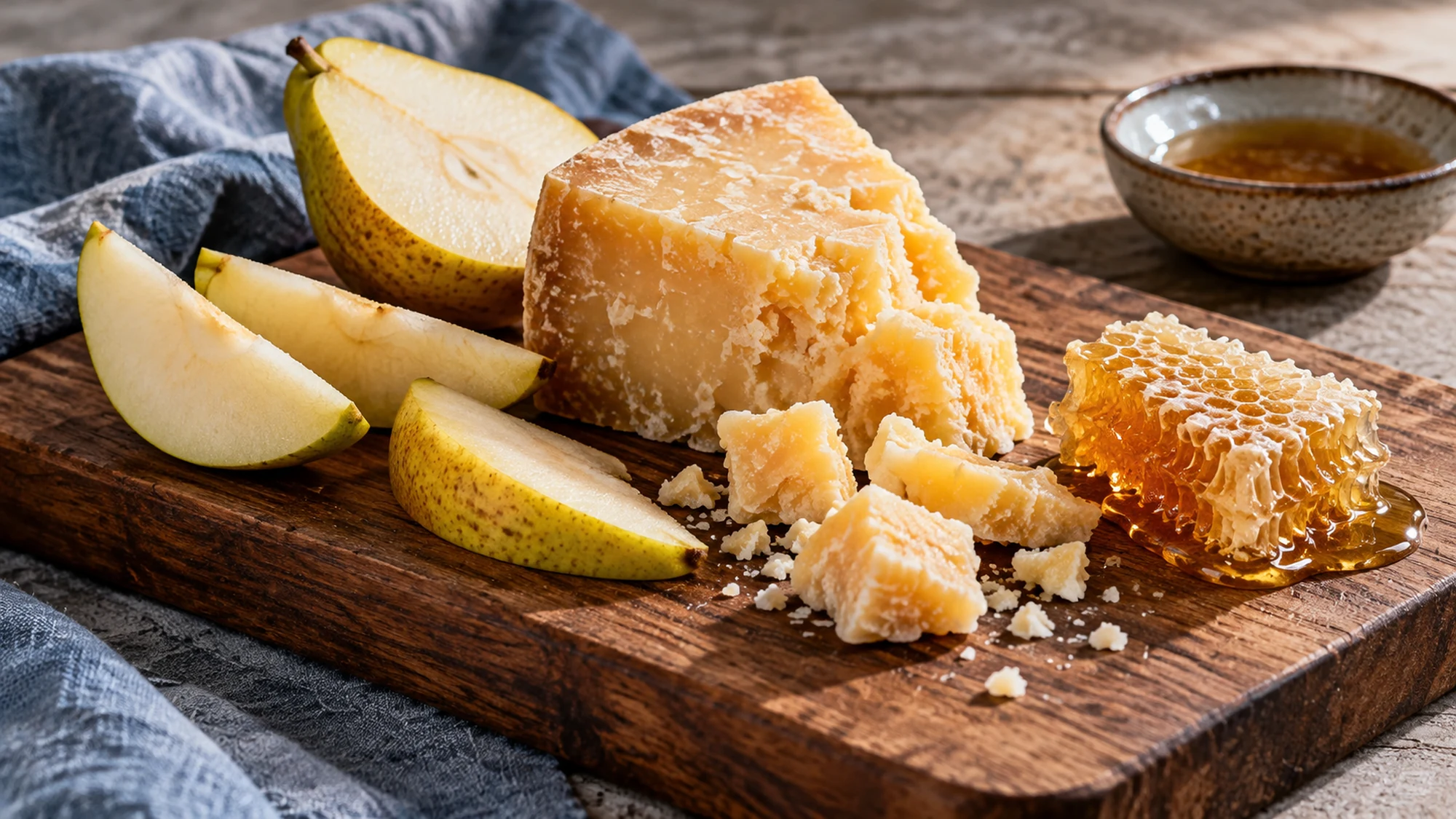
For a party, place it in a little dish with its own clean utensil; honey drips are easier to manage there than across a shared board. Our charcuterie cups offer another way to portion the savory accompaniments. Keep their perishable ingredients chilled appropriately rather than borrowing honey’s storage rules.
Buying and Storing Honey Comb
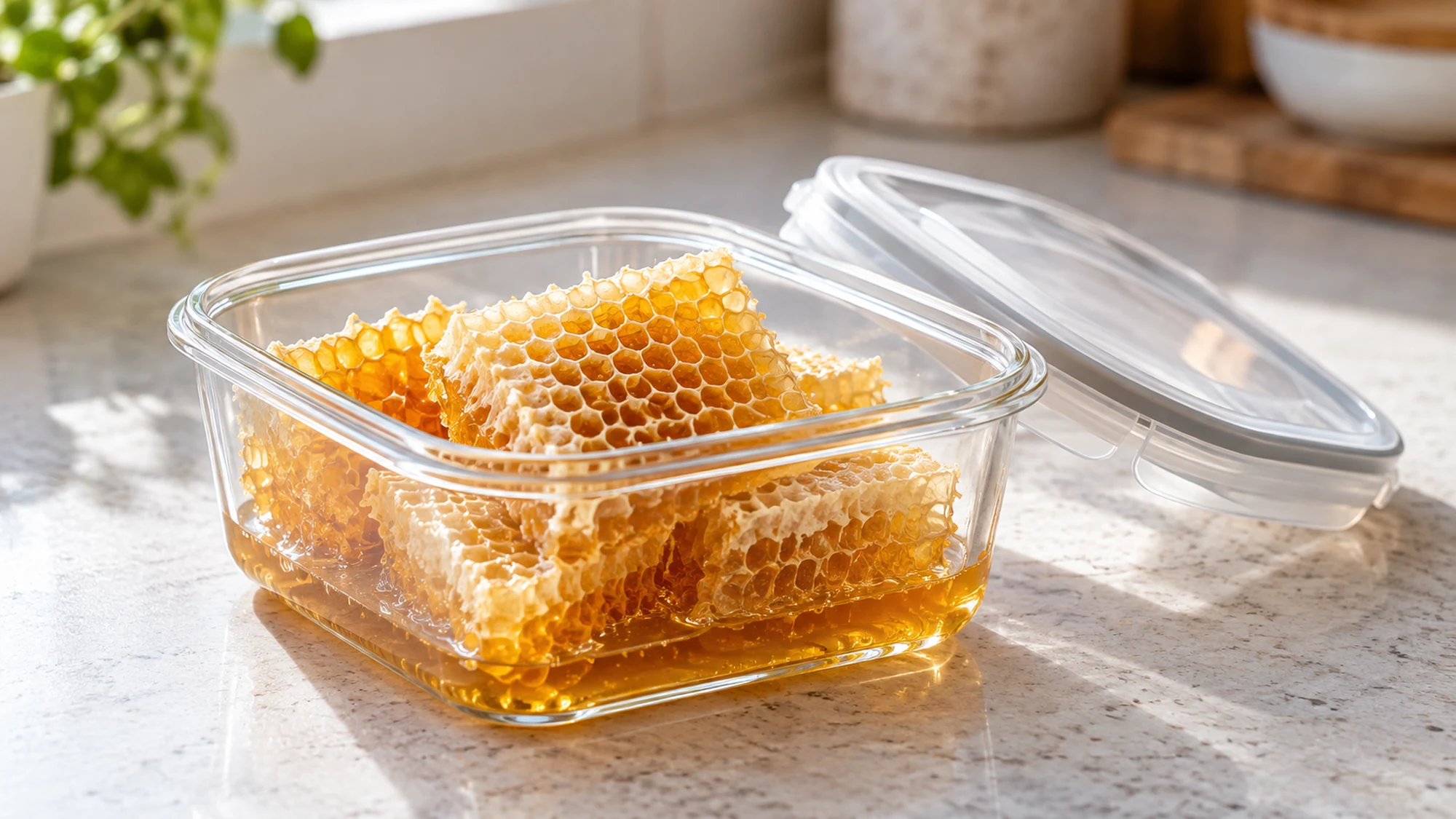
Buy comb specifically sold for eating from a food supplier or beekeeper. Craft beeswax, decorative wax, and material collected from an unknown hive are not substitutes for a labeled food product. Look for an intact package and follow the producer’s instructions.
- Choose a manageable piece: if you are new to it, a small package leaves room to discover whether you enjoy the wax.
- Close the container: Purdue recommends tightly sealed honey storage away from sunlight. Use a clean, dry utensil rather than introducing toast crumbs or yogurt.
- Keep ordinary honey at room temperature: Savannah Bee notes that refrigeration can encourage crystallization. Follow a comb product’s own label if its directions differ.
- Do not mistake crystals for spoilage: crystallization is a natural change in honey. It can make the filling grainy or firm without meaning that the comb has become unsafe by itself.
The Safety and Sweetness Limits That Matter
No honey for children younger than 12 months. The CDC warns that honey can cause infant botulism. That includes honey inside the comb; “raw,” local, or cooked into food does not make it an appropriate infant ingredient.
For everyone else, an attractive piece of comb is still a sweetener, not a medicine or a nutritional shortcut. The FDA explains how sugars from packaged honey are accounted for on labels. “Natural” does not make its sugar disappear; choose an amount that fits the rest of the food you are eating.
Bottom Line
Choose comb honey for the combination of flowing honey and chewy wax—not for a health promise. A thin piece with toast or cheese is a simple way to decide whether you like it.
Sources
- Purdue Extension: Honey, including comb honey
- CDC: Foods and drinks to avoid or limit before age one
- Savannah Bee Company: Storing honey
- FDA: Understanding the Nutrition Facts label
- Munro Honey: Comb honey

Hi, I’m Emily Pocker! I share recipes and food guides here at Recipes360 to help you find everyday meal inspiration and feel more confident in the kitchen. My goal is to make cooking approachable, enjoyable, and full of flavor.