
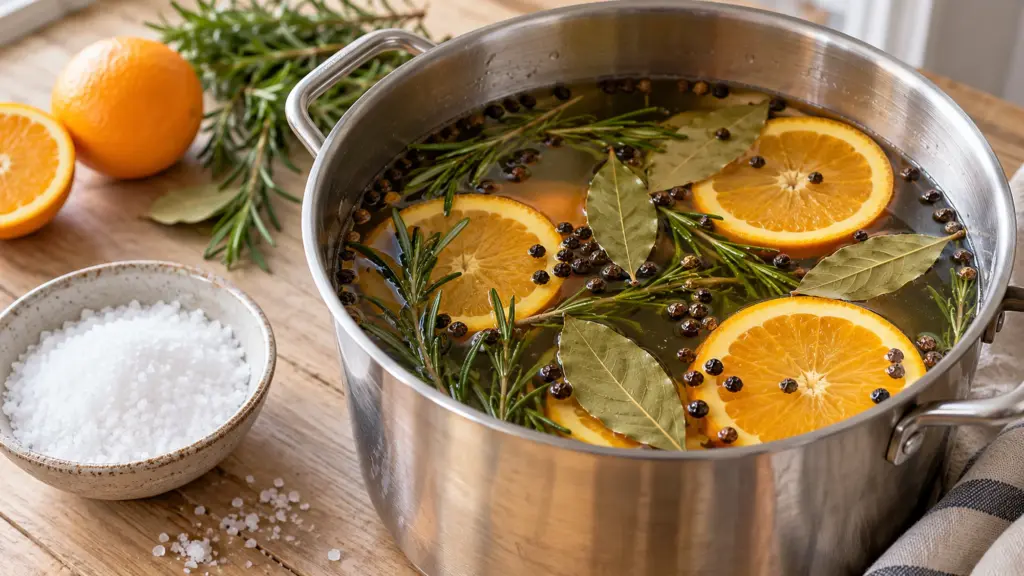
A turkey can take up most of a refrigerator before anyone remembers the brining pot. This brine for turkey starts with that practical problem: choose a food-safe container that fits, then make a measured salt solution with orange and herbs. The seasoning happens before roasting, so this recipe covers the brine and safe overnight handling rather than promising a particular roasting time.

Use a fully chilled brine, an unseasoned thawed turkey and a container that keeps the bird submerged in the refrigerator. Measure salt by weight so different crystal sizes do not change the recipe.
I’d settle the salt question before choosing the aromatics. Water and salt do the essential work; orange, rosemary and bay add fragrance around the edges. Read the turkey label first: a bird injected with a solution, labeled self-basting or already kosher-salted needs a different seasoning plan. This recipe is intended for an untreated 10–12-pound turkey.
Serving Suggestions After Using Brine for Turkey
Think of the finished roast as seasoned meat when planning the rest of the plate. Keep extra salt out of vegetables until you taste the whole meal, and offer gravy separately. Brined drippings can be salty enough to overwhelm a sauce; use unsalted stock and taste before reducing them.
For a crisp potato alongside the turkey, these air-fryer jacket potatoes give each diner a separate portion. Add something fresh or tart, such as a cabbage salad or cranberry accompaniment, to balance the richness.
| Accompaniment | Useful adjustment |
|---|---|
| Gravy | Start with unsalted stock; taste the drippings before adding. |
| Potatoes | Keep toppings on the side so the plate stays balanced. |
| Vegetables | Choose lemon or herbs before adding more salt. |
- Plan the fridge space before starting, including a rimmed tray to contain leaks.
- Keep raw turkey and its brine separate from ready-to-eat food.
- Discard used brine; it is not a sauce or a reusable stock.
Let the roast provide the seasoning, then use the side dishes to add texture, freshness and contrast.
Brine for Turkey Variations and Salt Choices
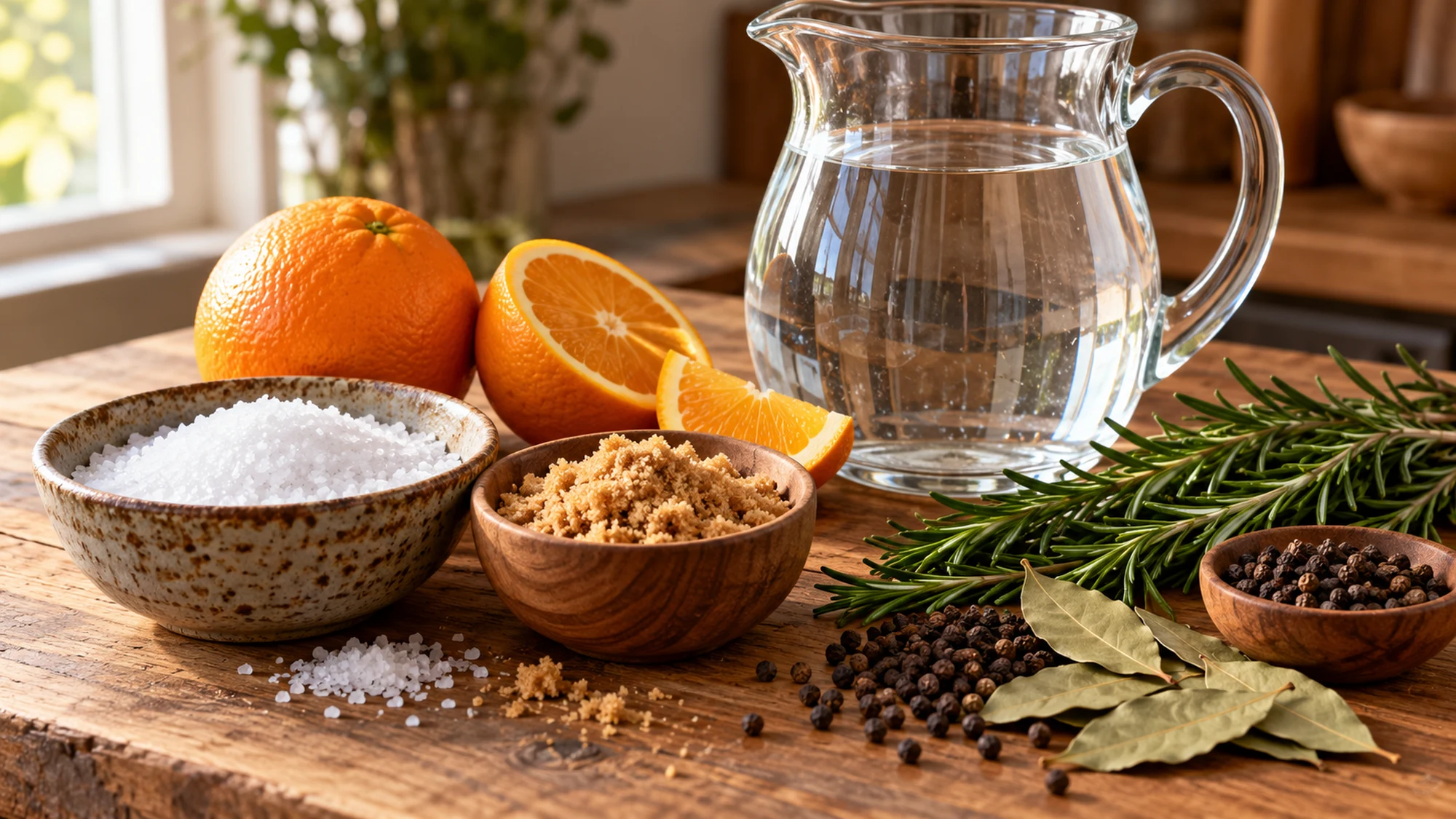
Changing the salt brand by volume is the easiest way to change this recipe unintentionally. A cup of fine salt and a cup of large kosher crystals do not weigh the same. A scale avoids that problem. The USDA’s poultry-brining guidance also emphasizes food-grade containers, full submersion and refrigeration.
Keep the water and weighed salt together when scaling. If the bird needs more liquid to stay submerged, make additional brine in the same proportions rather than topping the pot with plain water. I’d keep the herb mix restrained; the turkey should still taste like turkey, with a fragrant supporting cast.
- Citrus: replace part of the orange with lemon for a sharper aroma; neither replaces the salt.
- Herbs: thyme can join rosemary, or replace it for a softer herbal note.
- Sweetness: brown sugar rounds the seasoning but is optional; omitting it changes browning more than salt concentration.
- Container: stainless steel or a food-grade brining bag supported inside a rigid vessel works; avoid reactive aluminum.
Vary the aromatics freely, but keep the salt-to-water ratio measured and the entire process cold.
Health Benefits and Sodium Considerations
Brining is a cooking technique, not a nutritional upgrade. Salt changes how muscle proteins behave and can reduce moisture loss, as explained in the USDA’s explanation of brining. That does not make an overcooked bird immune to dryness, and it does add sodium.
How much salt and sugar stay in the meat depends on the bird, time and drainage. A precise nutrition claim for the roasted turkey would therefore be misleading. The card estimate describes a portion of unused brine, not the amount eaten; most liquid is discarded. Anyone managing sodium should account for the preparation as well as the sides.
- Cold storage matters: keep the turkey and brine at 40°F (4°C) or below.
- Avoid splashes: lift the bird out carefully, pat dry and clean contacted surfaces.
- Use a thermometer: roast separately until the thickest breast and innermost thigh and wing reach 165°F (74°C).
- Check the clock: overnight brining must fit within the turkey’s safe refrigerated storage period, not extend it.
Use brining for flavor and moisture management, while treating sodium, refrigeration and final cooking temperature as separate decisions.
Bottom Line
A useful brine is measured, chilled and planned around the turkey you actually bought. Start with an unseasoned bird, make room for safe submersion and leave roasting decisions to a thermometer. The citrus and herbs are the enjoyable detail; a consistent salt ratio and a cold refrigerator are the foundation.
Brine for Turkey Recipe


Ingredients
- 2 gallons water 7.57 liters total, divided; do not add unmeasured ice
- 360 g plain salt weigh it; crystal sizes vary
- 100 g brown sugar
- 1 orange washed, sliced
- 4 garlic cloves crushed
- 3 bay leaves
- 2 rosemary sprigs
- 3 thyme sprigs
- 1 tablespoon black peppercorns
- 1 untreated whole turkey 10–12 pounds, fully thawed; not kosher, injected or self-basting; turkey excluded from nutrition and cost
Equipment
- Food-safe container large enough to submerge turkey and fit in refrigerator
- Kitchen scale
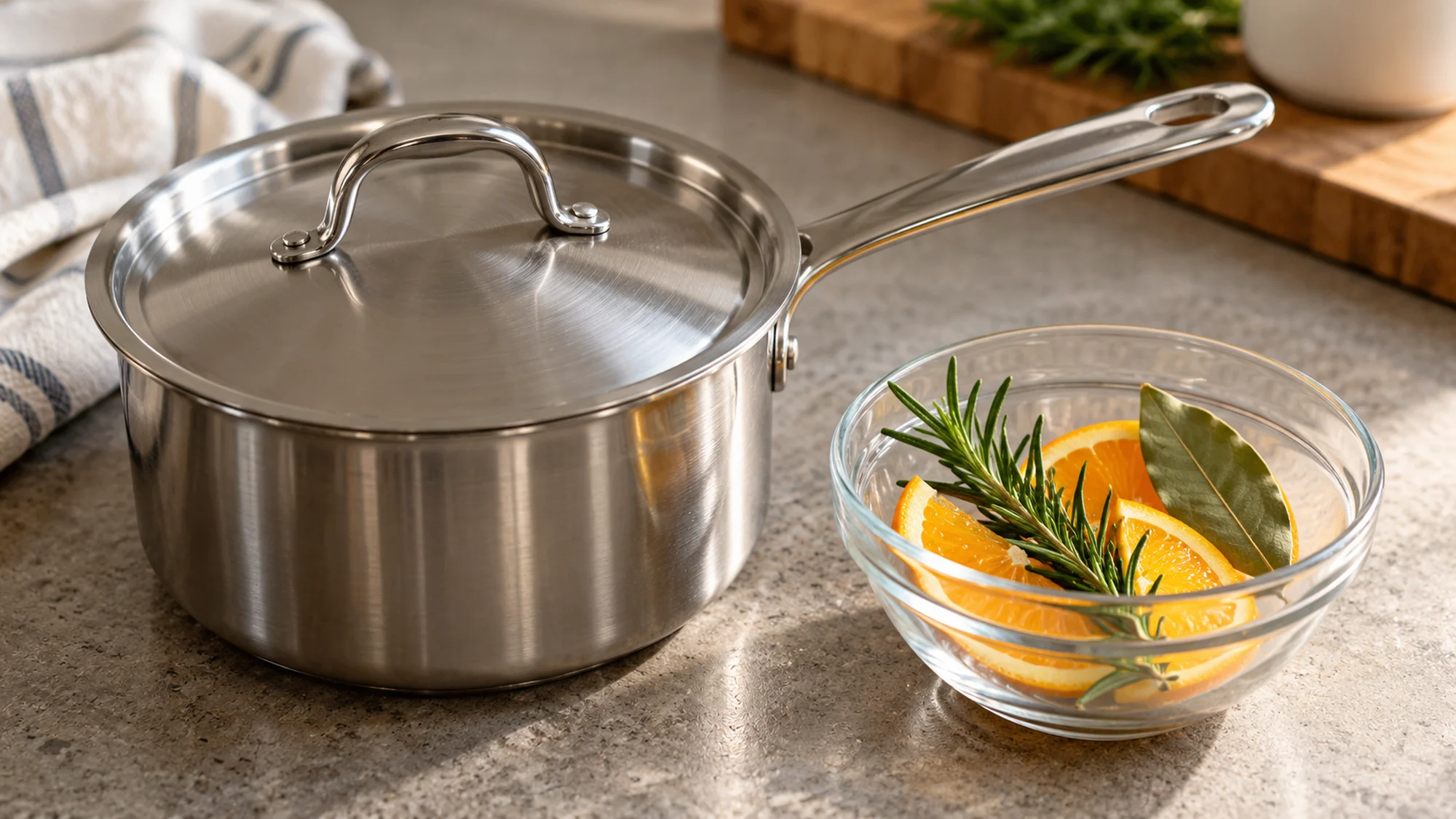
- Saucepan
- Food thermometer
Instructions
- Confirm the turkey is untreated and fully thawed. Fit a food-grade brining vessel inside the refrigerator with a rimmed tray below it. Keep the refrigerator at 40°F (4°C) or colder.
- Heat 2 quarts of the measured water with the weighed salt, sugar, garlic, bay, rosemary, thyme and peppercorns. Stir about 5 minutes, until the salt and sugar dissolve; there is no need to boil vigorously.
- Remove from heat. Add the remaining 6 quarts cold water and orange. Divide among clean containers if needed to cool efficiently. Refrigerate until the brine is at or below 40°F (4°C), allowing at least 2 hours and longer if needed. Temperature, not the clock, determines readiness.
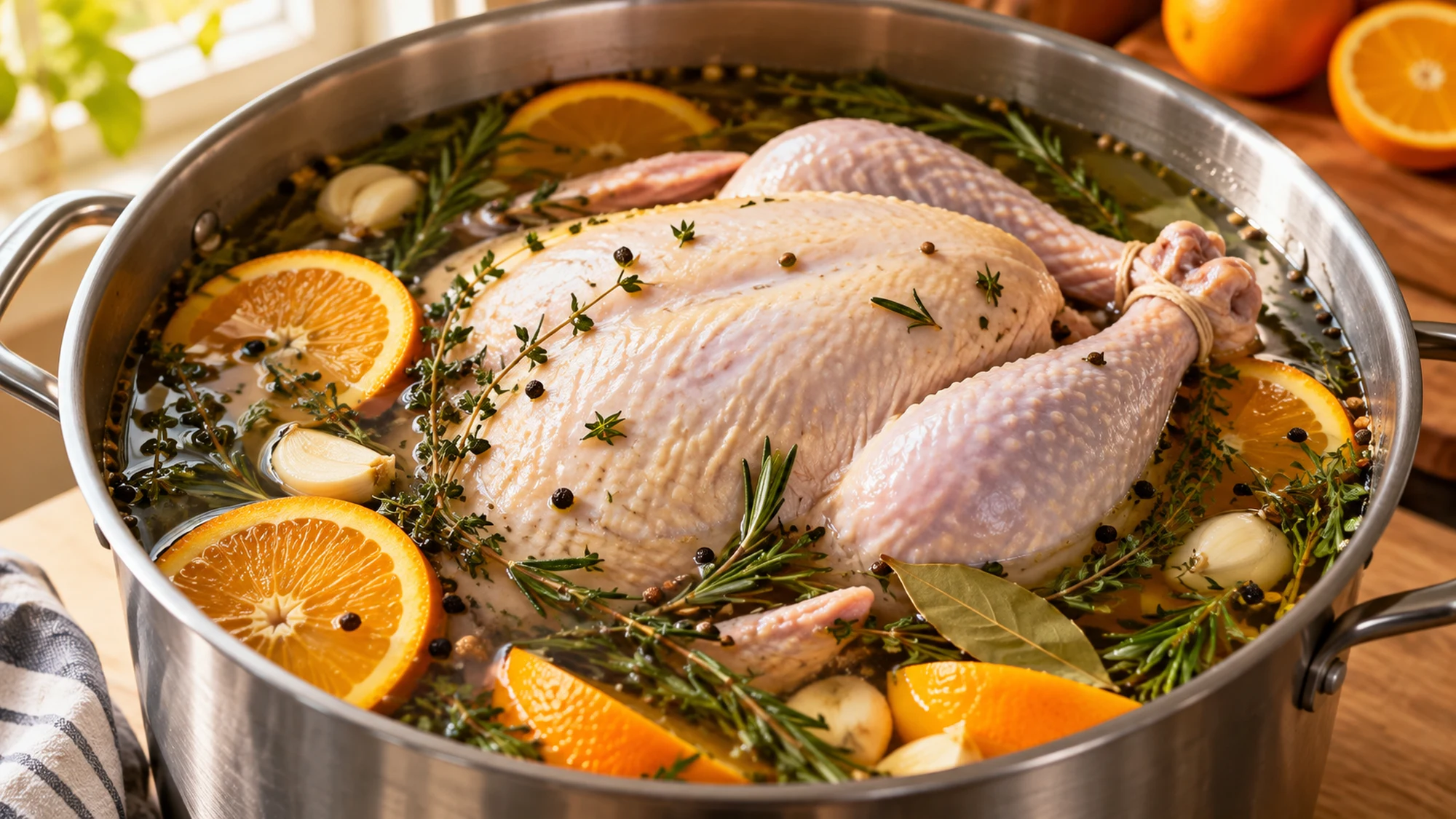
- Remove the neck and giblets from the thawed bird. Lower the turkey into the cold brine; keep completely submerged with a clean food-safe weight if needed. Cover and refrigerate for 12 hours, within the bird’s existing 1–2-day refrigerated storage window. If more liquid is necessary, prepare and chill additional brine at the same ratio of 47.6 g salt per liter water.
- Lift the turkey out without splashing. Discard the brine and aromatics. Do not rinse raw poultry; pat it dry and clean contacted surfaces. Roast using your preferred turkey method, checking for 165°F (74°C) in the thickest breast and innermost thigh and wing. Roasting time is not included here.
Nutrition
Video
Notes
Tried this recipe?
Let us know how it turned out!Hi, I’m Emily Pocker! I share recipes and food guides here at Recipes360 to help you find everyday meal inspiration and feel more confident in the kitchen. My goal is to make cooking approachable, enjoyable, and full of flavor.