
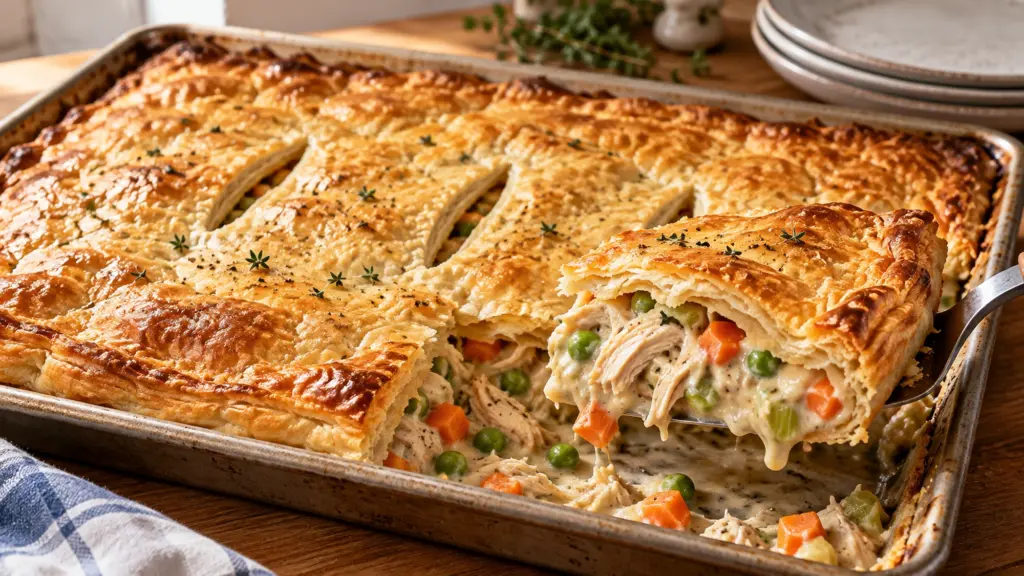
A pot pie can feel like a choice between enough filling and enough flaky pastry. A shallow pan gives you a generous surface of golden crust over chicken and vegetables, with less depth for a spoon to negotiate. This sheet pan chicken pot pie uses cooked chicken and a simple milk-and-stock sauce, so there is no separate bottom crust to roll.
Keep the filling thick enough to mound gently, let it stop steaming before adding the cold pastry, and bake until the lid is deeply golden and the center reaches 165°F (74°C).
I’d choose a modest rimmed pan over a deep casserole here. The wider layer is the point: you get a little pastry with each serving rather than a thick pool of filling under a distant roof. The card below is sized for a 13-by-9-inch quarter sheet pan; a large half sheet would spread this amount too thin.
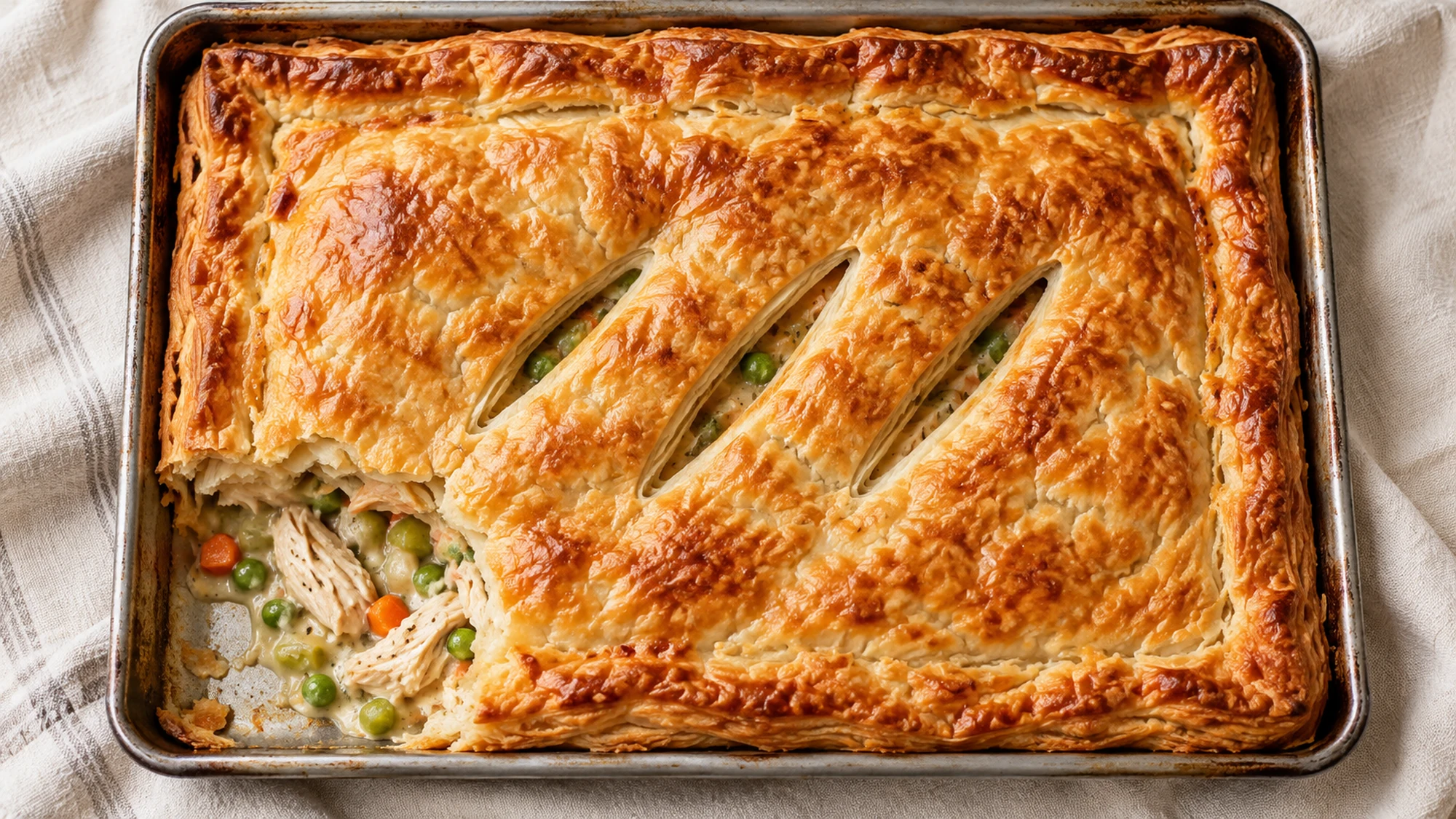
Serving Suggestions for Sheet Pan Chicken Pot Pie
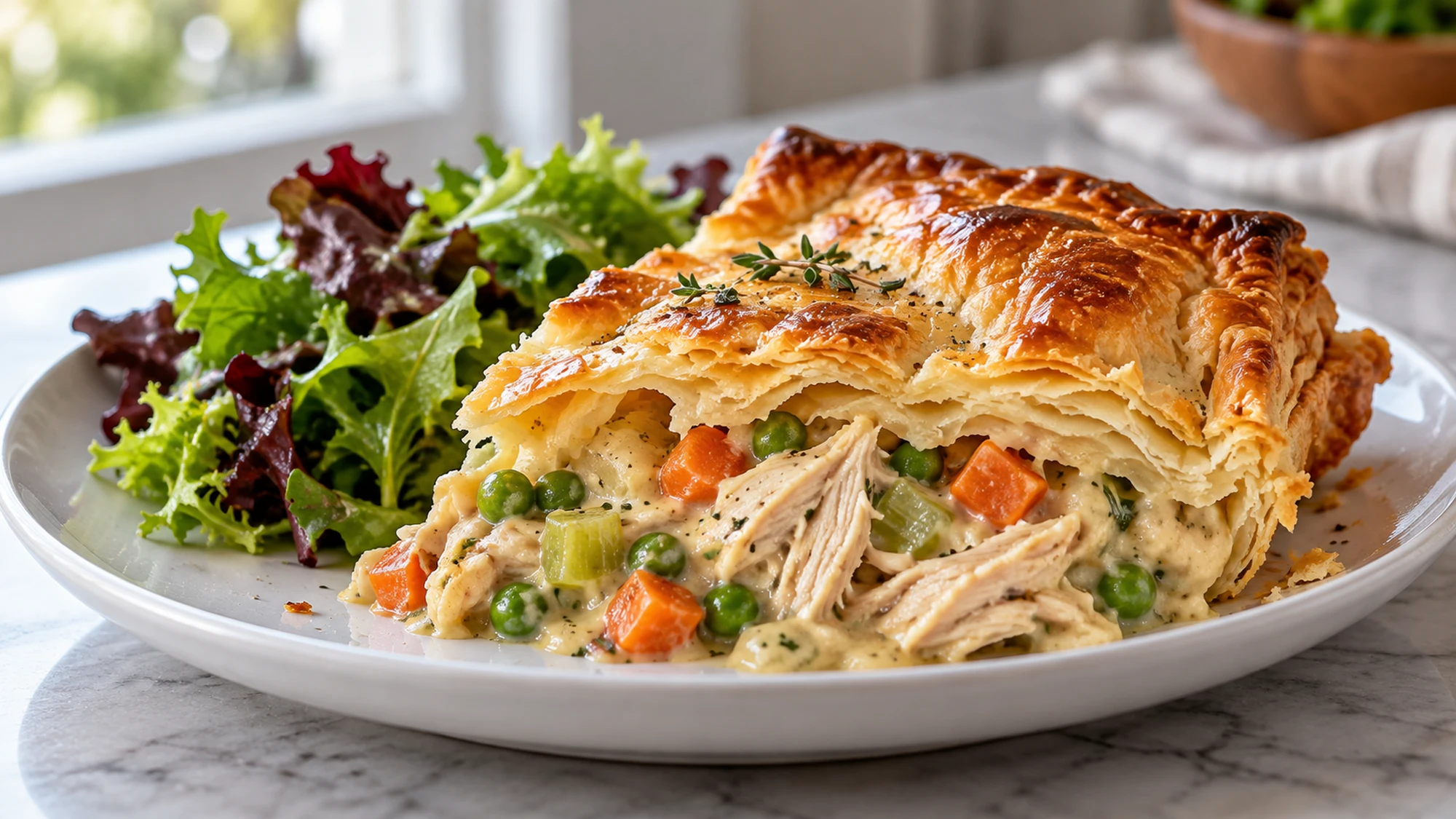
Give the pie a short rest after baking so the sauce settles, then use a broad spatula and a spoon together. Neat squares are optional. The flaky lid will crack when you cut it, which is part of its appeal rather than a problem to repair.
The filling already includes vegetables and chicken, so I’d keep the side crisp and simple. A lemony green salad works especially well against the creamy sauce. Put extra dressing on the table instead of pouring it beside the pastry, where it can soak into the edges. For a different crunchy side, try the carrot ribbon salad with its ginger-sesame dressing.
If dinner is delayed, leave the salad undressed and keep food-safety limits in mind rather than leaving the pie out indefinitely. For planned leftovers, portion the filling and pastry into shallow containers promptly; the lid softens as it sits, even when the food is stored correctly.
- Small supper: serve a smaller scoop with a substantial cucumber-and-lettuce salad.
- Hungry table: add steamed green beans or roasted broccoli rather than a second pastry-based side.
- Make-ahead lunch: pack the salad separately and reheat the pie thoroughly before combining the meal.
| Serving choice | What it adds | Best served |
|---|---|---|
| Leafy salad with lemon | Fresh crunch and acidity | Cold, alongside |
| Steamed green beans | A simple vegetable side | Warm, lightly dressed |
| Extra black pepper | A sharper finish | At the table |
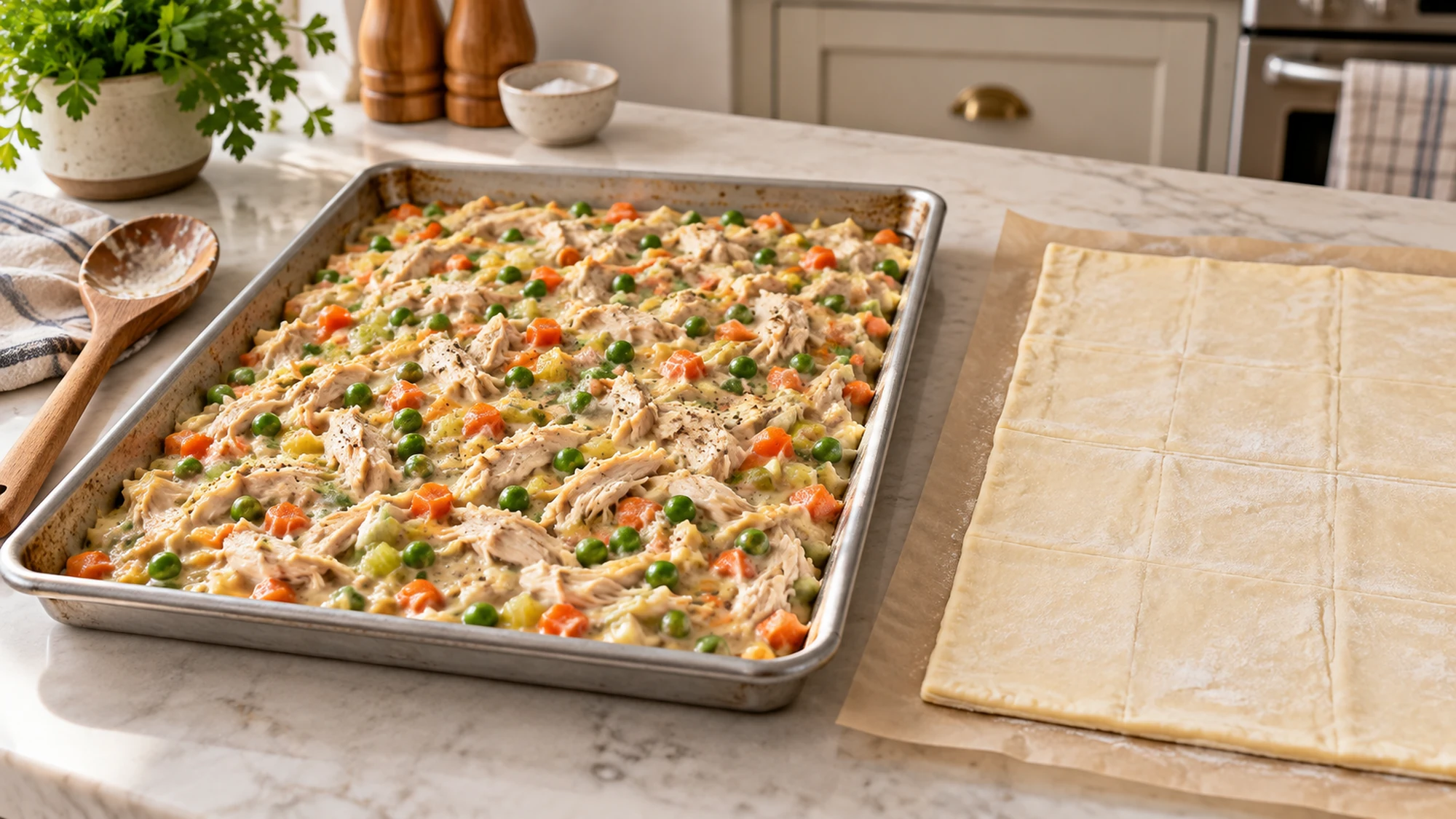
Variations That Keep the Filling Balanced
The sauce should coat the vegetables without flooding the pan. If you swap in mushrooms or spinach, cook off their released water first. Adding watery vegetables straight from the cutting board can undo the careful thickening and soften the pastry underneath.
Use cooked turkey instead of chicken in the same measured amount, or change the herb to a little finely chopped rosemary. These changes keep the basic balance intact. A dairy-free version needs both a suitable pastry and an unsweetened milk alternative; check every package rather than assuming puff pastry is dairy-free.
- Pastry handling: thaw according to its package, then keep it cold until the filling is ready.
- Vegetable swap: replace part of the mixed vegetables with cooked, well-drained broccoli pieces.
- Extra flavor: add a small squeeze of lemon to the filling before cooling it, then taste before adding more.
- Different pan: use another rimmed pan with a similar surface area; a deep baking dish needs separate timing judgment.
Health Benefits and Practical Trade-Offs
Chicken contributes protein, while peas, carrots and celery bring variety to the meal. Those ingredients do not turn a butter-and-pastry dish into a treatment or a special health food. The useful decision is portion size and what you serve around it, not a promise attached to the word homemade.
Stock, pastry and cooked chicken can all contain substantial sodium. Choose a lower-sodium stock and taste the finished filling before seasoning. The card’s nutrition numbers are estimates for the written ingredients and six equal portions; brands, chicken cuts and the amount of egg wash actually used change the result. USDA’s food preparation tips explain using herbs and labels to manage flavor and sodium.
- Allergens: standard puff pastry and flour contain wheat; this version also includes milk and egg.
- Safe leftovers: refrigerate promptly in shallow containers and use within three to four days.
- Reheating: check several parts of a portion with a thermometer; leftovers should reach 165°F (74°C).
Bottom Line
Think of this as a shallow, pastry-topped chicken supper. A thick filling, a cold lid and enough oven time for real golden color do more work than decorative crimping. Keep the side fresh, let the pan rest briefly, and serve while the pastry still has its crisp edges.
Sheet Pan Chicken Pot Pie Recipe

Ingredients
- 350 g cooked skinless chicken breast about 2 1/2 cups, shredded; refrigerated promptly after cooking
- 400 g frozen mixed vegetables peas, carrots, corn and green beans; thawed and drained
- 100 g yellow onion about 1 small onion, finely diced
- 70 g celery about 1 large stalk, finely diced
- 35 g unsalted butter about 2 1/2 tablespoons
- 35 g all-purpose flour about 1/4 cup plus 1 teaspoon
- 360 mL low-sodium chicken stock 1 1/2 cups
- 180 mL 2% milk 3/4 cup
- 1 clove garlic minced
- 1 teaspoon dried thyme
- 1/2 teaspoon fine salt 3 g; reduce to taste if chicken or stock is salty
- 1/4 teaspoon ground black pepper
- 250 g puff pastry thawed according to package directions but still cold; enough for a 13-by-9-inch lid
- 1 large egg beaten with 1 tablespoon water for brushing; some wash may remain
Equipment
- 1 13-by-9-inch rimmed baking sheet quarter sheet pan with at least a 1-inch rim
- 1 Large saucepan
- 1 Whisk
- 1 Pastry brush
- 1 Food thermometer
Instructions
- Heat the oven to 400°F (200°C). Check that your rimmed pan is 13 by 9 inches and at least 1 inch deep. Keep the thawed pastry refrigerated while you make the filling.
- Melt the butter in a large saucepan over medium heat. Add onion and celery and cook, stirring, for 6–8 minutes until softened. Add garlic and thyme and stir for 30 seconds.
- Stir in the flour and cook for 1 minute. Gradually whisk in the stock, then the milk. Simmer gently for 3–5 minutes, stirring, until the sauce coats a spoon without running like broth.
- Stir in the cooked chicken, drained mixed vegetables, salt and pepper. Heat until steaming throughout, then remove from heat. Spread in the rimmed pan and let stand for about 10 minutes, until heavy steam subsides. Do not leave the filling out for longer than needed.
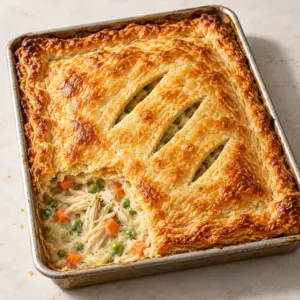
- On a lightly floured surface, gently roll the pastry to cover the pan. Lay it over the filling without stretching, tuck the edges just inside the rim and cut three steam slits. Brush lightly with beaten egg wash; do not pour leftover wash over the pie.
- Bake for 25–30 minutes until the pastry is deep golden and puffed, the filling bubbles at the edges and the center reaches 165°F (74°C) on a food thermometer. If necessary, continue in short intervals and loosely cover browned edges with foil.
- Rest for 5 minutes before dividing into six portions. Use a broad spatula and spoon together to lift the pastry and filling.
Nutrition
Video
Notes
Tried this recipe?
Let us know how it turned out!Hi, I’m Emily Pocker! I share recipes and food guides here at Recipes360 to help you find everyday meal inspiration and feel more confident in the kitchen. My goal is to make cooking approachable, enjoyable, and full of flavor.