
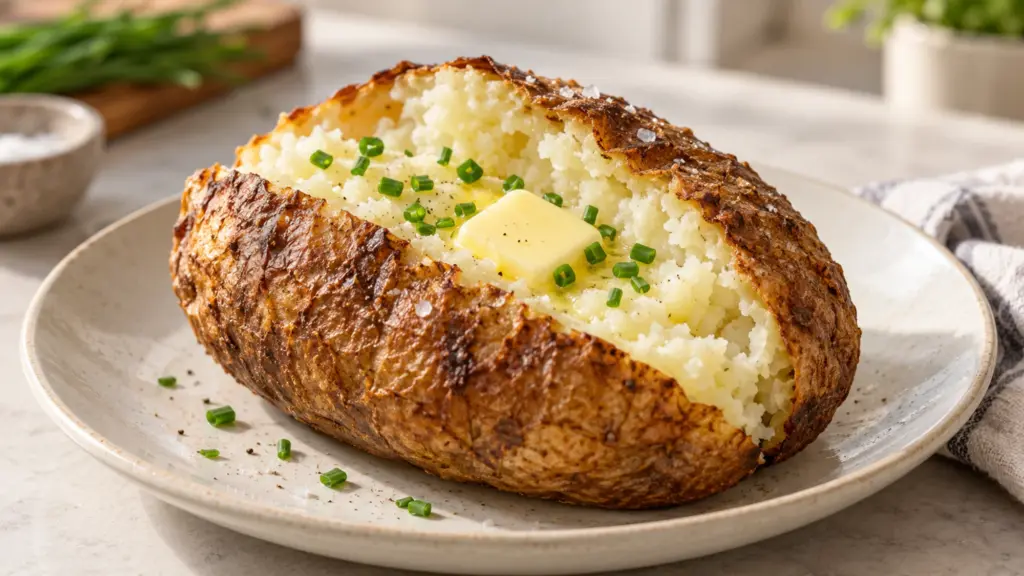
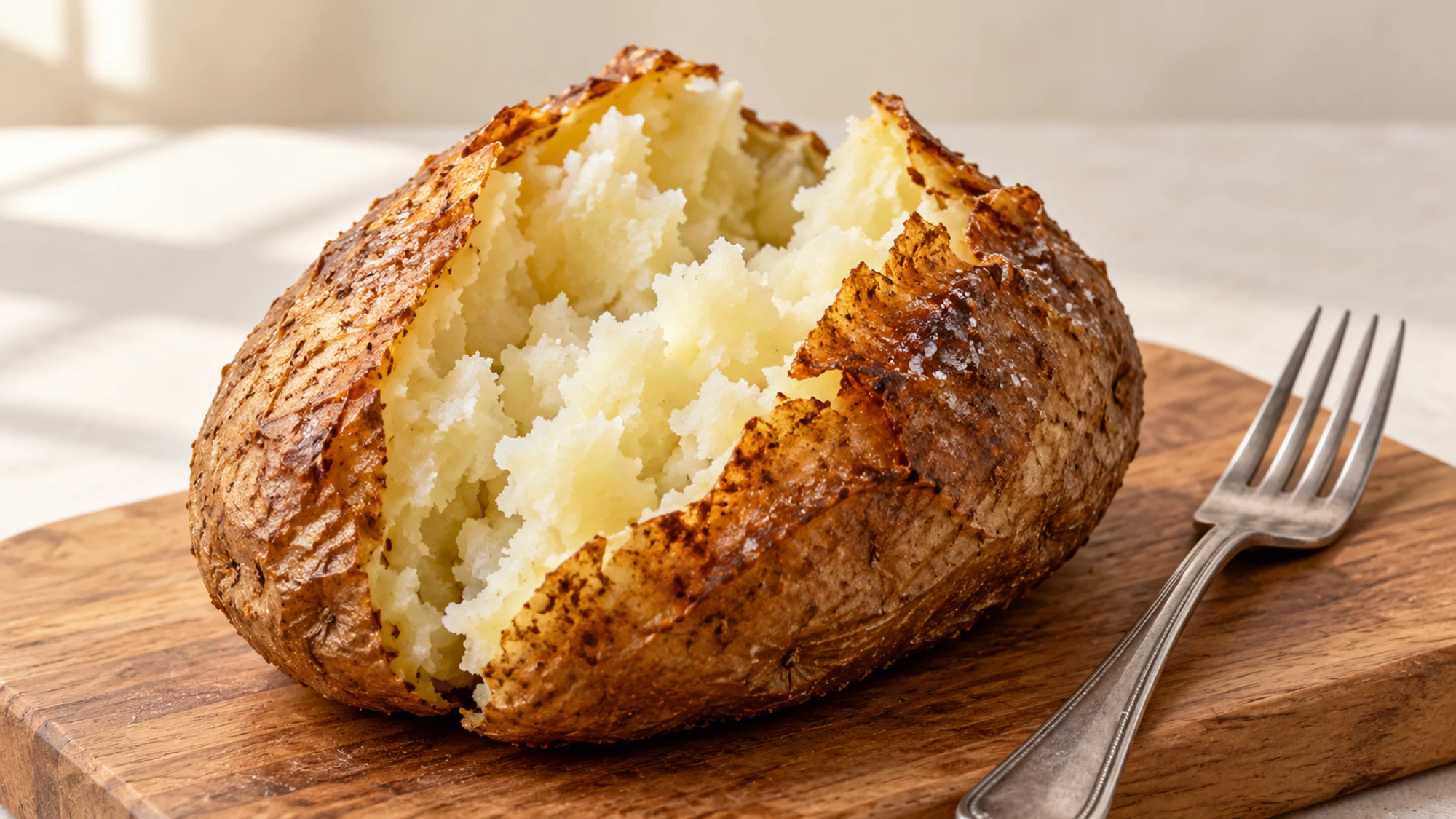
The potato looks ready on the outside, but the middle still resists your fork. That is the small trap with a jacket potato in air fryer: brown skin does not tell the whole story. Start with similarly sized russets, leave space around them, and cook until the center feels genuinely tender.
For crisp skin and a fluffy middle, dry the potatoes thoroughly, use a light coating of oil, and leave the foil in the drawer. Check tenderness before adding toppings.
A jacket potato is simply a baked potato served in its skin. This version makes two, with a straightforward air-fryer method and optional butter and chives. I’d choose medium potatoes over giant ones here: they are easier to fit comfortably in the basket, and dinner is less likely to wait on one stubborn center.
Serving Suggestions for Jacket Potato in Air Fryer
Split the potatoes just before serving and loosen the flesh gently with a fork. A little butter can settle into those fluffy ridges; a heavy topping piled on too soon can hide the texture you worked for. Put any extra toppings on the table so everyone can choose.
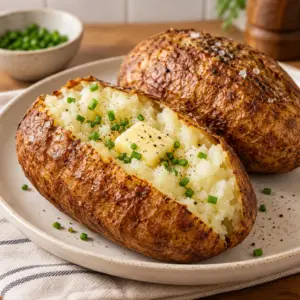
- Keep it simple: Butter, chopped chives and black pepper let the potato stay the main attraction. Add salt cautiously if your topping is already salty.
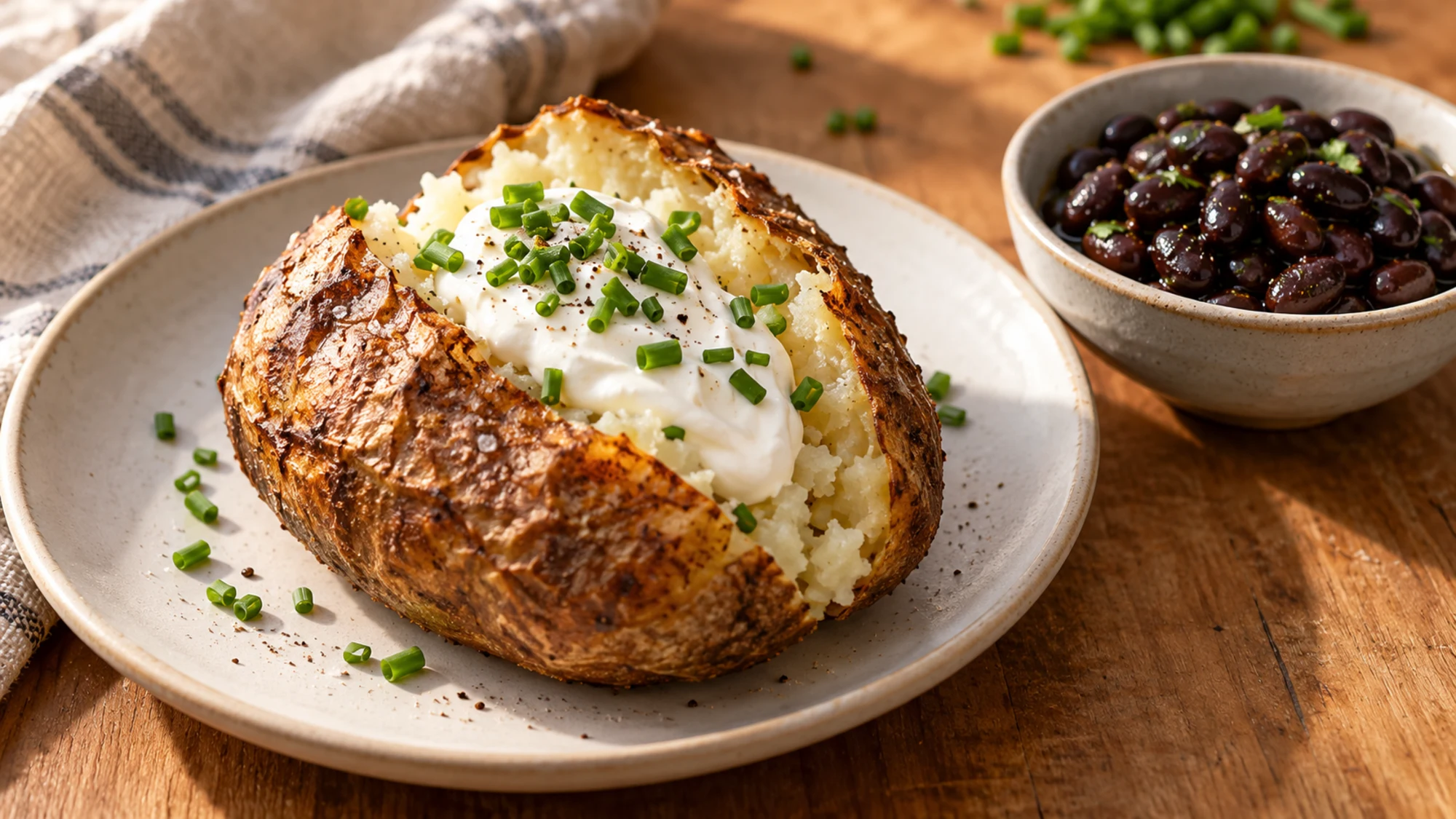
- Make it a meal: Spoon over warmed beans and add a crunchy salad on the side. Cooked chicken or lentils work too; use safely stored leftovers and heat them thoroughly.
- Add a cool contrast: Plain Greek yogurt brings tang against the hot potato. I’d add it at the table rather than before reheating.
The crispest skin belongs to the freshly cooked potato. If you are making dinner in stages, finish the salad and toppings while the air fryer runs, then serve promptly. For leftovers, follow safe cooling and storage guidance: refrigerate within two hours, or one hour above 90°F (32°C), and use within three to four days.
Prepare the toppings first, open the potatoes last, and give that crisp skin a chance to reach the table.
Variations That Keep the Skin Crisp
The most useful changes happen around the potato, not to the basic cooking method. Keep the skins dry before oiling, avoid crowding, and do not judge a larger potato by the timing for a smaller one. Air-fryer potato cooking also depends on basket capacity; this is not automatically a faster choice for a big batch.
Use this quick reference when choosing your finish. These are serving options rather than identical nutritional swaps, and the base recipe stays the same.
| Finish | What it adds | When to add |
|---|---|---|
| Butter and chives | Richness and fresh onion flavor | After splitting |
| Plain Greek yogurt | Cool, tangy contrast | At the table |
| Warm beans | A more substantial topping | Once the potato is tender |
| Olive oil and pepper | A dairy-free finish | After fluffing |
- Different potato size: Start checking early and add short cooking intervals. A thin knife should reach the center without a firm patch.
- Different variety: Russets are the choice for a fluffy interior. A waxier potato can work, but expect a creamier, denser result rather than the same texture.
- Reheating: The microwave is convenient but softens the skin. An air fryer can help re-crisp it; check that leftovers reach 165°F (74°C) throughout.
Change the toppings freely, but keep space in the basket and tenderness at the center of the decision.
Health Benefits: What the Potato Contributes
Potatoes provide carbohydrate, potassium and some fiber; keeping the edible skin adds texture as well as fiber. The potato nutrition overview is a useful reminder that the flesh contributes nutrients too. There is no need to treat the skin as the only worthwhile part.
- Look at the whole plate: Pair the potato with vegetables and a protein food rather than expecting it to cover every need alone.
- Keep toppings in perspective: Butter, cheese, yogurt and beans bring different flavors and nutrients. Portion size matters more than giving one topping a blanket good-or-bad label.
- Match your needs: The plain potato contains no dairy, but optional butter and yogurt do. Check packaged toppings and preparation surfaces if you need to avoid an allergen.
A potato can be a useful part of a varied meal; the serving size and what accompanies it tell the fuller story.
Bottom Line
A good jacket potato in air fryer needs a dry skin, room for hot air, and enough time for the center to soften. Keep the finish simple, check doneness carefully, and enjoy the contrast between crisp skin and fluffy potato.
Jacket Potato in Air Fryer Recipe

Ingredients
- 2 medium russet potatoes 8 ounces (225 g) each; scrubbed and thoroughly dried
- 2 teaspoons olive oil
- 1/4 teaspoon fine salt
- 2 teaspoons butter optional
- 2 teaspoons chopped fresh chives optional
- freshly ground black pepper to taste, optional
Equipment
- 1 Basket-style air fryer large enough for two potatoes with space between
- 1 Fork
- 1 Tongs
- 1 Instant-read thermometer optional
Instructions
- Preheat a basket-style air fryer to 400°F (200°C), following its manufacturer’s instructions. Scrub the potatoes under running water, dry thoroughly, then prick each in several places with a fork.
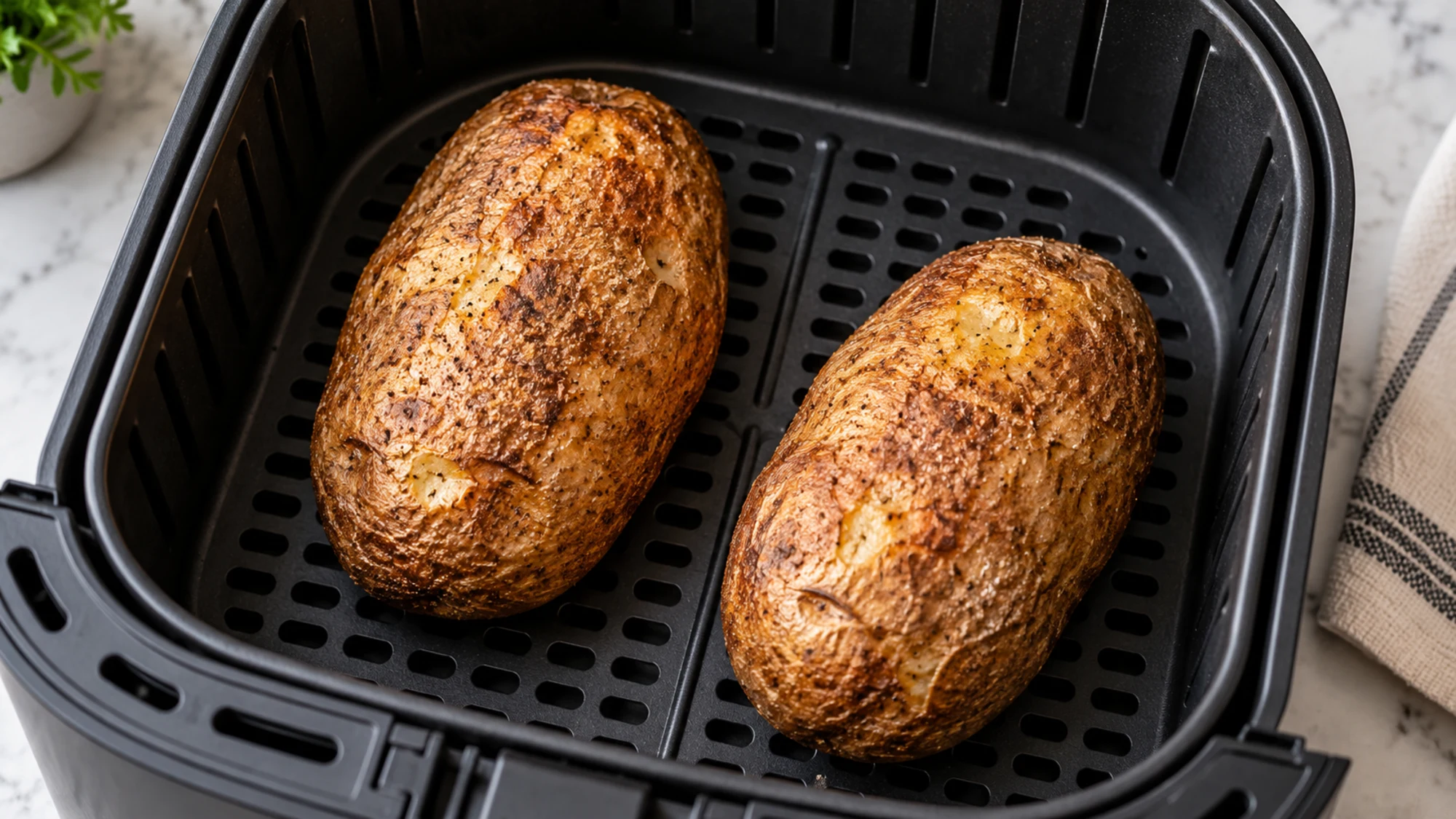
- Rub the potatoes with olive oil and sprinkle with salt. Set them directly in the basket in one layer, with room for air to circulate. Do not wrap in foil.
- Cook for 40–50 minutes, turning carefully with tongs halfway through. Begin checking at 35 minutes. A thin knife should slide easily through the center; if you use a thermometer, look for about 205–210°F (96–99°C) for a fluffy texture. Add 5-minute intervals as needed; larger potatoes and different machines may take longer.
- Transfer with tongs to plates and let stand until safe to handle. Split lengthwise, gently fluff the center with a fork, and add the optional butter, chives and pepper. Serve promptly for the crispest skin.
Nutrition
Video
Notes
Tried this recipe?
Let us know how it turned out!Hi, I’m Emily Pocker! I share recipes and food guides here at Recipes360 to help you find everyday meal inspiration and feel more confident in the kitchen. My goal is to make cooking approachable, enjoyable, and full of flavor.