
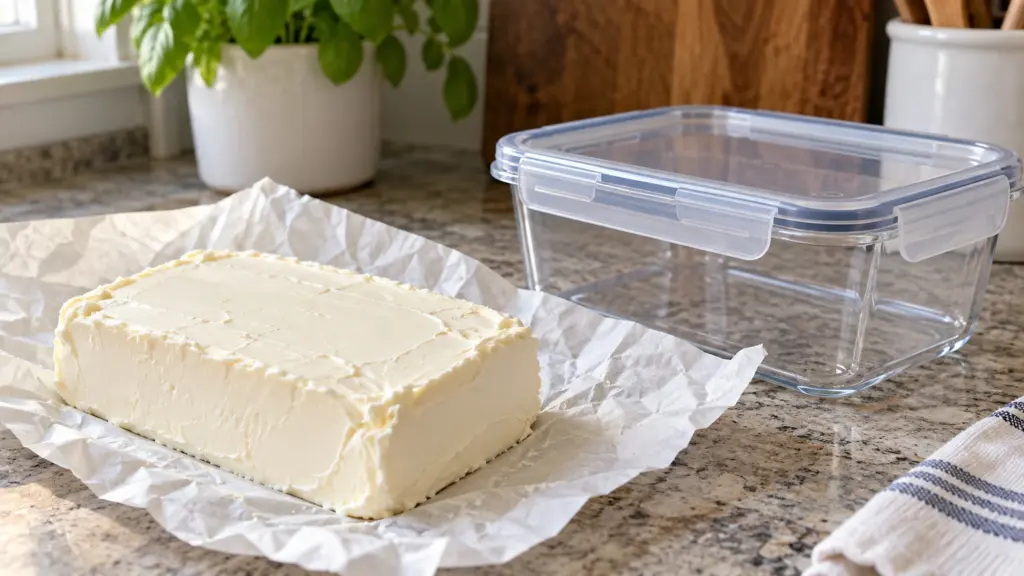
An extra block of cream cheese is easy to buy and harder to use before your plans change. Can you freeze cream cheese? Yes, but the answer becomes more useful when you decide what you will do with it after thawing.
Quick answer: You can freeze cream cheese for later cooking, but do not expect its original smooth spreading texture. Thaw it in the refrigerator and reserve it for a dish where a texture change is acceptable.
Freezing is a storage choice, not a way to rescue spoiled or mishandled dairy. Start with cream cheese that has been kept properly refrigerated, then make a plan for the thawed portion before putting it away.
What happens to cream cheese in the freezer
The National Center for Home Food Preservation cautions that cream cheese does not freeze well. This is an important quality warning: a block that looked smooth before freezing can be less appealing afterward, especially when served as a plain spread.
That does not rule out every use. North Dakota State University Extension includes cream cheese among dairy products that can be frozen for later cooking, dips, or icing. The practical distinction is between preserving something usable and preserving its exact original texture.
For a breakfast bagel or a simple cheese-and-cracker plate, fresh cream cheese is the easier choice. If you have a cooked dish in mind, freezing a small portion may be worthwhile. Products vary, so one successful result with a firm block is not a guarantee for a whipped or flavored tub.
| Planned use | Would freezing be my first choice? | Why |
|---|---|---|
| Plain spread on a bagel | No | Smooth texture is the main attraction |
| Cooked sauce or filling | Possibly | The cheese is mixed into a larger dish |
| A frosting with a precise texture | Not for an important first attempt | The finished consistency may be less predictable |
| No planned use at all | Decide before freezing | A labeled portion is more useful than an unidentified block |
Pack portions you can actually use
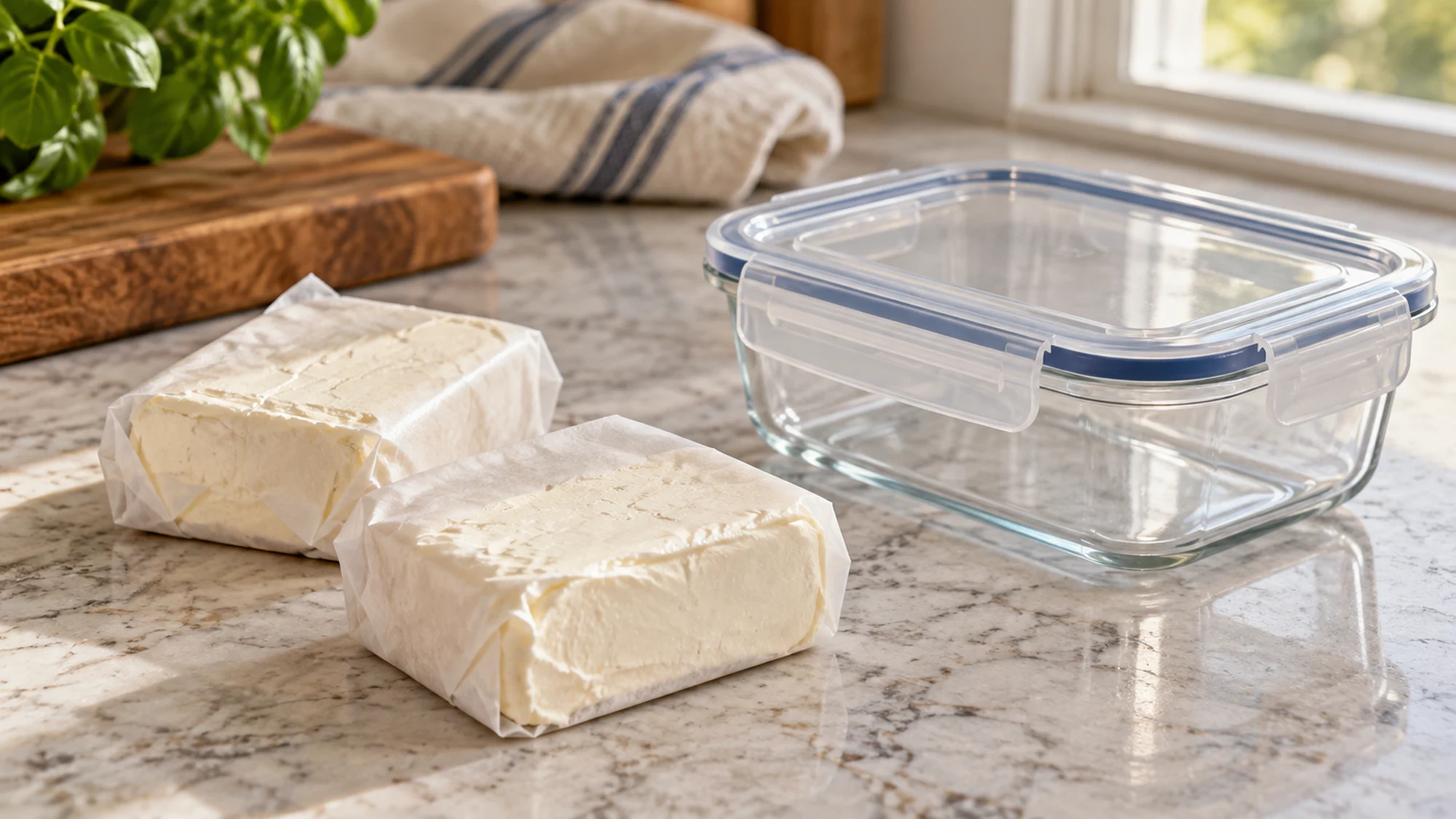
Use clean utensils and divide the cheese into sensible amounts for your intended dish. A whole block may suit one bake, while smaller portions are easier for a sauce. Avoid repeatedly handling the entire supply when you only need a little.
Seal portions in suitable freezer packaging or an airtight freezer container. Label the amount, product, and freezing date. If you keep the original packaging, add protective freezer wrapping when it does not provide a dependable seal. Keep the manufacturer’s storage instructions available rather than throwing away the only information you have.
Use an appliance thermometer instead of guessing from how cold the compartment feels. USDA guidance recommends a freezer at 0°F or below and a refrigerator at 40°F or below. Place the package where it can stay consistently frozen, not where it will be repeatedly left out during kitchen work.
Thaw gently and judge the result
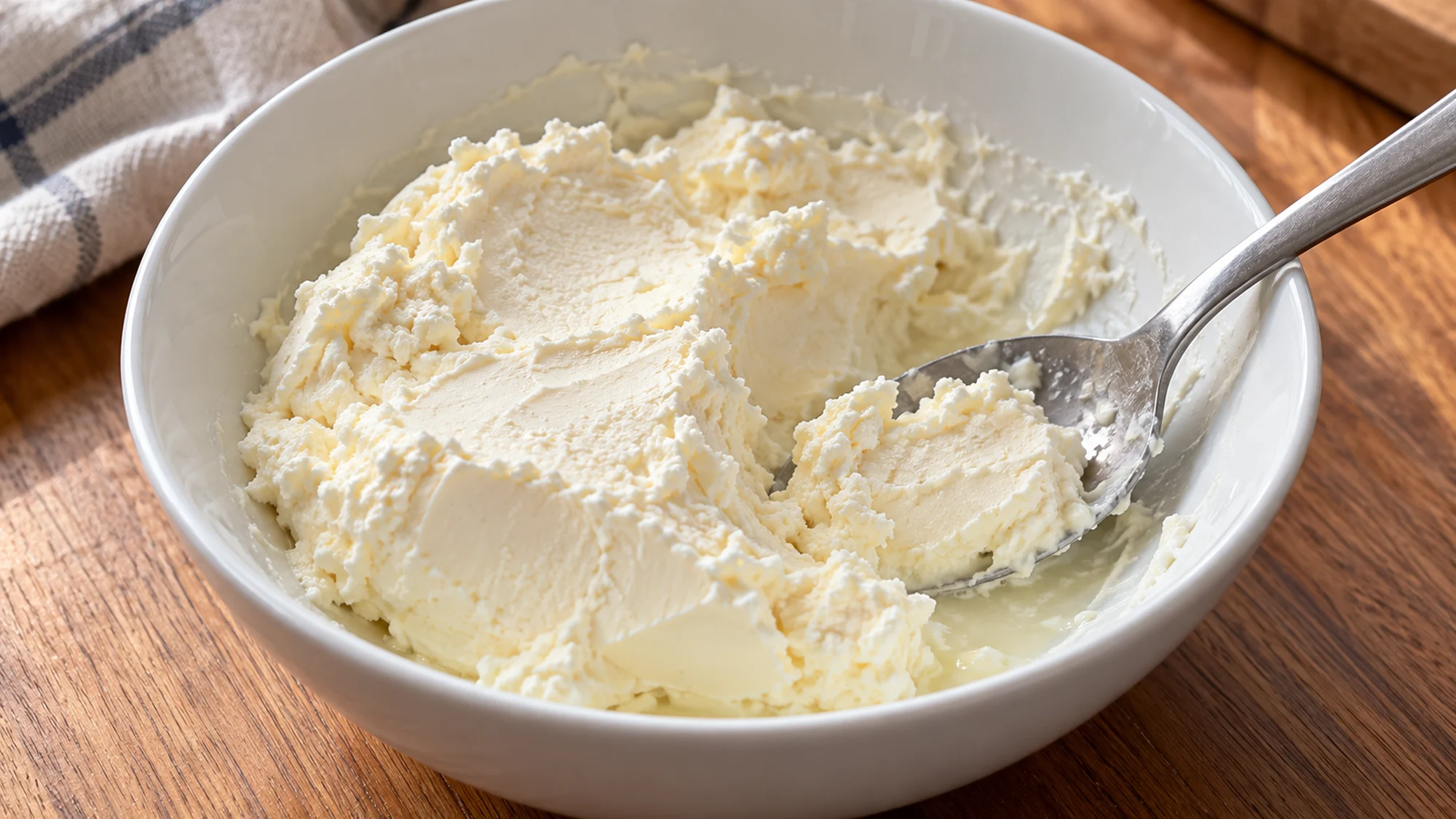
Move the portion to the refrigerator in a covered container and allow it to thaw there. USDA’s safe-thawing guidance identifies refrigeration as a safe thawing method. Do not leave cream cheese on the counter overnight to hurry the process; the outside warms before the center is ready.
Once thawed, the cheese may look separated or grainy. Stirring can help combine the visible components, but it may not restore the original smoothness. Try a small amount in the intended dish before committing the rest, especially when appearance matters.
Follow the product’s handling instructions and use the thawed portion promptly rather than assigning it a fresh unopened-package lifespan. Discard cheese with mold or other spoilage signs, and do not taste questionable food to decide whether it is safe. Normal appearance is not proof that mishandled dairy is safe.
Choose a forgiving dish
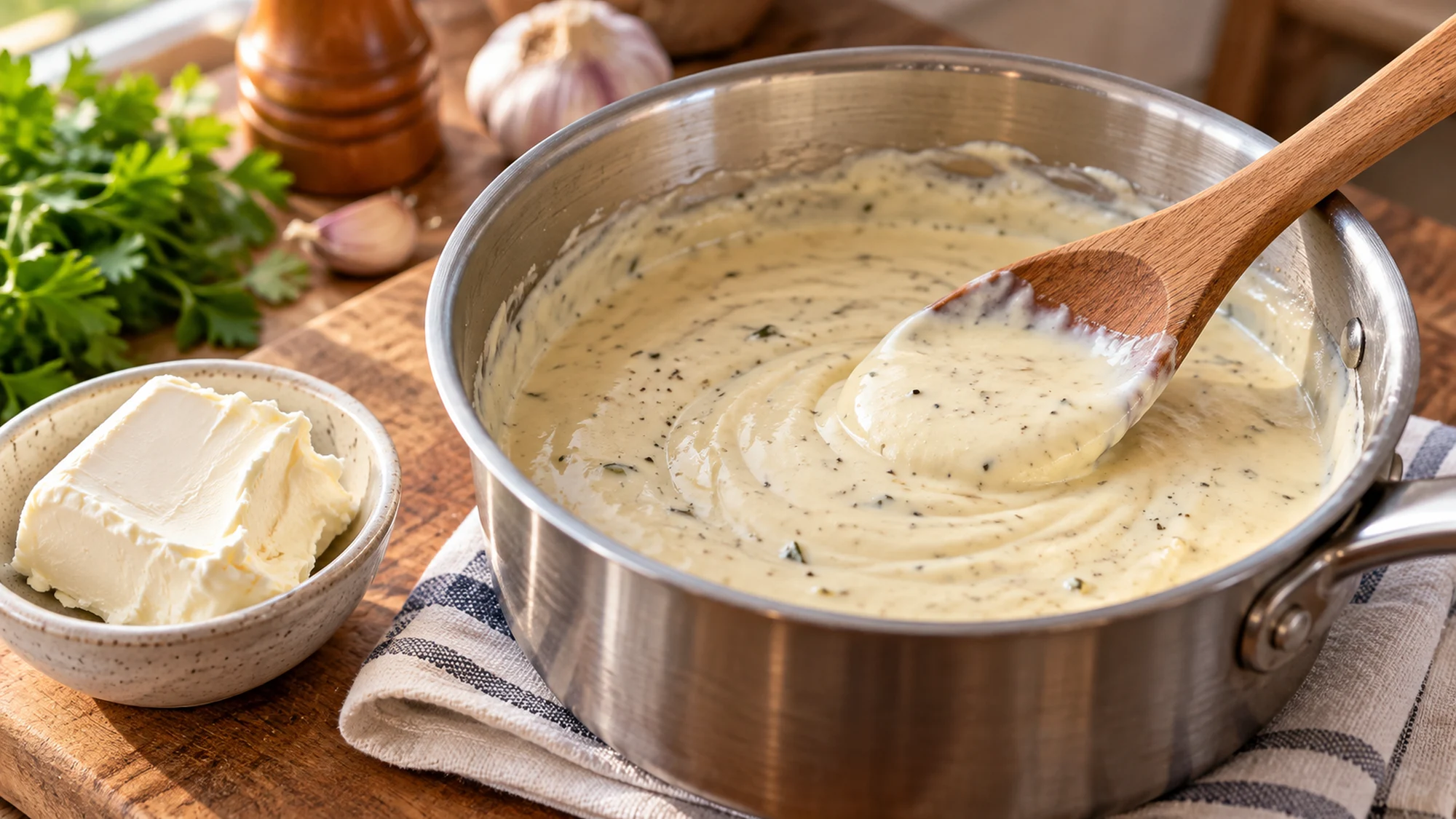
A small amount stirred into a warm sauce is a more forgiving experiment than a perfectly smooth frosting for a celebration cake. Work over gentle heat and combine gradually. This is a practical use suggestion, not a guarantee that every brand will melt or blend the same way.
If the texture still bothers you, do not force the whole portion into dinner. The point of freezing is to reduce waste without spoiling a larger batch of food. Next time, freeze a small test portion first and keep notes about the brand, amount, and dish.
Avoid repeated thawing and refreezing as an everyday strategy. Portioning once makes the process simpler and reduces the number of times you need to handle the cheese. It also makes it easier to remember what was stored and why.
Bottom Line
Yes, you can freeze cream cheese, but texture is the trade-off. Keep fresh cheese for smooth spreads, freeze well-handled portions with a specific cooking use in mind, and thaw them in the refrigerator. A clear label and a realistic plan are more valuable than expecting the freezer to preserve everything unchanged.
Sources
National Center for Home Food Preservation: Freezing Cheese · NDSU Extension: Freezing Dairy Products · USDA: Safe Storage Temperatures · USDA: Safe Thawing

Hi, I’m Emily Pocker! I share recipes and food guides here at Recipes360 to help you find everyday meal inspiration and feel more confident in the kitchen. My goal is to make cooking approachable, enjoyable, and full of flavor.