
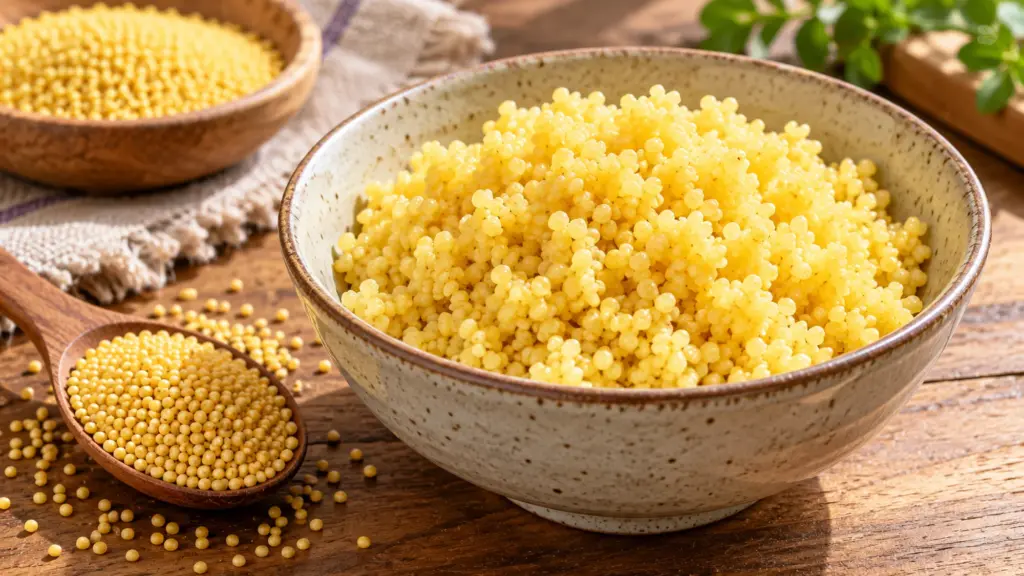
Millet can be the bag of tiny yellow grains you buy with good intentions and then leave beside the rice. Its mild flavor makes it approachable, and the same grain can become a fluffy side dish or a soft breakfast bowl depending on how you cook it.
Quick answer: Millet is a group of small cereal grains, not one single variety. For ordinary hulled millet, start with the package directions; a useful reference is 1 cup dry grain to 2½ cups liquid, simmered until tender.
The first decision is texture. Separate grains work well under vegetables and beans, while a softer pot suits porridge. Treat the cooking instructions as a starting point and taste the grain rather than relying only on the clock.
What millet is—and what to buy
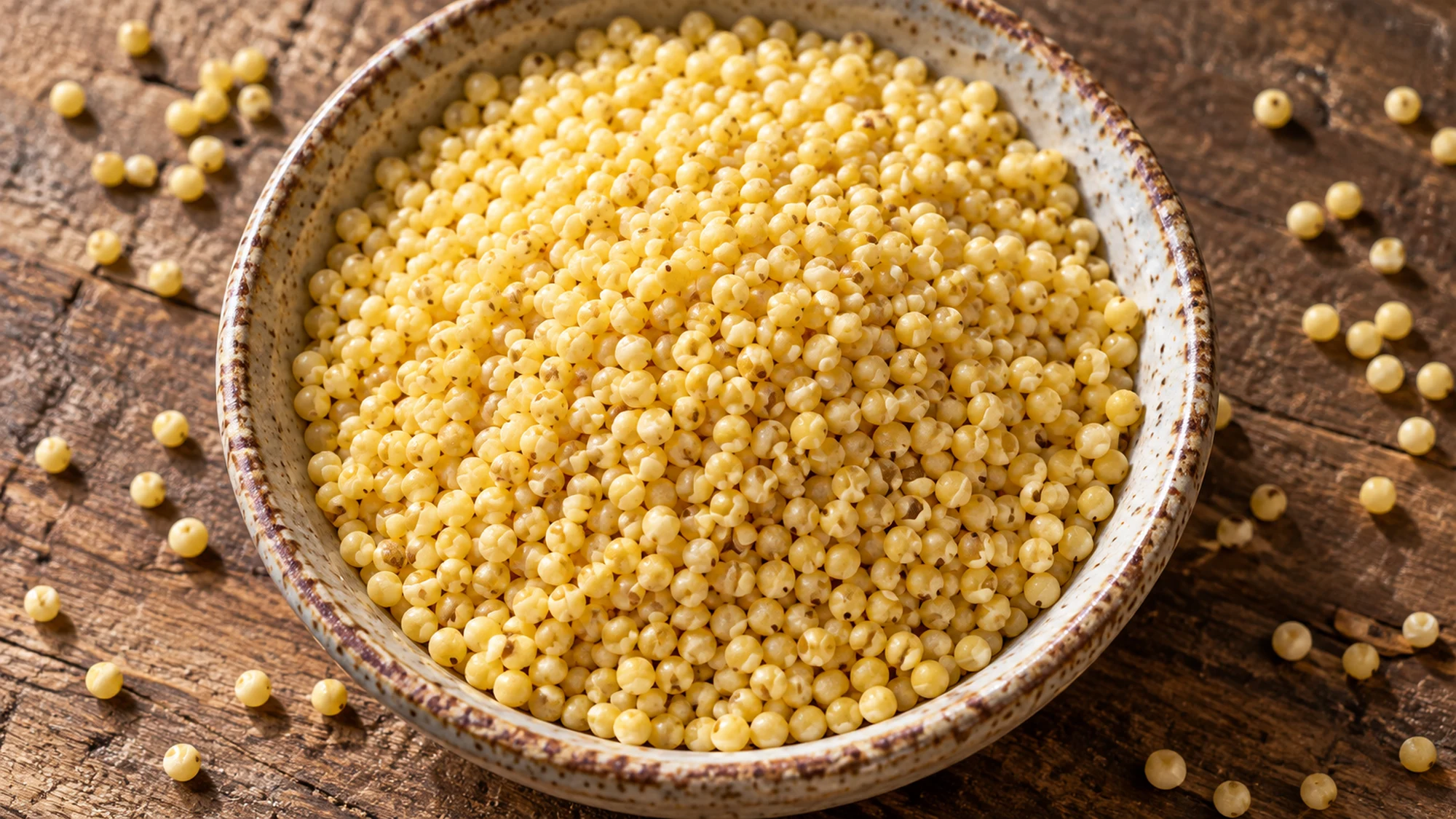
The Whole Grains Council describes several millets, including proso, pearl, foxtail, and finger millet. They have long-standing places in cuisines around the world. The yellow hulled millet commonly sold for stovetop cooking is only one part of that wider family.
Buy a package sold for human consumption and read its exact product name. Whole grains, flour, flakes, and instant preparations are not interchangeable in the pot. A flour intended for baking will not turn into separate grains, and a quick-cooking product may need much less time.
For a first purchase, a smaller bag is practical. You can learn whether you prefer it as a savory side or a breakfast grain without committing a whole shelf to it. Note the brand and your preferred cooking adjustment on the package after the first batch.
How to cook millet without guessing
The Whole Grains Council’s cooking chart suggests 2½ cups liquid for 1 cup dry millet, with a 25–35-minute simmer and about 4 cups cooked grain. Your package may recommend another ratio, so follow it when the product differs.
| What you want | How to approach it | Where it fits |
|---|---|---|
| Fluffy grains | Use the package ratio; fluff gently after cooking | Grain bowls and simple side dishes |
| Softer, spoonable millet | Add liquid gradually as needed and cook until soft | Breakfast porridge |
| A fuller savory flavor | Use a suitable broth instead of plain water | Vegetable plates and pilafs |
| A small trial batch | Halve grain and liquid, then check tenderness | Learning a new brand |
Use a pot with enough room for expansion. Bring the grain and liquid to a boil, reduce to a gentle simmer, and cover according to the package instructions. Near the end, taste a few grains. A hard center means it needs more cooking; if the pot is dry, add a little hot water rather than raising the heat.
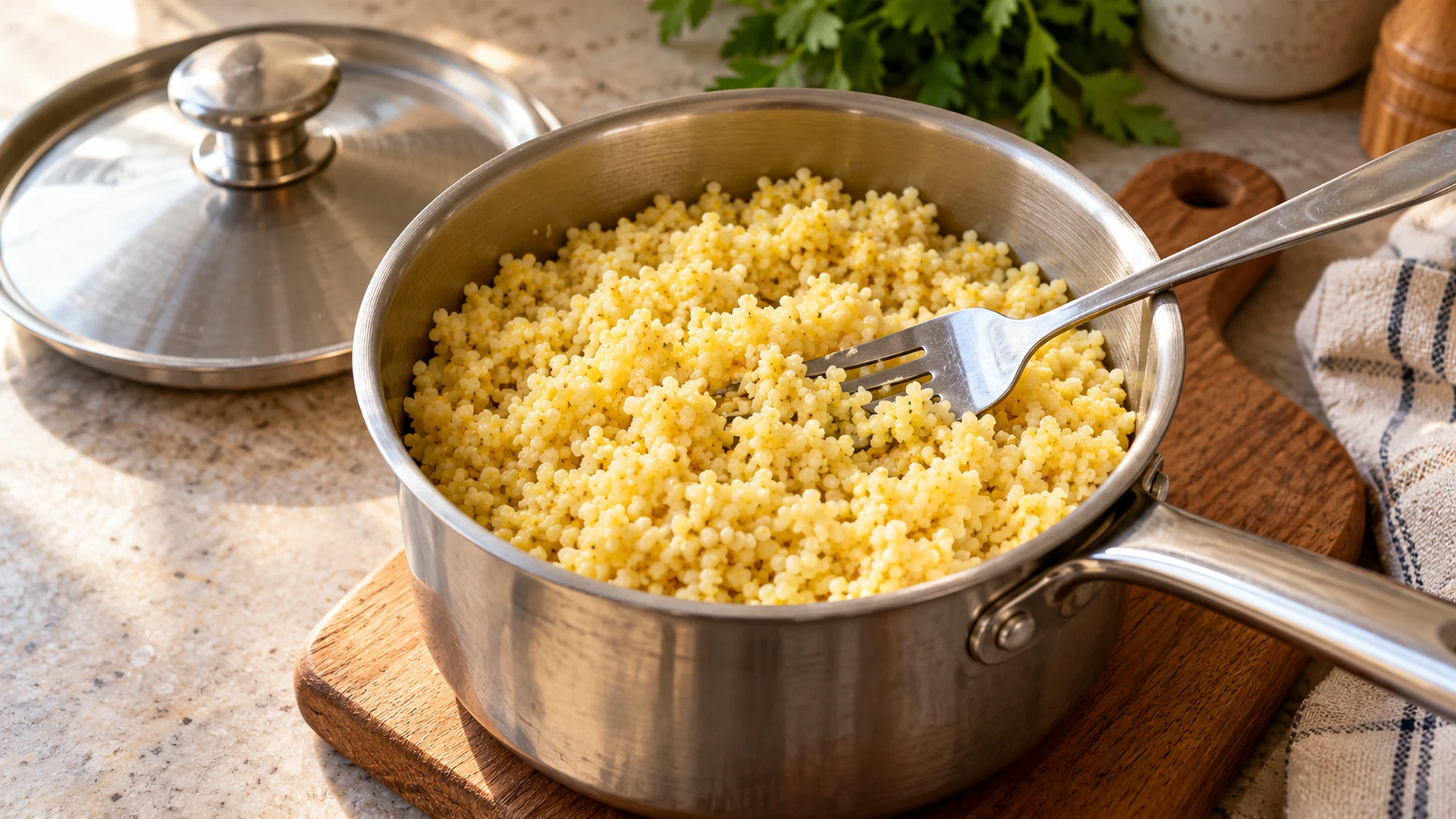
When the grain is tender, let it settle briefly off the heat before loosening it with a fork. Stirring repeatedly is unnecessary if you want separate grains. If your first pot is softer than planned, turn it into a spoonable bowl instead of trying to dry it aggressively over high heat.
Is millet gluten-free?
Millet itself is naturally gluten-free, but a finished package can encounter other grains during processing. If avoiding gluten is medically necessary, choose a product labeled gluten-free rather than assuming the grain name alone answers every question. The FDA’s labeling guidance explains that foods carrying that claim must meet its requirements, including less than 20 parts per million of unavoidable gluten.
Check broth, sauces, seasoning blends, and toppings as well. A plain grain can lose its suitability for a particular diet when the rest of the bowl changes. Shared utensils and preparation surfaces also deserve attention when cooking for someone with celiac disease.
Think of millet as another grain option, not a treatment or a nutritional shortcut. The type, portion, and foods served with it all matter. You do not need to replace every familiar grain to make room for something different.
Easy ways to use the cooked grain
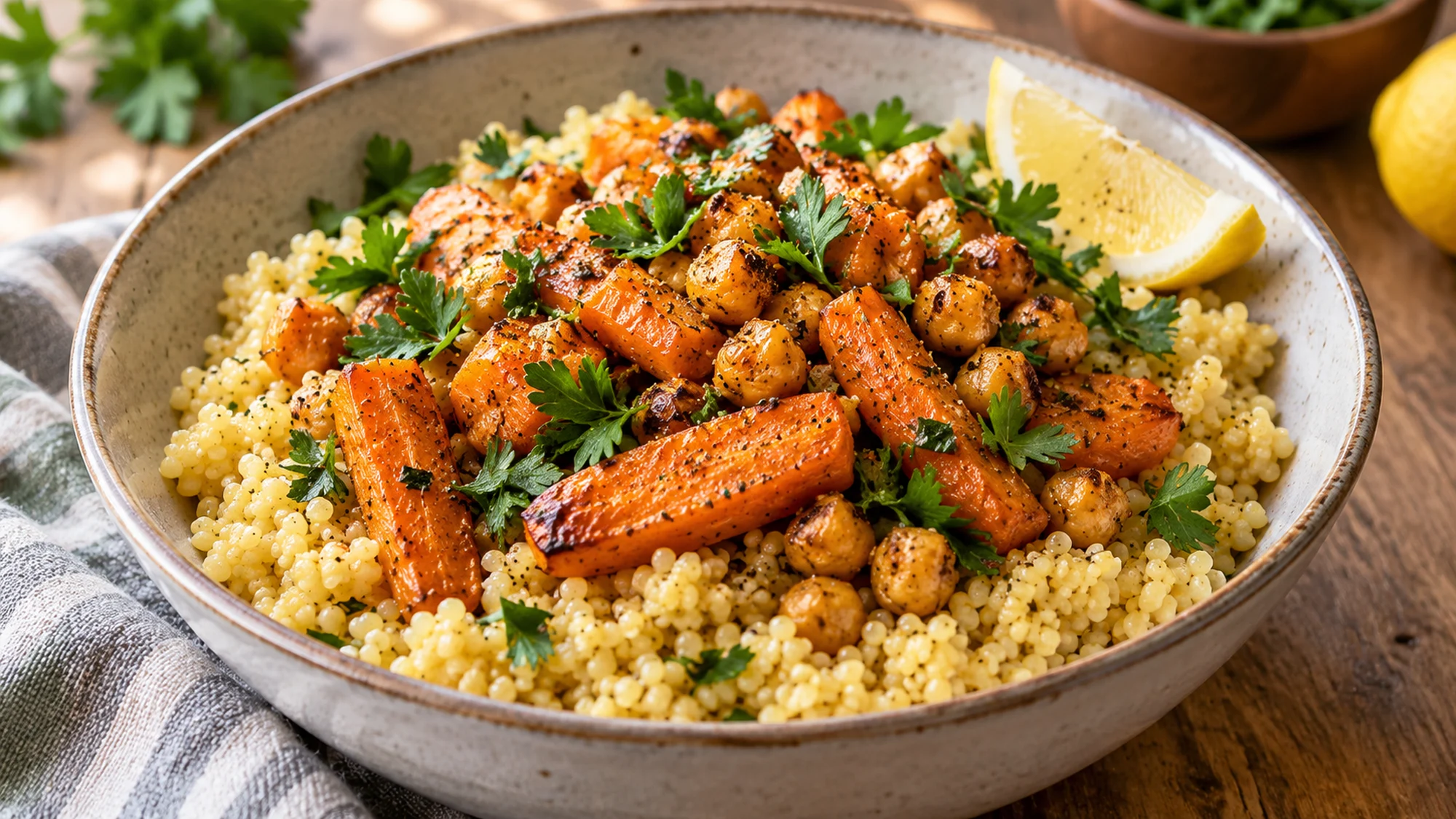
For a savory bowl, pair warm millet with roasted carrots, chickpeas, parsley, and a lemony dressing. The grain gives the plate a mild base, while the vegetables and dressing supply contrast. Keep the dressing separate until serving if you prefer a lighter, less saturated texture.
For breakfast, loosen a portion with milk or a suitable alternative, warm it gently, and add fruit and cinnamon. Taste before sweetening. A softer batch is especially useful here, so an imperfect first attempt does not have to become wasted food.
Millet also works alongside a stew or curry in the place you might normally put rice. Start with a modest serving so you can decide whether the texture suits the dish. Millet flour, however, needs a recipe designed for it; substituting it freely for wheat flour changes the structure of baked goods.
Bottom Line
Millet is versatile when you buy the right form and choose a texture before cooking. Begin with the package directions, taste for tenderness, and build a simple bowl around vegetables, beans, or another protein. One successful small pot is a better introduction than an ambitious pantry overhaul.
Sources
Whole Grains Council: Whole Grains A to Z · Whole Grains Council: Cooking Whole Grains · FDA: Gluten-Free Food Labeling

Hi, I’m Emily Pocker! I share recipes and food guides here at Recipes360 to help you find everyday meal inspiration and feel more confident in the kitchen. My goal is to make cooking approachable, enjoyable, and full of flavor.