
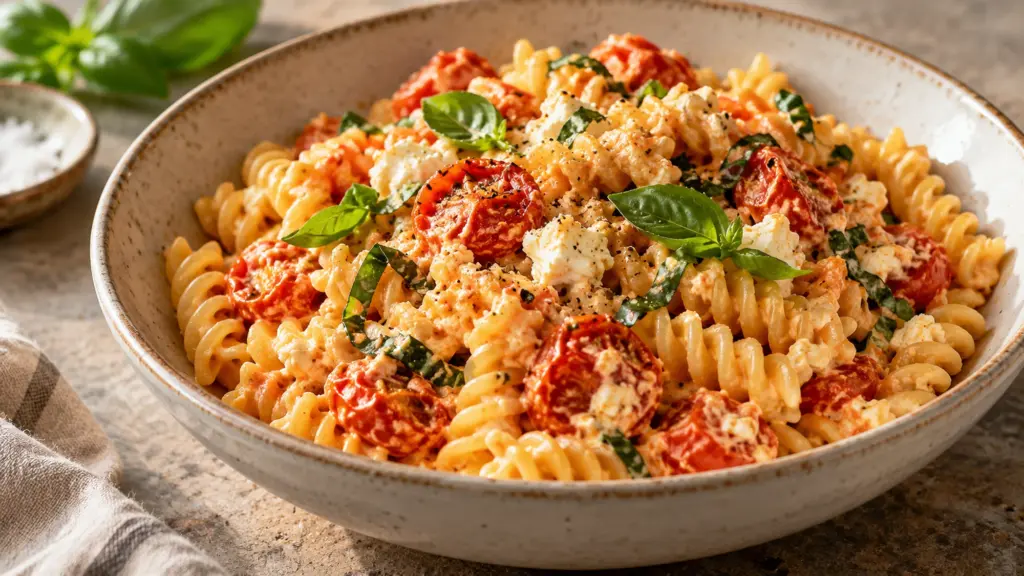
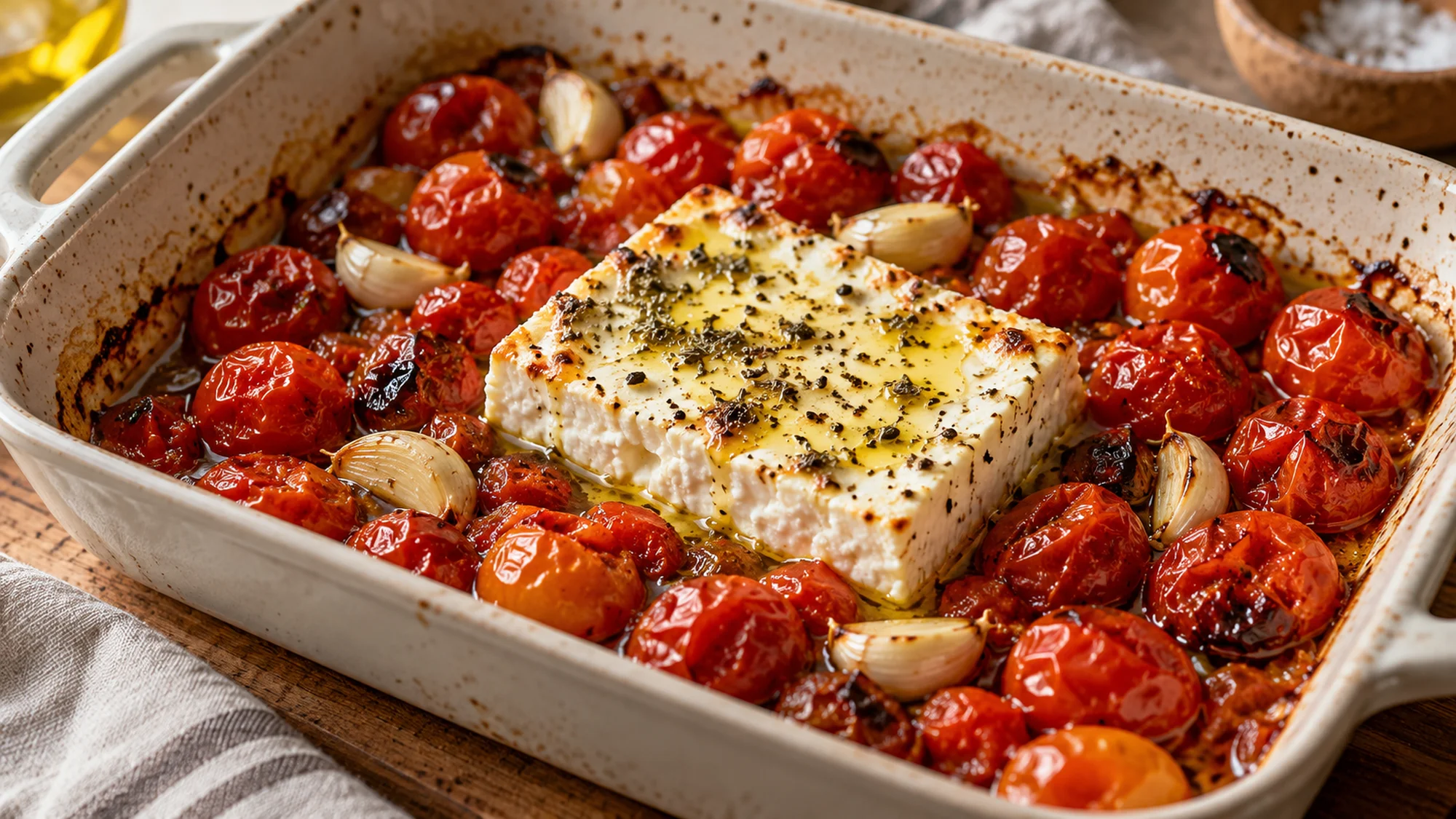
A block of feta can look stubbornly solid beside a tray of cherry tomatoes, right up until a fork turns them into sauce. Baked feta pasta uses that transformation well: roasted tomato juices loosen the warm cheese, and a splash of pasta water helps everything cling to the spirals. This version keeps the ingredients straightforward and lets the tomatoes supply most of the sweetness.
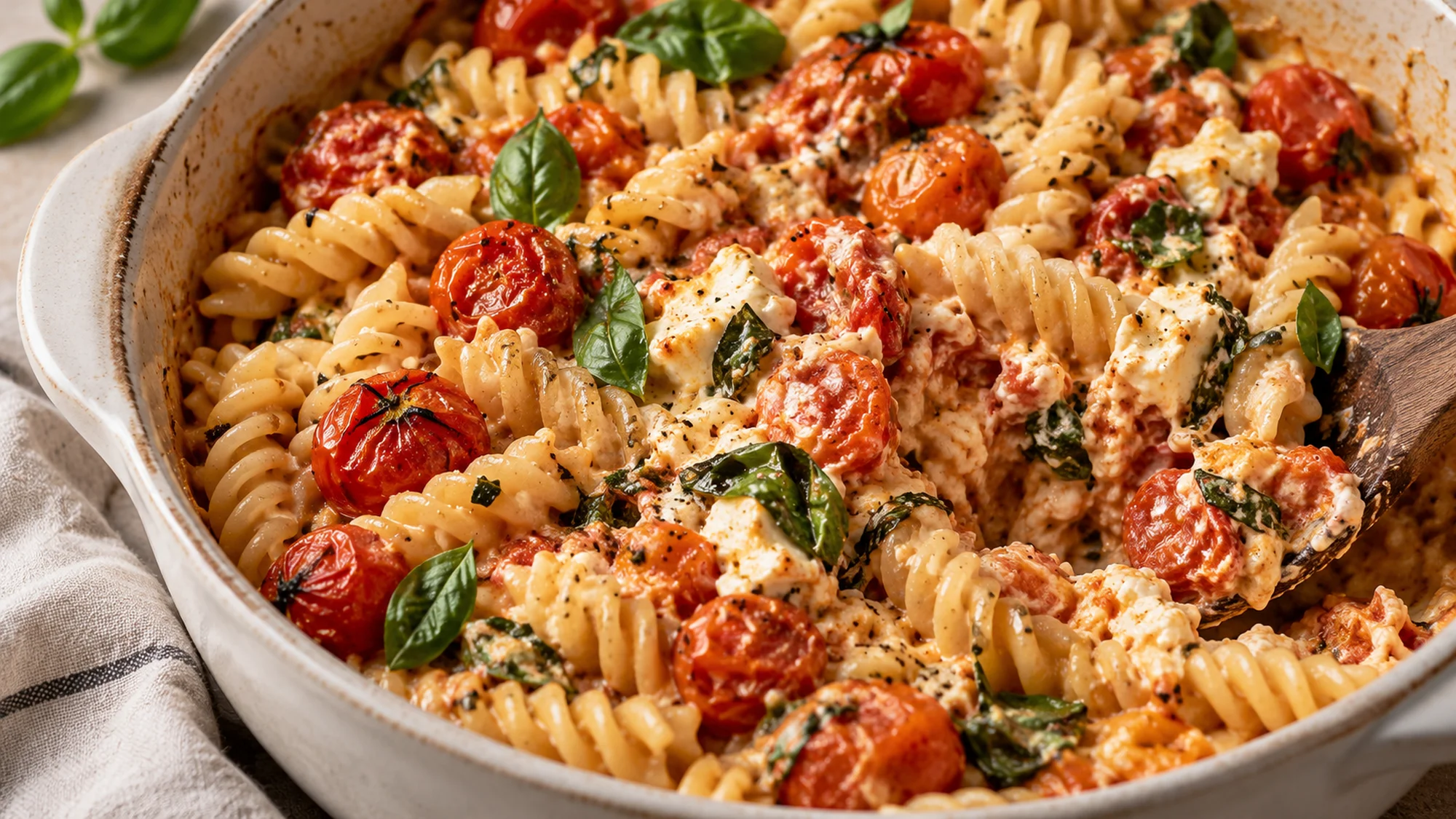
Roast the feta and tomatoes together, cook the pasta separately and save some of its water before draining. Mash the hot cheese and tomatoes, then toss with pasta while adding water gradually. Taste before adding salt: the feta already brings plenty, and the sauce concentrates as it sits.
Serving Suggestions for baked feta pasta
Serve baked feta pasta while the sauce is warm and loose enough to coat each piece. A little sauce should remain in the bottom of the bowl rather than forming a dry cheese layer around the noodles. If it tightens before everyone reaches the table, stir in another small splash of the reserved pasta water.
I’d choose a sharp green salad or simply dressed cucumber alongside the tangy sauce. Bread is optional, although a small piece of baguette makes sense if you enjoy catching the last tomato juices. Keep the plate balanced around your appetite; this is a main dish, not a requirement to serve every possible side.
Divide leftovers into shallow containers and refrigerate within two hours. Use within three to four days, then reheat the portion you need to 165°F (74°C), stirring in a little water to loosen the sauce. The basil loses some freshness on reheating, so a few new torn leaves are more useful than repeatedly heating the whole batch.
Variations for baked feta pasta
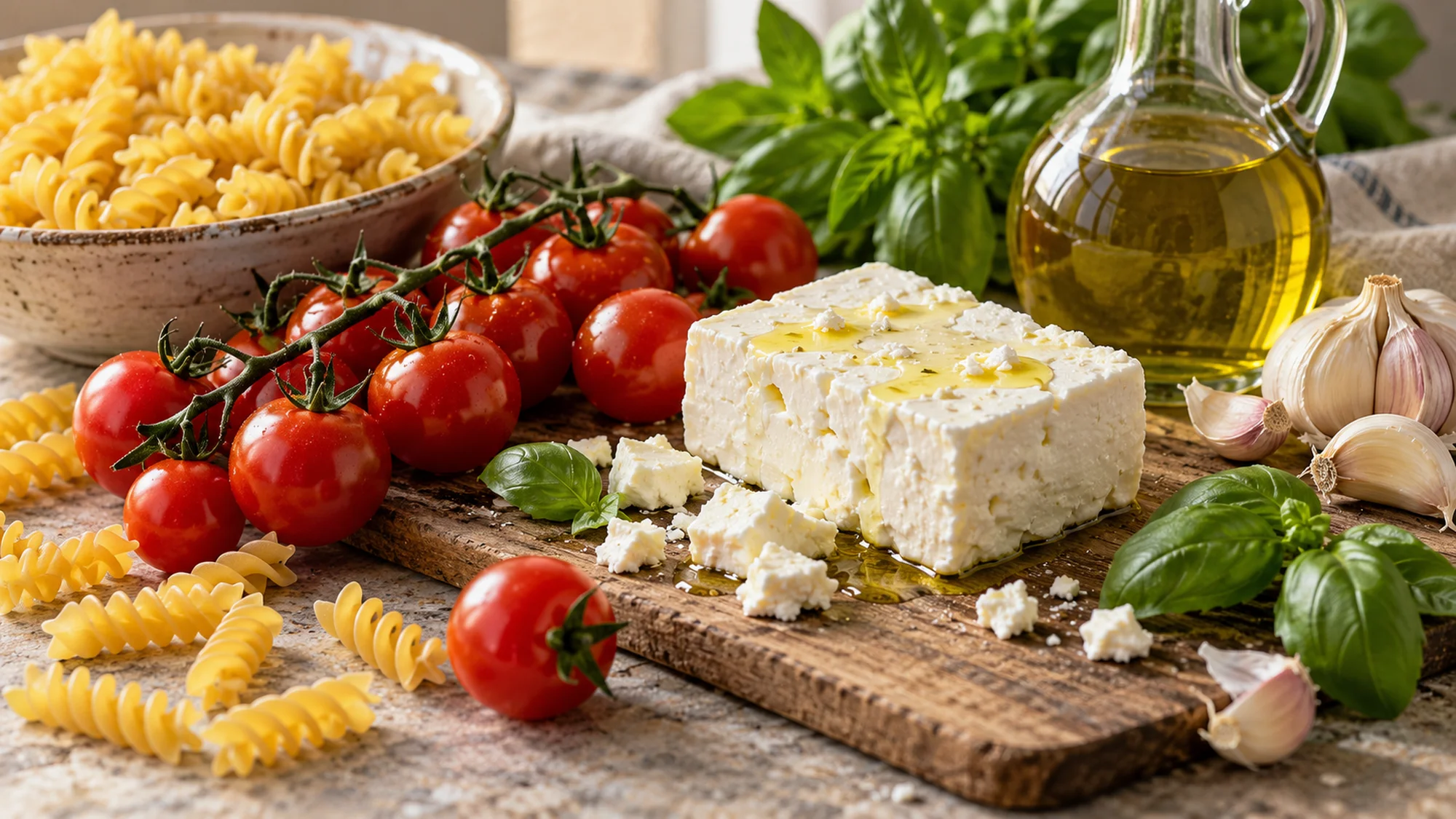
Choose a block of feta rather than assuming every tub of crumbles will behave identically. Crumbled cheese can be drier and may include ingredients that affect the finished texture. The tomatoes matter too: small ripe ones release juice readily, while large watery pieces can leave a thinner sauce and need a different roasting time.
I prefer adding basil after the dish leaves the oven. Its fresh aroma is a better counterpoint to roasted tomato than a tray of scorched leaves. Garlic roasts with the tomatoes here, giving it a mellower flavor than stirring raw minced garlic into the finished pasta. That difference is deliberate, so keep the two approaches distinct.
Use the table as a guide to changes rather than a list of identical substitutes. Whole-wheat or legume pasta can work, but follow its package cooking time and expect a different bite. When adding vegetables, consider the water they release; an already crowded dish steams more and browns less.
| Change | What it adds | How to handle it |
|---|---|---|
| Whole-wheat fusilli | More whole-grain character | Cook to package guidance |
| Baby spinach | Tender greens | Fold into the hot finished pasta |
| Chili flakes | Heat | Add a small pinch before roasting |
| Drier tomatoes | Less free liquid | Use reserved pasta water gradually |
Health Benefits and Portion Balance
Feta supplies protein and calcium along with sodium and saturated fat. Tomatoes contribute vegetables, but adding them does not erase the cheese’s contribution. A useful way to think about this dish is as a combination of pasta, vegetables and cheese, with portions and side dishes chosen for the overall meal.
The MyPlate guidance on variety and whole grains offers broader context without assigning a special health effect to one bowl. Whole-wheat pasta is one way to vary the grain choice, though its flavor and texture differ. Compare feta and pasta labels if sodium or other nutrients are important to your food choices.
Nutrition in the card is estimated for one-quarter of the batch, including all the cheese and measured oil. It is not a laboratory result, and brands change the numbers. Follow prompt cooling guidance and safe reheating guidance for leftovers; a covered dish left out for hours is not protected by its lid.
Bottom Line
The finishing toss deserves as much attention as the roasting. Mash while the feta is hot, add pasta water in small amounts and stop when the sauce coats the spirals comfortably. I’d hold the salt until that point and let fresh basil finish the bowl. The oven gets you most of the way there; a fork and a sensible splash of water handle the rest.
Baked Feta Pasta Recipe

Ingredients
- 250 g dry fusilli
- 200 g block feta cheese
- 600 g cherry tomatoes
- 2 tbsp olive oil
- 3 garlic cloves peeled and lightly crushed
- 1/4 tsp black pepper
- 1/4 cup fresh basil torn
- 1/2 cup reserved pasta cooking water use as needed
Equipment
- 9-by-13-inch baking dish
- Large saucepan
- Colander
- Heatproof measuring cup
Instructions
- Heat the oven to 400°F (200°C). Put the tomatoes and garlic in a 9-by-13-inch baking dish and toss with the olive oil and pepper. Nestle the feta in the center and turn it once to coat lightly with oil.
- Bake for 30–35 minutes, until the tomatoes have burst and the cheese is soft. Use oven mitts when moving the dish; hot tomato juices can splash.
- While the feta roasts, boil the fusilli according to its package until just tender. Before draining, scoop out at least 1/2 cup of the cooking water. Drain the pasta.
- Mash the hot feta, garlic and tomatoes with a fork. Add the pasta and 2 tablespoons of the reserved water. Toss well, adding further splashes only until the sauce coats the pasta loosely.
- Fold in the basil. Taste before adding any optional salt, since feta is salty. Divide among four bowls and serve promptly.
Nutrition
Video
Notes
Tried this recipe?
Let us know how it turned out!Hi, I’m Emily Pocker! I share recipes and food guides here at Recipes360 to help you find everyday meal inspiration and feel more confident in the kitchen. My goal is to make cooking approachable, enjoyable, and full of flavor.