
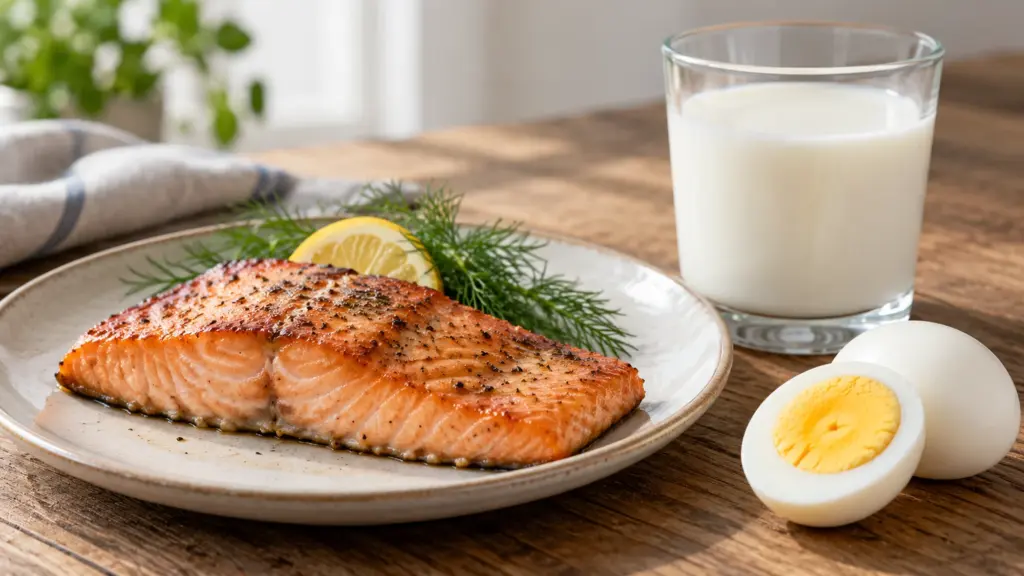
You flip over a milk carton, spot vitamin D on the label, and wonder whether breakfast could help with a low result from a blood test. Food matters, but vitamin D deficiency is not a problem a salmon dinner can diagnose—or reliably fix by itself.
Vitamin D foods can support your everyday intake. A confirmed deficiency needs a clinician-guided plan, not guesswork with groceries, sunshine, or supplements.
The useful kitchen question is narrower: which foods actually contribute vitamin D, and how can you make them part of meals you enjoy? I’d start with a few dependable choices rather than rebuild the entire shopping list.
Vitamin D Deficiency Is More Than a Food Gap
Vitamin D helps the body absorb calcium and supports bones and muscles, among other functions. But low vitamin D can involve intake, absorption, medicines, or how the body processes it—not simply an absence of fish on the plate. MedlinePlus explains these different causes.
- A food diary can show eating patterns; it cannot establish your vitamin D level.
- Symptoms such as tiredness have many possible explanations. Do not use a symptom checklist to diagnose yourself.
- If you have a low blood-test result, ask what it means for you and how your clinician plans to follow it.
Treat food choices as one part of the conversation, not a substitute for interpreting a test result.
Which Foods Are Worth Looking For?
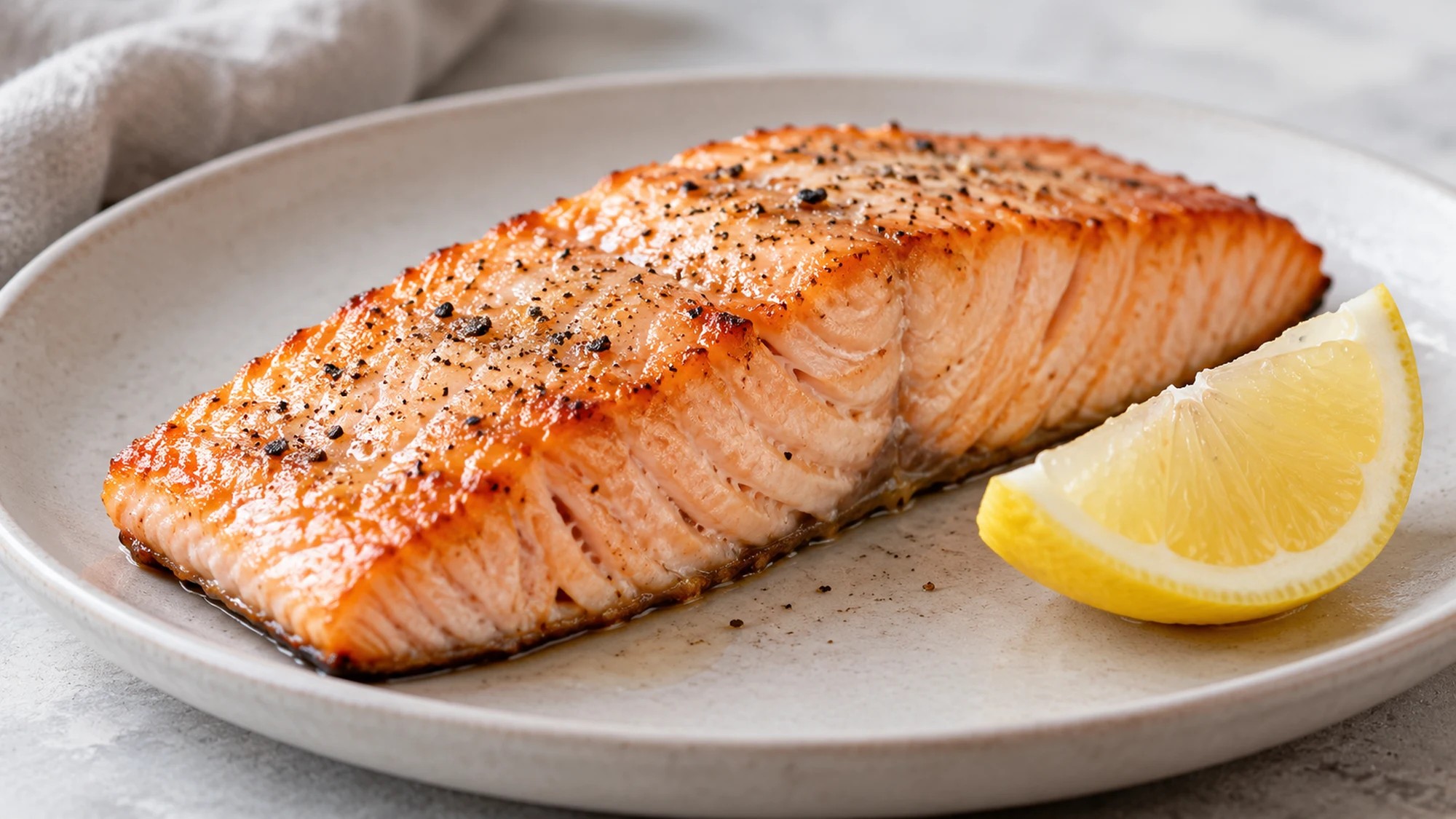
According to the NIH Office of Dietary Supplements, relatively few foods naturally contain vitamin D. Fatty fish are useful sources; egg yolks provide smaller amounts. Fortification adds another practical route, but it is product-specific.
| Food | What to check | Meal idea |
|---|---|---|
| Salmon or trout | Fish type and portion | Flaked into a grain bowl |
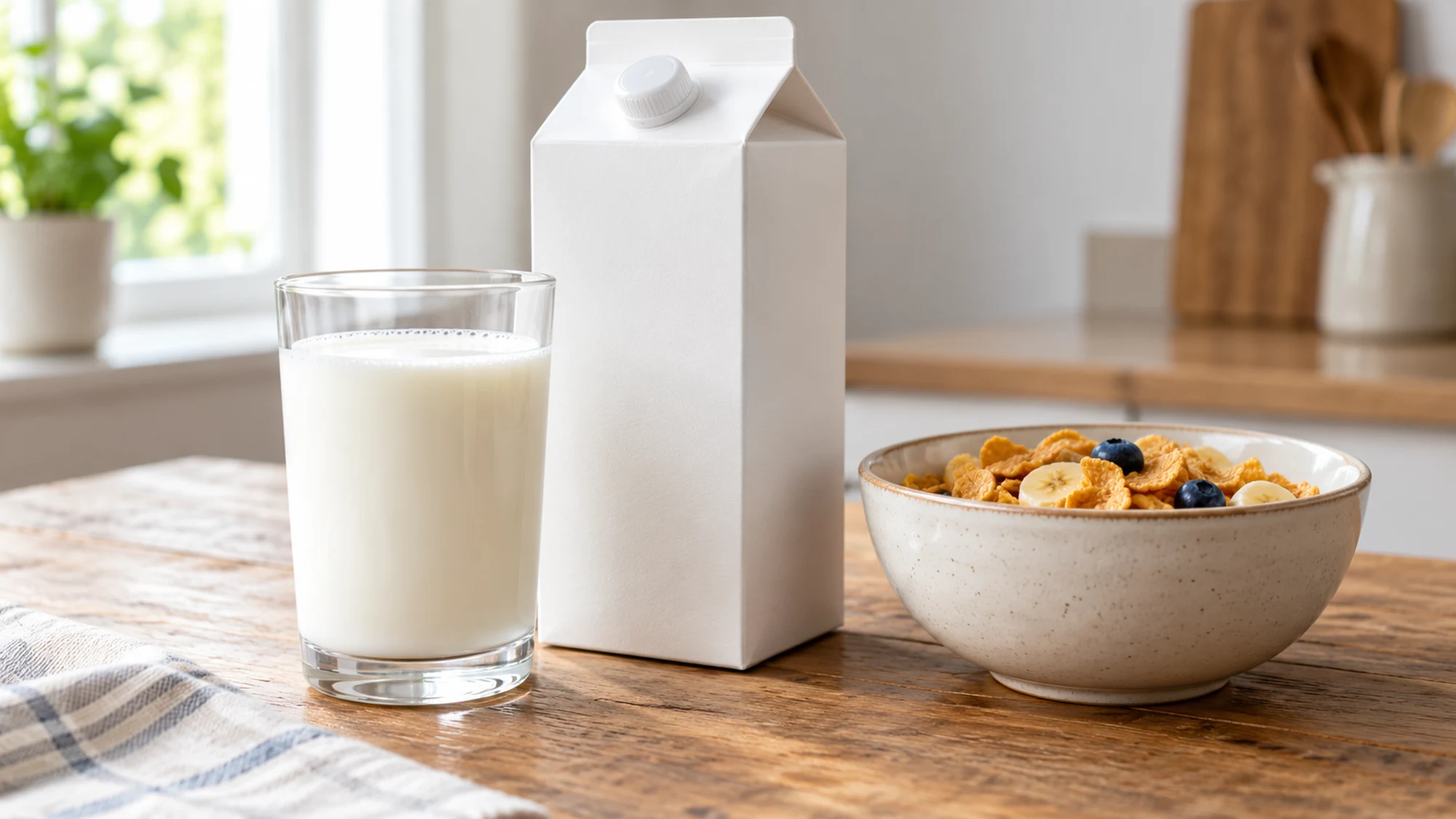
| Milk or plant beverage | Vitamin D on its label | With cereal or oatmeal |
| Breakfast cereal | Whether it is fortified | Paired with fruit |
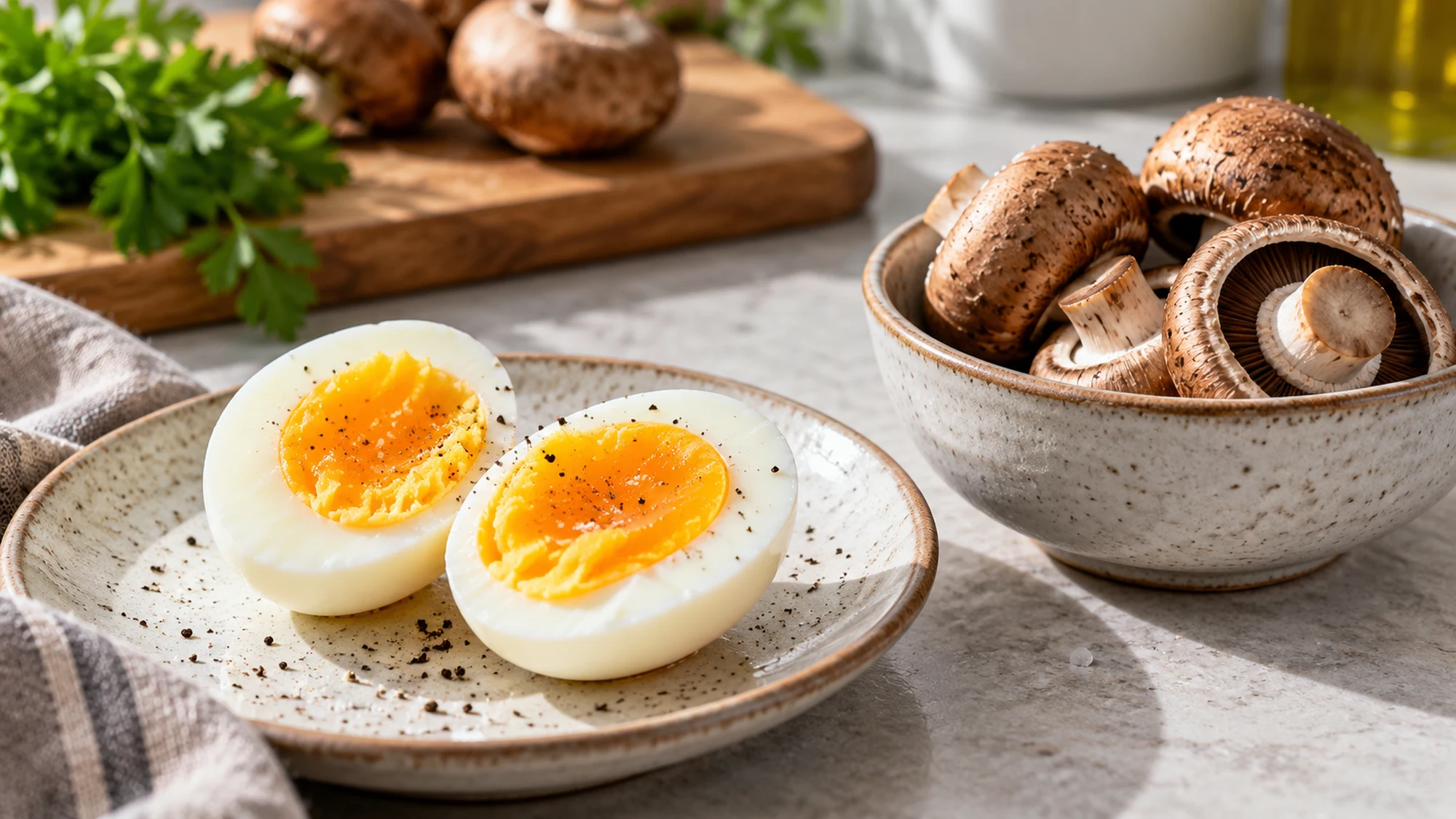
| Egg yolks | A smaller contribution | Chopped into a salad |
| Mushrooms | UV exposure or labeled vitamin D | Sautéed with vegetables |
I’d choose a fish you like eating over an ambitious purchase that sits untouched. Lemon, dill, or a spoonful of plain yogurt can soften salmon’s rich flavor. If fish is not for you, check fortified foods rather than assuming vegetables supply the same nutrient.
Look for a real source on the plate or label; “healthy-looking” packaging is not a vitamin D guarantee.
Read the Serving Size Before Comparing Labels
The FDA’s Nutrition Facts guide explains that listed nutrients refer to the labeled serving. Vitamin D appears in micrograms and as a percent Daily Value. The serving size describes a reference amount, not a recommendation for how much you personally should eat.
- Compare similar portions. A small splash of milk is not the same as the full serving shown on its carton.
- Check the specific substitute. Switching from dairy milk to a plant beverage may change vitamin D unless the replacement is fortified.
- Look again when you change brands. A familiar food name does not guarantee the same fortification.
Percent Daily Value helps compare products; it does not diagnose deficiency or tell you how to treat a low result. There is no need to turn breakfast into a spreadsheet. Pick a product that fits your preferences, then understand the portion you normally use.
Compare the amount you will actually eat or drink, not just the biggest number on the package.
Keep Food, Sun Safety, and Treatment Separate
Sunlight is involved in vitamin D production, but deliberate unprotected exposure is not a kitchen solution. The CDC recommends protection from ultraviolet radiation, including shade and protective clothing; tanning is not a safe workaround.
- For a food-first routine, rotate a fish meal, a labeled fortified breakfast option, or another suitable source without forcing every meal around one nutrient.
- For a confirmed deficiency, follow your clinician’s treatment and follow-up plan. Food alone may not correct it.
- Before adding a supplement, discuss existing products and medicines with your clinician or pharmacist. More is not automatically better.
Excessive supplemental vitamin D can cause harm, as MedlinePlus notes. Avoid borrowing someone else’s regimen, even when their blood-test story sounds familiar. Your shopping choices and your treatment plan answer different questions.
Bottom Line
Build meals around enjoyable, identifiable vitamin D sources, check fortified-food labels, and keep a confirmed deficiency under professional care. A useful grocery habit supports the plan; it does not replace it.
For a brief general explanation, Mayo Clinic’s “Why you need vitamin D and how to get it” introduces the nutrient and food sources. It is educational, not a personalized treatment plan.
Sources
- NIH: Vitamin D consumer fact sheet
- MedlinePlus: Vitamin D deficiency
- FDA: Understanding the Nutrition Facts label
- CDC: Sun safety

Hi, I’m Emily Pocker! I share recipes and food guides here at Recipes360 to help you find everyday meal inspiration and feel more confident in the kitchen. My goal is to make cooking approachable, enjoyable, and full of flavor.