
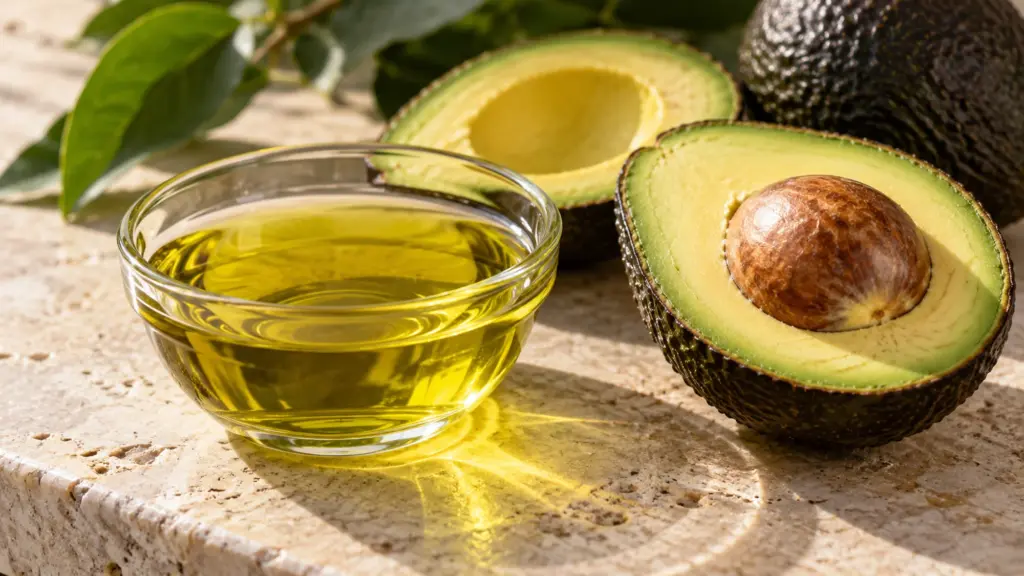
An avocado has a conspicuous brown pit, so the question is understandable: is avocado oil a seed oil? The cooking oil sold under that name comes from the fruit’s oily flesh, not from pressing its pit. That distinction answers the botanical question; it does not, by itself, settle which oil belongs in your kitchen.
No. Ordinary culinary avocado oil is a fruit-flesh oil. Choose it for the flavor, cooking task and trustworthy labeling you want—not because the phrase “seed oil” makes other everyday oils automatically unsafe.
I’d start with what dinner needs. A delicate dressing and a hot skillet are different jobs, and a bottle’s processing style tells you more about its usefulness than an argument on the internet.
“Is Avocado Oil a Seed Oil?” Starts With the Fruit
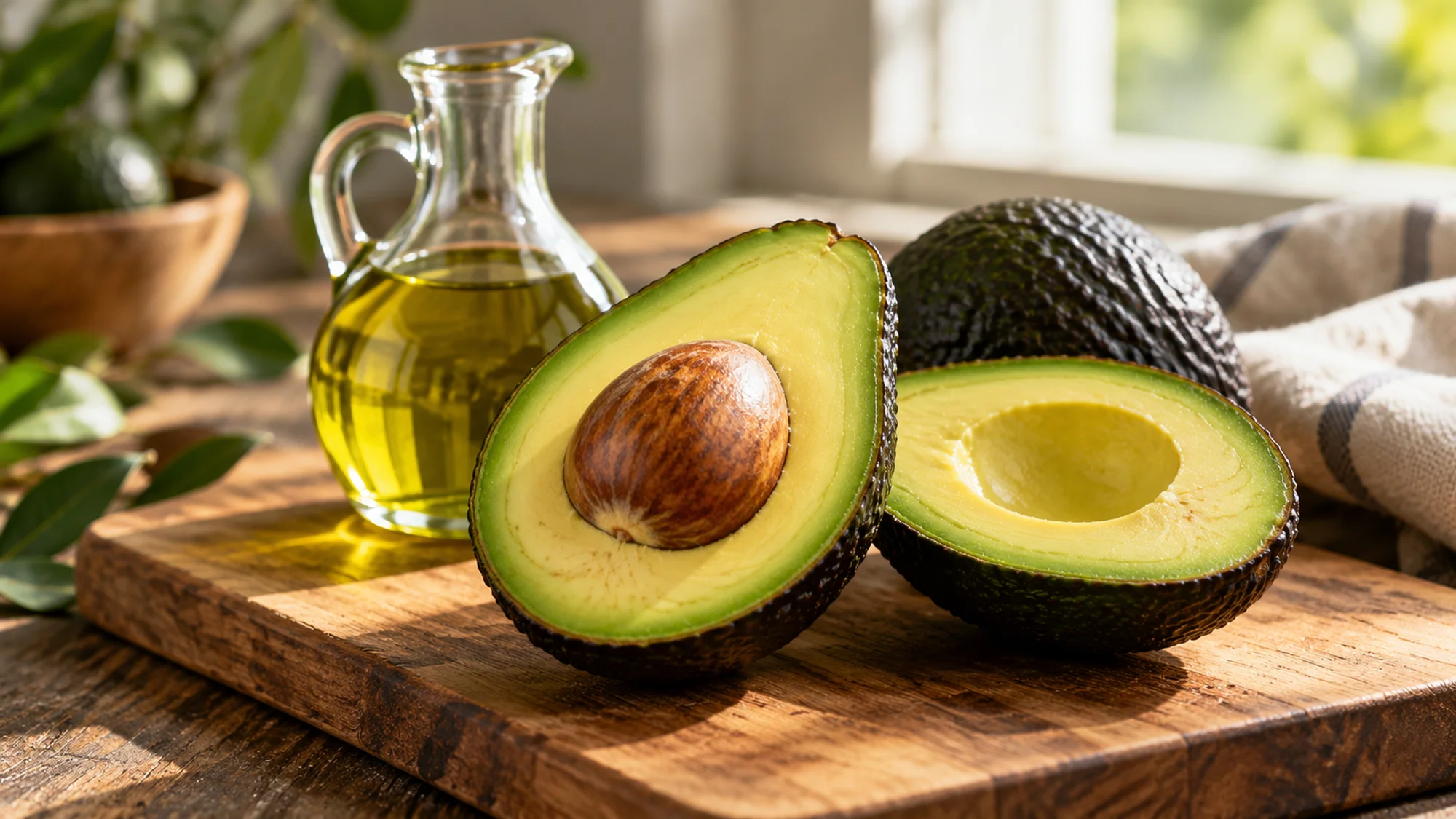
The pit is a seed, but the soft green-yellow flesh around it is a separate part of the fruit. In conventional avocado-oil production, that flesh is turned into a paste and the oil is separated. A California Bountiful report from an avocado-oil producer describes depitting, processing the fruit paste and pressing the oil.
The useful distinction is the source of the oil, not whether the plant contains seeds. A whole avocado and its extracted oil also serve different culinary roles: the flesh provides the body for chunky guacamole, while the oil coats and carries flavor.
- Avocado oil: the familiar edible product is obtained from the fruit flesh.
- Avocado seed oil: a separately described seed-derived material is not what an ordinary culinary avocado-oil label means.
- Oil blends: a product containing avocado oil may also contain other oils; read the ingredients rather than relying on the front photograph.
Refined, Virgin and Blended Are Different Questions
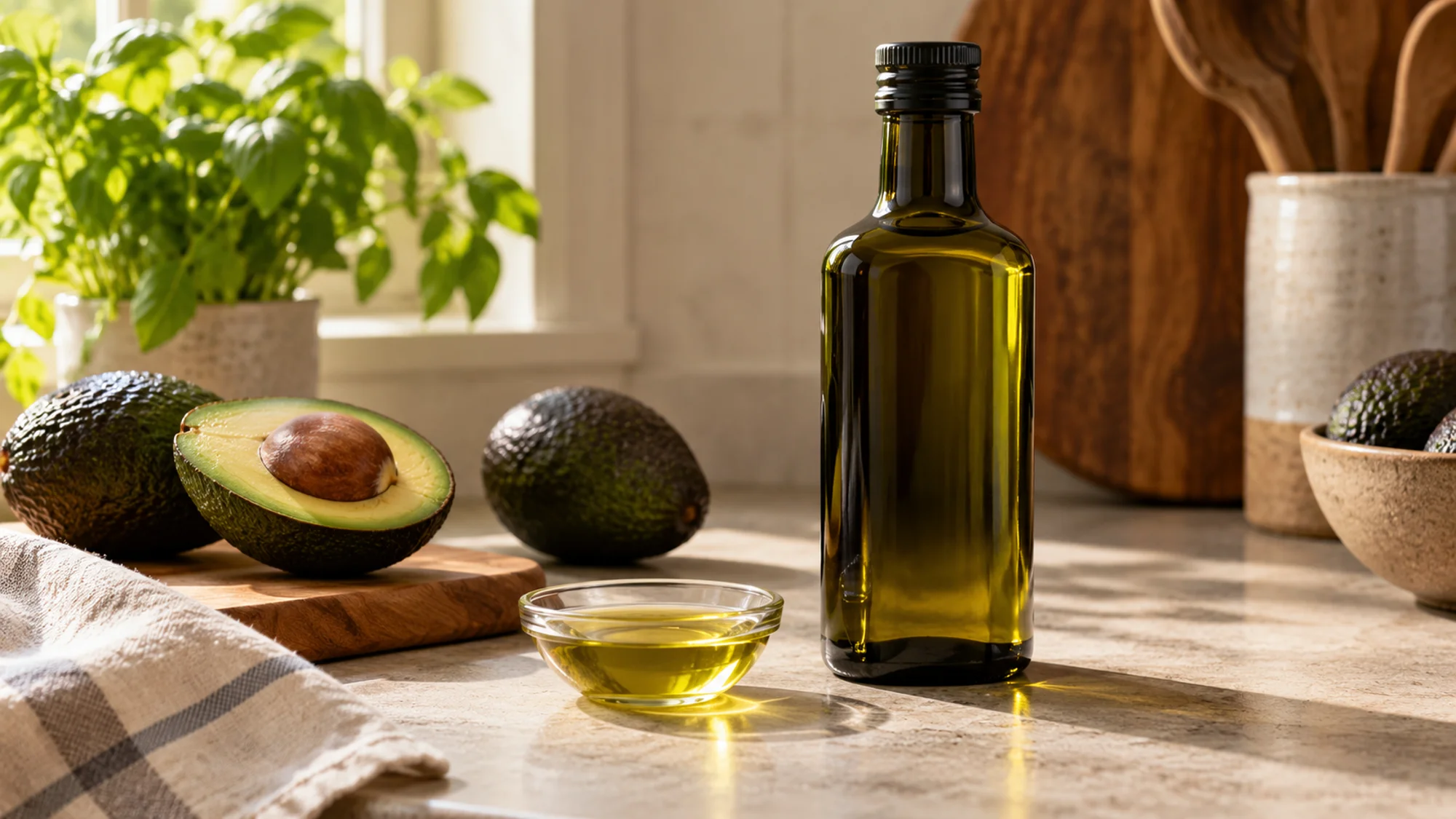
Refining changes an oil after extraction; it does not turn fruit flesh into a seed. Virgin avocado oil can bring a more noticeable green, grassy character, while refined versions are generally chosen when a quieter flavor is useful. Color alone is not a reliable purity test.
I prefer a modest bottle that suits a real cooking habit over a giant one bought for its health halo. This comparison is a shopping guide, not a ranking of good and bad foods.
| Label or feature | What to check | Practical use |
|---|---|---|
| Virgin or unrefined | Flavor and producer guidance | Dressings and finishing when you enjoy its character |
| Refined | Intended cooking uses on the bottle | A neutral background for everyday cooking |
| Blend | Every oil in the ingredients | Choose for the actual mixture, not one highlighted ingredient |
| Large bottle | How quickly you will use it | Avoid buying more than your kitchen needs |
Processing style and ingredient composition answer different questions. Read both before deciding whether a bottle fits the meal.
A Seed-Oil-Free Label Is Not a Health Verdict
The American Heart Association’s cooking-oil guidance includes several common seed oils as well as avocado oil among usable unsaturated-fat choices. Its practical emphasis is replacing fats higher in saturated fat, not avoiding every oil extracted from a seed.
That does not make any oil a free-pour food or a treatment. The amount, the food it accompanies and the overall eating pattern still matter. An expensive oil cannot turn a plate into a balanced meal on its own; it is one ingredient, not the entire nutrition department.
- Use the oil you enjoy in meals built around varied foods.
- Consider the replacement: changing a cooking fat is different from adding extra oil to everything.
- Treat claims about detoxing, curing inflammation or guaranteed weight loss with skepticism.
- If you need a personalized eating plan, bring the whole diet—not just the bottle—to a qualified professional.
A plant part is a classification, not a medical verdict. Keep health claims separate from the question of where an oil originates.
Choose and Store the Bottle With Care
Authenticity is a separate issue from botanical classification. UC Davis researchers have investigated avocado-oil quality and purity, including mislabeled and deteriorated samples. Those studies justify paying attention to sourcing; they do not establish that every bottle on sale today is adulterated.
Follow the manufacturer’s storage directions, close the cap and keep the bottle away from prolonged heat and light. I would rather replace an oil that smells stale than try to disguise it in a strongly seasoned dish.
- Check for a clear product identity and an accessible producer.
- Look at the ingredient list, package condition and date information together.
- Buy a quantity you can use comfortably rather than treating a sale as a lifetime supply.
- Do not use color, a high price or an attractive label as proof of laboratory-tested purity.
- For cooking, follow the product’s intended-use guidance and avoid heating oil until it smokes.
Freshness deserves as much attention as the label. A suitable bottle still needs sensible storage and timely use.
Bottom Line
Avocado oil is ordinarily made from avocado flesh, not its seed. Pick a well-labeled bottle for its flavor and intended use, store it carefully, and judge nutrition by the overall meal rather than a seed-oil slogan.
California Bountiful TV’s visit to an avocado-oil producer offers a closer look at the fruit and production process.
Sources
- California Bountiful: avocado-oil production
- UC Davis: avocado-oil research
- American Heart Association: cooking oils

Hi, I’m Emily Pocker! I share recipes and food guides here at Recipes360 to help you find everyday meal inspiration and feel more confident in the kitchen. My goal is to make cooking approachable, enjoyable, and full of flavor.