
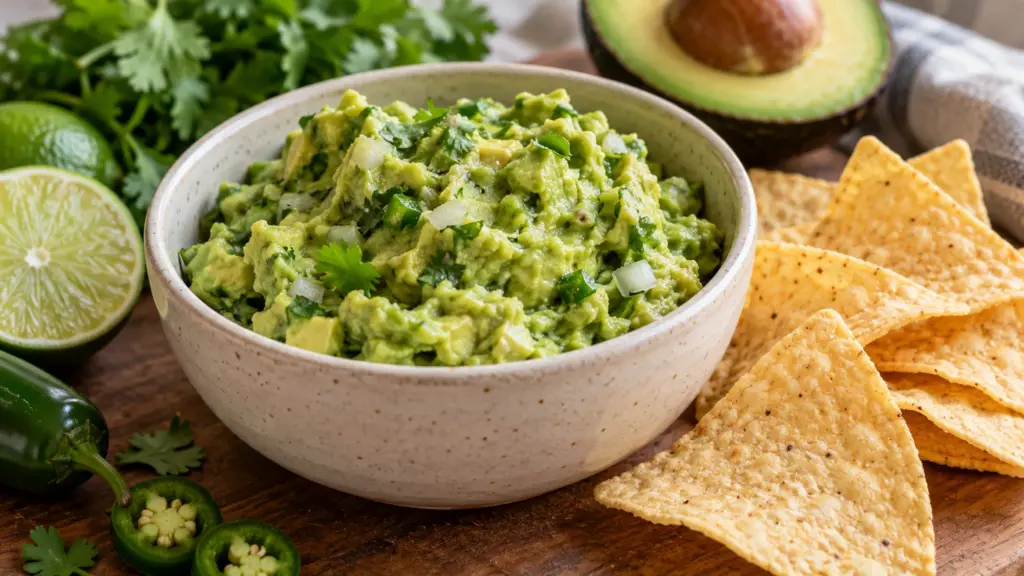
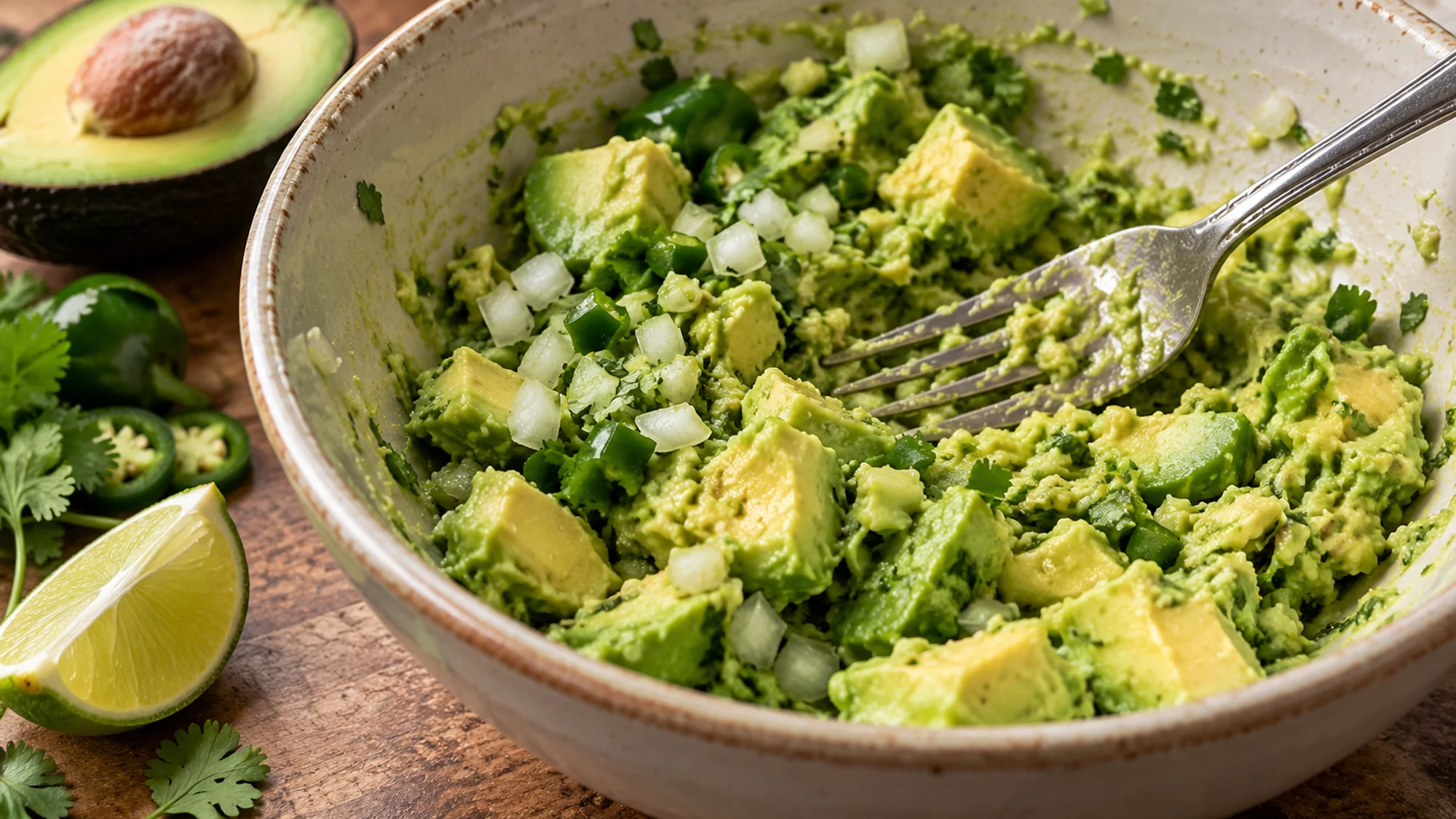
The first chip into a bowl of guacamole should meet avocado, not a puddle of lime juice. This version keeps the texture chunky and the additions small: white onion, jalapeño, cilantro, lime, and salt. There is no blender to wash and no tomato to drain, so the ripe avocado stays at the center of the bowl.
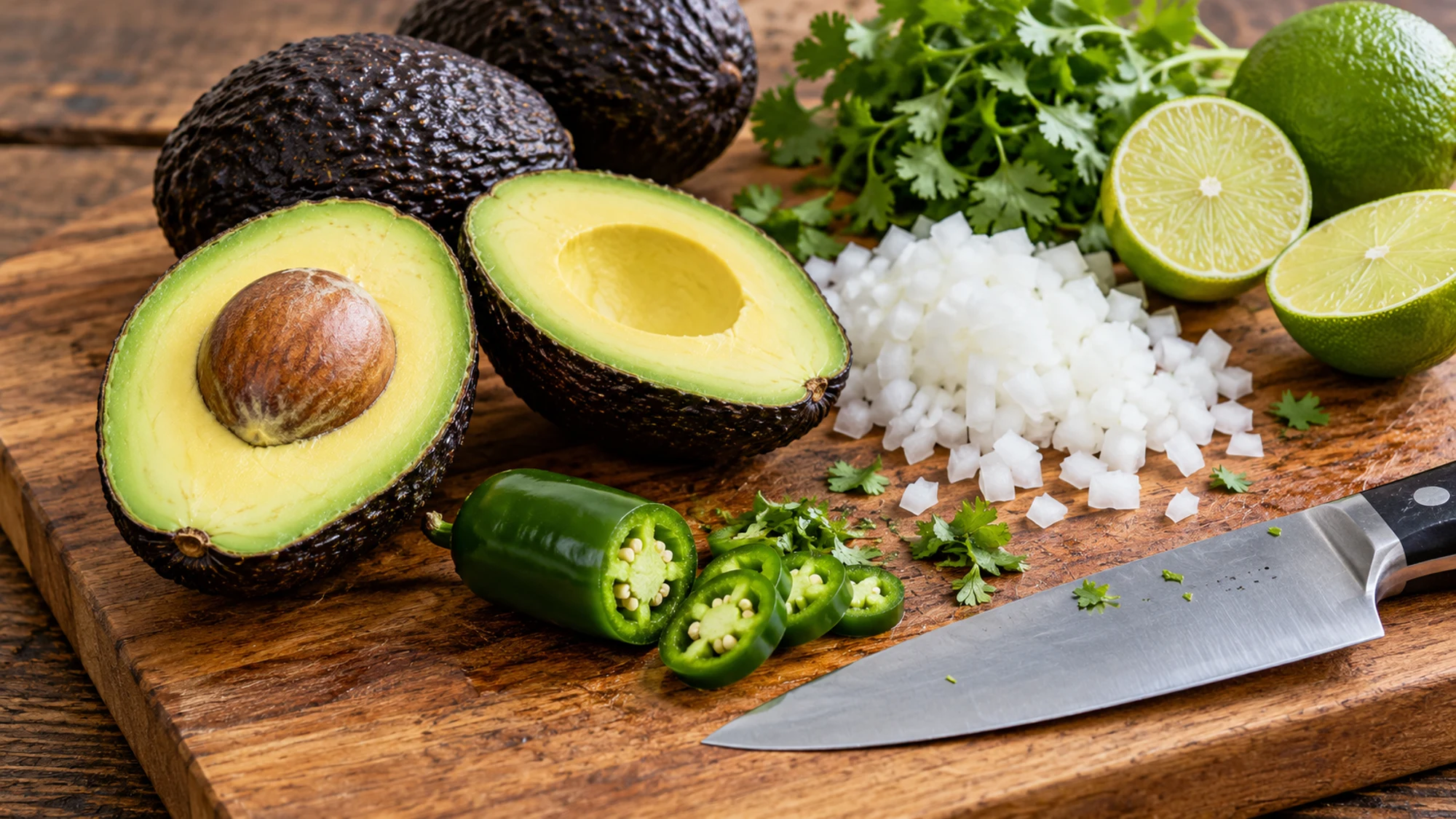
Use avocados that yield gently to pressure, mash them with a fork, and add lime gradually. Small pieces of onion and chile spread flavor through the dip without turning it into a chopped salad.
I’d choose a slightly uneven mash over a perfectly smooth purée. Soft pieces give the guacamole substance, while the mashed portion holds everything together. Ripeness does most of the work; extra citrus cannot make a hard avocado creamy. Scoop the flesh onto a stable board or into a bowl, keeping sharp blades away from the hand holding the fruit.
Serving Suggestions for Guacamole
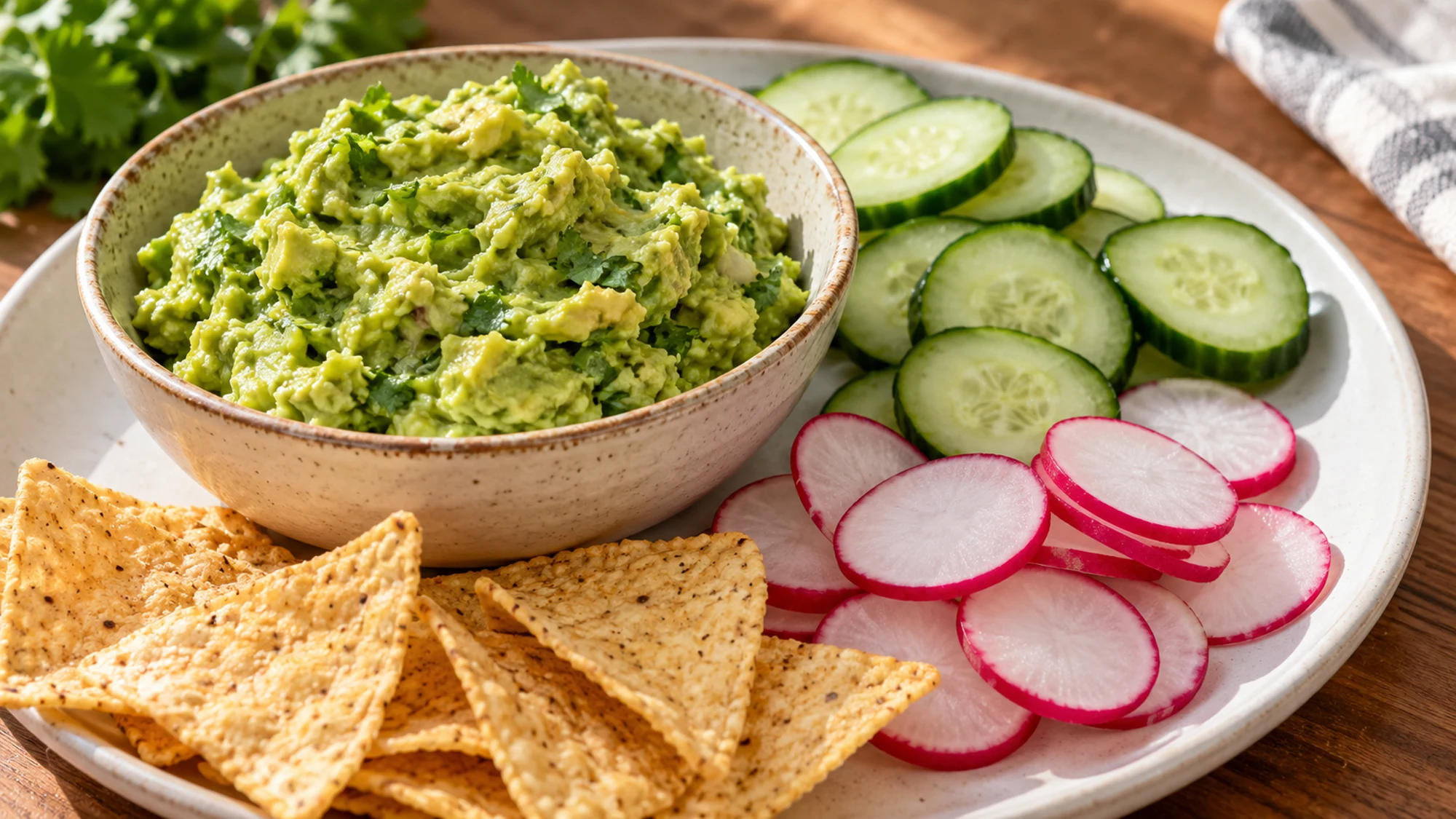
Make the guacamole close to serving time and keep it chilled until you need it. For a party, bring out a small bowl and replenish it from the refrigerator rather than leaving the whole batch on the table. A clean serving spoon helps keep used chips and fingers out of the portion you plan to save.
| Serve with | What works well |
|---|---|
| Tortilla chips | Choose sturdy chips and taste one with the dip before adding more salt. |
| Cucumber and radishes | Offer crisp, dry slices so they do not water down the bowl. |
| Tacos | Spoon on after cooking to keep the avocado cool and creamy. |
A spoonful is a useful cooling finish for these baked cod tacos or a contrasting topping for barbacoa. I’d start with a modest amount, especially when the taco already has a sauce. The aim is a soft, fresh contrast, not a filling that slips out of the tortilla.
- Mash in a wider bowl if you want room to leave some small chunks.
- Taste with the actual accompaniment: a salty chip and an unsalted cucumber give different impressions.
- For leftovers, smooth the surface, press food wrap directly against it, cover, and refrigerate. Use within one to two days for best quality.
Keep the dip cold until serving, offer a small bowl at a time, and let the accompaniments guide the final pinch of salt.
Guacamole Variations
The base is tomato-free because it keeps preparation simple and avoids extra liquid. For a tomato version, fold in a small amount of seeded, well-drained diced tomato just before serving. It changes both texture and yield, so do not expect a bowl with the same thickness after it sits.
- For gentler heat, remove the jalapeño ribs and seeds and begin with less. Chile heat varies, so taste before adding the rest.
- If cilantro does not suit you, leave it out. The dip will have a simpler flavor; parsley is an optional different herb, not the same flavor.
- For a finer texture, mash longer with the fork rather than adding liquid to make blending easier.
- For a brighter finish, add lime a little at a time. Salt and acidity work together, but neither should hide the avocado.
Avocado flesh darkens when exposed to air. The Avocados From Mexico storage guide explains why reducing air contact matters. Lime can help slow visible browning, but an avocado pit protects only the small area it covers. Color alone is not a food-safety test, and extra lime does not replace refrigeration.
Make small flavor changes, then taste again. Protect the surface from air when storing instead of relying on a pit in the middle of the bowl.
Health Benefits and Portion Context
Avocados supply fiber and predominantly unsaturated fat. Harvard’s avocado overview describes those nutrients and their place in a varied eating pattern. This is still an energy-containing food, and the overall meal matters more than treating one ingredient as a shortcut to better health.
- The nutrition estimate covers one-sixth of this batch and excludes chips, tortillas, and other accompaniments.
- The recipe contains no dairy or added oil. Its creamy texture comes from avocado rather than sour cream.
- Salt contributes sodium; begin with the measured amount, then consider the salt already present in the food served alongside it.
Use guacamole for the flavor and texture it brings, with a portion that fits the rest of the meal. Its nutrients do not require a health promise.
Bottom Line
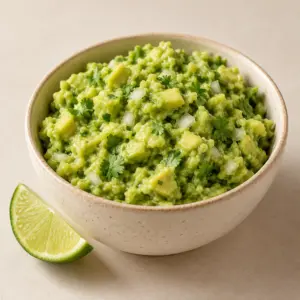
Good guacamole begins with ripe avocado and a light hand. Keep the mash a little chunky, chop the additions finely, and adjust lime after tasting. Serve it fresh, keep leftovers cold, and give the avocado room to taste like itself.
Guacamole Recipe

Ingredients
- 3 medium ripe Hass avocados about 450 g flesh
- 1/4 cup finely chopped white onion about 40 g
- 2 tablespoons chopped cilantro about 5 g
- 1 small jalapeño finely minced; start with half for less heat
- 1 tablespoon fresh lime juice plus up to 1 tablespoon more to taste
- 1/2 teaspoon fine salt start with less if serving with very salty chips
Equipment
- 1 Mixing bowl
- 1 Fork
- 1 Knife and cutting board
- 1 Citrus juicer
- 1 Spoon
Instructions
- Rinse the avocados before cutting. Halve them on a stable board, remove the pits carefully and scoop the flesh into a bowl. Finely chop the onion, cilantro and jalapeño; remove the chile ribs and seeds for less heat if desired.
- Add 1 tablespoon lime juice and the salt to the avocado. Mash with a fork until creamy in places but with some small chunks remaining.
- Fold in onion, cilantro and the amount of jalapeño you prefer. Taste with the chip or vegetable you will serve alongside. Add more lime, a little at a time, only if needed.
- Serve promptly or press food wrap directly onto the surface, cover and refrigerate at 40°F (4°C) or below. Refrigerate within 2 hours, or within 1 hour if above 90°F (32°C). Use refrigerated leftovers within 1–2 days for best quality.
Nutrition
Video
Notes
Tried this recipe?
Let us know how it turned out!Hi, I’m Emily Pocker! I share recipes and food guides here at Recipes360 to help you find everyday meal inspiration and feel more confident in the kitchen. My goal is to make cooking approachable, enjoyable, and full of flavor.