
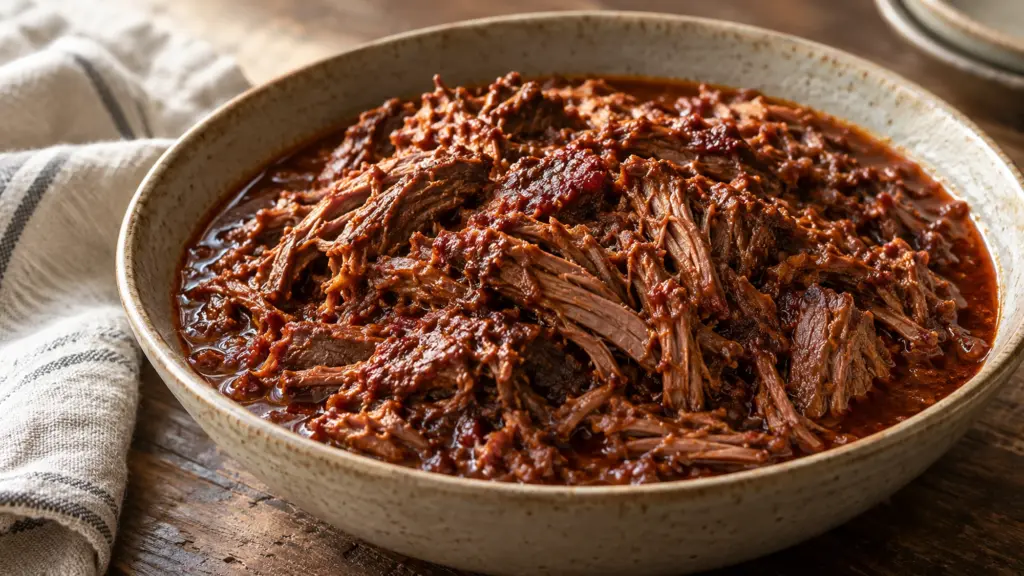
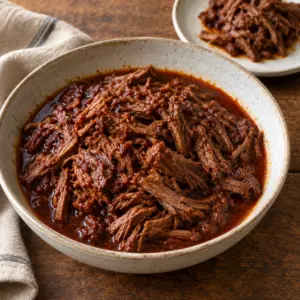
Beef that resists a fork usually needs more time, not a stronger grip. This home-oven barbacoa gives chuck a slow, covered braise in guajillo chile sauce until it pulls into moist strands. It is a practical beef version inspired by Mexican slow-cooked meat traditions, rather than a claim to reproduce a particular regional pit-cooked preparation.

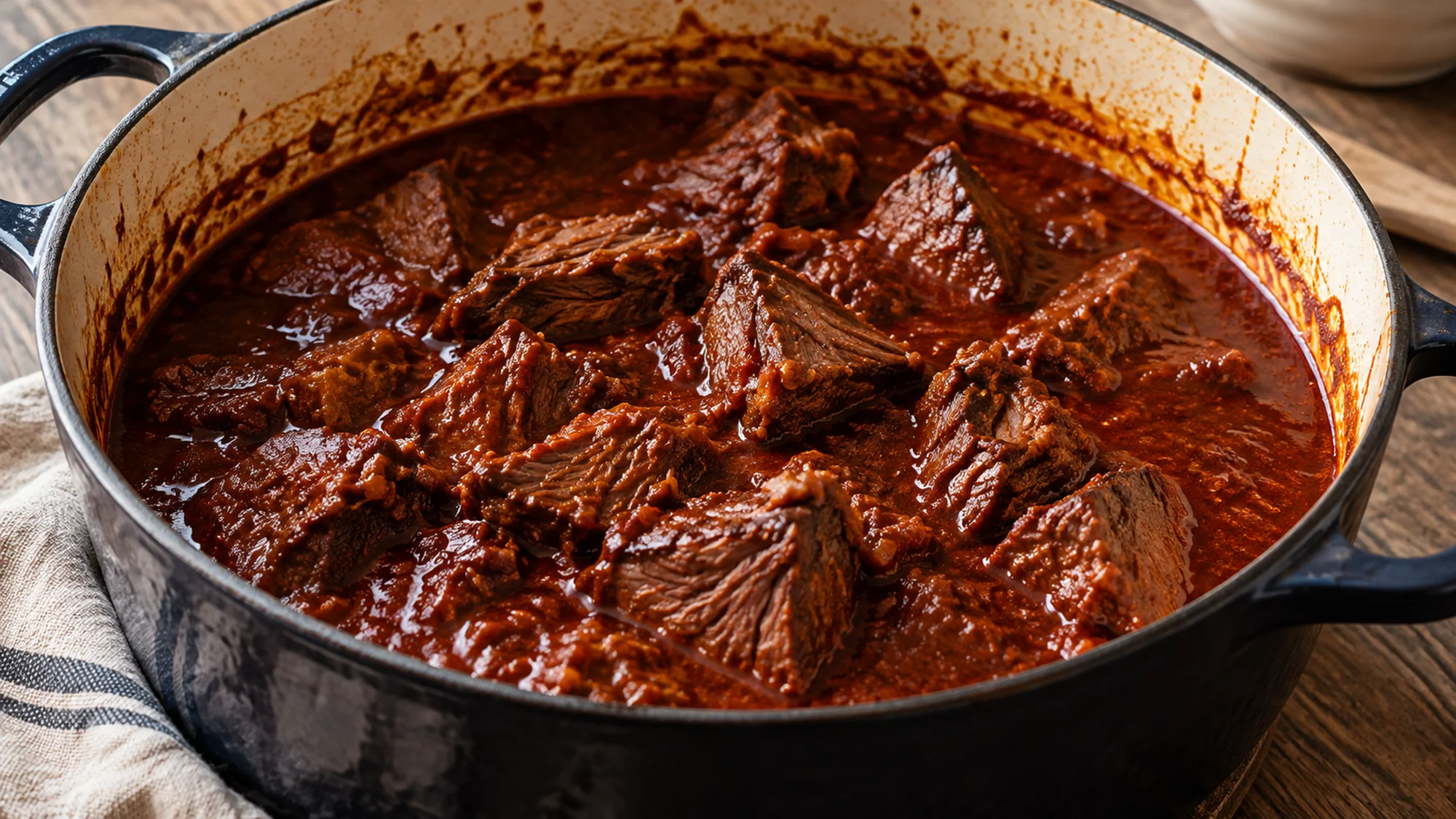
Use a well-covered Dutch oven, keep the liquid at a gentle braise and check that it has not dried out. The beef is ready when a fork twists through it easily. Shred it into the sauce after a short rest, then adjust the final thickness before serving so the meat stays moist without swimming.
Serving Suggestions for barbacoa
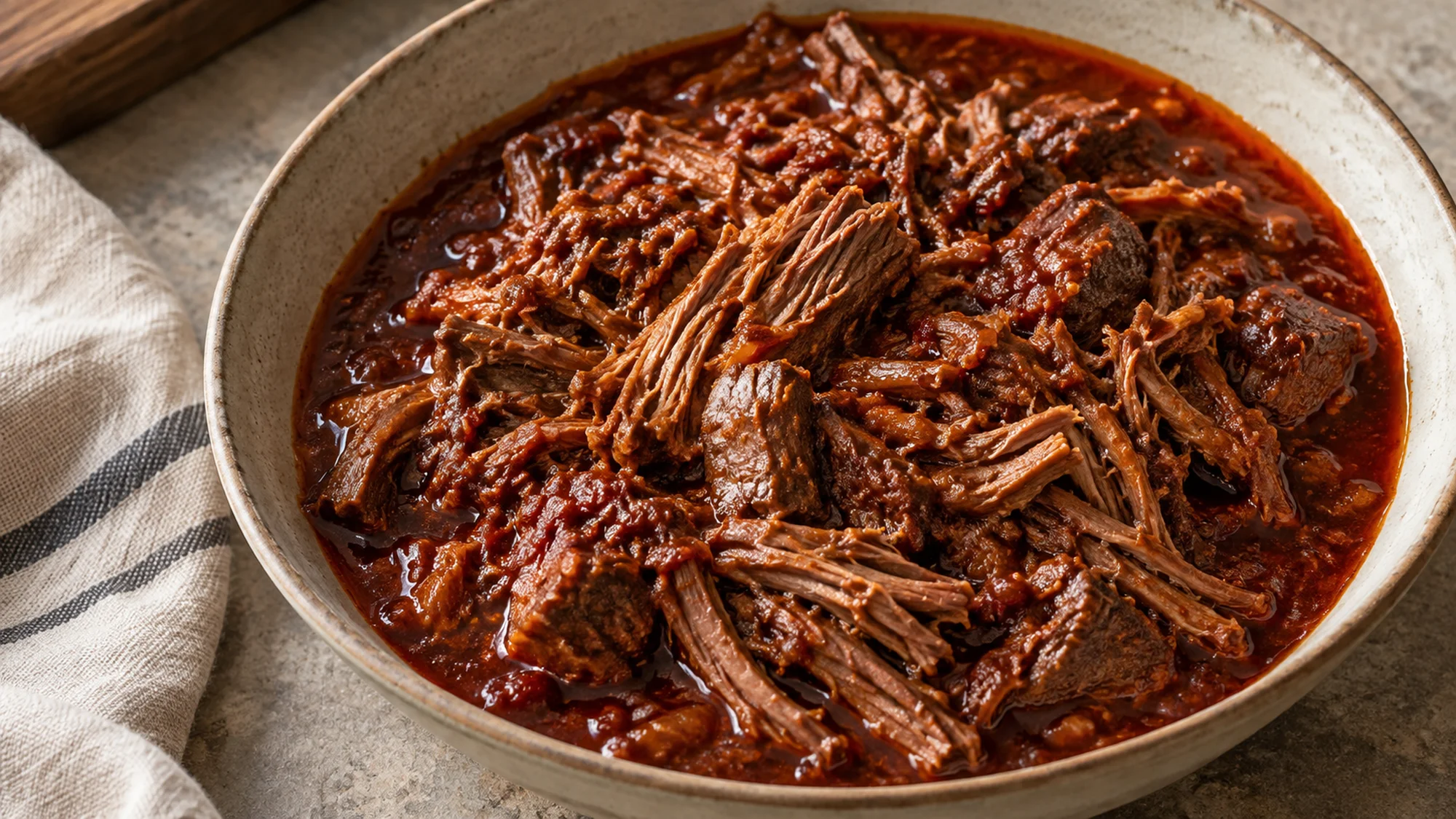
Serve barbacoa with warm tortillas and offer chopped onion, cilantro and lime separately. The beef carries a deep chile flavor, so a few cool, sharp additions provide contrast without hiding it. For a bowl-style meal, spoon a modest amount over rice or beans and add a crunchy vegetable alongside. For another tortilla-based dinner, baked cod tacos offer a quicker oven-cooked filling.
I’d skim obvious pools of fat from the braising liquid before mixing the meat back through it. Leaving some richness is part of the dish; serving a layer of grease is not essential. If the sauce tastes very concentrated after cooking, loosen it with a little hot water before deciding whether it needs more salt.
Plan ahead if you want leftovers. Divide the beef and sauce into shallow containers and refrigerate within two hours rather than leaving the heavy pot to cool overnight. Cooked beef keeps for three to four days refrigerated at 40°F (4°C) or below. Reheat the portion needed to 165°F (74°C), keeping enough sauce around it to prevent drying.
Variations for barbacoa
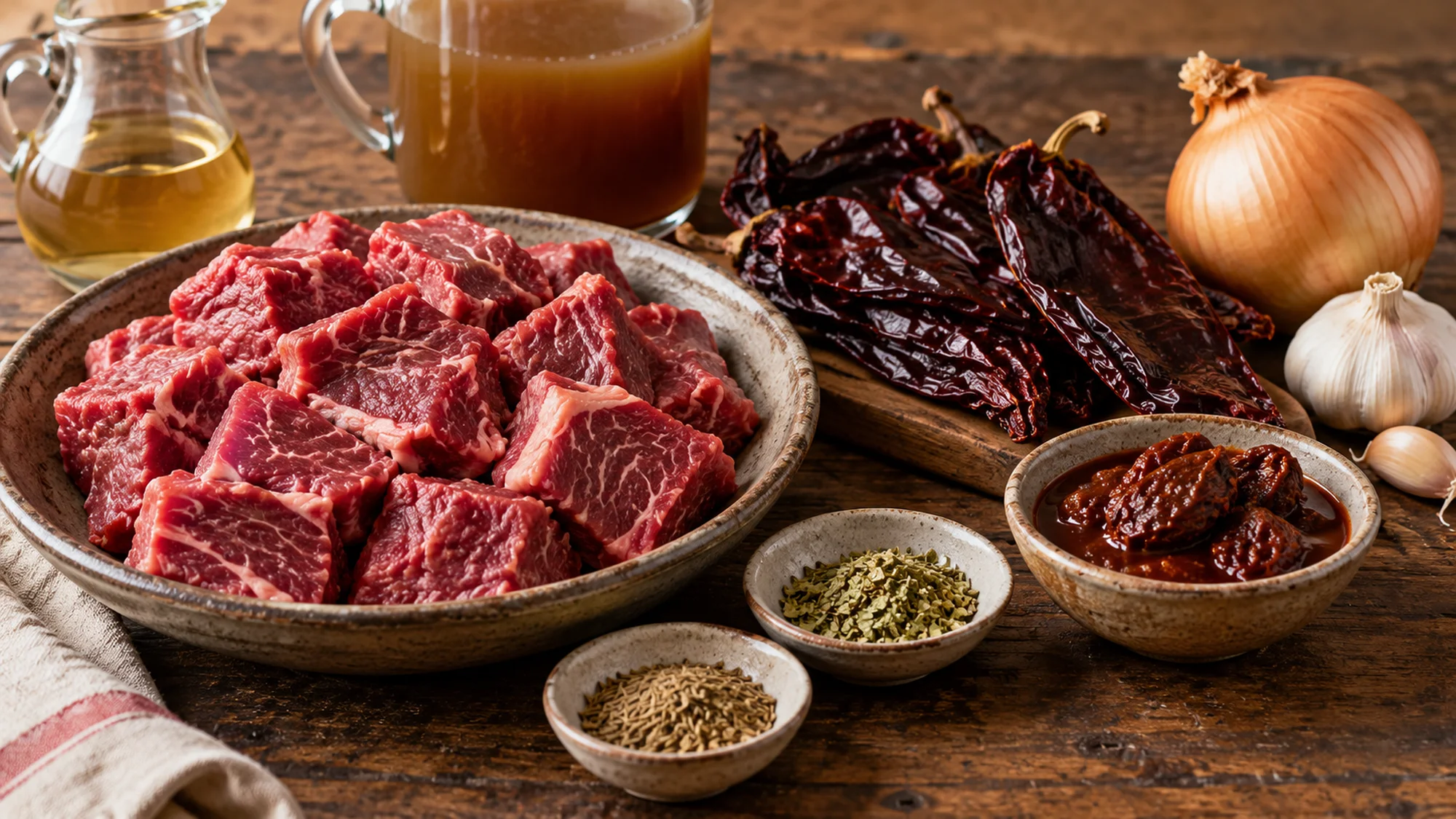
Chuck contains connective tissue that needs time to soften. A lean steak does not become an equivalent braising cut just because it is also beef. The pieces here are large enough to shred into substantial strands, but small enough to sit comfortably in the pot. Keep their size fairly consistent so one piece is not ready long before the others.
Guajillo chiles supply much of the red color and a fruity chile flavor, while chipotle brings smoke and heat. Remove the dry stems and most seeds before soaking. I would begin with one chipotle rather than treating the entire can as a casual addition; you can offer extra hot sauce at the table if someone wants more.
The table separates changes that affect heat from those that affect cooking. A slow cooker is useful, but it needs its own timing and moisture decisions rather than the oven schedule pasted onto a different appliance. The video includes both methods; this card stays with a covered oven braise.
| Choice | Effect | Practical approach |
|---|---|---|
| Less chipotle | Milder smoky heat | Begin with half a pepper |
| More guajillo | Deeper chile flavor | Keep the sauce pourable |
| Chuck instead of brisket | Different shape and fat distribution | Use the fork-tender cue |
| Sauce too thin | Less coating on the beef | Reduce after removing the meat |
Health Benefits and Portion Balance
Beef contributes protein, iron and other nutrients, while its fat content varies with the cut and trimming. This recipe should not be described as lean simply because it cooks for a long time. Skimming the sauce changes the final fat content, which is one reason the nutrition panel is an estimate rather than an exact analysis.
For the overall meal, varied protein foods and vegetables give more useful context than a health claim attached to a large pile of meat. Choose a serving that fits the meal and add vegetables you enjoy. Tortillas, rice, beans and toppings are separate from the beef-only card estimate.
Handle raw beef separately from ready-to-eat toppings and wash the blender and utensils after use. Follow cooked-beef storage guidance and safe reheating guidance for leftovers. Smell cannot tell you whether meat held too long at an unsafe temperature is safe to eat.
Bottom Line
Let tenderness make the final decision, then give the sauce a separate moment of attention. A covered pot prevents unnecessary evaporation, and a quick skim and adjustment at the end keep the shredded beef pleasant to serve. I’d bring the bright toppings to the table in small bowls and let the slow-cooked chile flavor remain the center of the meal.
Barbacoa Recipe

Ingredients
- 1.2 kg boneless beef chuck trimmed of large external fat deposits; cut into 3-inch chunks
- 3 dried guajillo chiles stems and most seeds removed
- 1 chipotle pepper in adobo
- 1 medium onion roughly chopped
- 4 garlic cloves
- 1 tsp ground cumin
- 1 tsp dried oregano
- 2 tbsp apple cider vinegar
- 400 ml low-sodium beef stock plus water if needed
- 1 tbsp olive oil
- 1 tsp fine salt
- 2 bay leaves
Equipment
- 5- to 6-quart Dutch oven with lid
- Blender
- Heatproof bowl
- Tongs
- Two forks
Instructions
- Heat the oven to 300°F (150°C). Cover the cleaned guajillo chiles with hot water in a heatproof bowl and soak about 15 minutes until pliable. Drain, discarding the soaking water.
- Blend the softened guajillos with the chipotle, onion, garlic, cumin, oregano, vinegar and stock until smooth. Vent the blender appropriately if the ingredients are still hot; do not seal hot liquid tightly.
- Pat the beef dry and season with the salt. Heat the oil in the Dutch oven over medium-high heat. Brown the beef in batches, turning with tongs, then return all pieces to the pot.
- Pour in the blended sauce and add the bay leaves. Bring to a gentle simmer, cover tightly and transfer to the oven. Braise for 3–4 hours, checking after 2 hours and adding a little hot water if the sauce is drying out. Turn the pieces once.
- When the beef pulls apart easily with a fork, remove the pot and rest covered for 15 minutes. Discard the bay leaves. Lift out the beef, skim excess fat from the sauce and simmer the sauce uncovered briefly if too thin.
- Shred the beef with two forks and stir it back into the sauce. Add a splash of water if too concentrated. Serve with optional tortillas and toppings, which are not included in the nutrition estimate.
Nutrition
Video
Notes
Tried this recipe?
Let us know how it turned out!Hi, I’m Emily Pocker! I share recipes and food guides here at Recipes360 to help you find everyday meal inspiration and feel more confident in the kitchen. My goal is to make cooking approachable, enjoyable, and full of flavor.