
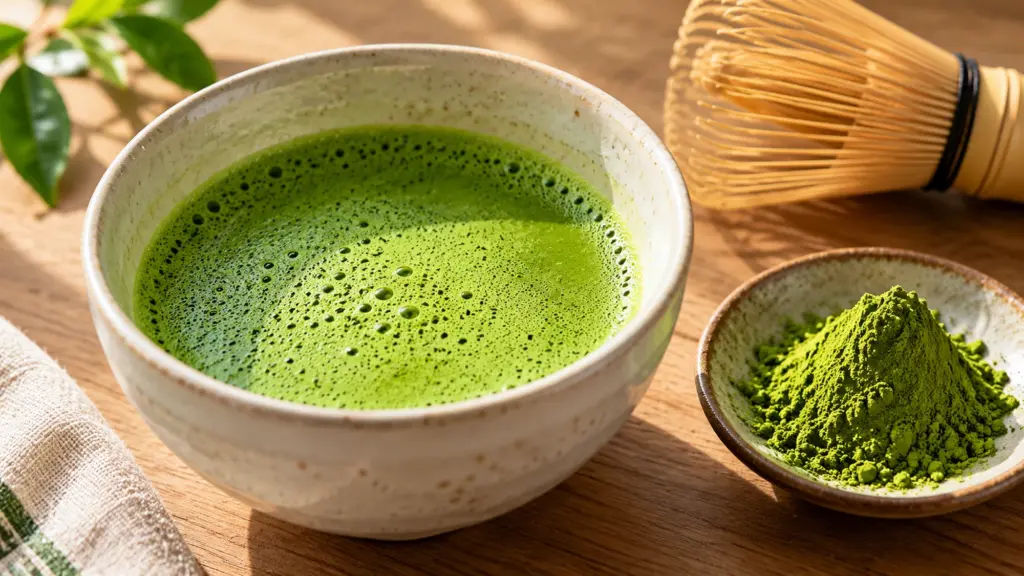
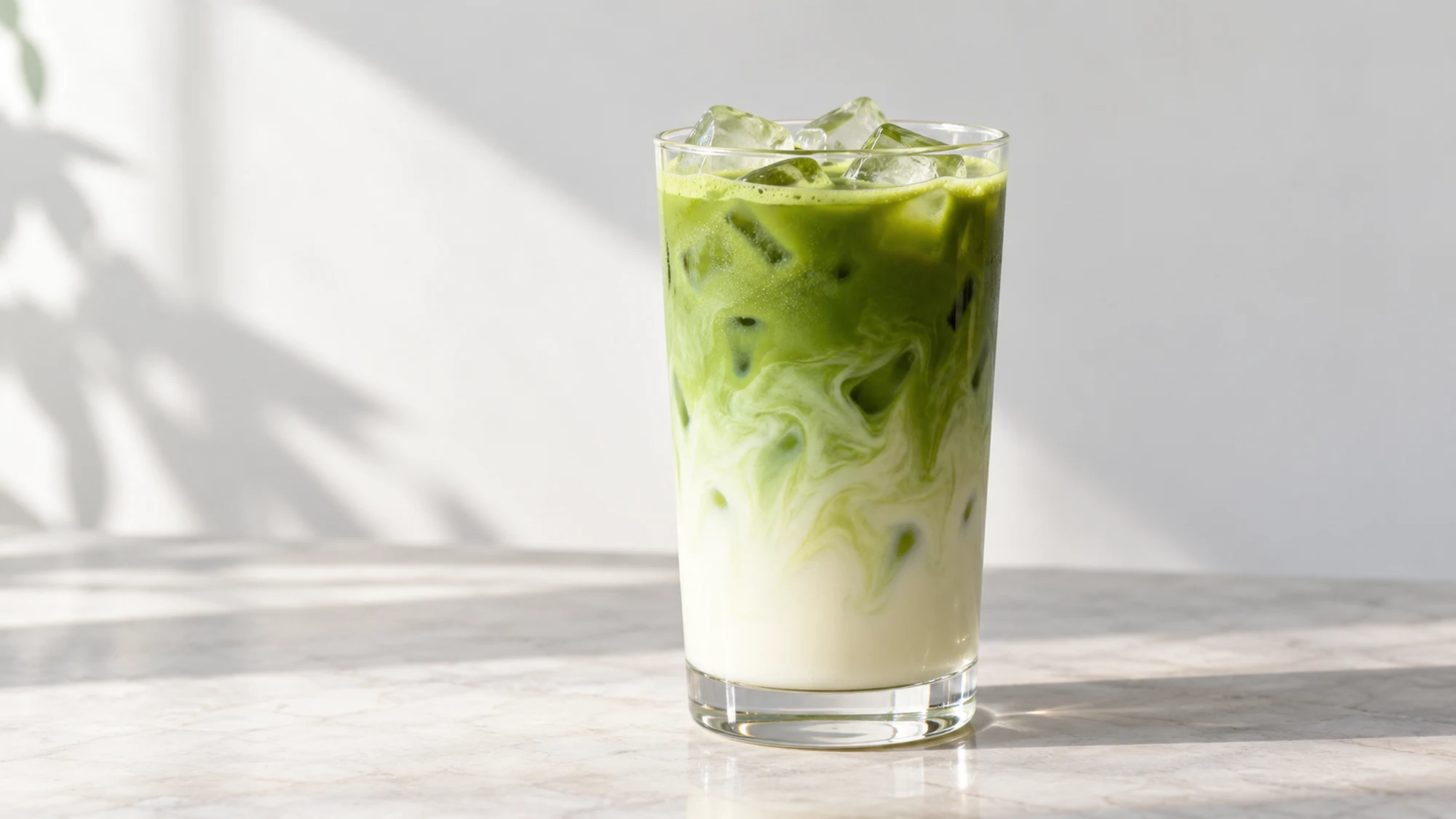
A pale green latte can look gentler than a dark mug of coffee, especially under a cap of milk foam. But does matcha have caffeine? Yes. The more useful question is how much matcha powder went into your drink—not how green it looks or how large the glass is.
Matcha contains caffeine naturally. The amount depends on the powder and the portion used; adding milk, ice, or water does not remove the caffeine already in the serving.
That makes a little measuring more helpful than a universal “milligrams per cup” claim. I’d start with the package or café’s information, then consider the rest of the day’s coffee, tea, and other caffeinated foods.
Why Does Matcha Have Caffeine?
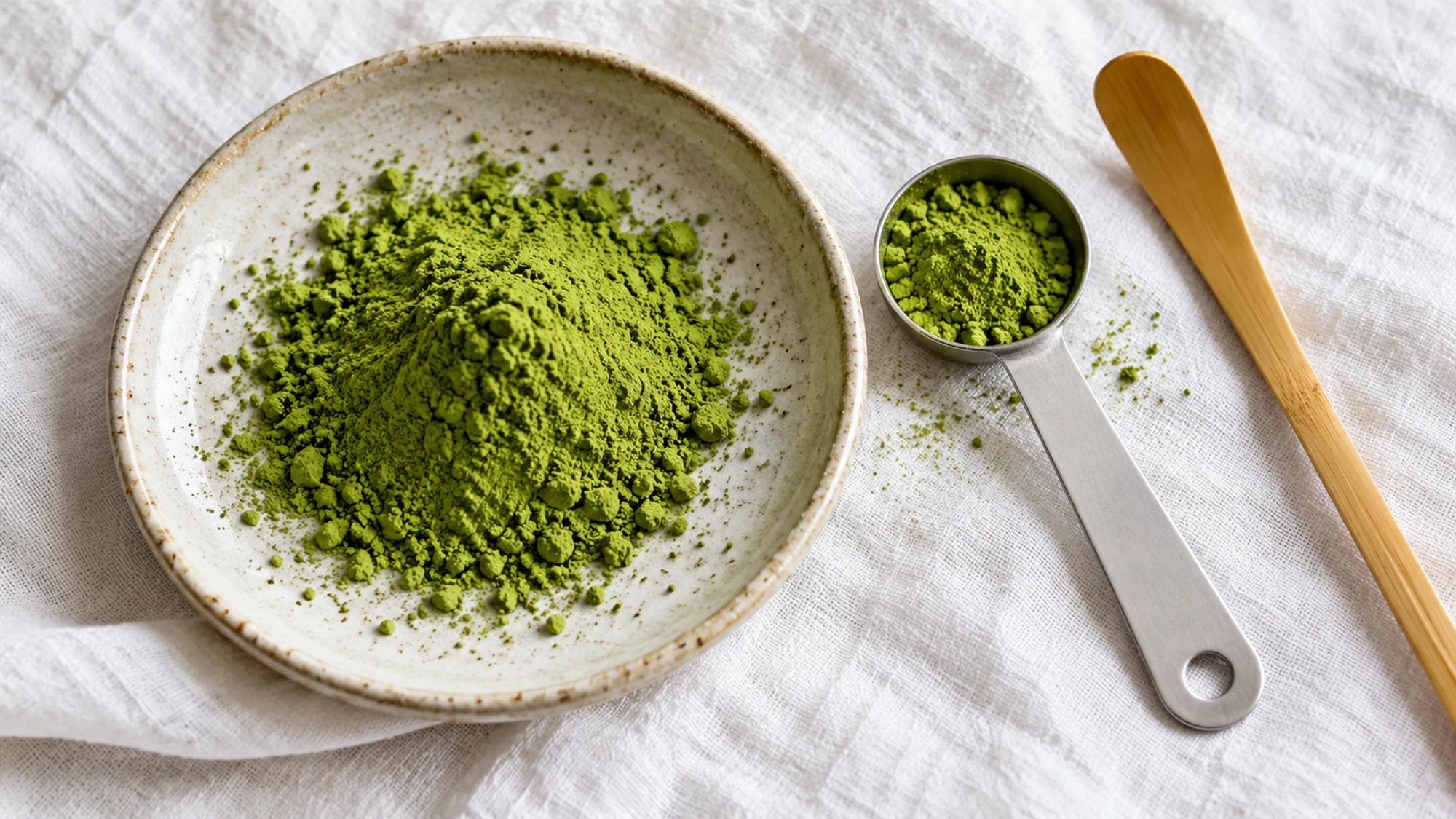
Matcha is finely powdered green tea, not a caffeine-free herbal drink. With a traditionally whisked serving, you consume the suspended tea powder rather than removing steeped leaves. Tea producer Ippodo describes this preparation; MedlinePlus identifies tea leaves as a natural caffeine source.
- Plain matcha powder and sweetened latte mixes are different products. Check what is actually in the container.
- A milk-heavy drink may taste mild while still containing a substantial portion of tea powder.
- Color and foam are not reliable caffeine measurements. They tell you more about appearance and preparation than a milligram total.
Treat matcha as a caffeinated tea, even when its flavor is softened by milk or sweetness.
How Much Caffeine Is in a Serving?
In a 2024 retail investigation, Bavaria’s State Office for Health and Food Safety examined 47 matcha-related samples, including 41 pure powders. It reported that drinks prepared with 1–2 grams of matcha powder could contain 13–68 milligrams of caffeine. That describes its tested products and portions, not every matcha sold everywhere.
Instead of treating that range as a promise about your tin, use it to understand why one fixed cup number can mislead. A café may use a different powder or more grams. As a simple example, if a package lists caffeine for 2 grams and you use 4 grams of that same powder, the calculated amount doubles. That arithmetic only works when the label and your portion refer to the same product. If a manufacturer provides caffeine per serving, first check the serving’s powder weight.
| Change to the drink | What happens to caffeine? | Useful check |
|---|---|---|
| More of the same powder | More caffeine in the serving | Grams or measured scoops |
| More plain milk or water | Dilution, not removal | Total powder stays the same |
| Different brand | Amount may differ | Product-specific information |
| Larger café size | Depends on its recipe | Whether powder increases |
Ask how much powder is used before comparing two drinks by cup size alone.
Count the Whole Day, Not Just the Latte
The FDA cites 400 milligrams a day for most adults as an amount not generally associated with negative effects. That is a general reference, not a target or a personal guarantee. Sensitivity, medicines, health conditions, pregnancy, and breastfeeding can change the conversation.
- Include coffee, other teas, energy drinks, and caffeine-containing foods or medicines when considering your total.
- If a café cannot provide a number, acknowledge the uncertainty rather than assuming the drink is low-caffeine.
- For individualized limits, especially during pregnancy or with relevant medicines, ask your healthcare professional.
A matcha latte is not automatically a better choice than coffee for someone trying to avoid caffeine. Compare actual servings when information is available. Our guide to coffee, cup size, and timing explores the same practical distinction for coffee drinkers.
A comfortable choice depends on your total intake and response, not which drink has the greener reputation.
Make a Smaller Serving Taste Deliberate
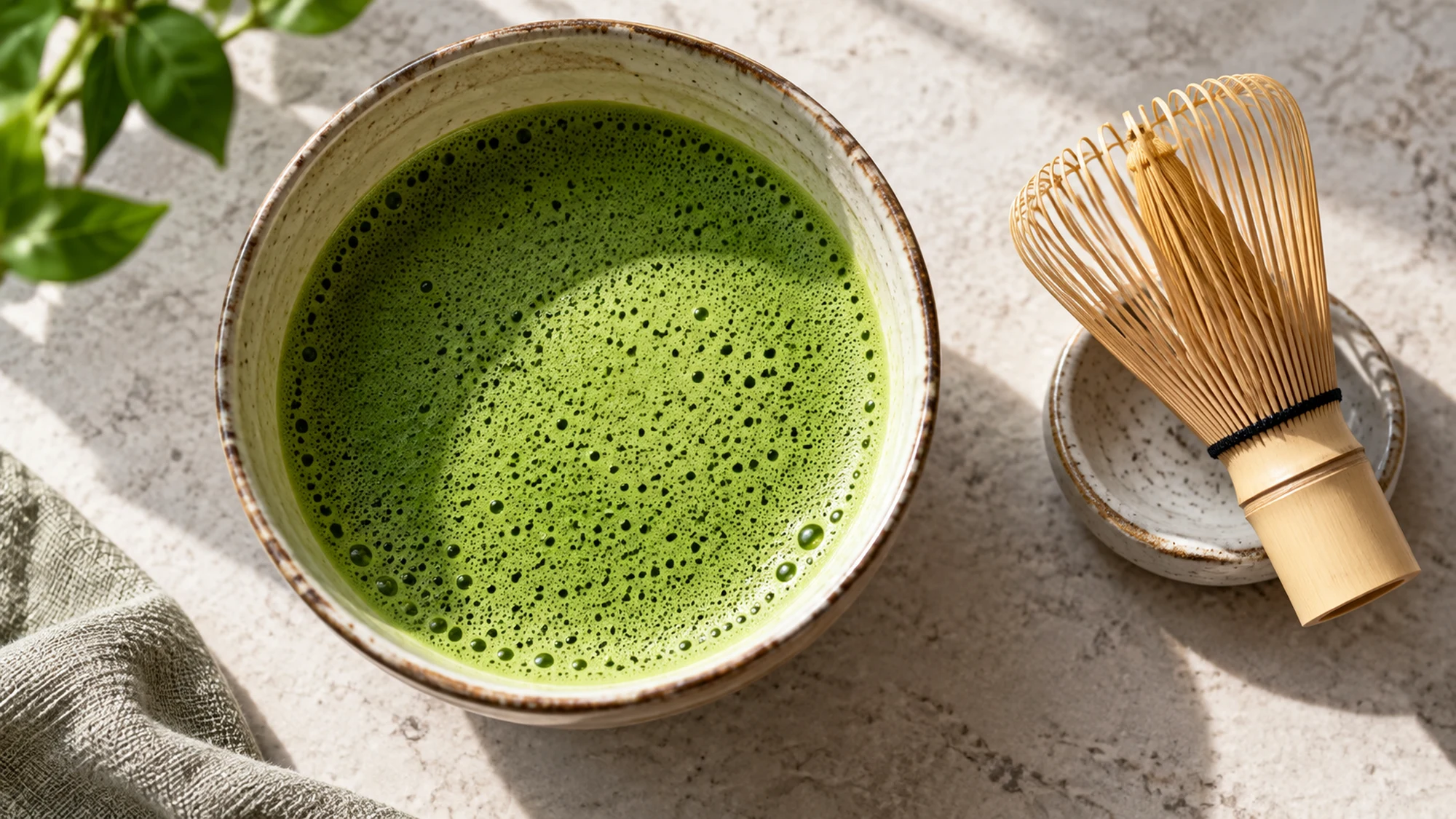
If you want less caffeine from the same powder, using less powder is more direct than pouring in extra milk. For texture, Ippodo recommends sifting before whisking. A smaller, well-mixed drink can be more satisfying than a large glass with dry green clumps at the bottom.
- Measure consistently instead of alternating between level and heavily heaped spoonfuls.
- Whisk the powder smoothly before adding your preferred milk or more water.
- Consider an earlier drinking time if late-day caffeine interferes with sleep.
According to MedlinePlus, caffeine can contribute to restlessness, anxiety, or sleep problems, and people differ in sensitivity. “Natural” caffeine is still caffeine. If you need to avoid it entirely, choose a drink specifically confirmed caffeine-free rather than relying on a matcha wellness claim.
Bottom Line
Yes, matcha has caffeine. Check the powder portion, use product-specific information where available, and remember that a creamy latte can still count meaningfully toward your day’s intake.
Ippodo Tea’s “How to prepare Usucha (thin matcha)” demonstrates traditional preparation. The demonstration explains technique, not the caffeine content of your particular powder.
Sources
- Bavarian LGL: Investigation of matcha tea
- FDA: Caffeine intake guidance
- MedlinePlus: Caffeine
- Ippodo Tea: Matcha preparation

Hi, I’m Emily Pocker! I share recipes and food guides here at Recipes360 to help you find everyday meal inspiration and feel more confident in the kitchen. My goal is to make cooking approachable, enjoyable, and full of flavor.