
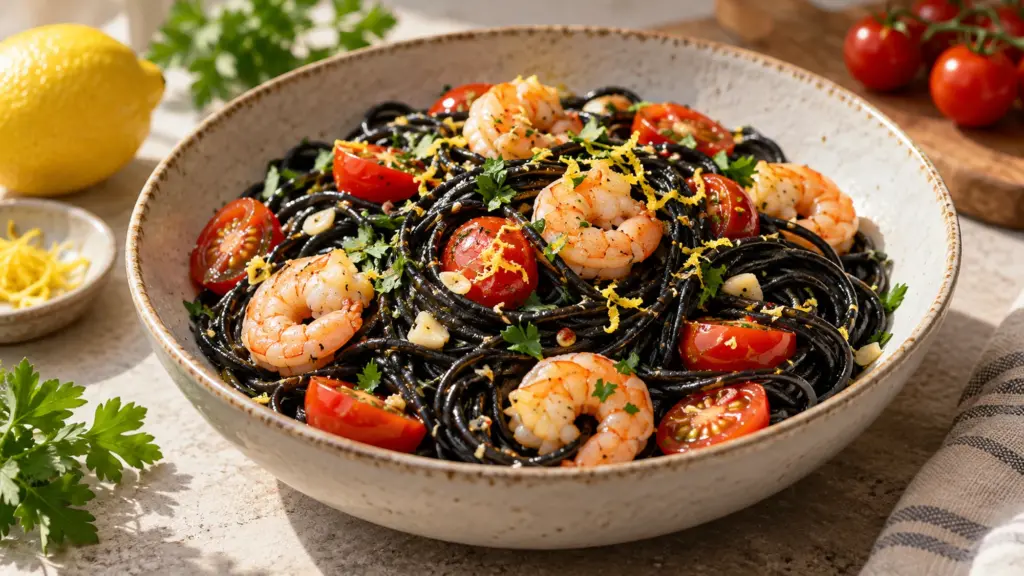
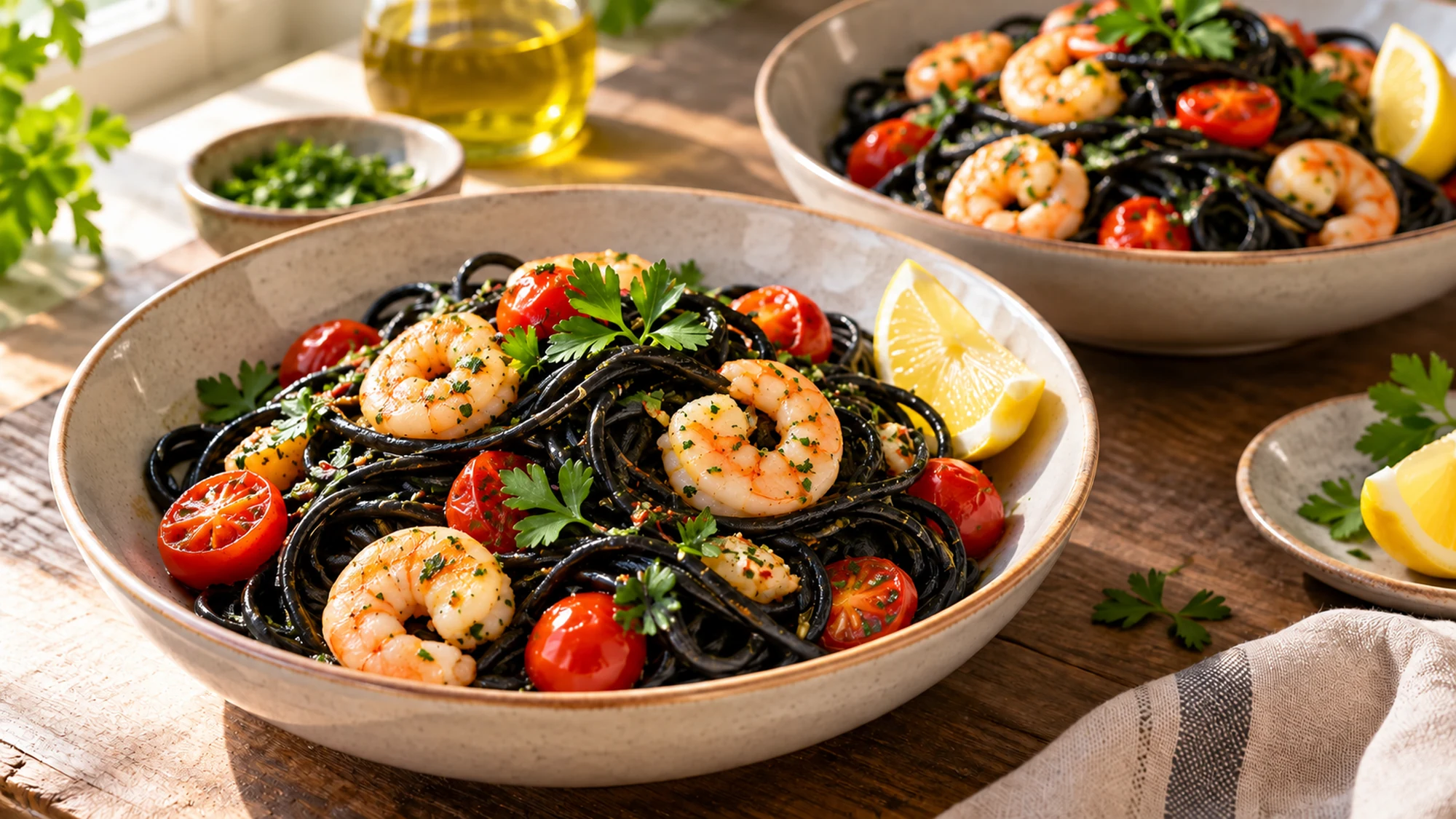
Squid ink pasta gives a simple shrimp-and-tomato dinner a striking dark base. The noodles in this recipe are dried spaghetti already made with squid or cuttlefish ink, so there is no fresh dough to knead and no separate ink sauce to prepare. Garlic, olive oil, lemon, and parsley keep the coating light.
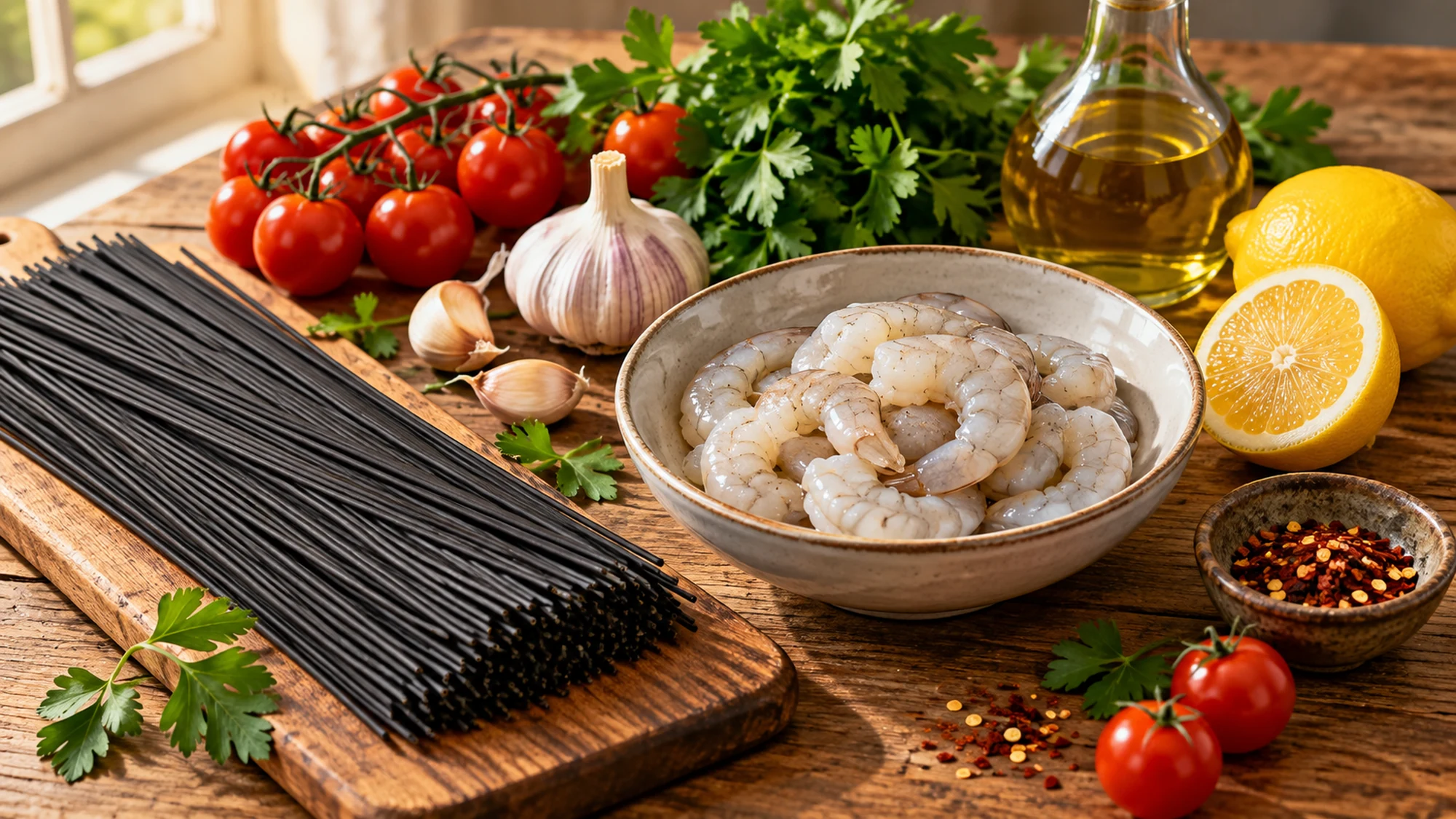
Read the pasta label before cooking: this recipe uses ink-colored noodles, not plain spaghetti that needs a separate packet of ink added to the sauce.
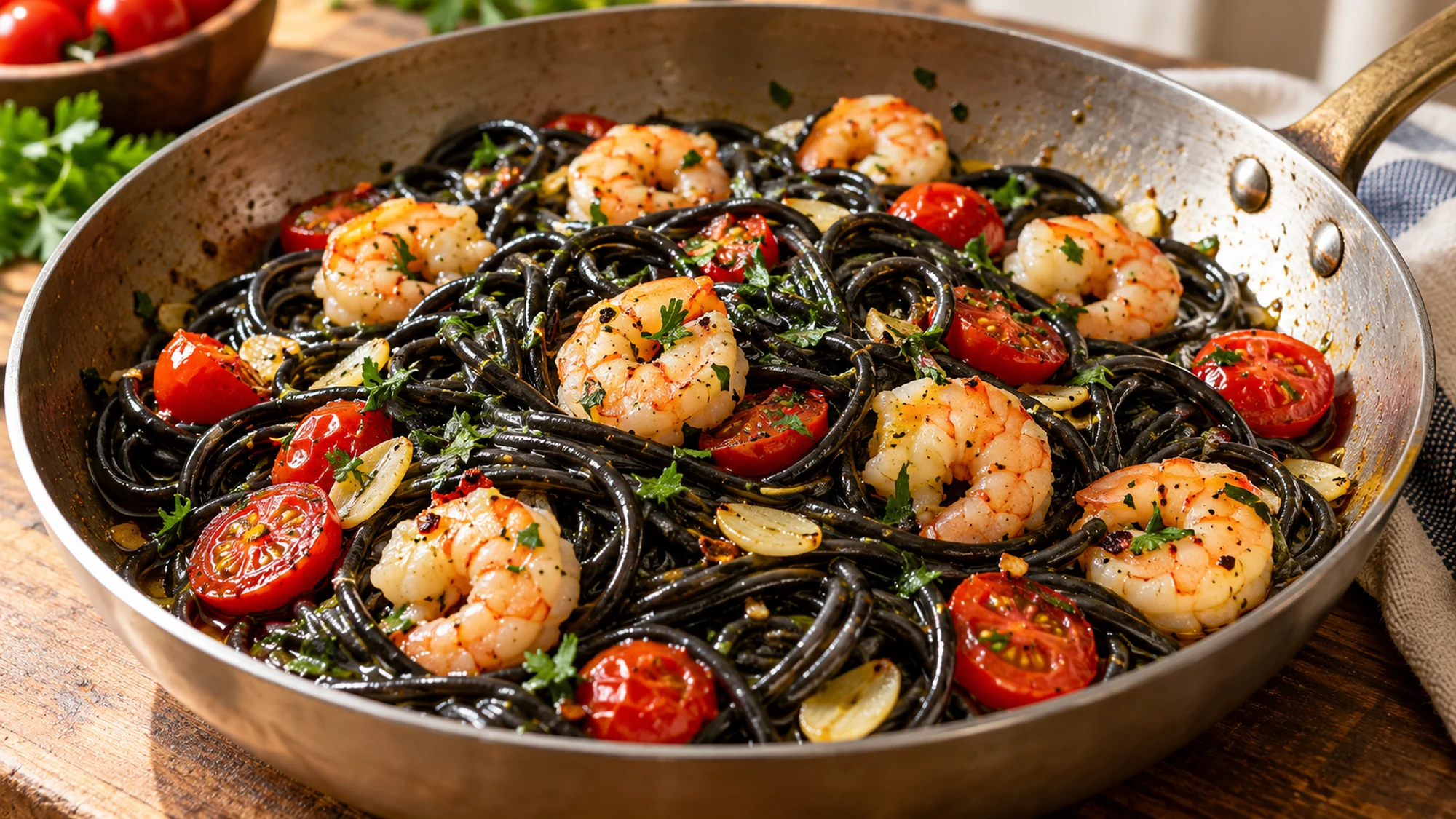
The shrimp cook separately for a few minutes, then return to the skillet once the tomatoes have softened. That order gives each ingredient the time it needs without leaving the shrimp in a long simmer. I’d keep the sauce loose and glossy, with some intact tomato halves, rather than trying to hide every dark strand under a thick topping.
Serving squid ink pasta
Divide the finished skillet into four main portions and serve promptly in shallow bowls. The recipe starts with 80 grams of dried pasta per person, plus shrimp and tomatoes. A green salad is a useful companion, while extra bread is optional and counted separately from the nutrition estimate.
Lemon goes in at the finish so you can adjust its brightness after tasting a coated strand. For another citrus-led pasta meal, the blog’s frozen lemon pasta takes a different, cheese-based approach. This shrimp version keeps both cheese and cream out of its measured sauce.
| Choice | What to expect |
|---|---|
| Pasta too dry | Toss with reserved cooking water in small splashes. |
| Sauce too watery | Toss briefly over moderate heat before adding more liquid. |
| Serving later | Cook close to mealtime; shrimp and pasta both firm or soften as they wait. |
Reserve pasta water before draining, then use it to adjust the coating while the noodles are still hot.
Variations and ingredient choices
Check that the package lists squid or cuttlefish ink if that is the flavor and ingredient you want. Black bean pasta, black rice noodles, and charcoal-colored pasta are different products. Their cooking times and textures do not automatically match those of dried wheat spaghetti.
- Use linguine made with ink instead of spaghetti, following that package’s cooking time.
- Replace cherry tomatoes with the same weight of ripe chopped tomato; a very watery tomato may need a longer reduction.
- For less heat, omit the measured chili flakes. The garlic and lemon still give the sauce a clear direction.
I’d buy peeled shrimp when time matters, but keep them cold while preparing the other ingredients. Remove the tails for easier eating, and pat the shrimp dry before they enter the skillet. Very small shrimp cook faster than large ones, so the visual and temperature checks matter more than a fixed minute count.
Match the method to the actual pasta and shrimp in front of you; the package and the shrimp’s size are more useful than the color of the noodles.
Health benefits and seafood handling
A quarter of the recipe is estimated at about 460 calories and 30 grams of protein. The calculation counts the dried pasta, shrimp, tomatoes, measured olive oil, garlic, lemon, parsley, and chili. It excludes additional oil and side dishes. Different pasta labels and shrimp products change these rounded estimates.
This recipe includes wheat and shrimp, and the ink is a mollusk ingredient. Some ink pastas also contain egg, so check the full ingredient and allergen information. The FDA’s seafood guidance recommends refrigerator thawing and describes cooked shrimp as firm, pearly, and opaque; most seafood should reach 145°F/63°C.
- Keep raw shrimp and its utensils separate from ready-to-eat parsley, lemon, and serving dishes.
- Refrigerate leftovers within two hours in shallow containers, use within three to four days, and reheat to 165°F/74°C, following Illinois Extension guidance.
- Budget an estimated US$14.40 for four servings, about US$3.60 each, with specialty pasta and shrimp making up most of the cost.
The useful benefit is a measured pasta-and-seafood portion; dark noodles do not establish a special health effect or remove allergen concerns.
Bottom Line
Squid ink pasta needs a clearly chosen noodle and a restrained finish. Cook the shrimp just through, soften the tomatoes separately, and bring everything together with lemon, parsley, and enough pasta water to keep the strands moving.
Squid Ink Pasta Recipe

Ingredients
- 320 g dry squid ink spaghetti made with squid or cuttlefish ink; follow package cooking time
- 400 g raw peeled shrimp deveined, tails removed; thawed safely if frozen
- 300 g cherry tomatoes halved
- 2 tbsp olive oil 28 g total, divided
- 4 garlic cloves about 12 g, thinly sliced
- 2 tbsp lemon juice 30 mL
- 1 tsp finely grated lemon zest about 2 g
- 10 g fresh parsley chopped
- 1/4 tsp red pepper flakes
- 1/4 tsp fine salt about 1.5 g; adjust for the pasta label
- 1/8 tsp black pepper
Equipment
- 1 Large pasta pot
- 1 Wide skillet
- 1 Tongs
- 1 Food thermometer
Instructions
- Bring a large pot of water to a boil. Keep shrimp cold while preparing tomatoes, garlic, lemon, and parsley. Pat thawed peeled shrimp dry with paper towel. Keep raw-shrimp utensils separate from garnish and serving plates.
- Cook the dried ink spaghetti according to its package until just al dente. Reserve a mug of pasta water before draining. Start the skillet while the pasta cooks.
- Heat 1 tablespoon of the oil in a wide skillet over medium-high heat. Add shrimp in one layer with salt and pepper. Cook for about 2 minutes, turn, and cook another 1–2 minutes or as needed until firm, pearly, and opaque through the center; most seafood should reach 145°F/63°C. Transfer to a clean plate.
- Reduce the heat to medium. Add the remaining tablespoon oil, garlic, and chili flakes. Stir for 30 seconds without scorching. Add tomatoes and cook for 5–7 minutes until softened and juicy, adding a small splash of pasta water if the pan becomes dry.
- Add cooked pasta to the skillet with a small splash of reserved water and toss until lightly coated. Fold in the cooked shrimp just to warm, then remove from heat. Add lemon juice, zest, and parsley. Divide into four portions and serve promptly.
Nutrition
Video
Notes
Tried this recipe?
Let us know how it turned out!Hi, I’m Emily Pocker! I share recipes and food guides here at Recipes360 to help you find everyday meal inspiration and feel more confident in the kitchen. My goal is to make cooking approachable, enjoyable, and full of flavor.