
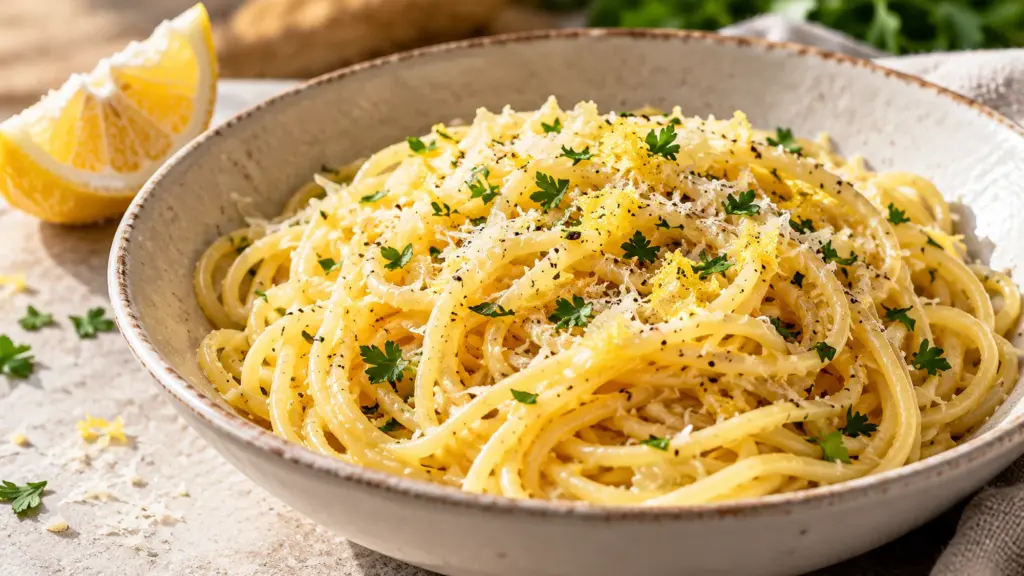
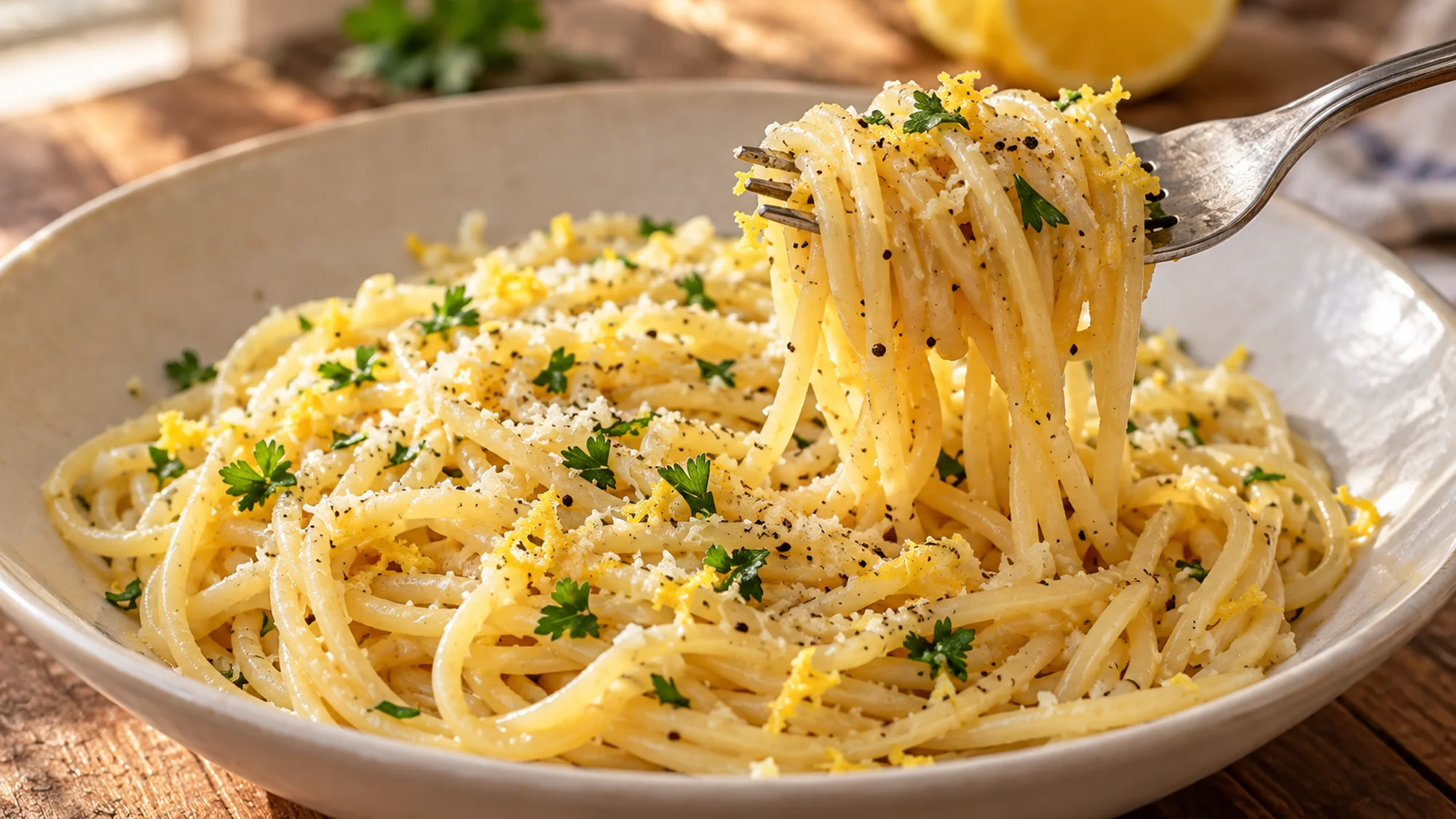
A frozen lemon can supply both fragrant yellow zest and small flecks of tart flesh for a bowl of hot spaghetti. Frozen lemon pasta uses those fine shavings in a butter-and-Parmesan coating, with enough pasta water to bring everything together. The finished dish is served hot; the lemon is the frozen part.
Freeze seeded lemon quarters ahead, grate a measured amount finely, and add the cheese off the heat so the sauce stays smooth.
I prefer starting with a modest amount of lemon and adding more only after tasting. A little white pith inevitably travels with the shavings, and its bitterness becomes more noticeable when a large portion of the rind goes into a small pan of pasta.
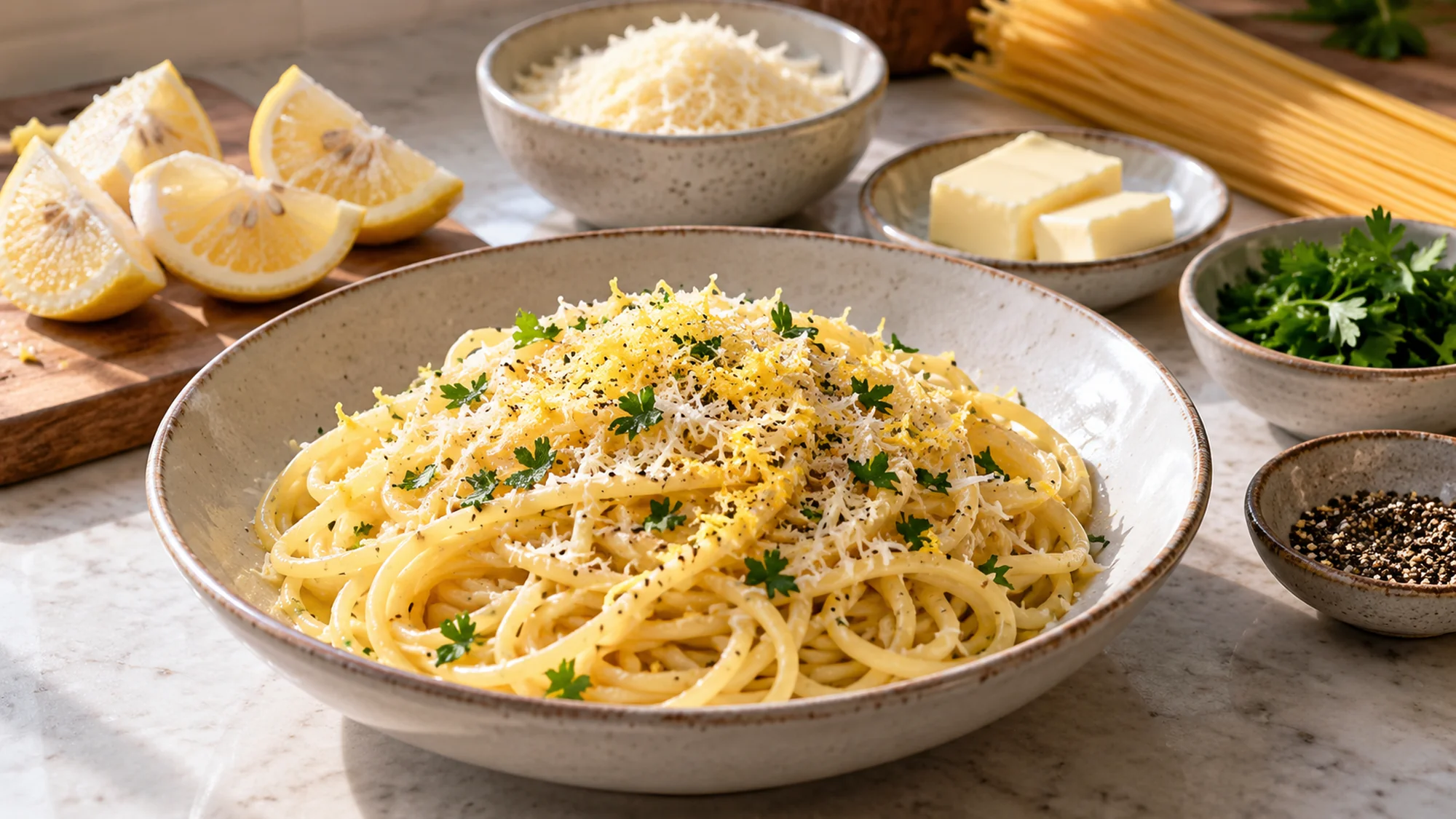
Serving frozen lemon pasta while the sauce is glossy
Have warm bowls ready before you finish tossing. The thin coating looks loosest in the pan and tightens as the pasta absorbs moisture, so a small splash of reserved cooking water just before serving can be useful. Long spaghetti or linguine makes the lemon and Parmesan easy to distribute with tongs.
Pair the three small main portions with a crisp green salad or a simply cooked vegetable. Chicken, fish or chickpeas can make a larger meal, with their nutrition counted separately. If you want a different comforting pasta another day, French onion pasta offers browned onions and a richer cheese finish.
| Serving situation | What helps | What to avoid |
|---|---|---|
| Eating immediately | Warm bowls and a last splash of pasta water | Leaving the finished pan uncovered |
| Adding a protein | Cook it separately and serve alongside | Overloading the small sauce quantity |
| Saving a portion | Refrigerate promptly in a shallow container | Expecting reheated pasta to have the same fresh coating |
Finish the sauce when everyone is ready to eat; this is a good dish for bowls at the table, not a long wait on the stove.
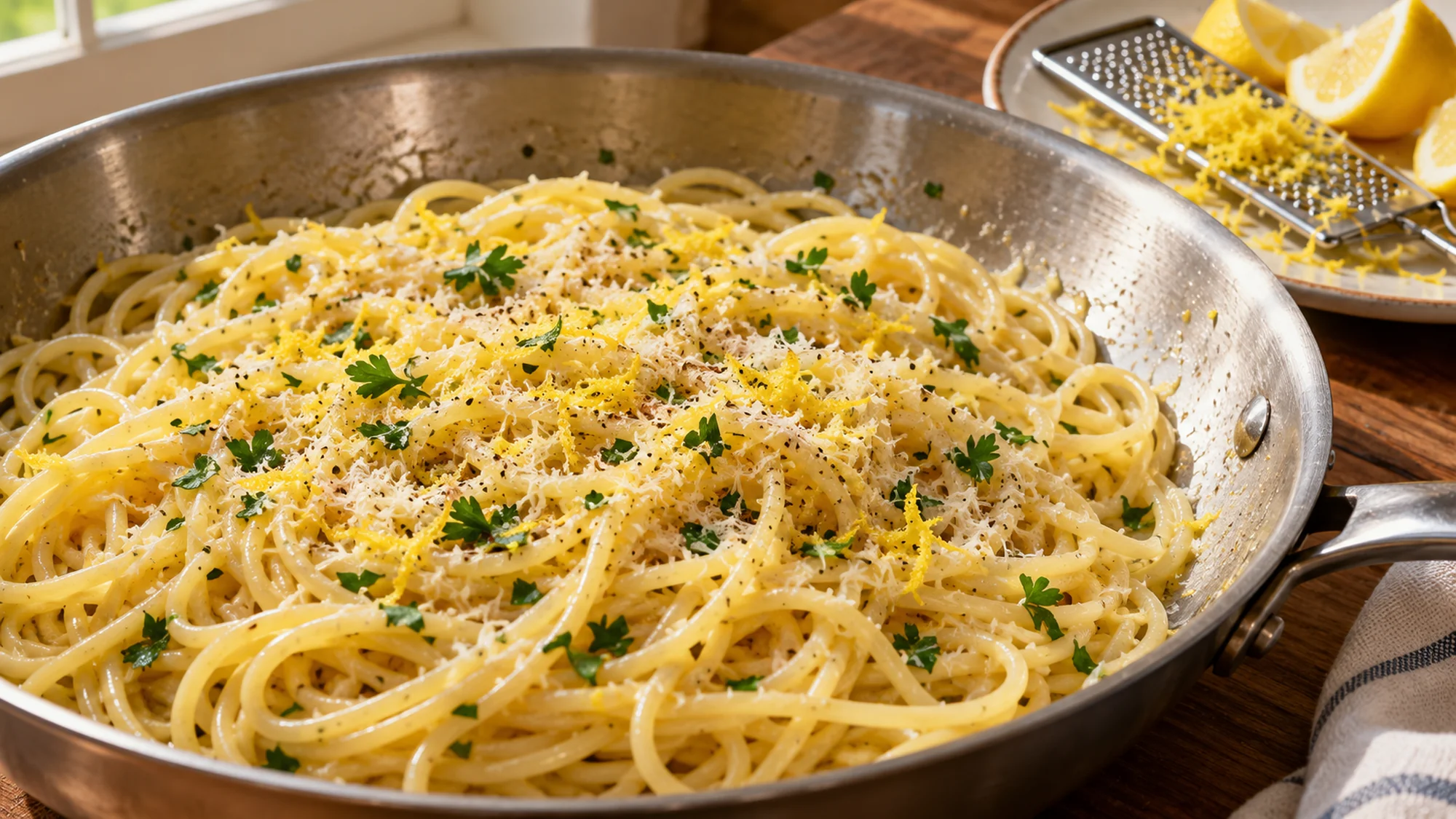
Lemon choices, substitutions and sauce fixes
Cut and seed the lemon before freezing, when a knife can move through it safely. Trim the thick central white core, freeze the quarters separately, and use a fine grater rather than chopping frozen fruit. Stop before your fingers approach the grater; a small ungrated piece is a reasonable trade for intact fingertips.
Use yellow skin and exposed flesh while avoiding large amounts of the thick white rind. No need to force the entire quarter through the grater. The card gives a starting weight and a small adjustment range, which makes the result more predictable than calling for an unspecified whole lemon.
- Fresh lemon instead: use a little finely grated yellow zest and add juice gradually. It makes a good lemon pasta, but the flavor and texture differ from grated frozen flesh.
- Cheese texture: finely grate Parmesan from a wedge. Coarse pieces need more time to disperse and can form clumps before they melt.
- Tight sauce: take the pan off the heat and toss in hot pasta water a tablespoon at a time. I would try this before adding more butter.
- Visible oil or cheese clumps: avoid a hard boil after adding the cheese. Gennaro Contaldo’s lemon pasta demonstration shows how tossing with cooking water helps create a coating.
Control lemon by the amount grated and sauce texture by the heat and water; adding more of everything rarely fixes either problem.
Health benefits, portions and leftover care
This pasta supplies carbohydrate from the spaghetti and some protein from the cheese and wheat. The lemon contributes flavor in a small amount; it does not transform buttered pasta into a vitamin supplement or a treatment. A vegetable side adds variety without asking a garnish to do the work of a whole serving of produce.
For a different grain choice, whole-wheat spaghetti is an option, although its nuttier flavor and firmer texture change the dish. The USDA’s practical meal guidance suggests making half of grains whole grains across the eating pattern, rather than expecting every meal to look identical.
- Wash before freezing: rinse and rub the lemon under running water, then dry it. The FDA’s produce guidance recommends washing before cutting; do not use soap.
- Mind the estimate: the card includes all butter and cheese divided among three portions. Extra cheese and serving accompaniments add to those values.
- Refrigerate leftovers: chill promptly at 40°F (4°C) or below and use within three days. Reheat thoroughly to 165°F (74°C), loosening with water as needed.
Enjoy the lemon for its flavor, keep the serving size clear, and round out the plate with foods that bring different nutrients.
Bottom Line
Frozen lemon pasta is a small planning step followed by a quick finish. Freeze the prepared quarters, grate sparingly and toss off the heat with finely grated Parmesan for hot, glossy strands with a clear citrus flavor.
Frozen Lemon Pasta Recipe

Ingredients
- 250 g dry spaghetti or linguine
- 40 g unsalted butter cut into small cubes
- 45 g Parmesan very finely grated from a wedge
- 25 g finely grated frozen lemon flesh and yellow zest start with 20 g and add up to 5 g more to taste; prepare 1 small lemon as directed, keep unused quarters frozen
- 5 g flat-leaf parsley finely chopped
- 1/4 teaspoon black pepper freshly ground, or to taste
- 1/4 teaspoon fine salt for the finished dish, optional to taste; plus salt for pasta water as desired
- 90–150 ml reserved hot pasta cooking water about 6–10 tablespoons; add as needed
Equipment
- Knife and cutting board
- Small freezer-safe container
- Fine grater
- Large saucepan
- Wide skillet and tongs
- Kitchen scale
- Measuring jug
Instructions
- Rinse and rub a small thin-skinned lemon under plain running water, then dry. Quarter it while fresh. Remove visible seeds and trim the thick central white core. Put quarters in a covered freezer-safe container and freeze at least 4 hours or overnight, until hard throughout. Keep unused pieces frozen. Do not try to cut a whole solid frozen lemon with a knife.
- Bring a large pan of water to a boil and salt as desired. Cook spaghetti until al dente according to its package, usually 9–12 minutes. Before draining, reserve at least 250 ml of the starchy cooking water. The recipe will use about 90–150 ml.
- While pasta cooks, finely grate 20 g of frozen lemon flesh and yellow zest from a quarter into a small bowl. Avoid thick white rind and stop if you encounter a missed seed; do not grate it. Keep fingers clear of the grater and leave a small end ungrated. Grate up to 5 g extra separately for adjustment.
- In a wide skillet over low heat, melt the butter with 60 ml hot pasta water. Add drained hot spaghetti and toss. Remove the skillet from the heat. Sprinkle in the Parmesan gradually while tossing, then add the 20 g grated lemon, parsley and black pepper. Add more hot cooking water a tablespoon at a time until a light glossy sauce coats the strands. Use about 90–150 ml water in total; avoid a hard boil after adding cheese.
- Taste a strand before adding any salt or the remaining 5 g lemon. Divide among 3 warm bowls and serve immediately. Optional vegetables, proteins, bread or extra cheese are excluded from the estimates.
- Refrigerate leftovers promptly in shallow covered containers at 40°F (4°C) or below, within 2 hours or 1 hour above 90°F (32°C). Use within 3 days. Reheat thoroughly to 165°F (74°C) with a splash of water; texture will differ from the fresh sauce.
Nutrition
Video
Notes
Tried this recipe?
Let us know how it turned out!Hi, I’m Emily Pocker! I share recipes and food guides here at Recipes360 to help you find everyday meal inspiration and feel more confident in the kitchen. My goal is to make cooking approachable, enjoyable, and full of flavor.