
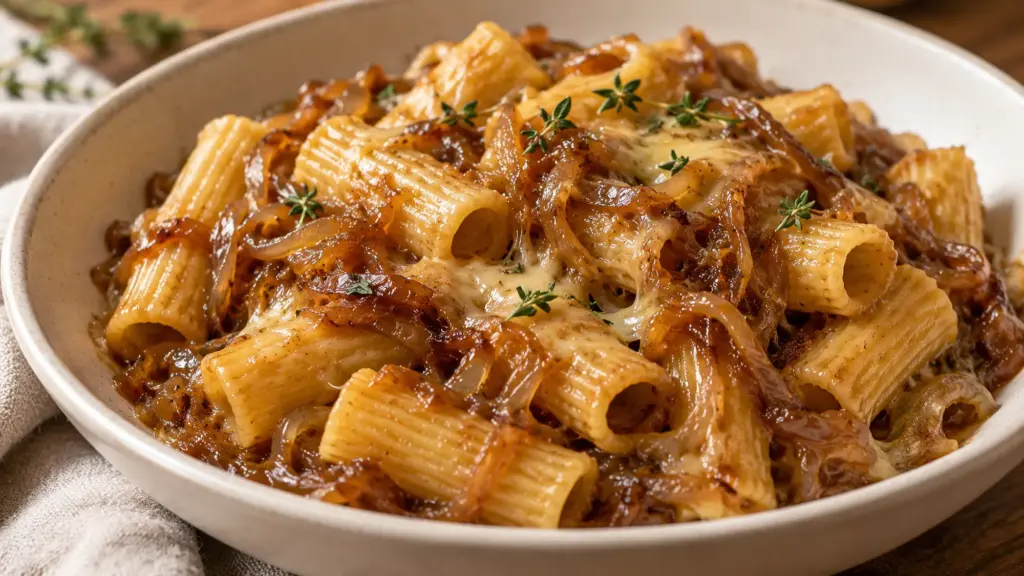
A pile of sliced onions can look out of proportion to a box of pasta, right up until it cooks down into a glossy tangle. French onion pasta puts those slow-browned onions at the center of dinner, with rigatoni, savory broth and Gruyère. The sauce comes from the onions, pasta starch and cheese; there is no cream to pour in.
For French onion pasta with deep flavor, let the onions become evenly golden brown before adding the pasta. Cook the rigatoni in broth, keep extra hot water nearby, and stir in the cheese after turning off the heat.
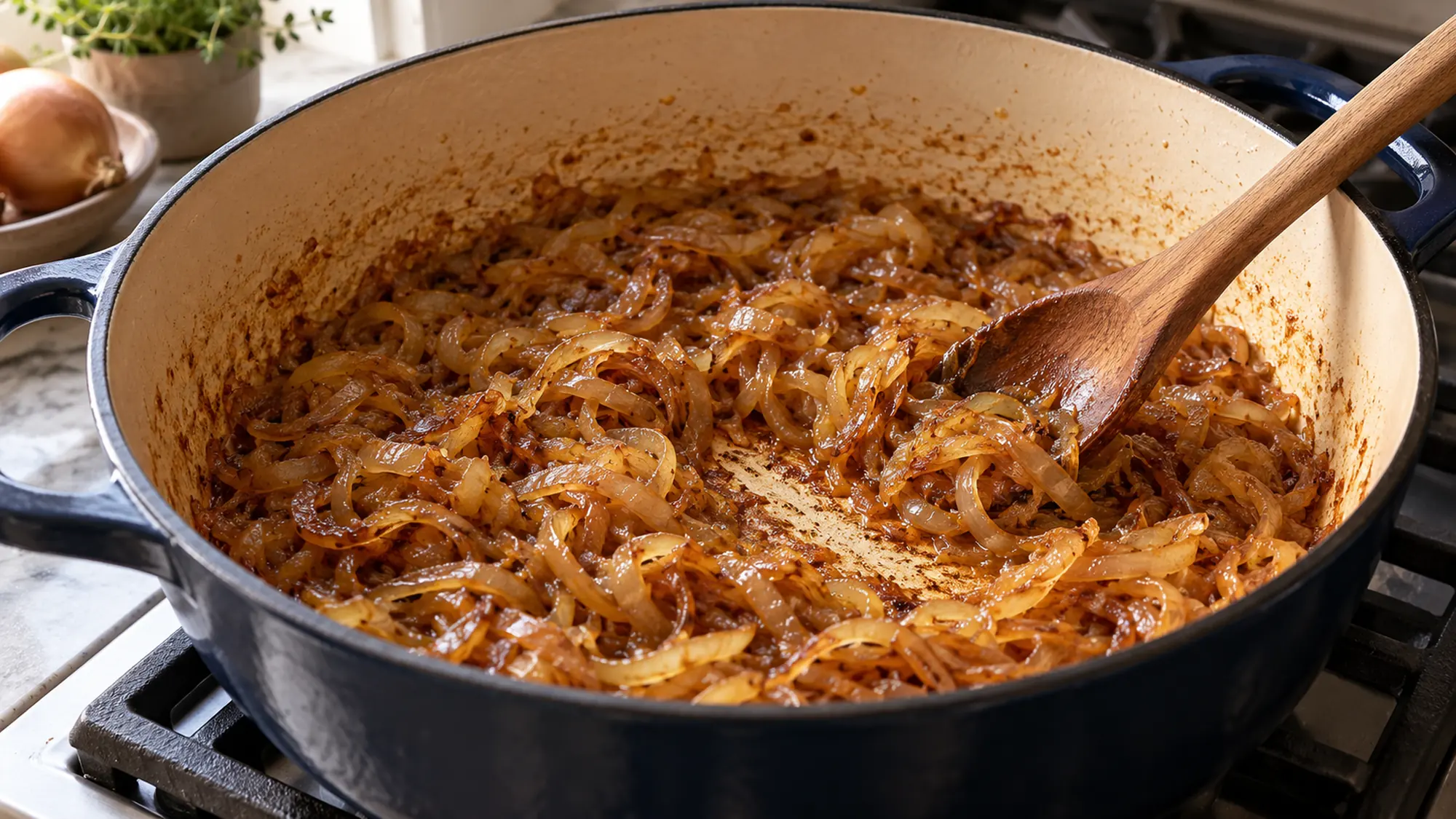
I’d choose a wide, heavy pot for this rather than a narrow saucepan. The extra surface helps moisture escape, and it gives you room to stir without sending onion ribbons over the edge. This is a one-pot meal, but it is not a fifteen-minute one: the National Onion Association notes that deeply caramelized onions commonly take around 45 minutes or longer.
Serving suggestions for French onion pasta
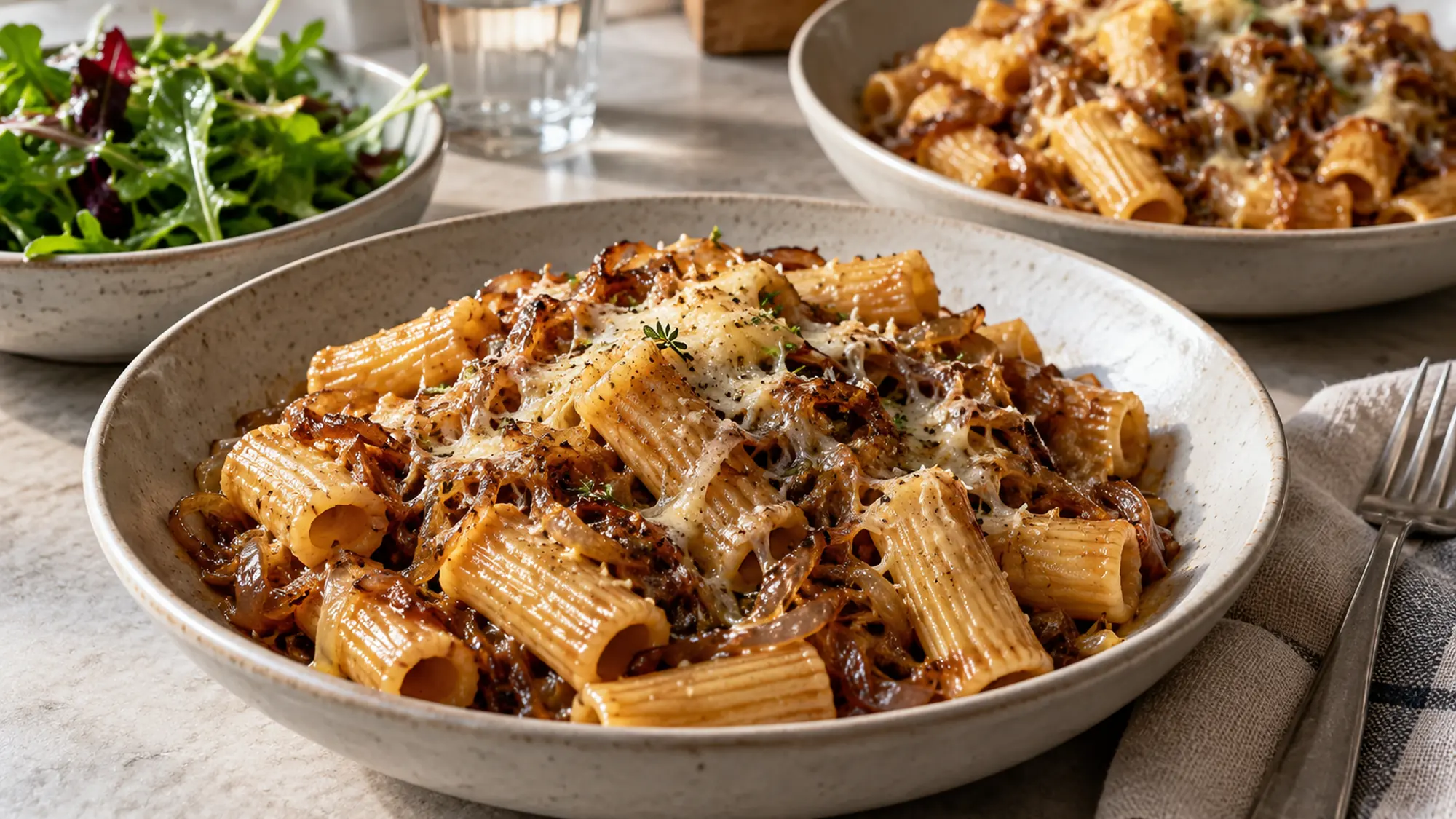
Serve the pasta as soon as the sauce coats the tubes and still looks a little loose in the pot. It continues absorbing liquid as it sits, so a glossy sauce can become noticeably thicker by the time everyone reaches the table. Warm bowls help, but having the rest of dinner ready helps more.
- For a fresh side: choose a leafy salad with a sharp vinaigrette or sliced cucumber and lemon.
- For another vegetable: offer steamed green beans or roasted broccoli without an additional cheese sauce.
- For portions: divide the pot into four main-dish bowls, then add vegetables alongside rather than relying on a large bread basket.
The site’s carrot ribbon salad offers a crisp alternative to the soft onions and pasta. If you are choosing between pasta dinners, baked feta pasta takes the flavor in a tomato-and-cheese direction. I’d keep this onion version uncluttered; the long cooking has already done the seasoning work that extra toppings often try to replace.
Have the sides ready first, and serve while the sauce can still move between the pasta tubes.
Variations and sauce adjustments
Rigatoni gives the onion strands somewhere to cling and leaves room inside each tube for sauce. Another short shape can work, but thickness and surface area change how quickly it hydrates. Use the package timing as a starting point and taste the pasta itself before deciding the pot is finished.
| Choice | What changes | Practical adjustment |
|---|---|---|
| Penne instead of rigatoni | Smaller tubes may cook sooner | Start tasting before the rigatoni would be ready |
| Mushroom broth | A different savory base | Use vegetarian Worcestershire and suitable cheese if needed |
| Swiss cheese | Milder finish than Gruyère | Grate finely and add off the heat |
| Whole-wheat pasta | Different texture and liquid uptake | Expect to adjust water and cooking time |
- Sauce too tight: add hot water a few tablespoons at a time and stir until it loosens.
- Onions catching: lower the heat and release brown deposits with a small splash of water. Blackened bits taste bitter.
- Pasta almost tender but liquid low: add more hot water before the bottom begins to stick.
Let the pasta’s texture decide the final liquid adjustment, and keep the cheese away from a hard boil.
Health benefits and portion considerations
Onions make up a substantial part of this dish, while pasta supplies carbohydrate and the cheese contributes protein and calcium. The NIH calcium fact sheet identifies cheese among common calcium sources. That contribution does not erase the butter, oil or sodium that comes with the rest of the recipe.
- Control salt gradually: start with unsalted or low-sodium broth and taste again after the cheese melts.
- Check allergens: standard rigatoni contains wheat, Gruyère contains milk, and some Worcestershire sauces contain fish.
- Read the estimate: nutrition is per one-quarter recipe, without a side salad or extra cheese.
For leftovers, transfer the pasta to shallow containers and refrigerate promptly. USDA guidance calls for refrigeration within two hours, a refrigerator at 40°F (4°C) or below, and using leftovers within three to four days. Reheat a portion with a splash of water until it reaches 165°F (74°C), stirring so the center warms evenly.
Treat this as a substantial main course and use the sides, broth choice and portion size to shape the whole meal.
Bottom Line
French onion pasta works best when the onions get enough time and the sauce stays flexible. Deep browning, gradual liquid adjustments and cheese added off the heat bring the soup-inspired flavor into a practical bowl of rigatoni.
French Onion Pasta Recipe

Ingredients
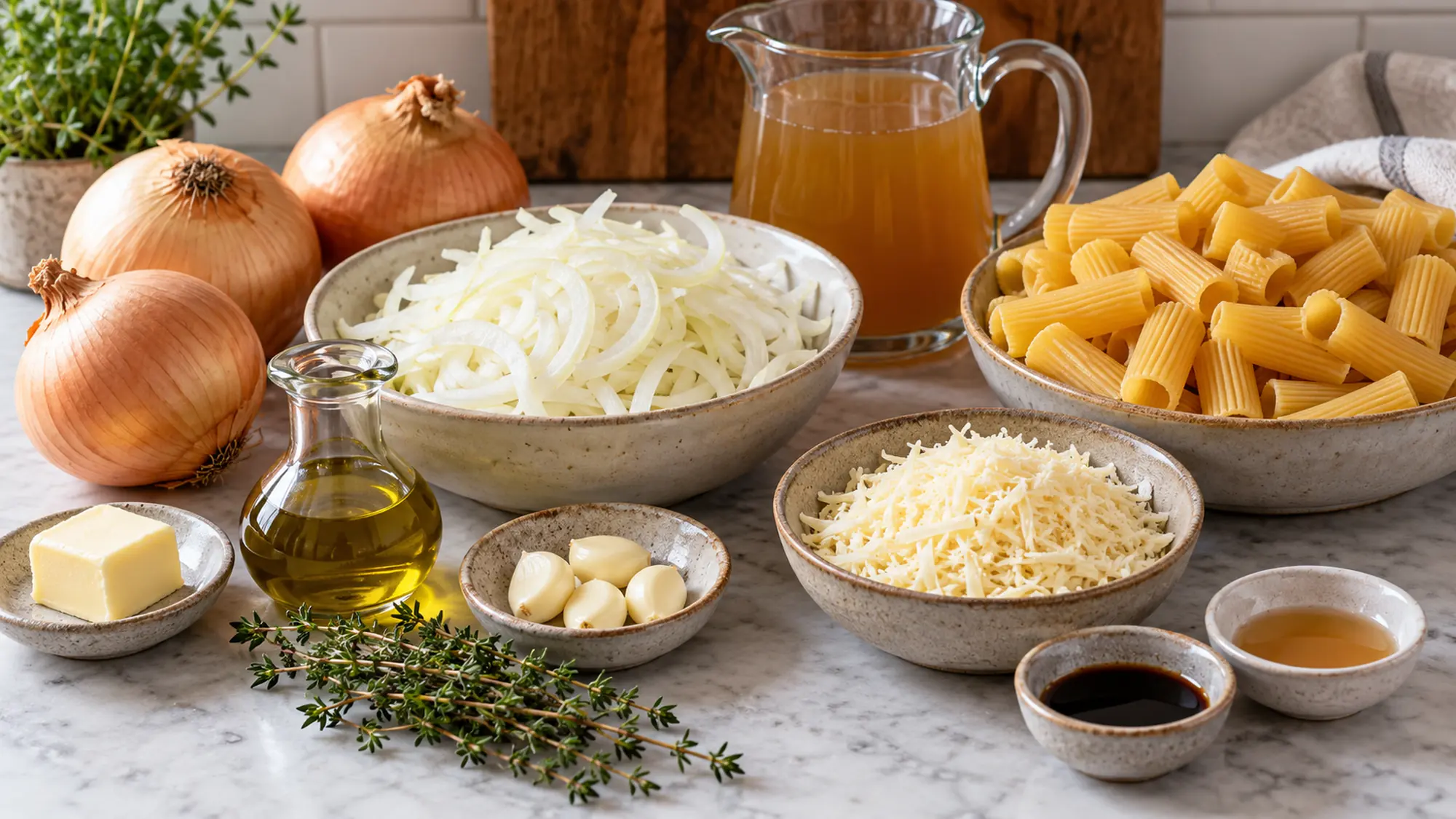
- 1 1/2 pounds yellow onions 680 g peeled weight, about 3 large; thinly sliced
- 2 tablespoons unsalted butter 28 g
- 1 tablespoon olive oil
- 3 garlic cloves minced
- 2 teaspoons fresh thyme leaves
- 10 1/2 ounces dry rigatoni 300 g
- 4 cups unsalted beef broth 960 ml
- 1 cup hot water 240 ml, available for adjustments; use only as needed
- 3 1/2 ounces Gruyère cheese 100 g, finely grated
- 1 teaspoon Worcestershire sauce
- 1 teaspoon apple cider vinegar
- 1/4 teaspoon fine salt add only as needed after tasting
- 1/4 teaspoon ground black pepper
Equipment
- 1 Wide heavy 5-to-6-quart pot
- 1 Wooden spoon
- 1 Knife and cutting board
- 1 Box grater
- 1 Measuring jug
Instructions
- Heat the butter and oil in a wide heavy pot over medium heat. Add the sliced onions and stir to coat. Cook uncovered for 40–50 minutes or longer, stirring every few minutes at first and more often as they darken, until soft and evenly golden brown. Reduce heat if they catch; add a tablespoon or two of water to loosen brown deposits, without leaving the onions swimming. Do not scrape black burned bits into the sauce.
- Add the garlic and thyme and stir for about 1 minute. Pour in 1/2 cup of the measured broth and scrape up the golden-brown deposits from the bottom.
- Add the remaining broth, dry rigatoni and pepper. Bring to a steady simmer. Cook uncovered, stirring frequently along the bottom, for about 12–16 minutes, or until the pasta is just tender. Start tasting near the package’s suggested time. Add the reserved hot water a few tablespoons at a time if the liquid runs low before the pasta is ready.
- When the pasta is tender, the sauce should be glossy and slightly loose. If very watery, simmer briefly, stirring; if thick, add a little hot water. Turn off the heat and wait about 1 minute.
- Stir in the Gruyère in small handfuls until melted, then add Worcestershire and cider vinegar. Taste before adding any of the measured salt. Do not boil hard after adding the cheese; loosen with another splash of hot water if needed.
- Divide among four bowls and serve promptly. Refrigerate leftovers within 2 hours in shallow containers, use within 3–4 days and reheat to 165°F (74°C), adding water and stirring to warm evenly.
Nutrition
Video
Notes
Tried this recipe?
Let us know how it turned out!Hi, I’m Emily Pocker! I share recipes and food guides here at Recipes360 to help you find everyday meal inspiration and feel more confident in the kitchen. My goal is to make cooking approachable, enjoyable, and full of flavor.