
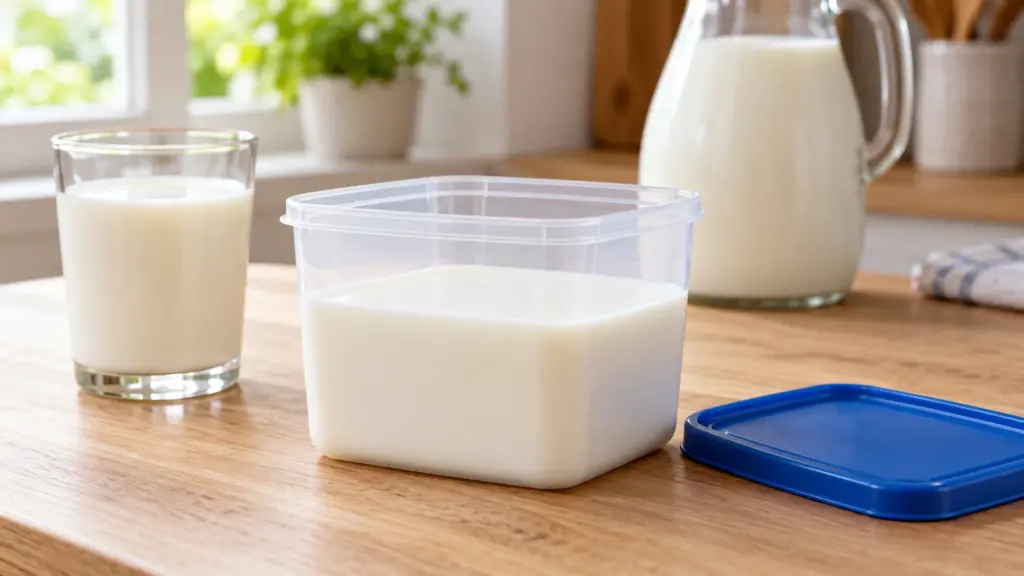
Yes, you can freeze milk before it spoils, and it can save the last part of a carton from going to waste. The main trade-off is texture: thawed milk may look separated or feel less smooth, even when it was handled properly.
Yes, you can freeze milk. Portion it into freezer-safe containers with room to expand, thaw it in the refrigerator, and expect some separation. Aim to use it within a month for its best quality.
Think of the freezer as a place to save a useful portion for later. A small container earmarked for breakfast is often easier to use than a frozen gallon with no plan.
Can You Freeze Milk Without Changing Its Texture?
Milk’s fat and water can separate during freezing and thawing. Once it is fully thawed, shake or stir it to bring them back together. The result may still feel different from fresh milk, especially when you drink it plain. U.S. Dairy explains these texture changes and recommends using frozen milk within a month for the best quality.
That one-month target is about quality, rather than a guarantee that every container is safe until then. The milk’s condition before freezing and its temperature history still matter. Freezing should be a decision you make while the milk is fresh, rather than an attempt to save milk that has already spoiled.
Portion Milk Before It Goes Into the Freezer
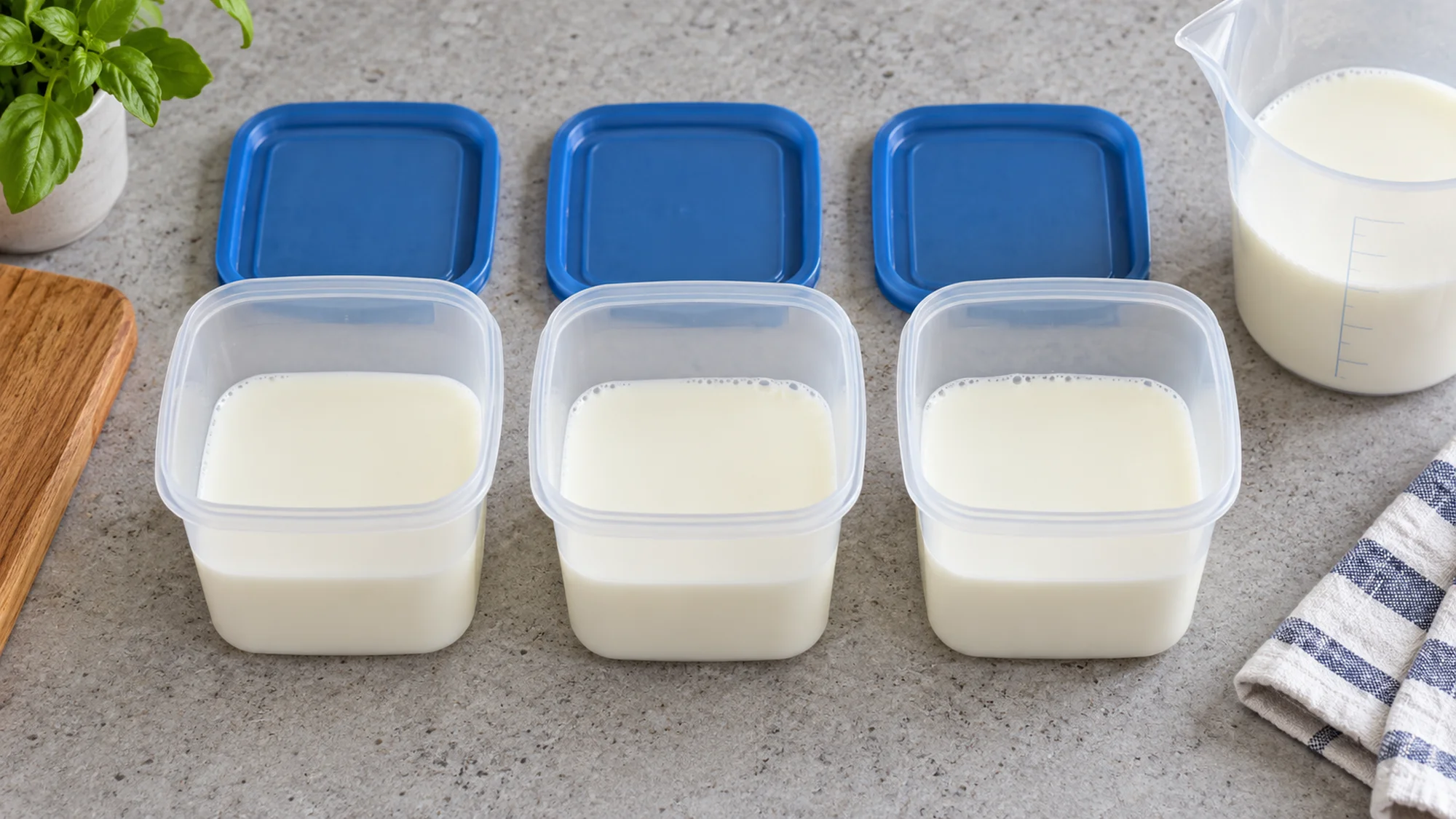
Choose clean, airtight, freezer-safe plastic containers and leave room at the top for expansion; about an inch is the guidance from U.S. Dairy. Follow the container’s own filling instructions, too. Avoid filling a bottle to the neck or squeezing one more splash into a nearly full box.
I prefer portions planned around a specific breakfast or baking project. You do not need a special set of matching containers; you need containers suitable for freezing and portions you can identify later.
| What you need | Useful portion | Why it helps |
|---|---|---|
| A little for drinks | Measured ice-cube portions | Take only the amount you need |
| Breakfast for one | A small container | Plan one bowl of oatmeal |
| A baking project | The recipe’s measured amount | Avoid thawing a whole carton |
| Several meals | Separate small containers | Thaw one at a time |
- Write the freezing date and amount on each container.
- Keep a short freezer list so the oldest portion is easy to find.
- If you freeze cubes, measure one tray cavity first so you know how much each cube holds.
- Freeze only the amount your household is likely to use; buying more is not a saving if it stays forgotten.
Thaw It in the Refrigerator
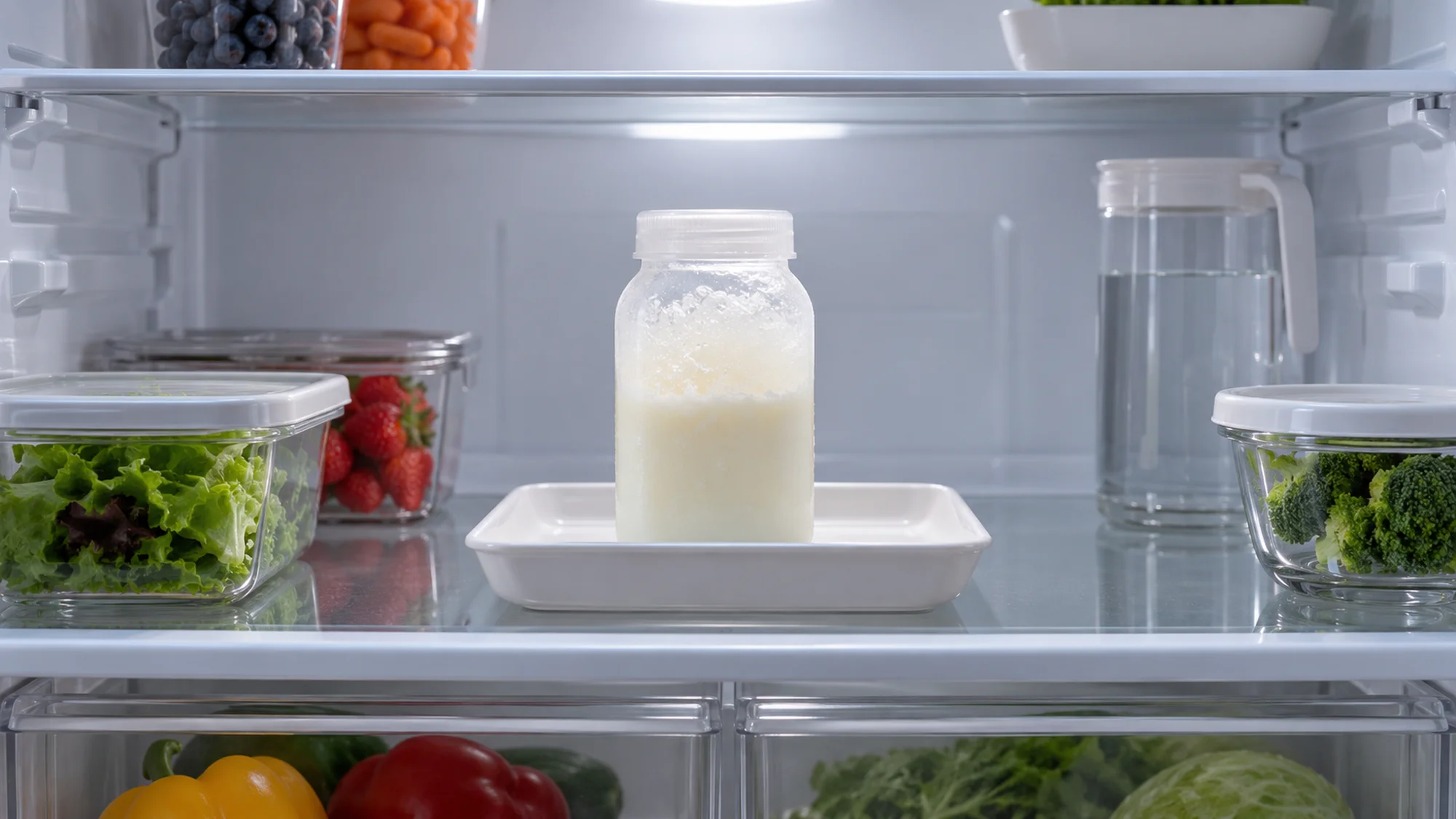
Move one container to the refrigerator on a tray before you need it. Allow plenty of time: small portions thaw sooner, while a large container may take a day or two. Do not leave milk on the counter to speed things up.
Keep the refrigerator at 40°F (4°C) or below and the freezer at 0°F (−18°C). The FDA’s storage guidance advises using appliance thermometers, since a temperature dial does not tell you the actual temperature.
- Freezing stops most bacterial growth but does not reliably kill bacteria. Discard perishable milk left unrefrigerated for more than two hours, or one hour above 90°F (32°C). A reassuring smell cannot establish safety after unsafe storage.
- Once thawed, keep it refrigerated and plan to use it promptly. There is no universal extra week that freezing adds to every carton. If you are unsure how long the milk was warm or whether it was already spoiled, discard it instead of tasting it to investigate.
Give Thawed Milk a Job
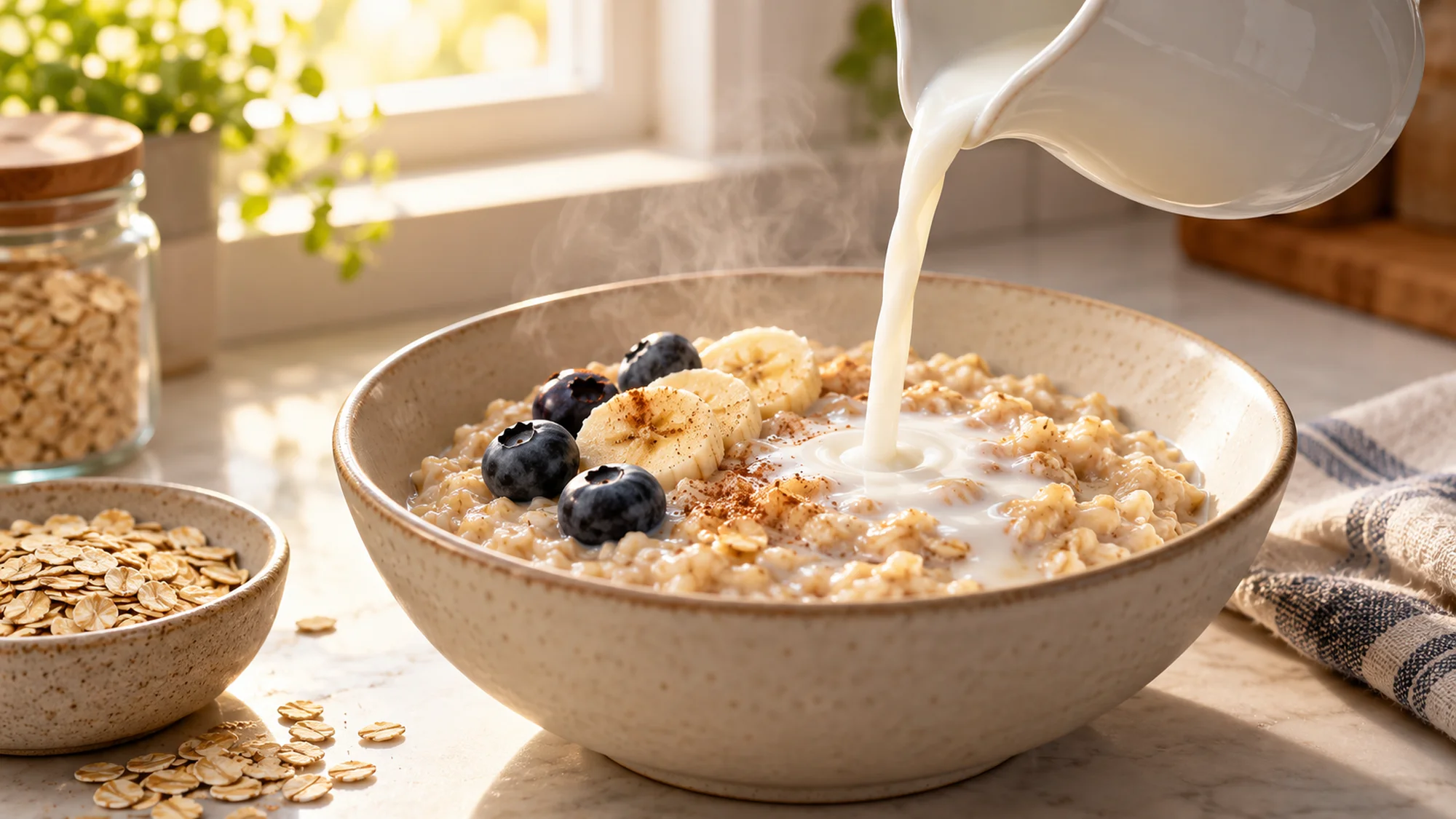
Oatmeal, muffins, pancakes, and sauces are practical destinations when the texture is less appealing in a glass. New England Dairy suggests cooking and baking uses and notes that freezing produces little to no nutrient change.
For a smoother breakfast, stir thawed milk into oats as they cook. In baking, measure it after it has thawed and been mixed again. A breakfast bake such as apple cinnamon baked oatmeal gives a planned portion a clear destination. For a sauce, stir it in gradually so you can judge the consistency rather than adding everything at once.
I would start with one small portion before freezing the rest of a carton. Save one portion, thaw it, and try it in the dish you had planned. That tells you whether the texture suits your household before you commit the rest of the carton.
Bottom Line
Freeze fresh milk in manageable portions, leave expansion space, and thaw it in the refrigerator. A one-month quality target and a simple plan for breakfast or baking make it easier to use what you save. Good handling matters more than trying to stretch a questionable carton.
Sources
- U.S. Dairy: How to freeze milk safely.
- FDA: Are you storing food safely?
- New England Dairy: Frozen milk questions.

Hi, I’m Emily Pocker! I share recipes and food guides here at Recipes360 to help you find everyday meal inspiration and feel more confident in the kitchen. My goal is to make cooking approachable, enjoyable, and full of flavor.