
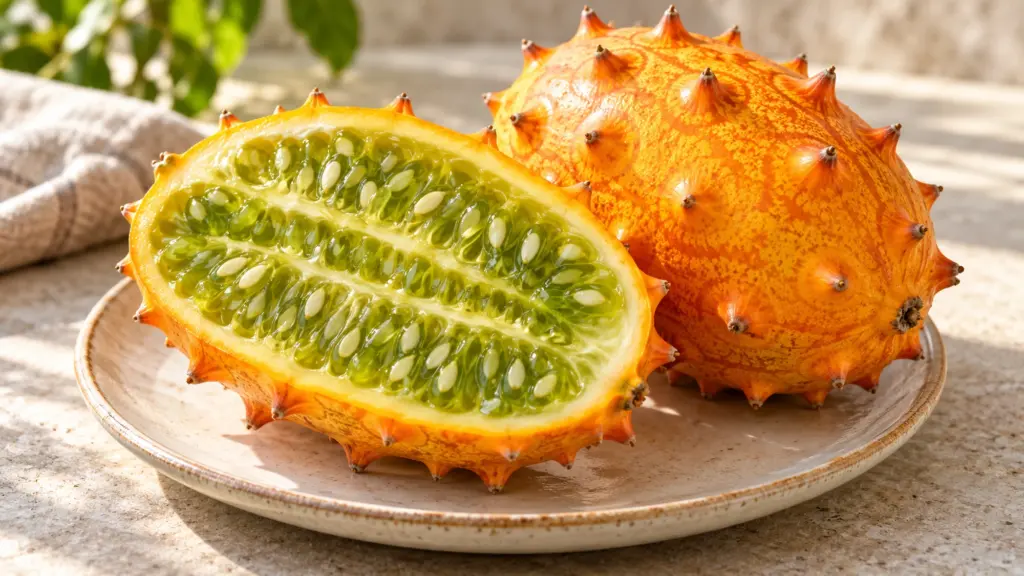
That orange fruit with little horns is hiding something much softer inside. Horned melon, also called kiwano, contains green, jelly-like pulp and edible seeds. Cut the washed fruit in half and scoop out the center with a spoon; you do not need to carve away every horn first.
Eat the green pulp and seeds of horned melon. Expect a mild, refreshing flavor and a slippery, seeded texture rather than firm melon cubes. Start with a spoonful on its own before choosing what to add.
What Horned Melon Tastes Like
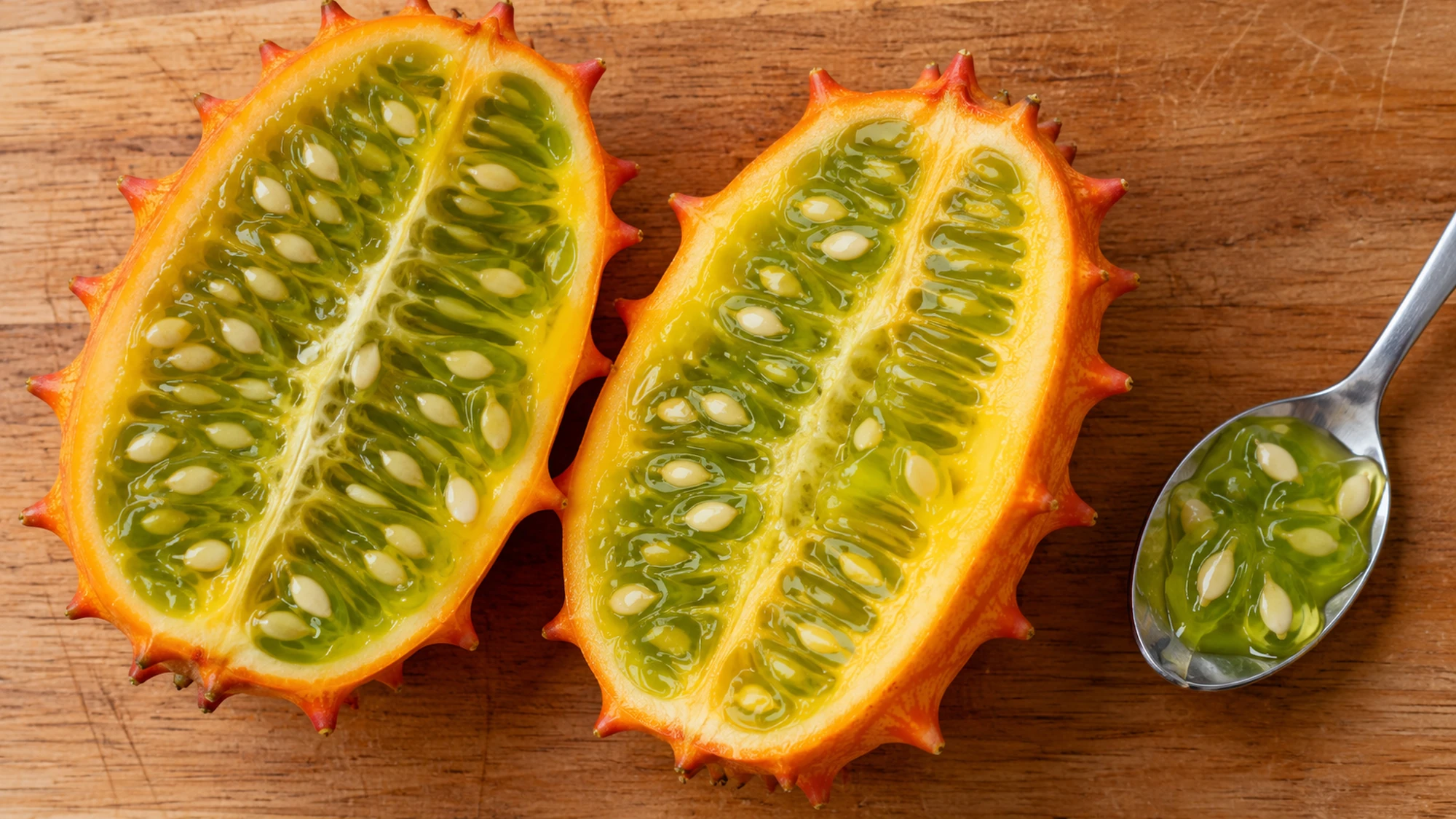
Horned melon is Cucumis metuliferus, a member of the gourd family with African origins, described in the Specialty and Minor Crops Handbook. Mature fruit has an orange exterior and green interior. Despite the similar names, kiwano is not kiwifruit.
The produce supplier EAT ME describes its flavor as mildly sweet and refreshing, with melon, banana and cucumber comparisons. Treat those comparisons as signposts, not a promise that it tastes exactly like all three. The jelly and seeds are as noticeable as the flavor.
- If you like seeded fruit: Try it plain so you can judge the whole texture.
- If you want a sweeter bowl: Pair a small amount with a sweet fruit you already enjoy.
- If you want firm pieces: Choose another fruit; the pulp will not behave like diced cantaloupe.
I’d buy one before planning a whole party platter around it. If neat cubes are what you need, mangos offer a different texture and a useful alternative. The dramatic rind does not require an equally dramatic serving plan.
How to Open and Eat Horned Melon
Use a stable cutting board and handle the projecting horns carefully. The FDA’s produce guidance recommends washing produce under running water even when the skin will be discarded, because cutting can transfer dirt and bacteria to the interior. Use a clean produce brush on firm melons, then dry the fruit.
- Wash your hands and prepare a clean board, knife and spoon.
- Set the fruit securely on the board. Cut it lengthwise or across the middle, keeping your fingers away from the blade.
- Scoop the green jelly and seeds into a bowl, or eat the pulp from the half with a spoon.
- Set aside the rind. Keep the cut fruit and collected pulp chilled if you are not eating them immediately.
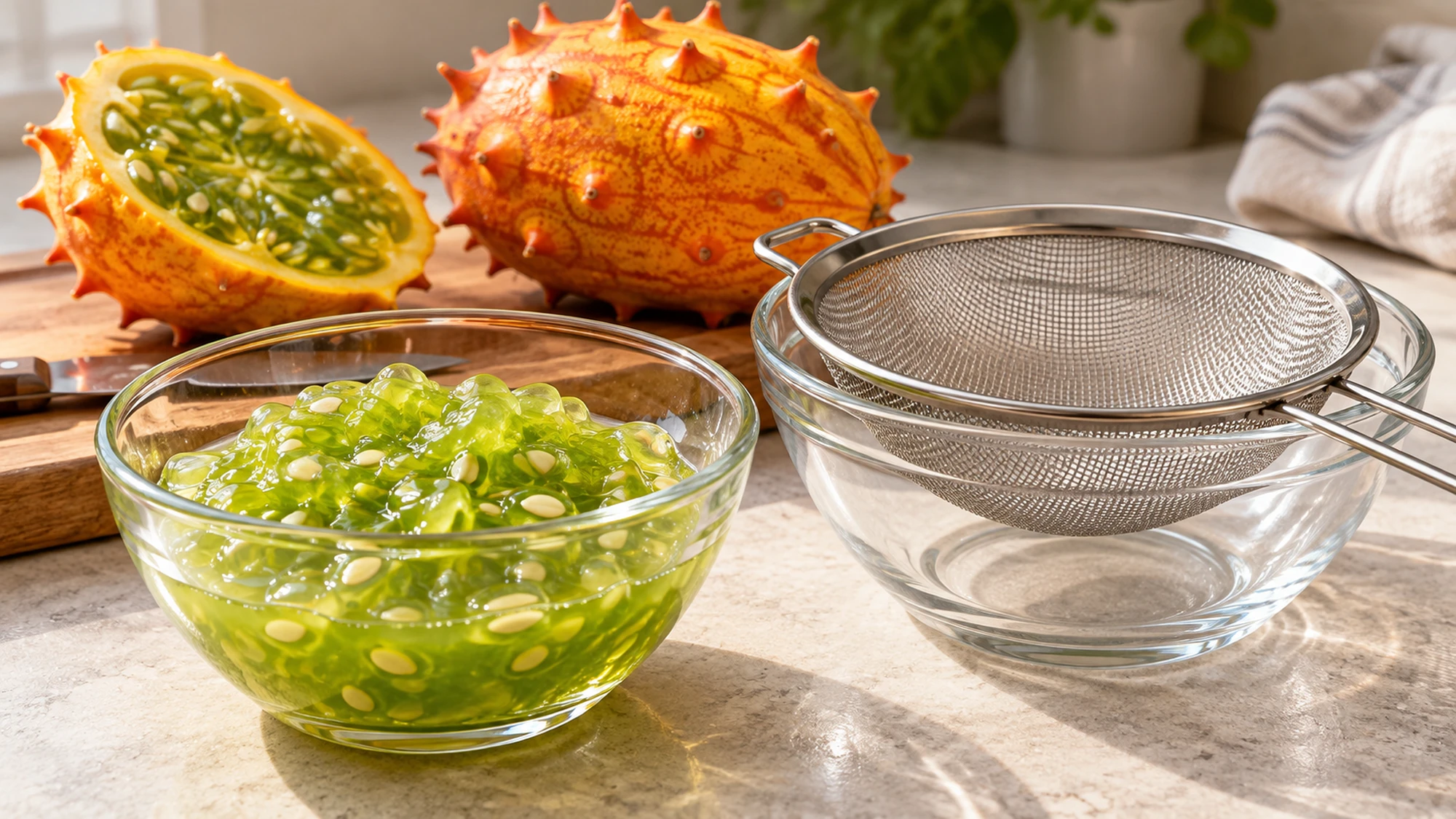
The seeds can be eaten with the pulp. If you dislike them, do not make yourself pick out every seed individually. A sieve gives you a different option, especially when you want the juice rather than the whole seeded texture.
Choose a Use for the Pulp
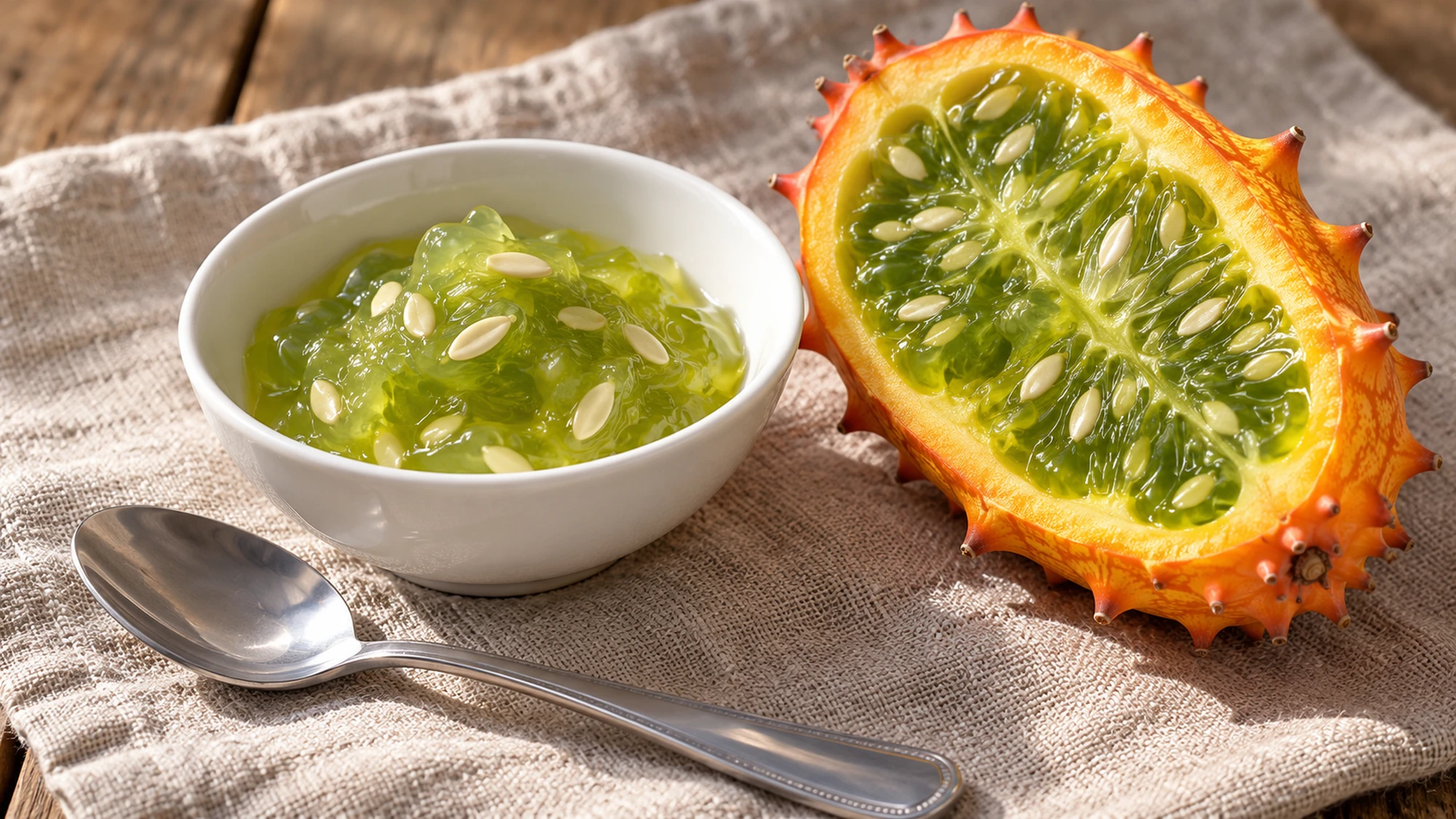
I’d start with a spoonful beside another food rather than mixing the whole melon into it immediately. That lets you decide whether you want more fruit, more sweetness or simply a smaller amount of jelly. Keep additions modest until you know what you enjoy.
| Use | How to start | Texture to expect |
|---|---|---|
| Plain snack | Spoon from the cut half | Jelly and seeds together |
| Yogurt topping | Add a small spoonful | Slippery fruit against creamy yogurt |
| Fruit salad | Add pulp just before serving | Loose pulp among firmer fruit |
| Juice or sorbet base | Press pulp through a sieve | Seed-free liquid |
The produce association’s Veggipedia preparation guide suggests sieving the pulp for juice and sorbets. Use a spoon to press gently over a bowl, then discard the remaining seeds. This changes the texture; it does not mean the seeds were unsafe to eat.
Buying, Storage and Safe Handling
Choose fruit without leaking, damaged or rotten areas. For whole fruit, EAT ME recommends keeping kiwano outside the refrigerator for a few days; Veggipedia also advises a cool place outside the fridge. Buy it for a planned use rather than relying on a long storage claim to rescue an aging fruit.
Once cut, switch to cut-fruit handling. CDC food-safety guidance recommends refrigerating cut fruit within two hours, or within one hour above 90°F/32°C, and keeping the refrigerator at 40°F/4°C or below. Put leftover pulp in a clean covered container and use it promptly.
- Keep raw meat, poultry and seafood away from the fruit and its utensils.
- Use water for washing the rind, not soap, detergent or produce wash.
- Discard rotten fruit and cut fruit left out beyond the safe time limit.
Bottom Line
Horned melon is simplest with a clean knife and a spoon. Enjoy its green pulp and edible seeds, sieve it if the texture does not appeal, and remember that whole-fruit storage advice changes once you cut it.
Sources
- Specialty and Minor Crops Handbook: Kiwano
- EAT ME: Kiwano preparation and storage
- Veggipedia: Kiwano
- FDA: Selecting and serving produce safely
- CDC: Preventing food poisoning

Hi, I’m Emily Pocker! I share recipes and food guides here at Recipes360 to help you find everyday meal inspiration and feel more confident in the kitchen. My goal is to make cooking approachable, enjoyable, and full of flavor.