
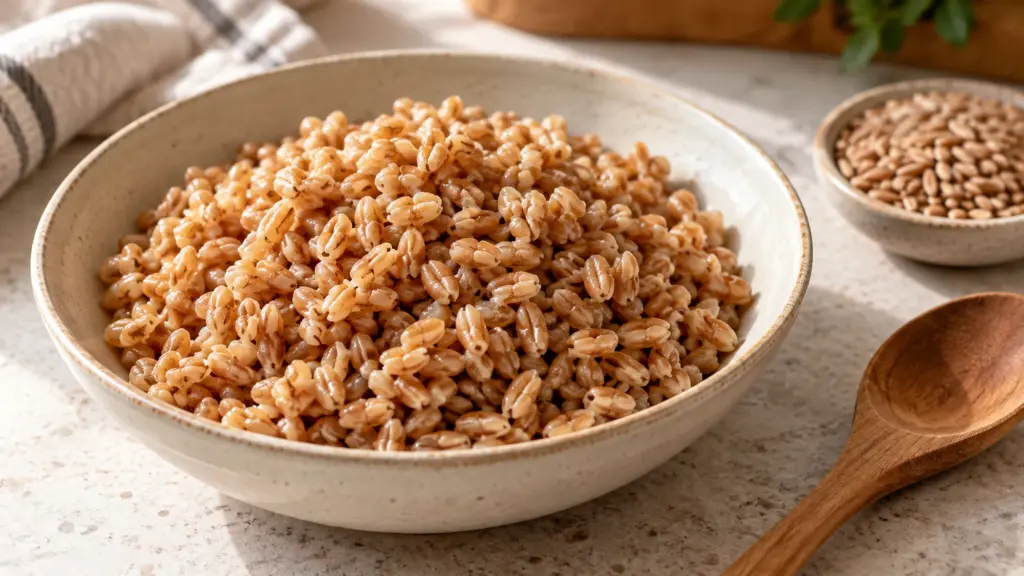
A grain bowl with plump, golden-brown kernels can leave you wondering whether you are eating rice, barley or something else. What is farro, exactly? It is wheat, usually sold as dry kernels and cooked until tender with a satisfying chew. Before buying a bag, check two things: the grain named on it and how much bran remains.
Farro is an ancient wheat grain with a nutty flavor and chewy texture. The name can refer to emmer, einkorn or spelt. It contains gluten, and its whole, semi-pearled or pearled form changes the fiber content and cooking time. “Ancient” does not mean gluten-free.
What Is Farro Made From?
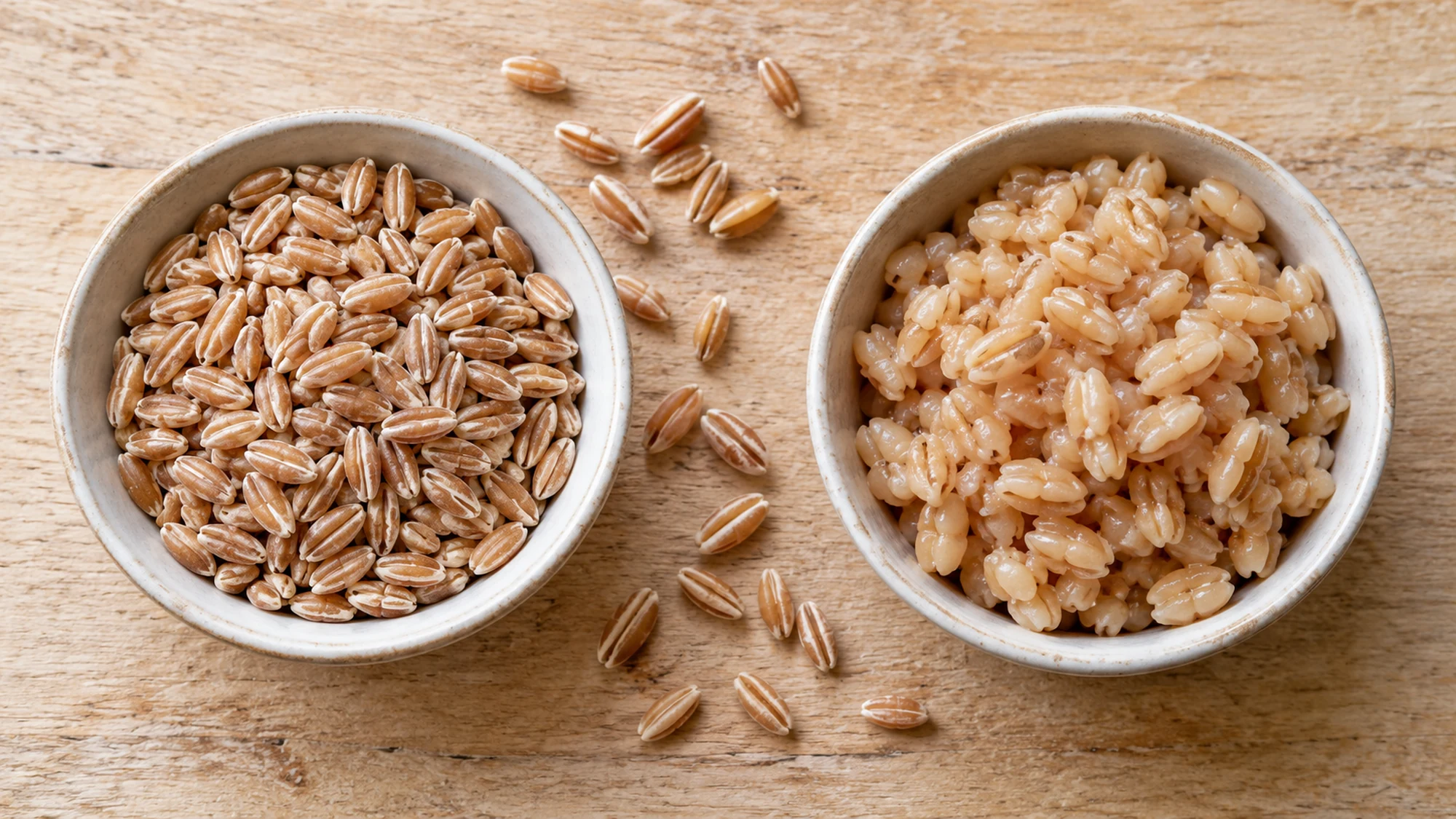
Kansas State University describes three wheats sold under the farro name: einkorn, emmer and spelt. You may see the Italian names farro piccolo, farro medio and farro grande, respectively. Emmer is the grain often meant when a recipe simply says farro, but the package is more useful than an assumption.
- It is a wheat kernel: Farro is not a pasta shape, even when it appears in a risotto-style dish.
- Expect some chew: The Whole Grains Council describes its nutty taste and firm texture, which suit soups, grain salads and pilafs.
- The name is not a processing grade: Knowing that a bag contains emmer still does not tell you whether its bran has been removed.
I would introduce it through a familiar meal, such as a vegetable bowl, rather than expecting a new grain to change dinner completely. Its appeal is the bite and gentle wheaty flavor; it does not need a complicated sauce to make its presence known.
Whole, Semi-Pearled and Pearled Matter
These terms describe processing rather than three different species. Removing bran generally shortens cooking time and reduces fiber. The Whole Grains Council advises looking for “whole farro” when you want the whole-grain form. A bag that says only farro leaves an important question unanswered.
| Form | Bran | Cooking implication |
|---|---|---|
| Whole | Retained | Usually longest; check soaking directions |
| Semi-pearled | Partly removed | Generally quicker than whole |
| Pearled | Removed | Usually quickest |
For example, Bob’s Red Mill explains that its lightly scratched farro is not technically whole grain, because some bran has been lost. That description applies to its product; read your own bag. I would choose whole farro for retained bran when time allows, and a pearled version when a quicker cooking plan matters more.
Farro Contains Gluten
The Celiac Disease Foundation lists farro, emmer, einkorn and spelt among wheat sources of gluten. Pearling, rinsing or soaking does not make farro gluten-free. Do not use it for someone with celiac disease, or as a wheat-free substitute for someone with a wheat allergy.
- For a gluten-free bowl: Rice or quinoa can provide a different grain base. Check the actual product and handling for cross-contact, rather than assuming every package is suitable.
- For a recipe substitution: Cook the replacement according to its own directions. Farro, rice and quinoa do not share one universal liquid ratio or cooking time.
- For mixed dishes: Check broth, dressings and other additions too. A gluten-free base does not establish that the whole meal is gluten-free.
If you choose quinoa instead, our rice-cooker quinoa guide explains that grain’s separate cooking method. It will not reproduce farro’s larger, chewier kernels, which is worth knowing before making the swap.
Using Farro and Handling Leftovers
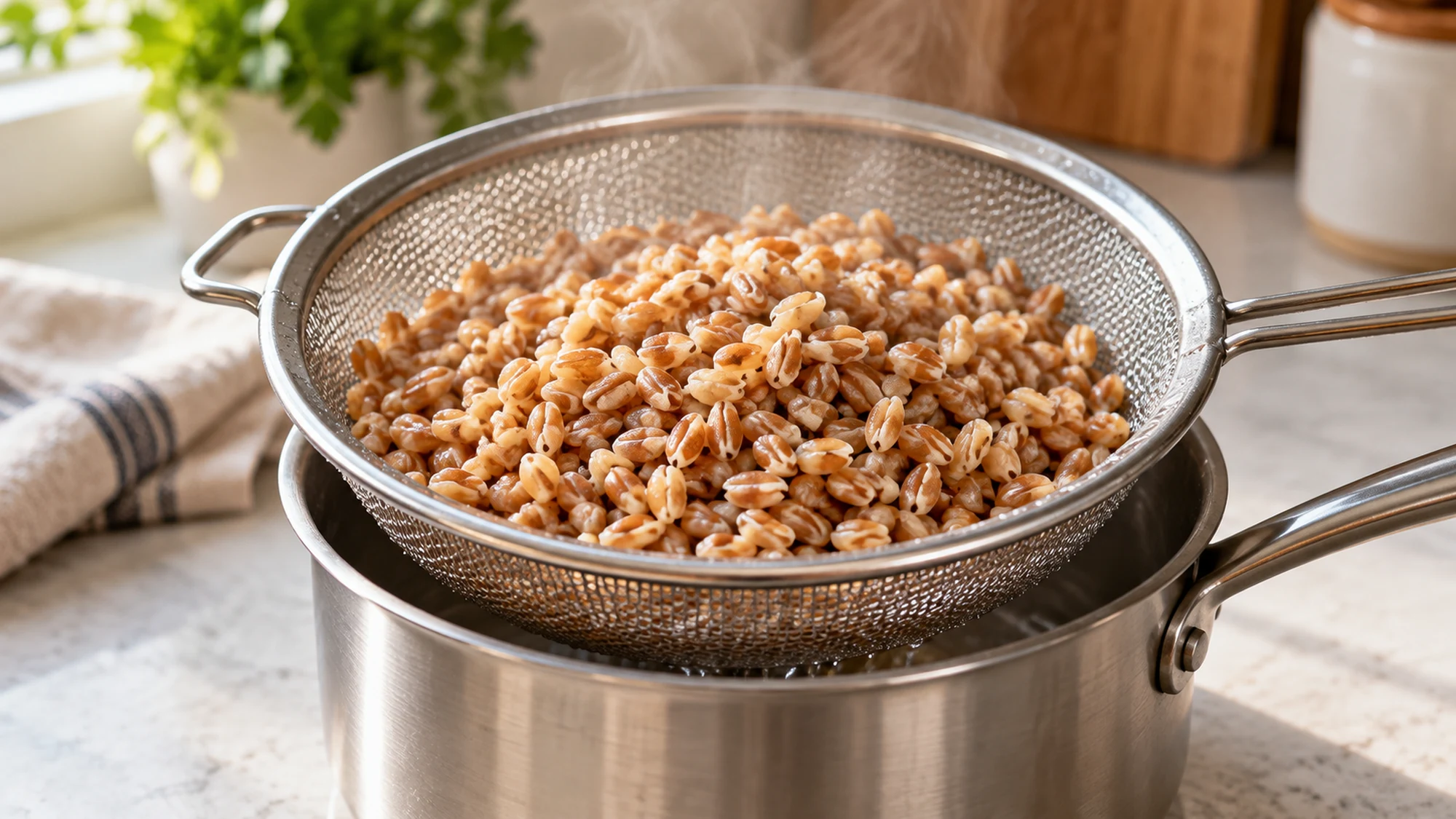
Start with the directions for the particular product. Bob’s Red Mill’s preparation guide, for example, offers a boil-and-drain method and a separate refrigerated overnight-soak method. Those are different plans, so do not combine an unsoaked cooking time with a soaked-grain instruction.
- Judge the center: A cooked kernel should be tender enough to eat while retaining some chew. If it is still hard, continue following the package’s cooking guidance.
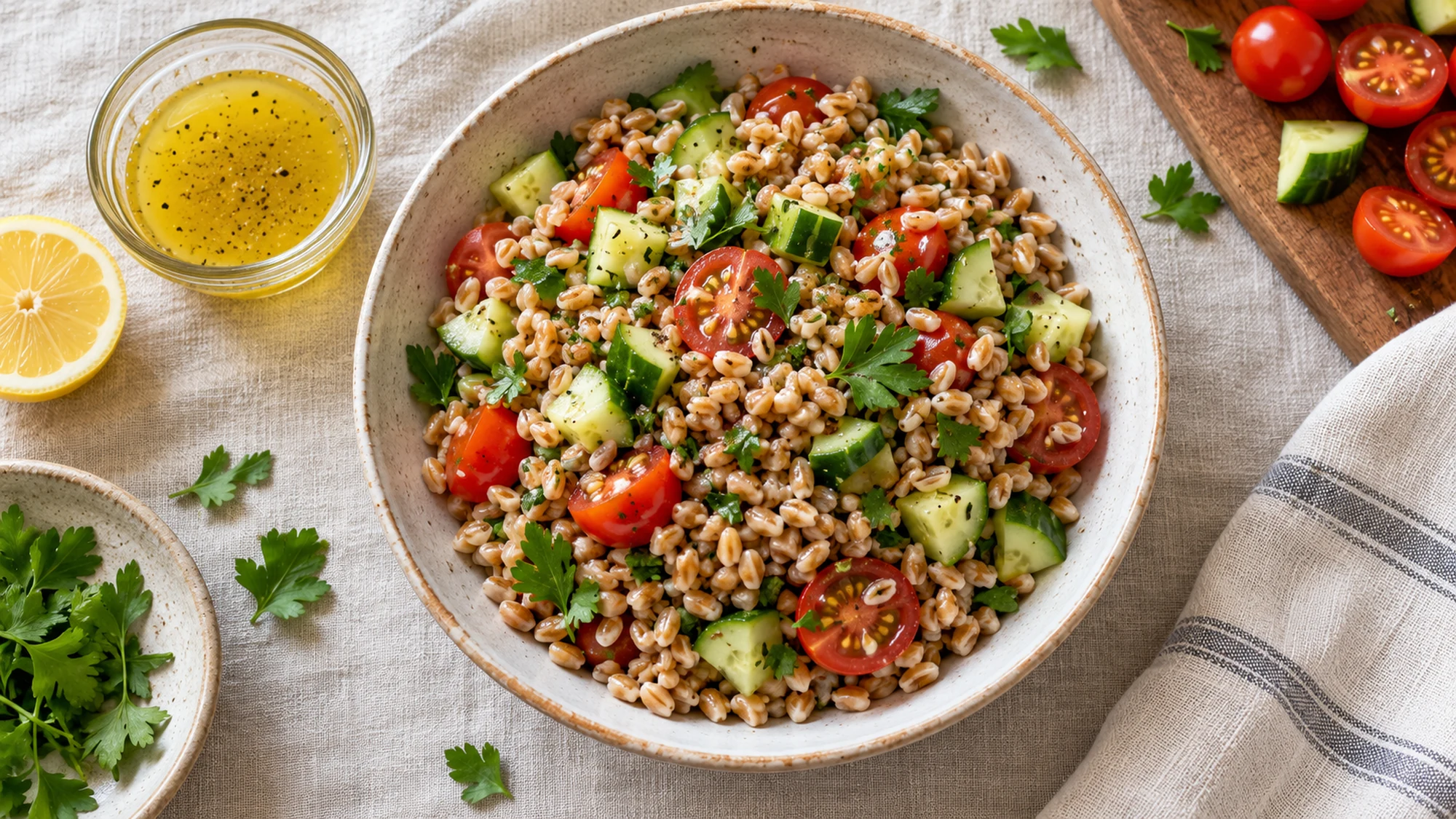
- Use texture deliberately: Pair it with crisp vegetables in a salad, add it to a soup, or serve it warm alongside beans and vegetables.
- Plan the portion you need: Dry and cooked grains have different weights and volumes. Compare nutrition labels on the same basis rather than matching a dry measure to a cooked serving.
- Chill promptly: FoodSafety.gov advises refrigerating perishable leftovers within two hours, or one hour above 90°F (32°C), in shallow containers. Keep the refrigerator at 40°F (4°C) or below.
A chewy grain salad still needs cold storage. I would portion leftovers before putting away the meal, so tomorrow’s lunch is ready without leaving a large bowl cooling on the counter.
Bottom Line
Farro brings a nutty wheat flavor and substantial chew to soups, salads and grain bowls. Check both the wheat type and the whole or pearled form, then follow that package’s cooking directions. Choose another suitable grain when gluten or wheat must be avoided.
Sources
- Kansas State University: Farro varieties and forms
- Whole Grains Council: Spotlight on farro
- Whole Grains Council: Whole grains A to Z
- Bob’s Red Mill: Farro processing
- Bob’s Red Mill: Preparation instructions
- Celiac Disease Foundation: Gluten-containing grains
- FoodSafety.gov: Safe chilling

Hi, I’m Emily Pocker! I share recipes and food guides here at Recipes360 to help you find everyday meal inspiration and feel more confident in the kitchen. My goal is to make cooking approachable, enjoyable, and full of flavor.