
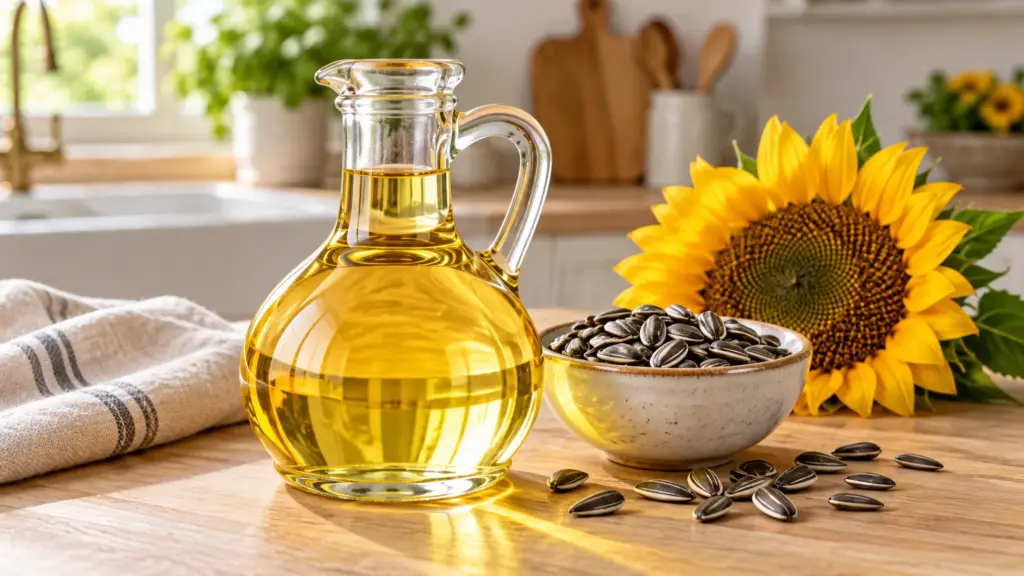
A bottle says high oleic sunflower oil, while the one beside it simply says sunflower oil. Those extra words describe the balance of fats, not a special cooking technique. If you want a mild oil for everyday meals, that distinction is worth understanding before paying for the bigger label.
High oleic sunflower oil comes from sunflower varieties selected for more oleic acid, a monounsaturated fat. It is different from traditional sunflower oil, but “high oleic” does not mean calorie-free, cold-pressed or suitable for unlimited heating.
What High Oleic Sunflower Oil Actually Means
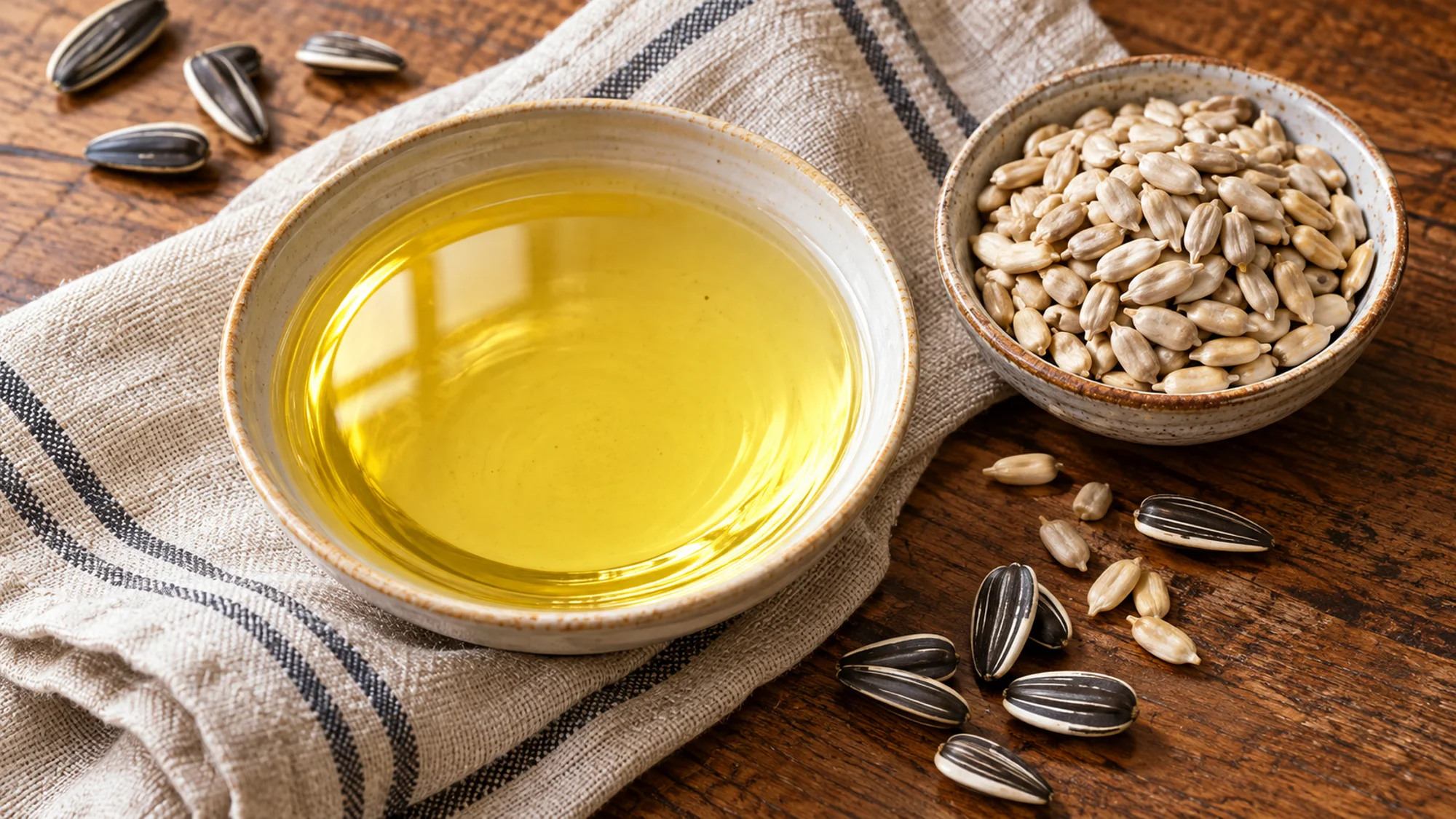
Oleic acid is one kind of fatty acid, the building blocks of fats. The National Sunflower Association describes high-oleic sunflower oil as usually containing at least 80% oleic acid. That is a proportion of the oil’s fatty acids, not a promise that every bottle has precisely the same composition.
These sunflower varieties were developed through conventional breeding. Traditional sunflower oil contains more linoleic acid, a polyunsaturated fat; neither version becomes a different plant just because its fat profile changes. I would treat “high oleic” as useful ingredient information, not as a complete nutrition verdict.
- Source: sunflower seeds, rather than olive fruit or another oil crop.
- Composition: predominantly monounsaturated fat in the high-oleic version.
- Processing: refined, expeller-pressed and cold-pressed describe separate production details. One phrase does not establish the others.
Read the Bottle Before Choosing a Use
Start with the ingredient list, then look for a clear high-oleic designation and the manufacturer’s cooking guidance. A sunflower picture does not identify the fatty-acid profile. Blended products also deserve a second look: their ingredient list may name several oils.
| Label wording | What it helps establish | What it does not establish |
|---|---|---|
| High oleic sunflower oil | A sunflower oil with a high-oleic profile | Exact flavor or a universal smoke point |
| Refined | Further processing of the extracted oil | That every refined oil is high oleic |
| Cold-pressed | An extraction description | The same heat guidance as refined oil |
| Oil blend | More than one oil may be present | A single-source sunflower product |
For a neutral background flavor, I would choose a bottle explicitly intended for the job, rather than assuming the most expensive option is the most useful. A delicate dressing and a hot skillet ask different things of an oil. Our guide to fruit oils, seed oils and bottle labels explains another part of that distinction.
Cooking With High Oleic Sunflower Oil
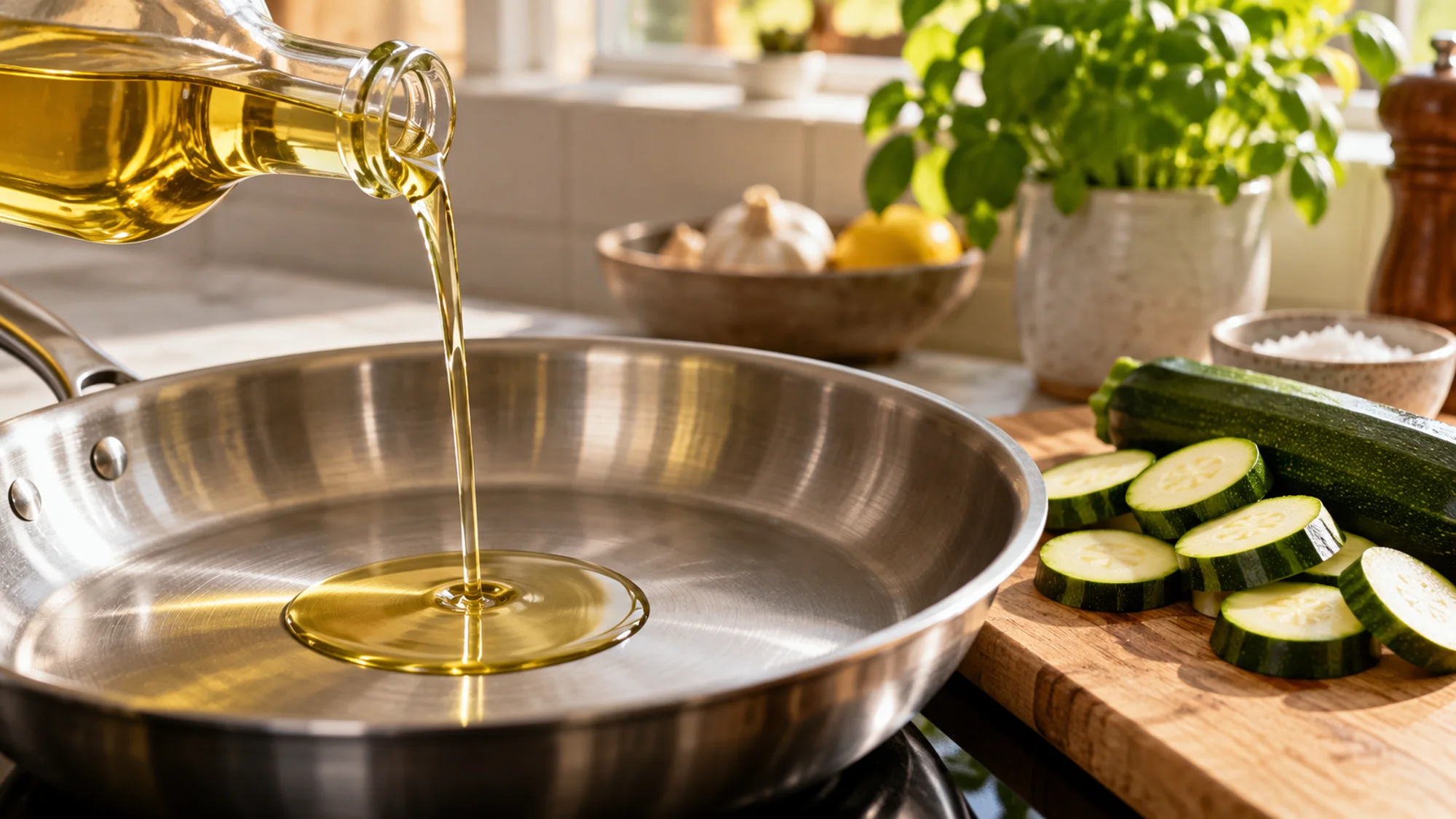
A useful advantage is resistance to oxidation compared with traditional sunflower oil. Tufts’ explanation of high-oleic sunflower oil connects this difference to oleic acid’s chemical structure. Better stability does not make oil indestructible, and it does not justify repeatedly heating a pan until it smokes.
- For sautéing: follow the bottle and recipe guidance, and keep the heat controlled. Smoke is a warning, not a readiness signal.
- For oil-based baking: a mild product can stay in the background. Do not automatically replace solid butter in a recipe that relies on creaming it.
- For dressings: let lemon, vinegar, herbs or mustard supply the flavor when you want the oil to be quiet.
- For buying: compare usable quantity and intended application, not a universal smoke-point number copied from an unrelated product.
Choose the oil for the food and the heat you actually need. A stability advantage is not permission to ignore the pan.
Health Claims and Freshness Need Context
The FDA’s review of oleic-rich oils supports a qualified—not conclusive—heart-health claim when these oils replace fats higher in saturated fat without increasing daily calories. That replacement matters: adding extra oil to an unchanged meal is not the same comparison. No bottle can guarantee a health outcome.
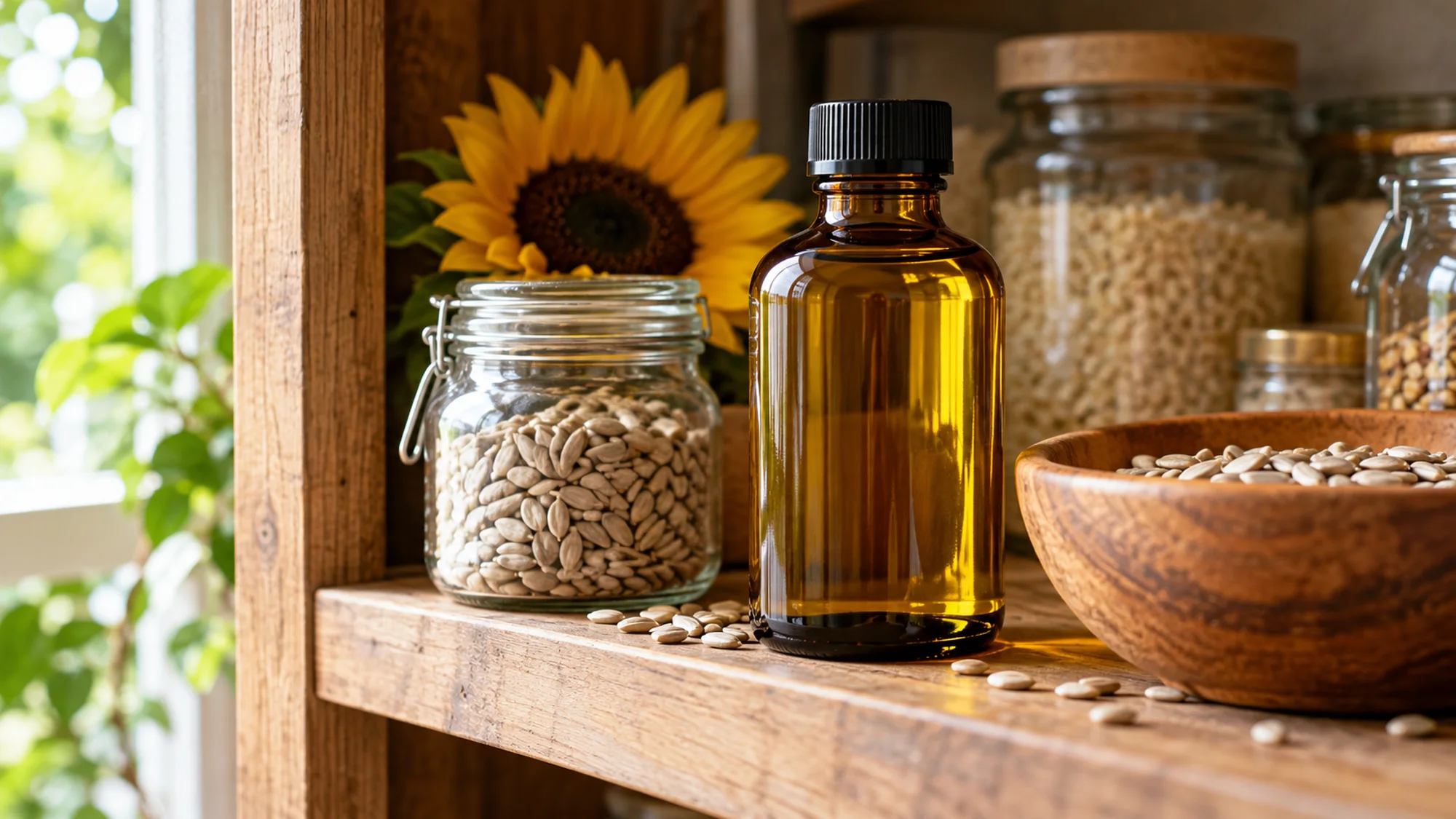
For storage, I would prioritize a manageable bottle over a giant bargain. The American Heart Association’s cooking-oil advice recommends cool, dark storage, smaller containers when use is infrequent, and discarding oil that smells bad. A sunny stove-side shelf is convenient, but convenience is not freshness.
- Close the cap after pouring and keep the bottle away from direct light and heat.
- Use the package’s storage directions and date information rather than a made-up universal shelf life.
- If the oil has developed an unpleasant smell, discard it instead of trying to cover it with spices.
Bottom Line
High oleic sunflower oil is a useful option when its flavor, processing and cooking directions fit your meal. Check the exact product, use a measured amount and protect it from heat and light. The useful upgrade is informed cooking—not treating one oil as a cure-all.
This National Sunflower Association video discusses the oil’s fat profile. It is an industry-produced explanation; the qualified health-claim limitations above remain important.
Sources
- National Sunflower Association: high-oleic composition and production
- Tufts: high-oleic and traditional sunflower oils
- FDA: oleic-acid qualified health-claim review
- American Heart Association: cooking oils and storage

Hi, I’m Emily Pocker! I share recipes and food guides here at Recipes360 to help you find everyday meal inspiration and feel more confident in the kitchen. My goal is to make cooking approachable, enjoyable, and full of flavor.