
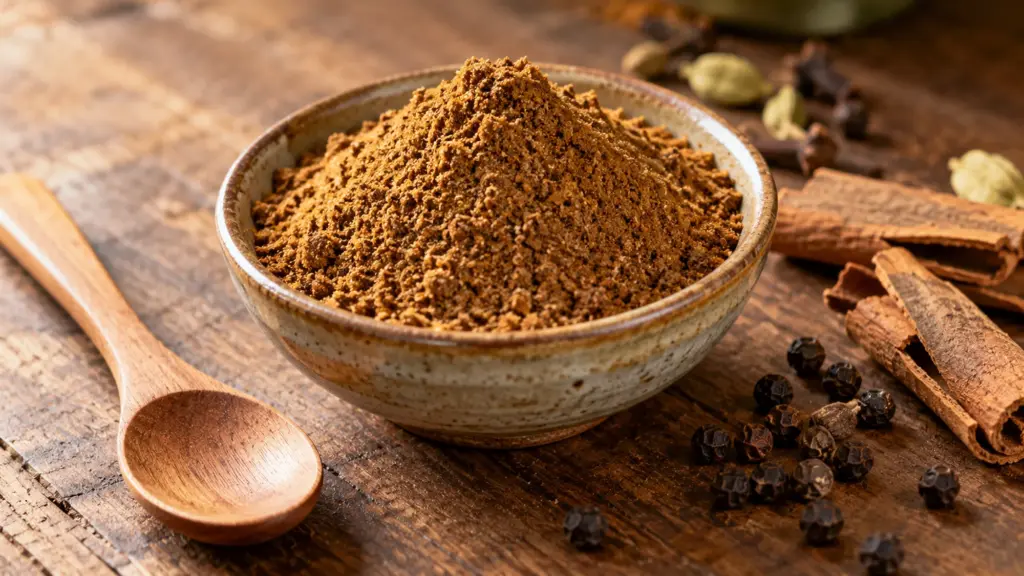
Two jars marked garam masala can smell surprisingly different when you open them. One may lead with cumin and pepper; another may make cardamom or cinnamon more noticeable. Garam masala is an aromatic Indian spice blend, and its ingredient list matters more than expecting every jar to follow one formula.
Use garam masala to add layered spice aroma to savory food, often near the end of cooking when the recipe calls for it. Choose the blend by its actual ingredients and your taste. It is not automatically interchangeable with curry powder, and its name does not guarantee a particular chili heat.
What Is in Garam Masala?
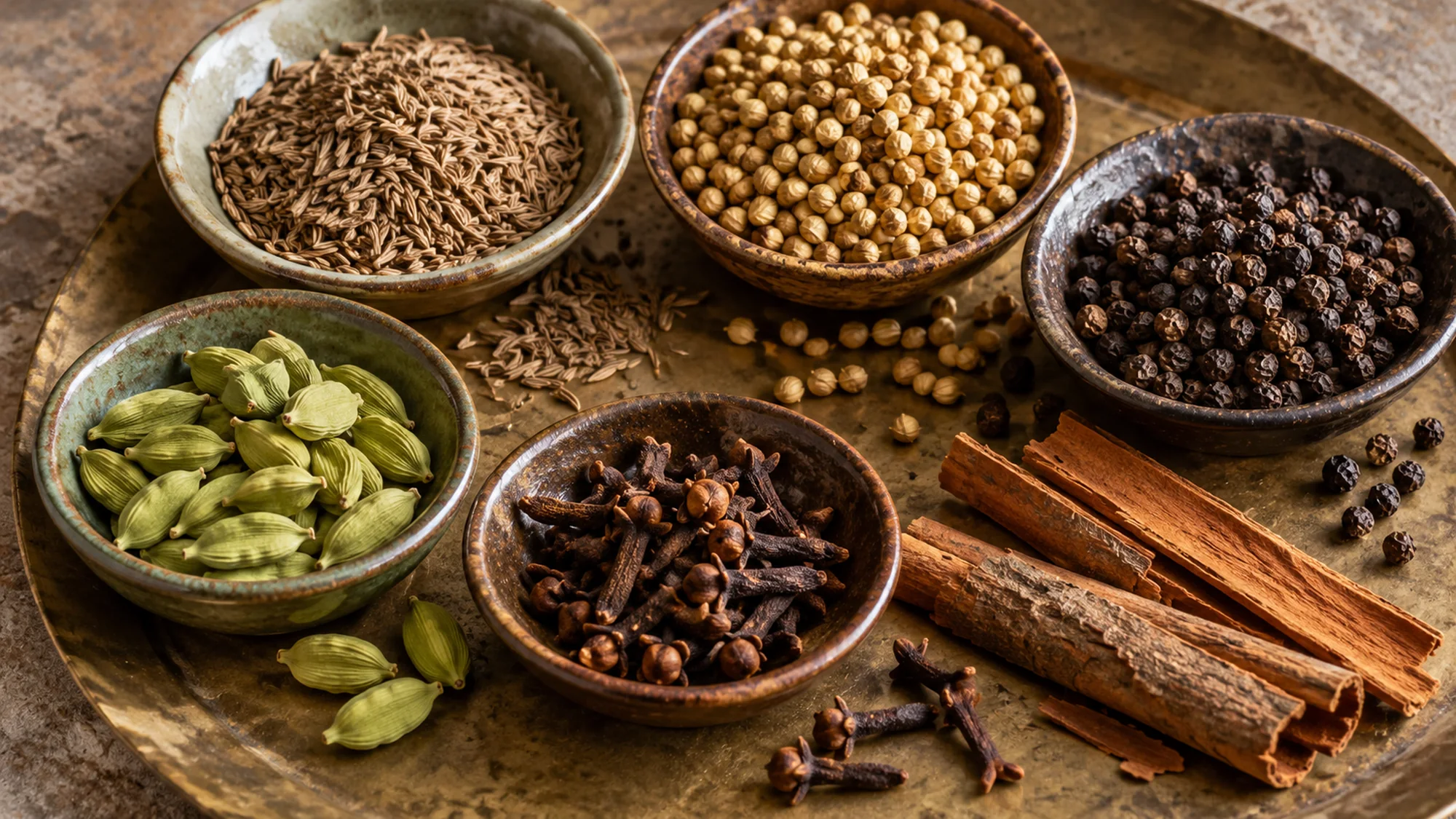
The McCormick U.S. garam masala label names spices including coriander, black pepper, cumin, cardamom and cinnamon. Diaspora Co.’s version lists a wider combination that includes fennel, mace, nutmeg, two types of cardamom, ginger and cloves. These are examples of commercial blends, not definitions that every cook must follow.
I’d compare the ingredient list before replacing a familiar jar with a different brand. That gives you something concrete to work with: a cumin-forward blend and one with more noticeable sweet-spice aroma can both fit the name, while changing the character of dinner.
- Look beyond the front: The blend name does not reveal every spice or its proportion.
- Separate warmth and heat: Aromatic cinnamon or cardamom is different from chili heat. Check for chili and pepper rather than assuming either mildness or fieriness.
Garam Masala and Curry Powder Do Different Jobs
Compare actual jars rather than relying on color. McCormick’s U.S. curry powder includes fenugreek and turmeric, along with coriander, cumin and other spices. The two blends share some ingredients, but that overlap does not make their flavor or role identical.
| What you have | Useful role | Before substituting |
|---|---|---|
| Garam masala | Layered aromatic spice character | Check its pepper, chili and sweet-spice balance |
| Curry powder | The particular curry blend’s flavor and color | Read its ingredients; formulas vary |
| Ground cumin | One distinct spice | It cannot recreate a whole blend |
| Whole spices for a homemade blend | A specific cook’s chosen combination | Follow that preparation rather than guessing proportions |
A recipe may use individual spices early and garam masala later. Replacing all of them with one powder changes the plan. Treat an improvised substitute as a different seasoning direction rather than an exact match.
- Do not replace a teaspoon of a whole spice mixture with the same amount of a single strong spice and expect the same result.
- Check whether salt is already present in the blend before adjusting the dish.
When and Where to Add It
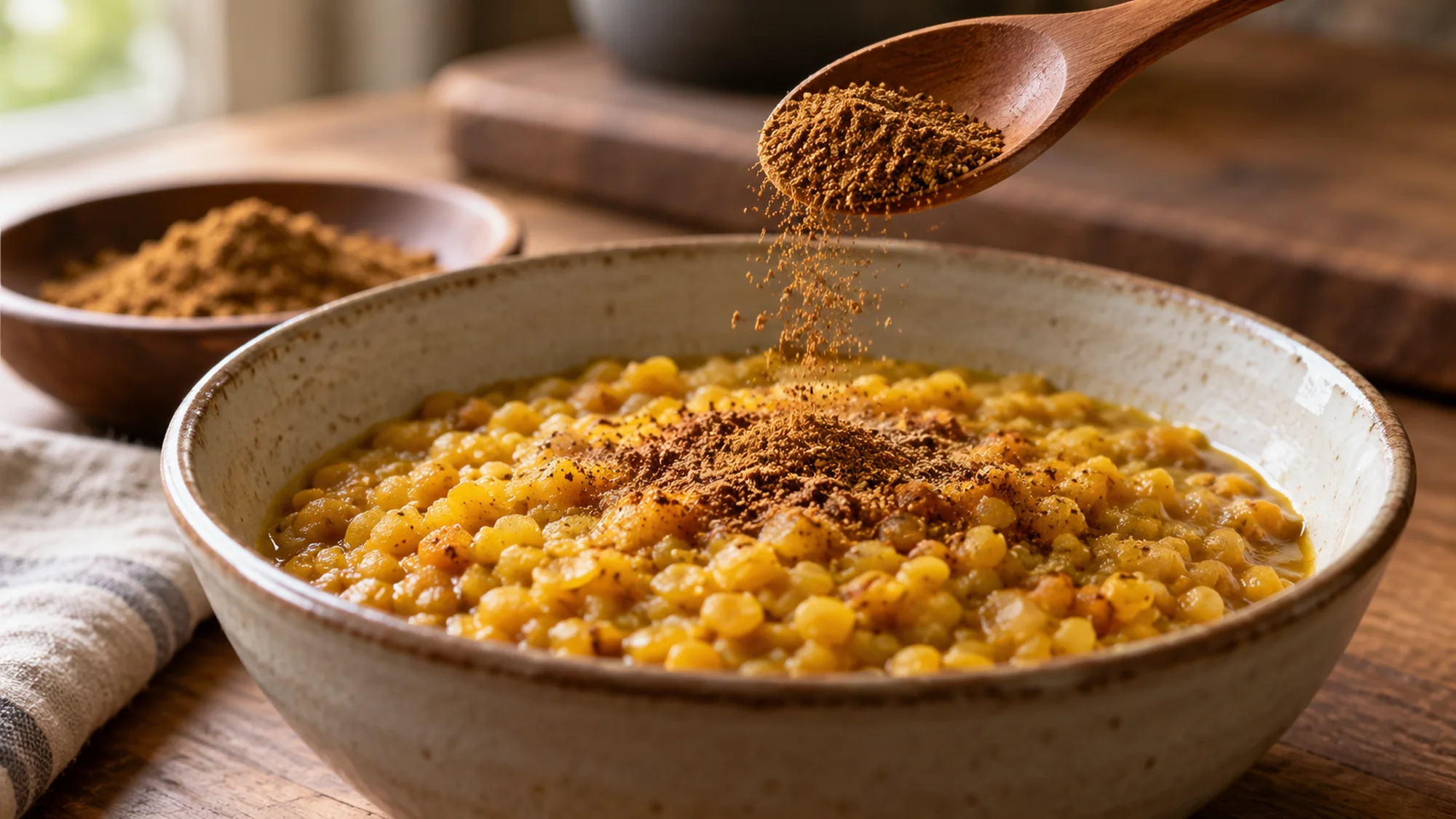
Many preparations use garam masala near the finish for aroma. McCormick’s U.S. guidance suggests that approach for chicken curry, dal and chickpea masala, while also giving examples of seasoning vegetables before roasting. The right timing therefore depends on the particular dish, rather than one rule that replaces its instructions.
I prefer a measured first addition with an unfamiliar blend. Stir it through, give yourself a chance to taste the food, then decide whether it needs more. A small change is easier to judge than an enthusiastic shower over the pot.
- For lentils or chickpeas: Follow the recipe’s timing, especially if it already uses individual spices.
- For roasted vegetables: A blend can be part of the seasoning, with the actual recipe guiding quantity and heat.
- For a practical example: Our murgh curry with onion-tomato gravy is a separate recipe that uses garam masala alongside other spices.
Buying, Storing and Checking the Label
McCormick Australia’s garam masala lists ingredients including turmeric, chili, salt and garlic, illustrating why a label from one market should not stand in for every product. Recheck the package in your hand when changing brand, size or market.
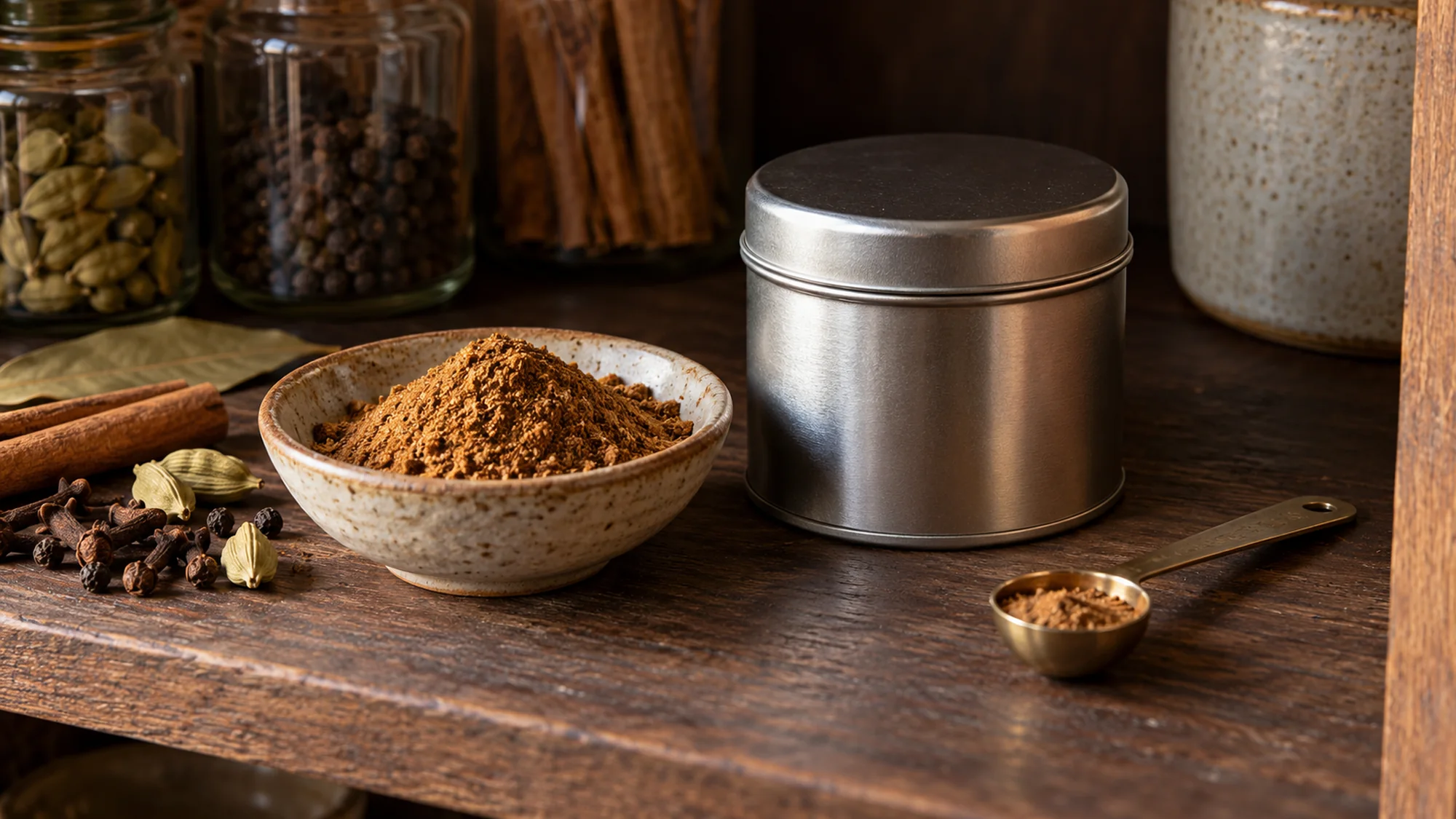
Diaspora Co. recommends airtight storage in a dark, dry place away from direct sunlight. Close the jar after measuring and use a dry spoon. Follow the maker’s date guidance for quality; buying a manageable amount is often more useful than keeping a large jar open indefinitely.
- Allergens: FDA guidance explains that major allergens such as milk, soy and wheat must be declared when present as ingredients in covered foods. Check any advisory information and the other ingredients in your meal too.
- Prepared dishes: A dry spice blend does not make a yogurt marinade or cooked curry safe to store on the counter.
Bottom Line
Buy garam masala by its ingredients, then let the recipe guide when to add it. Expect variation, keep curry powder and individual spices distinct, and store the blend tightly closed and dry. A measured spoonful gives you room to understand the flavor before adding more.
Sanjeev Kapoor Khazana’s video below demonstrates one Punjabi garam masala preparation. Its chosen ingredients illustrate variation; they do not define every version.
Sources
- McCormick U.S.: Garam Masala label and uses
- Diaspora Co.: Garam Masala ingredients and storage
- McCormick U.S.: Curry Powder label
- McCormick Australia: Garam Masala label
- FDA: Food allergy labeling

Hi, I’m Emily Pocker! I share recipes and food guides here at Recipes360 to help you find everyday meal inspiration and feel more confident in the kitchen. My goal is to make cooking approachable, enjoyable, and full of flavor.