
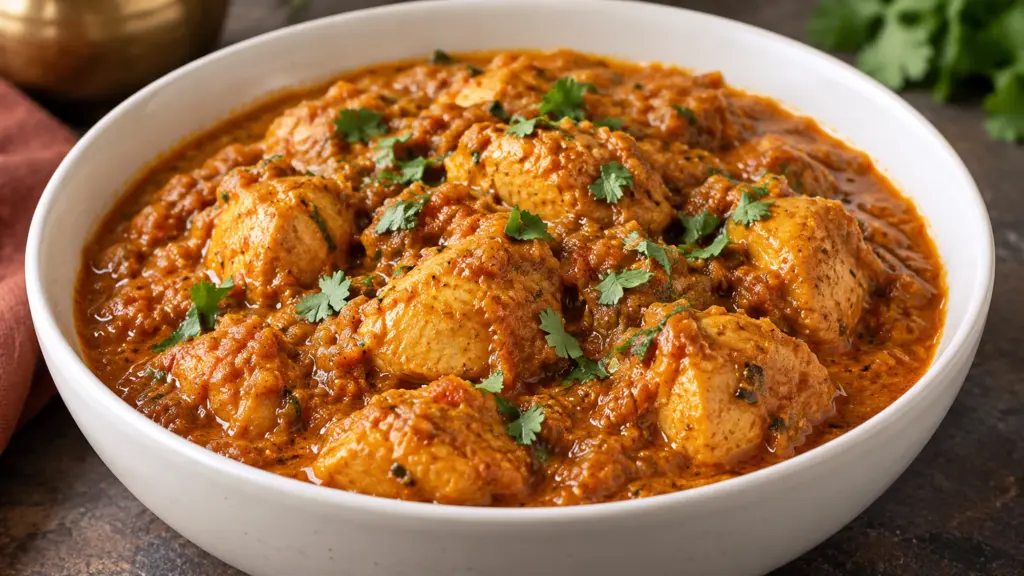
A good murgh curry recipe starts before the chicken reaches the pot. Give sliced onions enough time to turn golden, then cook the tomatoes until they lose their watery edge. Those two steps create the rounded, savory gravy that makes a simple chicken dinner feel complete. If you have ever ended up with chicken floating in a sharp, thin sauce, slowing down at this stage is the first thing to change. You need a heavy pot and a little patience, not a long list of specialty ingredients.

Golden onions build the flavor; a gentle simmer keeps the chicken and yogurt gravy together.
This version uses boneless chicken thighs, plain yogurt and a small collection of spices. It is a practical home-style approach rather than one definitive regional recipe: murgh means chicken, and chicken curries vary widely. Expect a textured onion-tomato sauce, not the smooth, buttery finish of restaurant-style butter chicken. The recipe card below has the complete quantities and temperature checks.
Serving Suggestions
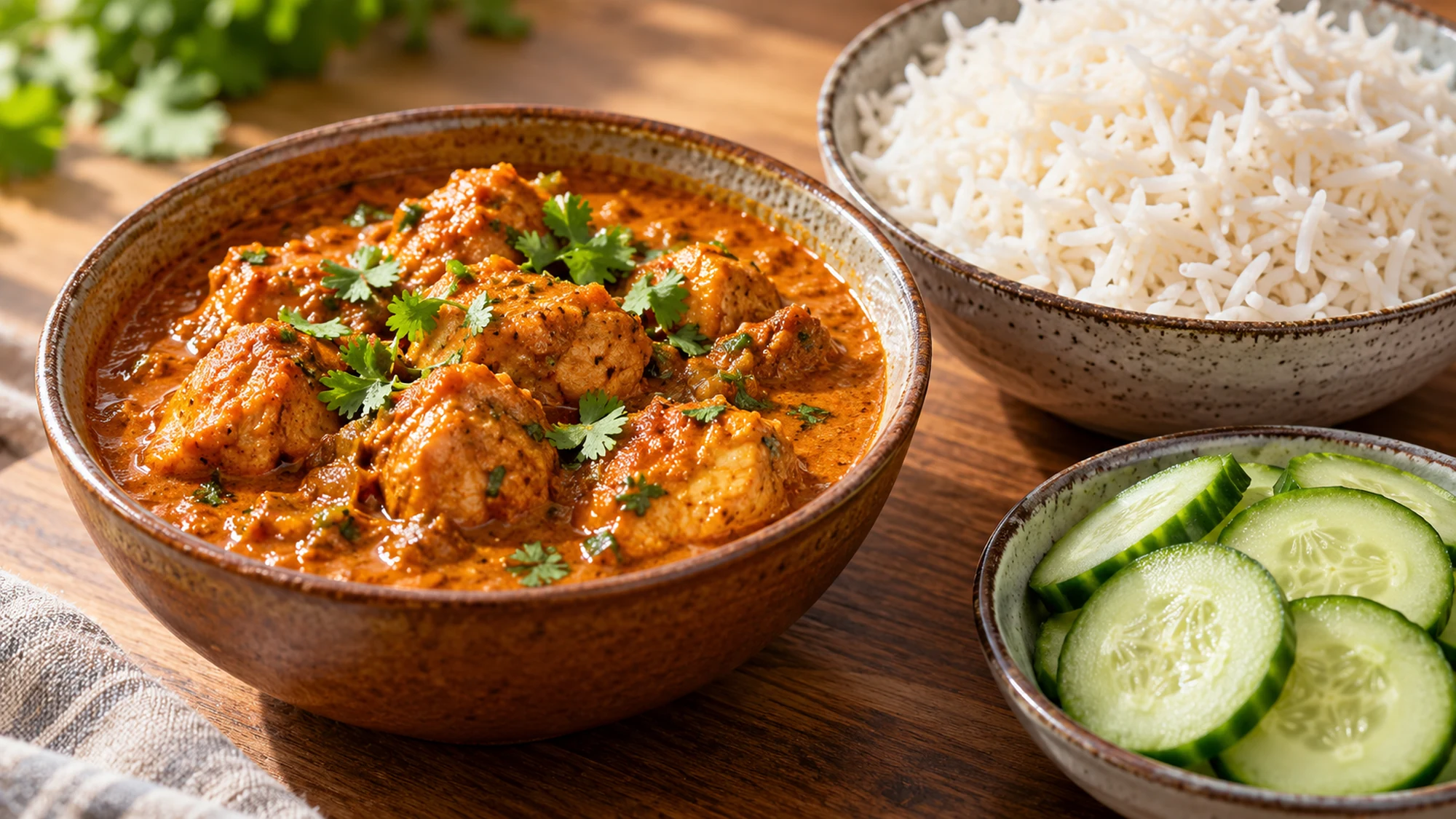
Spoon the curry over steamed rice, or serve it with warm roti to catch the gravy. Sliced cucumber adds cool crunch without another cooked dish. If you want a vegetable alongside, the gently sweet contrast of roasted sweet potatoes works; keep portions modest so the curry remains the center of the plate.
For four servings, divide the chicken evenly before ladling out the sauce. Boneless thighs make that easier than a mixture of bone-in cuts. The nutrition estimate covers the curry alone, so add rice, bread and other accompaniments separately when planning a meal. Set out the accompaniments before serving so the curry does not sit uncovered and reduce further while you finish another dish. If dinner is delayed briefly, keep it hot and covered, adding a small splash of water before serving if needed.
| What you notice | What to do |
|---|---|
| Onions darken at the edges before softening | Lower the heat and add a spoonful of water; do not let them burn. |
| Sauce looks thin near the end | Uncover and simmer briefly, stirring, until it coats the chicken. |
| Sauce becomes too thick | Stir in warm water a tablespoon at a time. |
Variations
For a milder curry, use mild paprika instead of chili powder and check whether your garam masala contains chili. For more heat, add a little extra chili powder with the ground spices rather than trying to fix everything at the table. Start conservatively: heat levels vary between spice brands.
Chicken breast can replace the thighs, but it is less forgiving. Cut it evenly and begin checking its temperature earlier; stop cooking when it reaches the safe minimum rather than automatically following the full thigh timing. Bone-in chicken needs different timing and is not a straight, minute-for-minute swap.
Use unsweetened, plain whole-milk yogurt. Whisking it smooth and adding it over low heat reduces the chance of a grainy sauce. Do not replace it with sweetened vanilla yogurt. Canned crushed tomatoes work when fresh tomatoes are bland; choose an unsalted version if you want more control over seasoning.
Health Benefits
Chicken supplies protein, while onions and tomatoes contribute vegetables to the meal. That does not make the curry a complete nutritional solution on its own. Pairing it with a generous vegetable side and a portion of rice or bread that suits your appetite is more useful than labeling the dish “guilt-free.”
The card’s nutrition numbers are estimates, not laboratory results. Different chicken cuts, yogurt brands and amounts of salt will change them. Milk is an allergen here; anyone avoiding it should choose a recipe designed and tested for that restriction rather than assuming an untested yogurt substitute will behave identically.
Food safety matters more than the color of the gravy. USDA guidance sets 165°F as the minimum internal temperature for poultry. Check a thick chicken piece with a thermometer. Refrigerate leftovers promptly in shallow containers, use within three to four days, and reheat thoroughly; the card repeats the storage details.
Bottom Line
The most useful shortcut is to prepare the ginger, garlic and spices while the onions cook—not to rush the onions themselves. Once the tomatoes thicken, keep the heat gentle when adding yogurt and let the chicken simmer without a furious boil.
Taste the finished sauce before adding extra salt or chili. If it seems heavy, cucumber and fresh cilantro on the plate can offer contrast without changing the curry. Follow the card for the measured recipe; its accompanying Kunal Kapur video illustrates a related method, with different cuts and spices clearly noted.
Takeaway: Build the gravy patiently, add yogurt gently, and use a thermometer rather than guesswork for the chicken.
Murgh Curry Recipe With a Rich Onion-Tomato Gravy


Ingredients
- 750 g boneless skinless chicken thighs cut into 2-inch pieces
- 2 tablespoons neutral oil
- 250 g onions thinly sliced, about 2 medium
- 4 garlic cloves minced
- 1 tablespoon fresh ginger finely grated
- 1 teaspoon cumin seeds
- 2 teaspoons ground coriander
- 1/2 teaspoon ground turmeric
- 1/2 teaspoon Kashmiri chili powder or mild paprika; adjust heat to taste
- 300 g tomatoes finely chopped
- 1/2 cup plain whole-milk yogurt 120 g, whisked smooth
- 3/4 teaspoon fine salt plus more to taste
- 1/2 cup water plus extra as needed
- 1 teaspoon garam masala
- 2 tablespoons fresh cilantro chopped
Equipment
- 1 Heavy pot with lid
- 1 Cutting board
- 1 Chef’s knife
- 1 Instant-read thermometer
Instructions
- Cut the chicken into even 2-inch pieces. Whisk the yogurt until smooth and set it near the stove while preparing the vegetables. Do not wash raw chicken; wash hands and utensils after handling it.
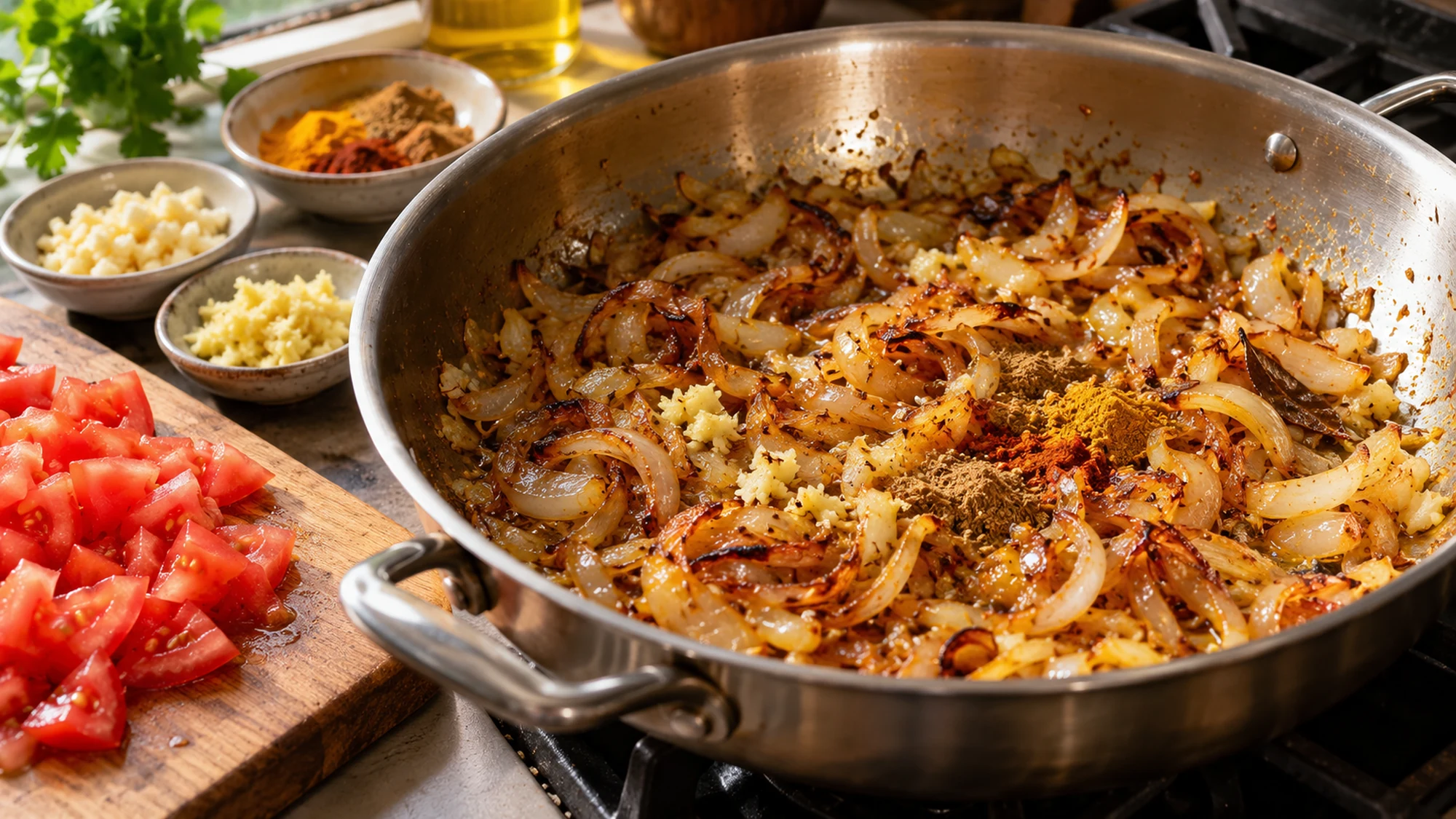
- Heat the oil in a heavy pot over medium heat. Add the onions and cook for 12–15 minutes, stirring frequently, until evenly golden brown. Reduce the heat if the edges scorch; add a spoonful of water to loosen browned bits.
- Stir in the garlic, ginger and cumin seeds for 1 minute. Add coriander, turmeric and chili powder; stir for 30 seconds. Add the tomatoes and cook for 8 minutes, stirring, until softened and thick rather than watery.
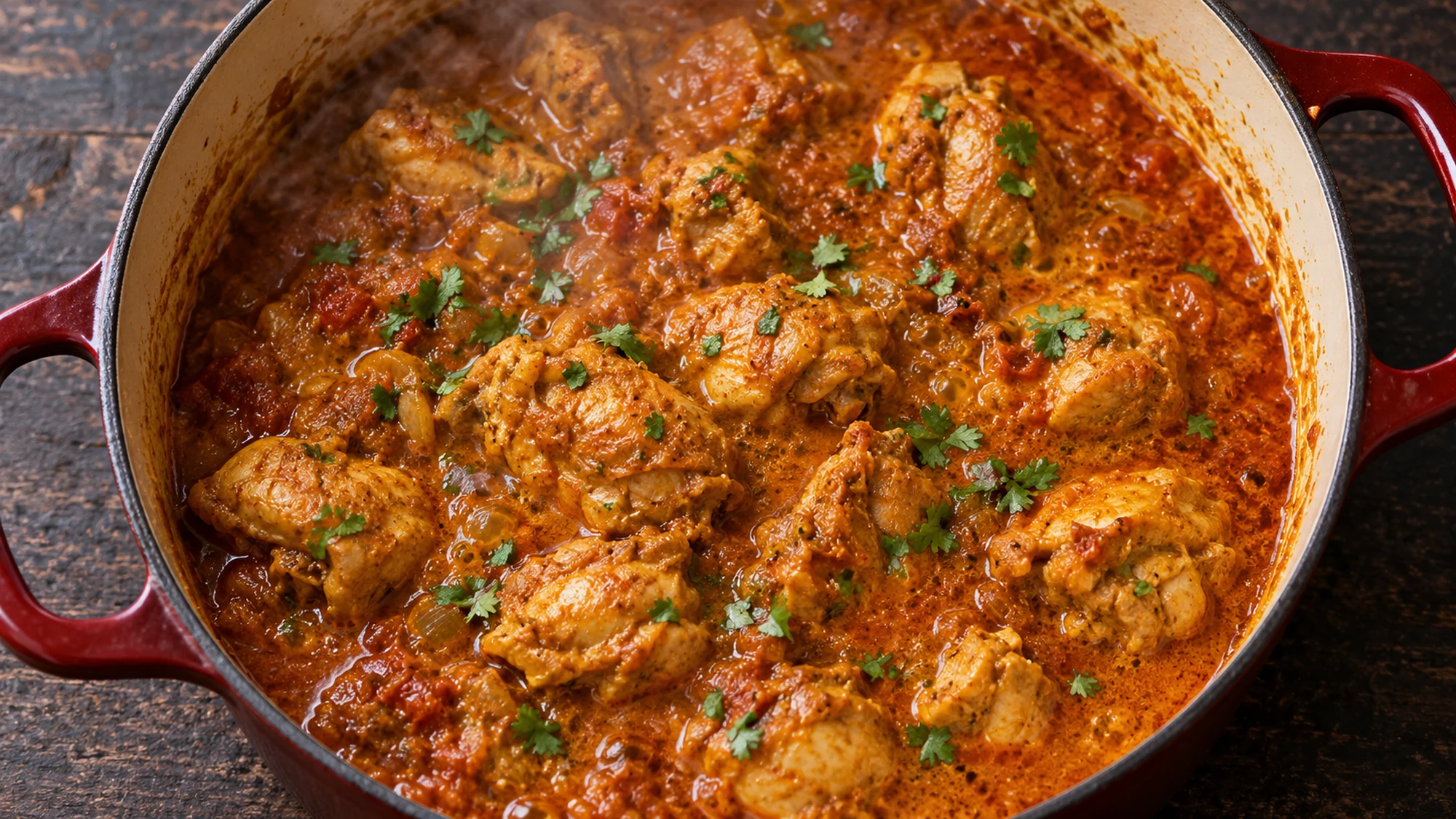
- Turn the heat to low. Stir the yogurt into the tomato mixture a spoonful at a time until incorporated. Avoid a hard boil, which can make the yogurt grainy.
- Add the chicken and salt, increase to medium-low and stir for about 5 minutes. Add the water, bring to a gentle simmer and cover. Cook for 20–25 minutes, stirring occasionally, until the thickest chicken pieces reach at least 165°F (74°C). Add a little water if the sauce catches.
- Uncover and simmer for about 5 minutes if the gravy needs thickening. Stir in garam masala and cilantro. Taste and adjust salt. Serve hot; rice and cucumber are optional accompaniments, not included in the nutrition estimate.
Nutrition
Video
Notes
Tried this recipe?
Let us know how it turned out!Hi, I’m Emily Pocker! I share recipes and food guides here at Recipes360 to help you find everyday meal inspiration and feel more confident in the kitchen. My goal is to make cooking approachable, enjoyable, and full of flavor.