
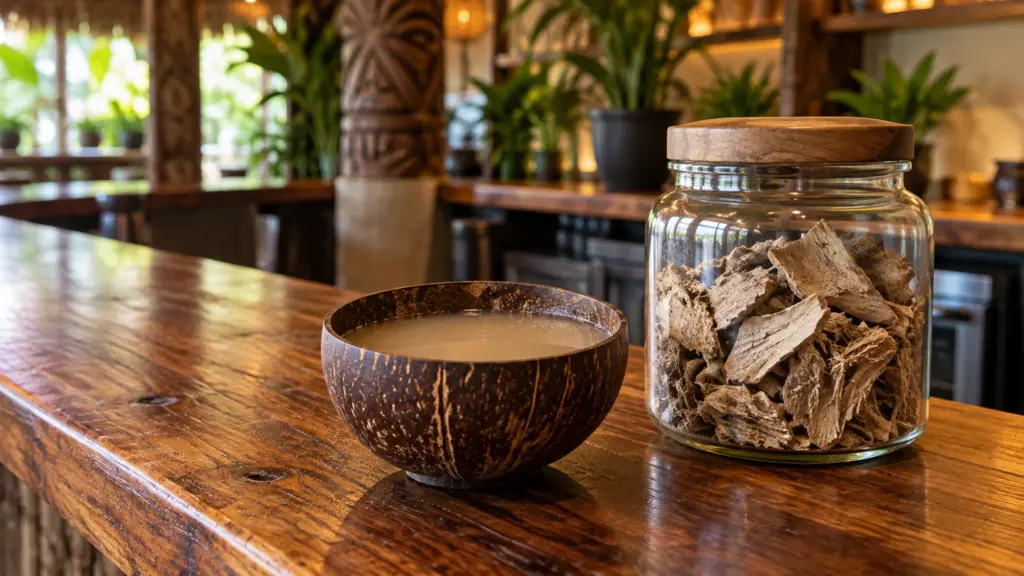
A kava bar is a social venue that serves drinks made with kava, a plant traditionally used in Pacific Island communities. In the United States, these venues are often presented as places to gather without alcohol. Before ordering, know that kava is psychoactive, can interact with medicines and has been linked to serious liver injury.
A kava bar sells kava drinks, but alcohol-free does not mean risk-free. Ask what is in each drink, including extracts and other botanicals. Do not mix kava with alcohol or sedating medicines, and do not treat a bar drink as a proven treatment for anxiety or insomnia.
What is in a kava drink?
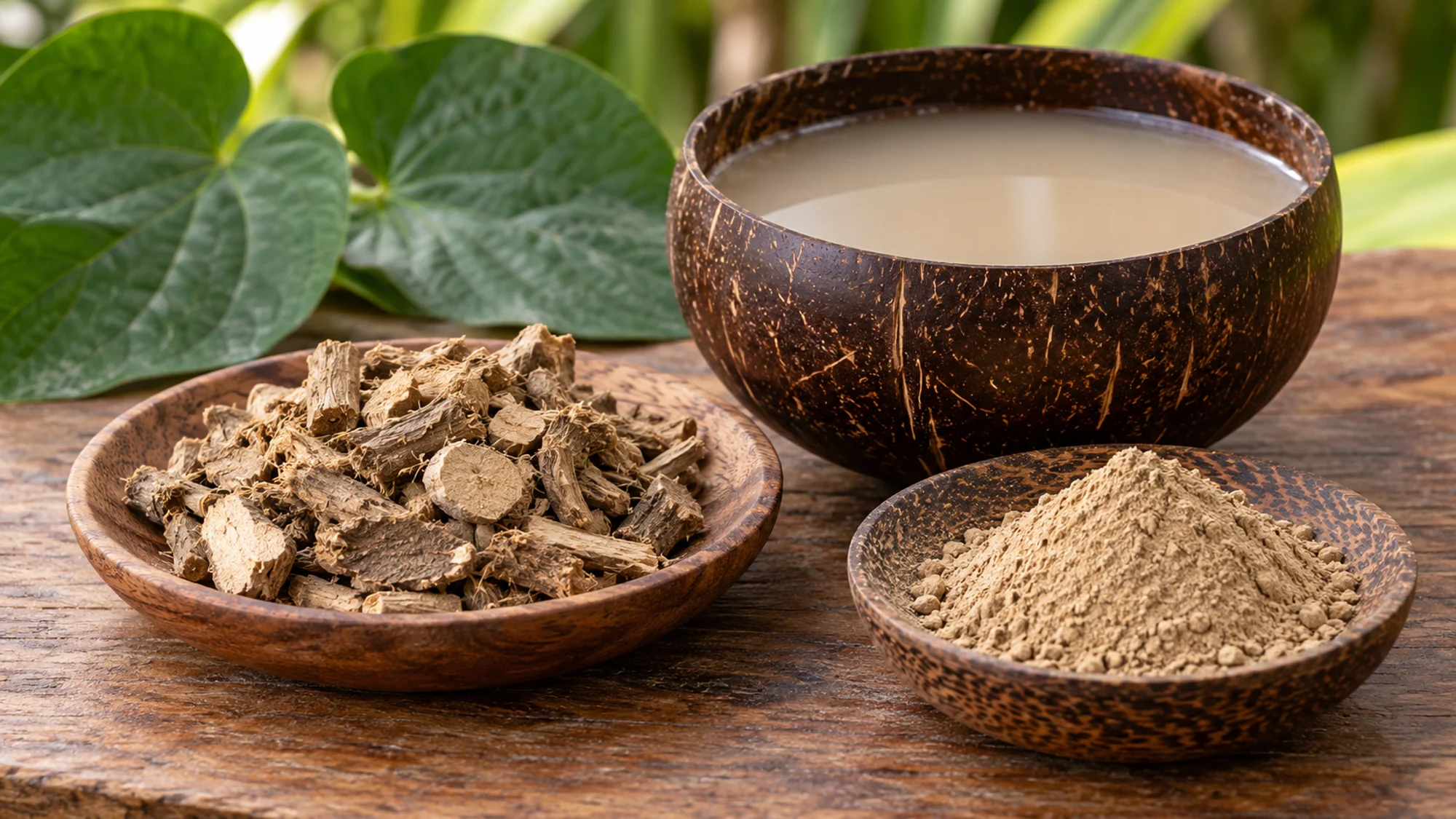
Kava comes from Piper methysticum, a member of the pepper family native to the South Pacific. Traditional beverages use root material prepared with water. Commercial products also include extracts, capsules and flavored drinks; the venue’s name does not tell you which preparation is in your cup.
Its cultural role deserves more care than a generic “wellness drink” description. A Fijian ceremony leaflet hosted by the United Nations describes yaqona ceremonies as an expression of respect and welcome. A contemporary commercial bar is a different setting, and practices vary among communities.
Ask whether a drink is prepared from root, an instant product or a concentrated extract. Ask for the full ingredient list, too. A sweet flavor or cloudy appearance cannot reveal its strength, processing or added substances, and a standard-sized cup is not a standardized medical dose.
Read the menu before choosing
| Menu description | Question to ask | Why the answer matters |
|---|---|---|
| Traditional or root-prepared kava | What plant material and preparation are used? | Preparation differs from concentrated extracts |
| Extract or enhanced drink | What extract and other ingredients are added? | Strength may differ substantially between products |
| Botanical blend or house tonic | Does this include kratom or other active ingredients? | A blend brings additional risks and interactions |
| Alcohol-free special | Is there kava, alcohol or a sedating ingredient in it? | The menu category does not establish safety |
| Tea, water or another alternative | Can you confirm it contains no kava or kratom? | You can join the social setting without taking kava |
Kratom and kava are different plants. Do not assume a drink called a “tea” contains only ordinary tea leaves. A 2026 CDC report raised concerns about commercial kava products and increasing co-use with kratom. The report could not establish a formulation-specific risk for an individual cup.
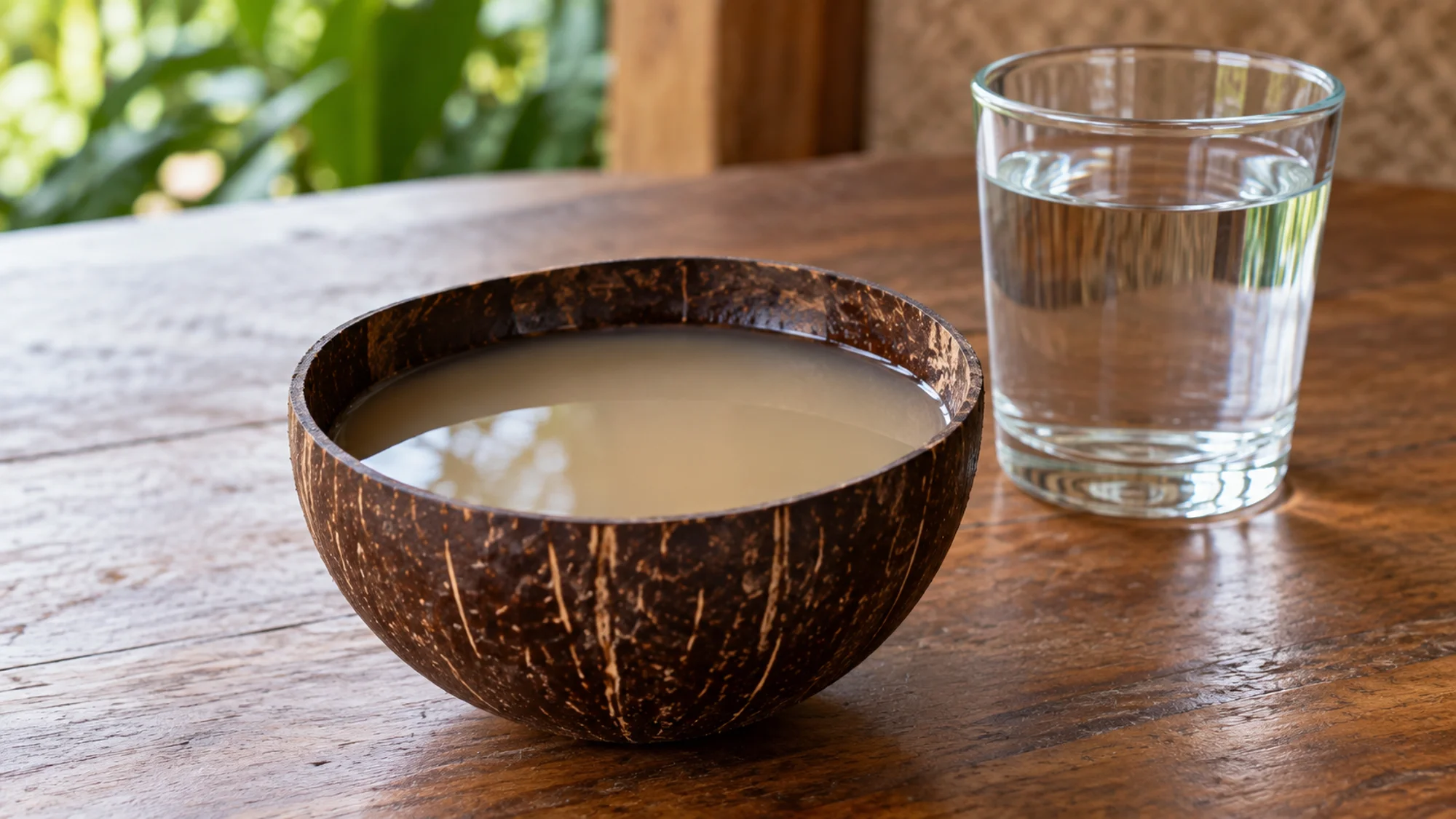
Clear answers are useful, but they are not a guarantee that a product is safe for you. If the ingredients are unclear, you can choose a drink without these substances or leave it. A welcoming social venue should not require you to experiment with an unfamiliar active ingredient.
Risks, interactions and people who should avoid it
NCCIH reports rare liver injuries associated with various kava products, including some water-prepared drinks; some cases have been severe or fatal. The cause is not fully understood. Saying that a drink is traditional, natural or solvent-free does not establish that it cannot harm the liver.
Poison Control advises people with liver damage, or those taking drugs that affect the liver, to avoid kava. Pregnancy and breastfeeding also raise concerns. If you take any medicine, have a pharmacist or clinician check the combination before using kava rather than relying on a bartender’s reassurance.
Do not combine it with alcohol or other sedating substances, including benzodiazepines. NSW Health describes increased drowsiness, impaired reflexes and interaction concerns. Do not drive after using an impairing substance. Seek medical help for severe symptoms, or possible liver-warning signs such as yellow eyes or skin and dark urine.
What the evidence does and does not show
NCCIH says some kava supplements may help anxiety symptoms, but it does not find benefit for generalized anxiety disorder, and evidence for other conditions is insufficient. That is not a prescription for a bar drink. Different formulations, concentrations and circumstances make a clinical finding difficult to transfer to a menu item.
Commercial recreational beverages also face safety concerns beyond whether someone feels relaxed. CDC’s report notes FDA’s conclusion that indiscriminate kava use in recreational or relaxation beverages is not safe. Poison-center reports are warning signals; they do not tell us the probability of harm for every user.
If anxiety or poor sleep is the reason you are considering kava, bring that concern to a clinician. A venue cannot diagnose the cause or decide which treatment suits you. For an evening out, water or another clearly identified drink without kava, kratom or alcohol can let you enjoy the setting without using these substances.
Bottom Line
A kava bar offers a social setting around a psychoactive botanical beverage. Learn the ingredients, respect the cultural background and take the liver and interaction risks seriously. You can visit without ordering kava. Neither an alcohol-free label nor a calming sales pitch is proof of safety or a reason to replace medical care.
National Geographic’s video offers a look at a kava ceremony for cultural context. It is not evidence that a commercial kava drink is safe or medically effective.
Sources
- NCCIH: Kava Usefulness and Safety
- CDC: Reports Linked to Kava and Kratom Products
- Poison Control: Kava
- NSW Health: Kava Clinical Factsheet
- Yaqona Vakaturaga: Fijian Kava Ceremony

Hi, I’m Emily Pocker! I share recipes and food guides here at Recipes360 to help you find everyday meal inspiration and feel more confident in the kitchen. My goal is to make cooking approachable, enjoyable, and full of flavor.