
The baking aisle can make one small bottle feel like a complicated decision. Pure vanilla extract, imitation vanilla, bean paste and alcohol-free flavoring may sit together, but they are not the same product. Start with the bottle’s actual name and ingredients, then choose for the food you want to make.
Pure vanilla extract gets its vanilla flavor from vanilla beans in an alcohol-and-water solution. Read the full label: pure does not automatically mean alcohol-free, sugar-free or interchangeable with every vanilla product.
What pure vanilla extract means on a U.S. label
The FDA standard of identity for vanilla extract requires at least 35 percent ethyl alcohol by volume and a specified amount of vanilla constituent. That standard describes the product in the bottle, not the alcohol content of a finished cake.
The regulation also permits certain optional ingredients, including sugar, dextrose, corn syrup, glycerin and propylene glycol. A bottle can therefore meet the standard without containing only vanilla beans, alcohol and water. I’d read the ingredients rather than treating a short word on the front as the complete story.
- Look for the product name: vanilla extract is different from a product simply called vanilla flavoring.
- Check the ingredients: this is where you learn about sweeteners or other permitted additions.
- Check concentration: a stronger extract may have different suggested quantities.
- Consider your requirements: if you avoid alcohol, choose a clearly labeled alternative rather than assuming baking answers that concern.
Extract, imitation and paste do different jobs
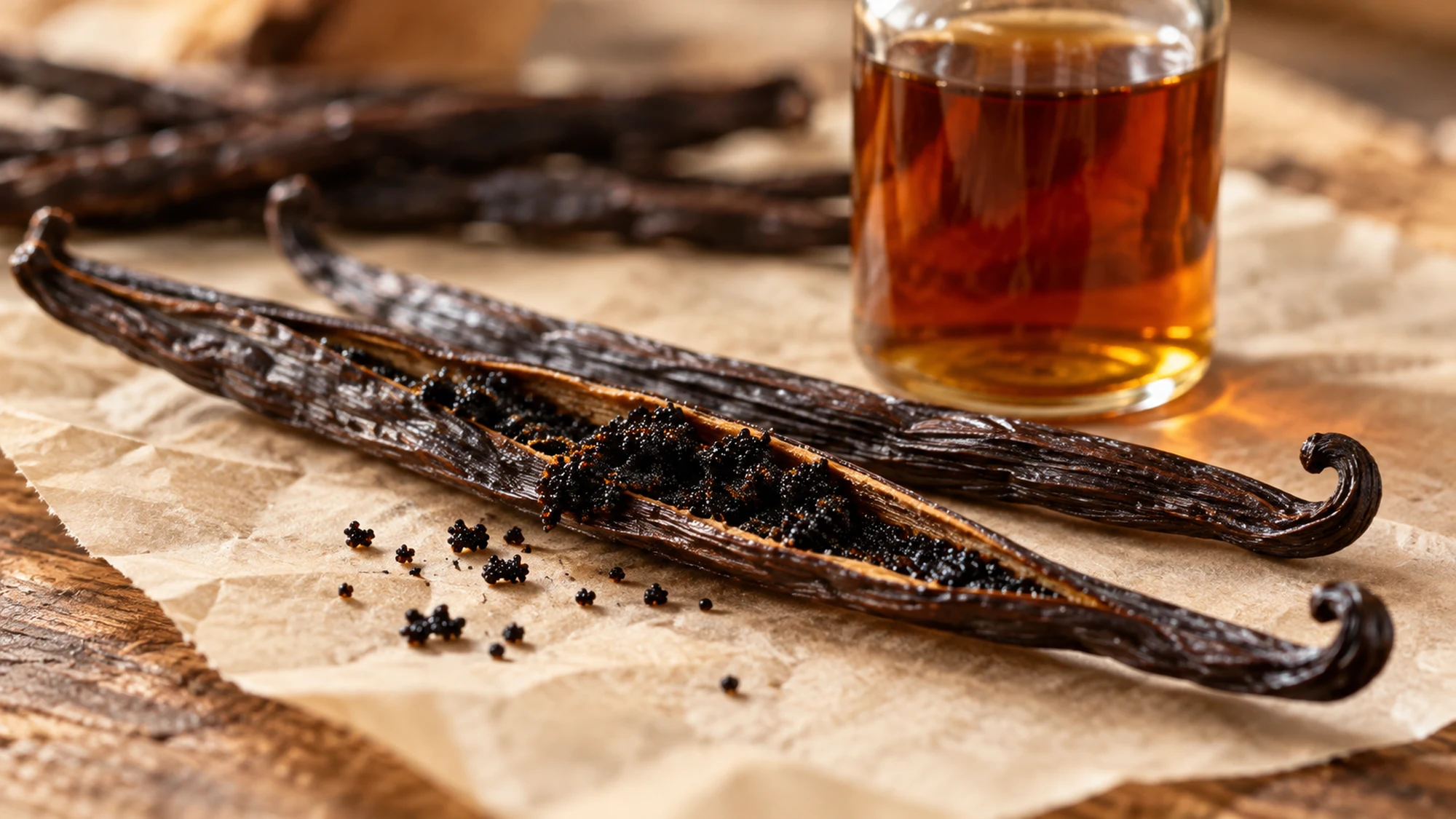
A useful comparison starts with what each form brings to the recipe. Vanilla paste often includes visible seeds and a thicker base, while a whole bean lets you scrape seeds directly into a mixture. Those are practical differences, not a ranking of the person doing the baking.
| Vanilla form | What to expect | What to check |
|---|---|---|
| Pure extract | Pourable bean-derived flavoring | Ingredients and concentration |
| Imitation vanilla | Vanilla-style flavor from a different formulation | Product directions and flavor strength |
| Vanilla bean paste | Thicker product, often with visible seeds | Sweeteners and substitution guidance |
| Whole vanilla bean | Pod and seeds to prepare | Recipe’s bean quantity and handling |
| Alcohol-free flavoring | An alternative formulation | Explicit alcohol-free labeling |
Do not assume one teaspoon of every product means the same intensity. Follow the recipe and the manufacturer’s conversion guidance when moving between forms. The seeds may look lovely in a pale dessert, but they are not a measurement system.
Choose pure vanilla extract for the dish, not the price tag
I’d give vanilla more attention when it is the main flavor: plain custard, whipped cream or a simple frosting leaves less room for other ingredients to take over. In a strongly spiced or chocolate-heavy bake, the question may be how much vanilla character you actually want. If a dessert also calls for canned dairy, our evaporated milk guide explains another easy-to-confuse baking ingredient.
The accompanying America’s Test Kitchen video compares vanilla forms and explores pure versus imitation in cooking. Treat that as culinary context, not proof that one bottle wins in every recipe. Your budget, the recipe and the product’s directions still belong in the decision.
- For a delicate dessert: choose a vanilla product whose aroma you enjoy and measure carefully.
- For a familiar recipe: keep the specified form when you want the most predictable starting point.
- For a substitution: check concentration before changing the quantity.
- For visible flecks: consider a bean or paste if the recipe accommodates it, rather than expecting clear liquid to provide seeds.
Measure, store and troubleshoot without overcomplicating it
Measure vanilla into a spoon rather than tipping the bottle straight over your mixing bowl. That small pause is especially useful with a new bottle or a concentrated product. Too much can dominate a gently flavored mixture, and adding more ingredients to compensate may change the whole recipe.
Keep the cap firmly closed and follow the bottle’s storage guidance. A cool cupboard away from heat and direct light is a practical place to start when the manufacturer recommends room-temperature storage. Do not transfer extract into an unmarked bottle that could be mistaken for a drink.
- Strong alcohol aroma: extract contains alcohol by design; the smell from the bottle is not the same experience as the diluted flavor in food.
- Different color: compare the actual product description rather than judging authenticity by darkness alone.
- A weak result: confirm that you measured the right product and amount before doubling it next time.
- A dietary concern: check the complete label and contact the manufacturer when the information you need is unclear.
- A no-cook dish: remember that no heating step occurs; choose a suitable product if avoiding alcohol is important.
Bottom Line
Pure vanilla extract is a specific flavoring product, not an all-purpose quality guarantee. Its label tells you more than the bottle’s price or color: look at identity, ingredients, concentration and directions, then match it to the recipe.
I’d buy the bottle that fits the way you cook and use it thoughtfully. Vanilla should support the dessert, not turn a simple baking decision into a contest.
Sources
- FDA standard of identity: Vanilla extract
- FDA definitions for vanilla flavorings
- America’s Test Kitchen: Pure and imitation vanilla

Hi, I’m Emily Pocker! I share recipes and food guides here at Recipes360 to help you find everyday meal inspiration and feel more confident in the kitchen. My goal is to make cooking approachable, enjoyable, and full of flavor.