

The yogurt aisle can make a simple breakfast feel like a vocabulary test. Lactose free yogurt may sit beside Greek, low-fat, dairy-free, and no-added-sugar tubs, yet those labels answer different questions. Start with why you are changing yogurt, then choose the texture and flavor you want.
Lactose free yogurt can be made from real dairy milk treated with lactase. It may help someone managing lactose intolerance, but it still contains milk proteins and is not automatically suitable for a milk allergy or a dairy-free diet.
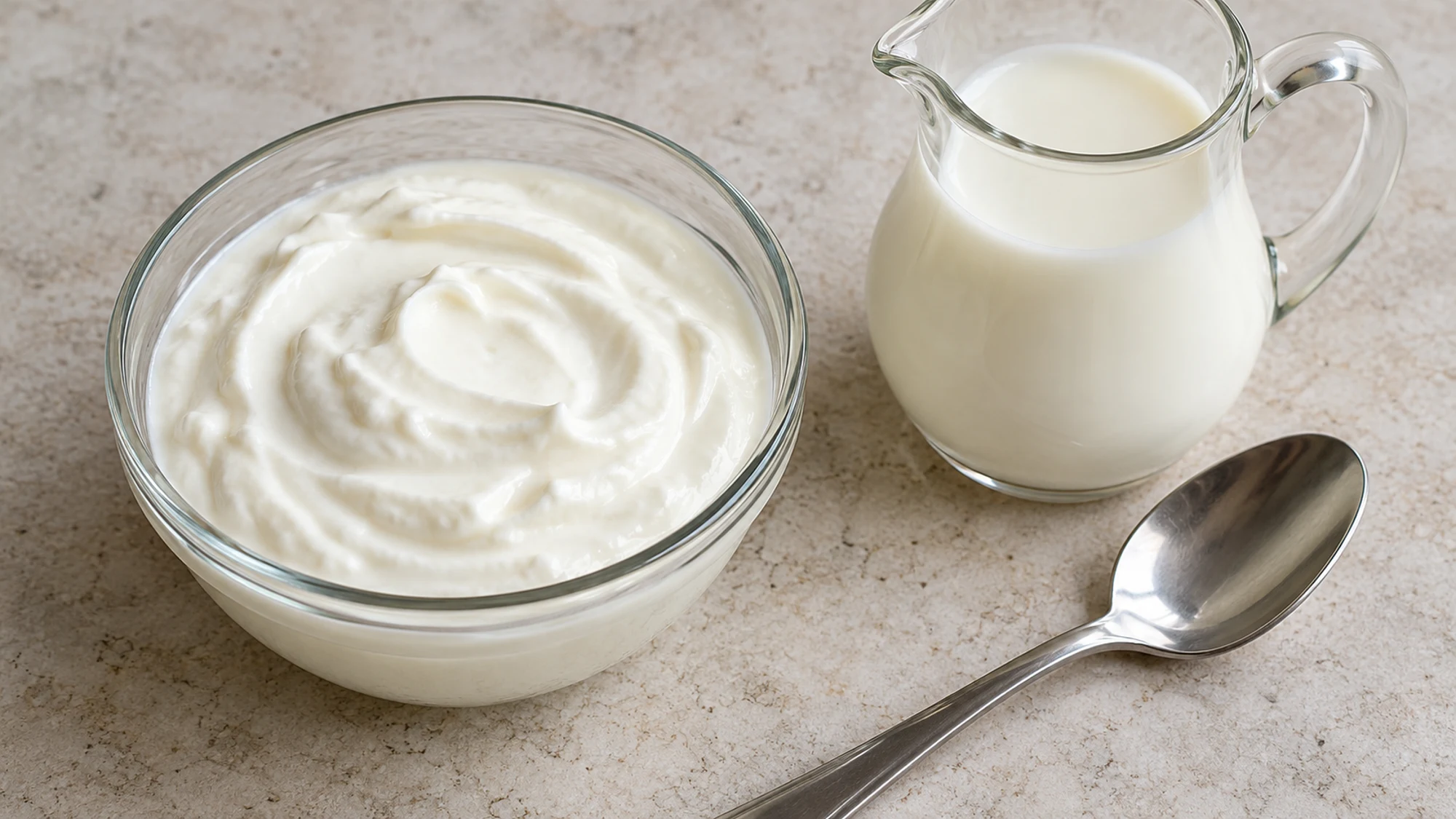
What lactose free yogurt means
Lactose is milk sugar; lactase is the enzyme that helps break it down. NIDDK explains that lactose-free dairy products can help reduce dietary lactose. Fermentation alone does not make every ordinary yogurt lactose-free, so look for an explicit product claim rather than guessing from its thickness or tang.
A useful real-label example is Green Valley Organic Lactose-Free Plain Yogurt 6oz. Its ingredient list includes cultured low-fat milk, lactase enzyme, pectin, and live cultures, and it declares milk as an allergen. That is lactose-free dairy, not a plant-based alternative.
- Lactose-free: describes the product’s lactose claim.
- Low-fat: describes fat, not the presence or absence of lactose.
- Greek-style: describes a style; check the actual lactose statement.
- No added sugar: does not mean zero naturally occurring sugars.
Milk allergy needs a different decision
NIDDK distinguishes lactose intolerance from milk allergy: one concerns digesting a sugar, while the other involves an immune reaction to milk proteins. Treating lactose does not make those proteins disappear. A milk-allergic person should not substitute lactose-free dairy yogurt for a medically appropriate milk-free option.
I’d make the allergen check the first shopping step, before comparing protein or price. A front label can answer one question very clearly and still be the wrong answer to another. Read the ingredients and allergen declaration on the package every time, especially when changing flavors or brands.
- If you need to avoid milk proteins, follow your allergy plan and check suitable alternatives with your clinician.
- If lactose is the issue, choose a clearly labeled product and consider your individual tolerance.
- If symptoms persist despite a lactose-free choice, seek an assessment rather than assuming more dietary restriction is the solution.

Compare the whole label, not one claim
The same Green Valley product’s current manufacturer page lists a 170 g serving with 8 g protein, 8 g total sugars, and 0 g added sugars. Those figures belong to that exact plain product and serving; they are not universal values for lactose-free yogurt. Check the tub you actually buy because formulations can change.
| Label check | Why it helps |
|---|---|
| Serving size | Compare equal quantities |
| Milk declaration | Lactose-free dairy still contains milk |
| Total and added sugars | These answer different questions |
| Protein | Amounts vary by product and style |
| Calcium and vitamin D | Do not assume every yogurt is fortified |
I prefer plain yogurt as a starting point because it leaves more room to choose fruit, oats, or savory seasonings. That is a flavor preference, not a claim that flavored yogurt is forbidden. For the separate question of fat level, our low fat yogurt guide explains another part of the label.

Use it comfortably and keep it cold
Choose a texture for the job: a spoonable breakfast bowl, a tangy topping, or a smooth addition to a cold sauce. Start with a small tub when trying a different brand; an ingredient list cannot tell you which tang or thickness you will enjoy.
- Keep it refrigerated: CDC recommends 40°F (4°C) or below. Lactose-free does not mean shelf-stable.
- Serve cleanly: use a clean spoon and keep the remaining yogurt covered.
- Limit time out: refrigerate perishable dairy within two hours, or one hour when temperatures exceed 90°F (32°C).
- Follow the package: use its storage and opening instructions rather than applying one invented lifespan to every tub.
If your main goal is digestive comfort, keep the rest of the meal in view, too. NIDDK notes that tolerance varies and that some people can eat ordinary yogurt. There is no need to turn somebody else’s comfortable portion into a rule for your own breakfast.
Bottom Line
Choose lactose free yogurt for a clear lactose-related need, then compare the actual ingredients, allergens, serving size, and nutrition. Keep milk allergy separate from lactose intolerance, and let taste and intended use guide the final choice.
The Gastro Girl Podcast discusses lactose intolerance with gastroenterologist Dr. Claire Jansson-Knodell in the following longer conversation.
Sources
- NIDDK: eating and nutrition for lactose intolerance
- NIDDK: lactose intolerance versus milk allergy
- Green Valley: Organic Lactose-Free Plain Yogurt 6oz ingredients and nutrition
- CDC: preventing food poisoning and refrigerating perishables

Hi, I’m Emily Pocker! I share recipes and food guides here at Recipes360 to help you find everyday meal inspiration and feel more confident in the kitchen. My goal is to make cooking approachable, enjoyable, and full of flavor.