
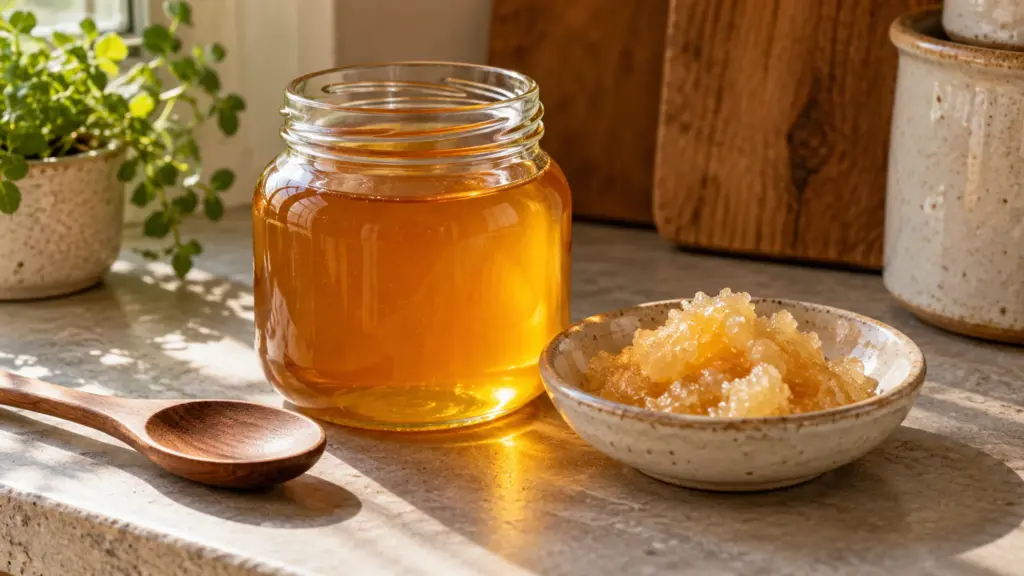
An old honey jar can look quite different from the glossy liquid you brought home. Does honey expire? Properly stored pure honey has an exceptionally long shelf life, and crystals alone do not mean it has spoiled. The important distinction is between a change in texture and honey that has been contaminated or diluted.
Pure honey stored tightly sealed and dry can last indefinitely, although flavor, color and texture may change. Crystallization is normal. Discard honey that foams and smells alcoholic, and never give honey to infants younger than 12 months.
Does honey expire, or just change quality?
Utah State University Extension describes commercial honey as having an indefinite shelf life because of its resistance to microbial growth, while noting an approximately two-year best-quality period. That distinction matters: a quality date does not mean every older jar suddenly becomes unsafe, and a long shelf life does not excuse poor handling.
I would judge the question in two parts: was the honey stored properly, and do you still like its quality? A darkened color or firmer texture can affect how you want to use it without providing an automatic discard date. Keep the package information so you can identify the product and contact its producer if something seems unusual.
| What you notice | What it can mean | Useful next step |
|---|---|---|
| Grainy or firm honey | Natural crystallization | Use as-is or warm gently |
| Darker color over time | A possible quality change | Consider storage history and intended use |
| Foaming plus an alcoholic smell | Spoilage, according to Penn State | Discard it |
| Honey mixed with water or other foods | A different storage situation | Follow guidance for the mixture |
Understand the crystals before warming the jar
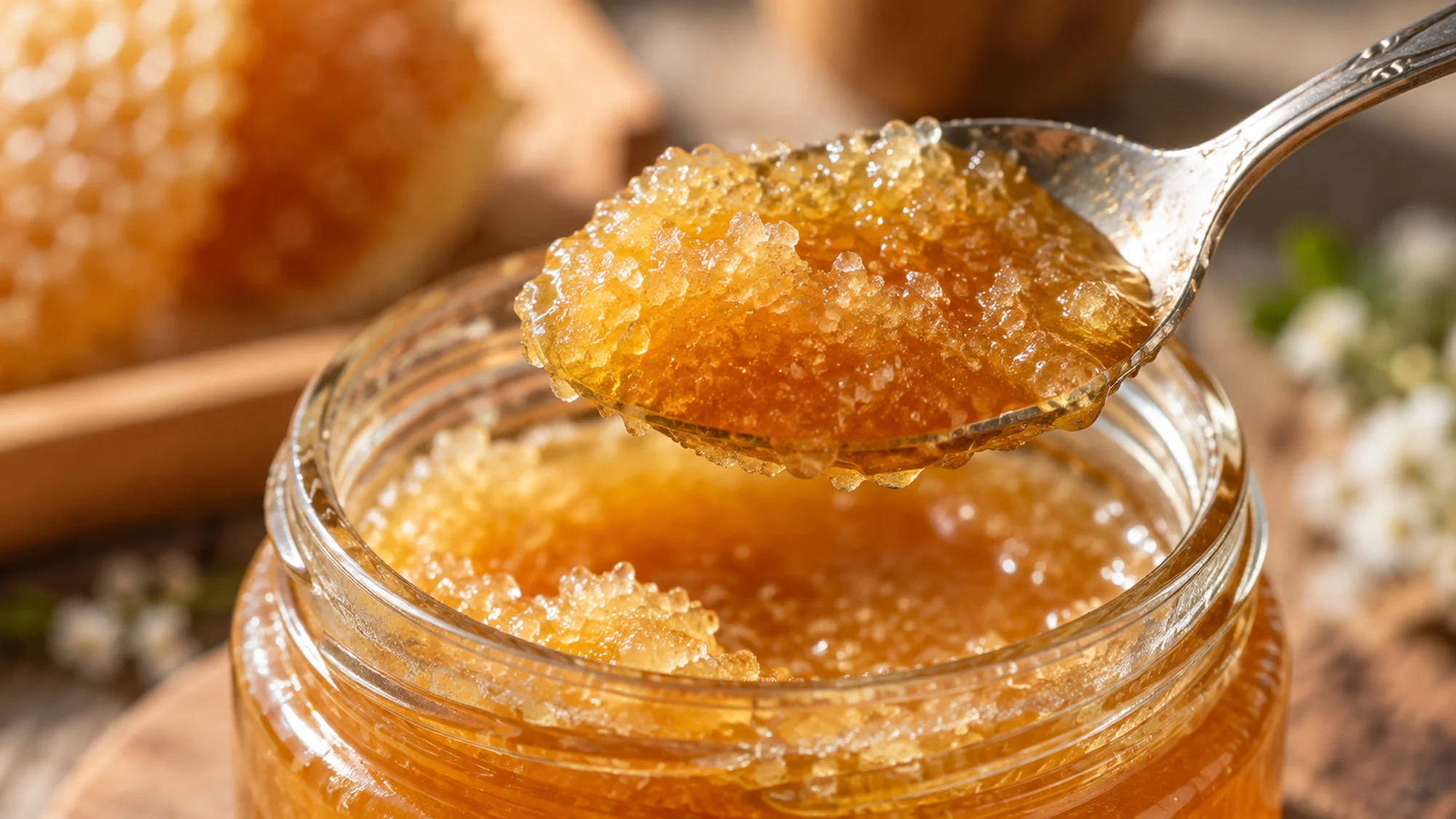
The North Carolina State Beekeepers Association explains crystallization as glucose molecules forming ordered crystals. The change is not, by itself, evidence that honey is impure or spoiled. Different jars need not stay liquid for the same length of time, so appearance alone is not a useful purity test.
Crystallized honey can still be pleasantly spreadable. I would use that texture on toast rather than insist every jar pour like syrup. If you need a liquid drizzle, warm only what you need; a spoonful for a drink and a jar for a baking project are different practical jobs.
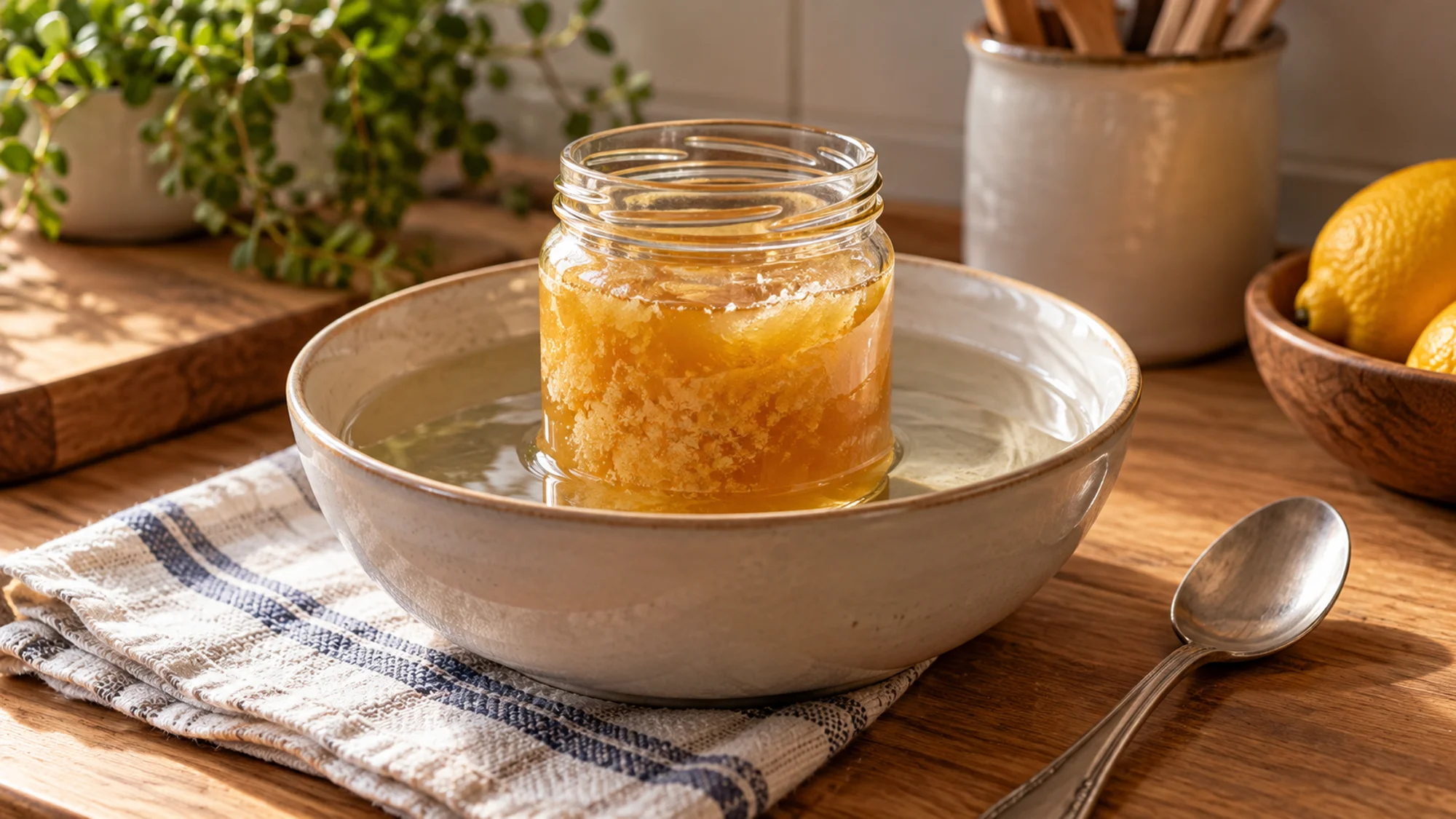
- For a glass jar, use hot but not boiling water and stir until crystals dissolve, following the beekeepers’ guidance.
- Keep the container off a direct heat source and let the water and honey cool.
- Do not pour warming water into the honey.
- Avoid aggressive heating simply to make the jar look new.
Store honey dry and recognize a problem
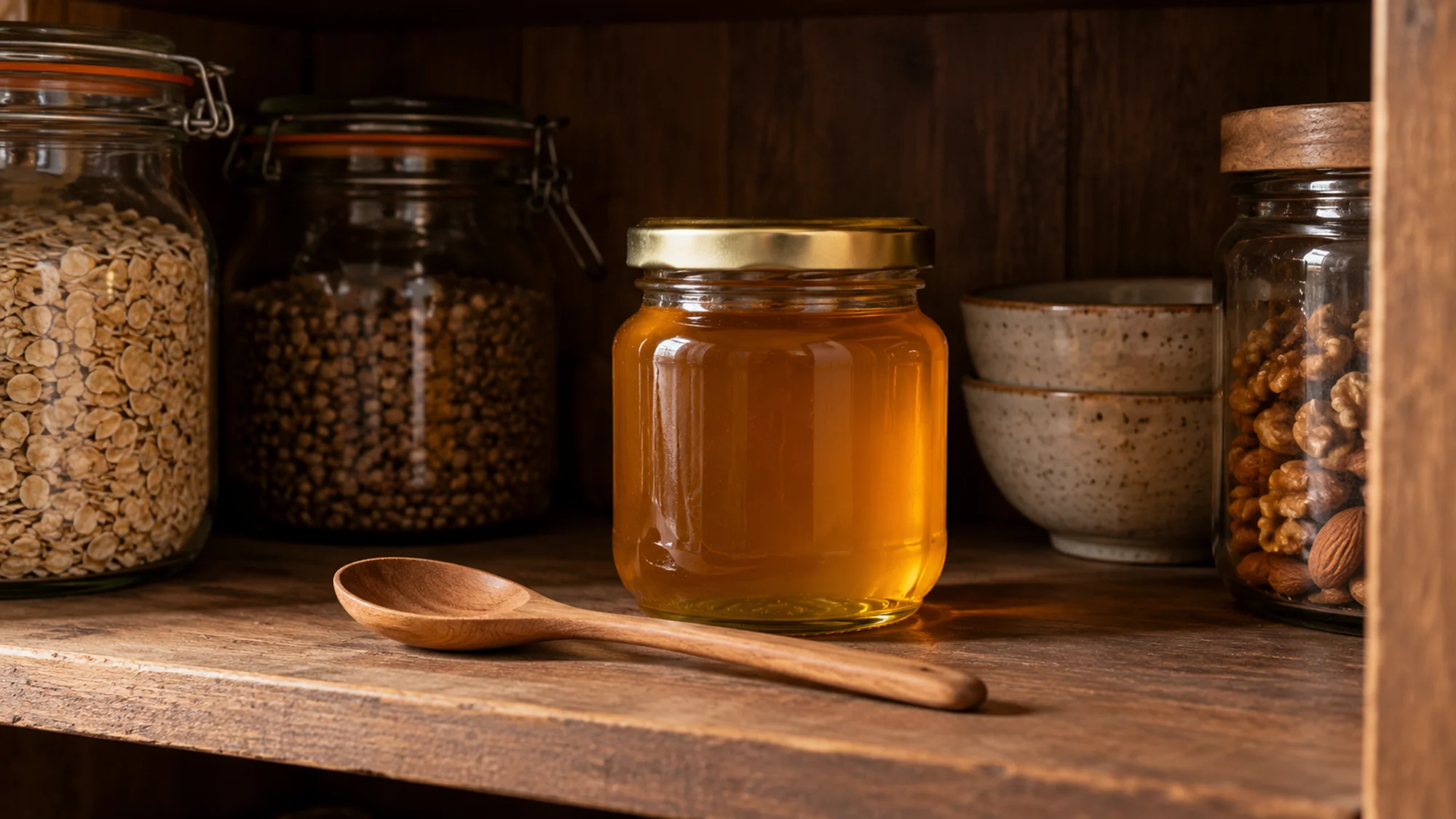
Penn State Extension recommends airtight storage in a dry place at room temperature. Honey absorbs moisture and odors when exposed to air. Extra water can create conditions for yeasts and molds; foaming together with an alcoholic smell is a reason to discard the honey, rather than try to restore it by heating.
Close the lid after use and reach for a clean, dry utensil. My priority would be keeping crumbs and water out, not finding an elaborate container. Store the jar where you can reach it without balancing it above a steaming pot; everyday convenience helps make careful handling repeatable.
Crystals are a texture change. A jar that has been diluted, contaminated or shows signs of fermentation deserves a separate safety decision.
Keep the advice specific to pure honey
A jar of pure honey is not the same product as a honey drink, a homemade sauce, garlic in honey or honey stirred into yogurt. Once other ingredients enter the picture, follow storage guidance for that particular food. Do not borrow the words “lasts indefinitely” to describe an unverified mixture.
Age does not remove the infant warning. The CDC says not to give honey to children younger than 12 months because it can cause infant botulism. Do not add it to an infant’s food, water, formula or pacifier. The long shelf life of honey is not proof that it is appropriate for every person or use.
- Check whether the label describes pure honey or a product with additional ingredients.
- Follow producer directions for infused, flavored or mixed products.
- For intact comb honey, see our separate guide to honey comb and its edible wax.
- When storage history is unclear and the jar appears abnormal, do not taste it to investigate.
Bottom Line
Does honey expire? Properly stored pure honey can remain usable long past a quality date, but storage and condition still matter. Keep it sealed and dry, treat ordinary crystals as normal, discard fermented honey and keep all honey away from babies under 12 months.
SciShow’s explanation of how bees make honey offers useful background on the food in the jar. It is a general science overview, not a storage test for your particular honey.
Sources
- Utah State University Extension: Storing Sugars
- Penn State Extension: Honey storage questions
- North Carolina State Beekeepers Association: Honey FAQ
- CDC: Honey before 12 months

Hi, I’m Emily Pocker! I share recipes and food guides here at Recipes360 to help you find everyday meal inspiration and feel more confident in the kitchen. My goal is to make cooking approachable, enjoyable, and full of flavor.