
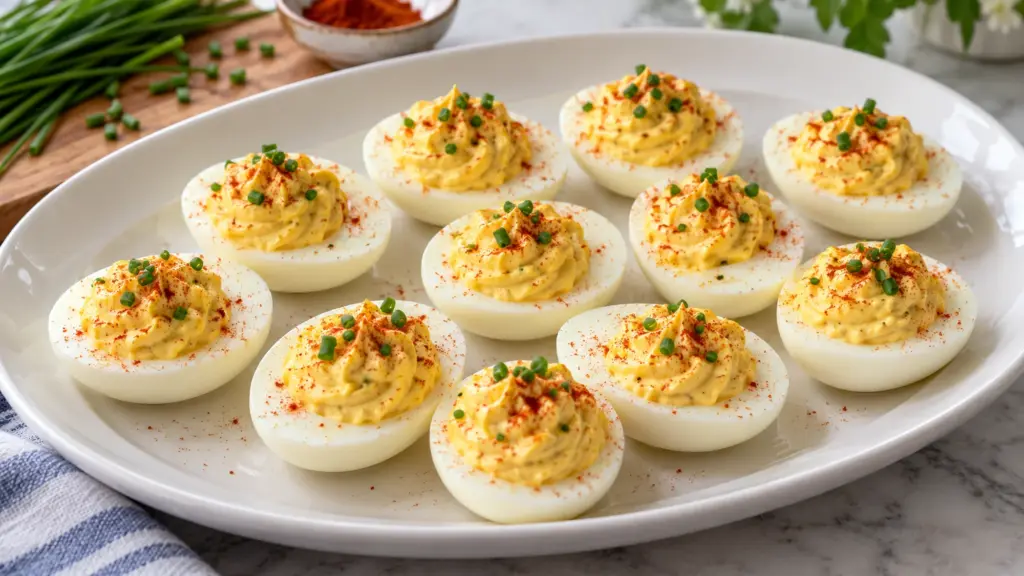
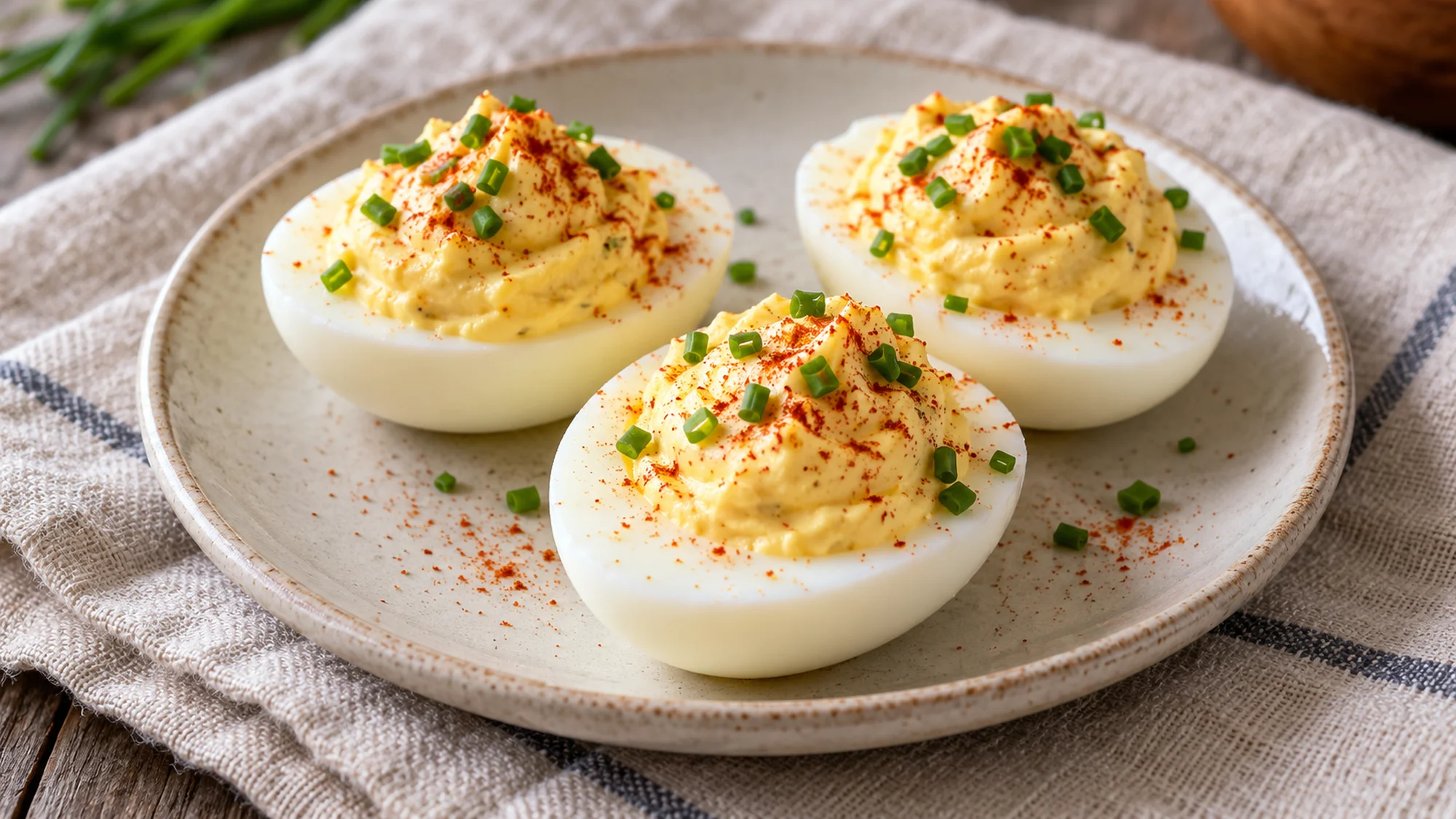
A deviled egg should be easy to pick up and smooth enough to eat without a trail of dry yolk crumbs. This deviled eggs recipe uses a modest amount of mayonnaise, Dijon mustard, and cider vinegar for a creamy filling with a little tang. Paprika and chives finish the tops without hiding the egg beneath a pile of extras.
Cook the eggs until the yolks are firm, cool them promptly, and mash the filling before adding liquid ingredients. A smooth filling begins with breaking down the yolks, not endlessly adding mayonnaise.
Serving Suggestions for This Deviled Eggs Recipe
Serve two halves per person as an appetizer or part of a larger spread. I’d use a tray with shallow wells if the eggs need to travel; round whites have a talent for moving just as the platter reaches the table. A flat plate works with the halves spaced apart.
- Add paprika lightly so its color complements the filling rather than leaving a dusty mouthful.
- Snip chives finely. Long pieces can pull out a scoop of filling when someone takes the first bite.
- Set out a small batch at a time and keep the rest refrigerated, especially when the serving window is long.
- Recipes360’s charcuterie cups are another portioned appetizer for a shared spread; keep the eggs on their own chilled platter.
- Choose fresh vegetables and a simple bread accompaniment if the eggs are part of lunch rather than an appetizer.
| Tool | Result | Useful detail |
|---|---|---|
| Two teaspoons | Simple rounded filling | No special equipment needed |
| Piping bag, wide tip | More defined swirls | Mash out lumps first |
| Small food processor | Very smooth filling | Stop before overworking |
Make the presentation as simple as the occasion allows. A cool, stable platter and a filling you can lift neatly are more useful than elaborate decoration.
Variations and Filling Texture
Dijon supplies mustard flavor and a little acidity, while cider vinegar sharpens the mixture in a small measured amount. Taste the completed filling before adding extra salt; mayonnaise and mustard already bring some. I’d adjust with a few drops at a time rather than turn a firm filling into a sauce that needs rescuing.
- Yellow mustard gives a different, more familiar mustard note. Start with the same small amount and assess the flavor before adding more.
- For a pickle variation, add a little very finely chopped, well-drained dill pickle. Wet relish can loosen the filling quickly.
- A pinch of smoked paprika changes the finish without needing another rich topping.
- Greek yogurt can replace some mayonnaise, but its sharper flavor and thinner texture make this a different filling. Do not assume an equal swap tastes or pipes identically.
- If the yolks are lumpy, press them through a small sieve or mash more thoroughly before deciding they need more mayonnaise.
Older refrigerated eggs can sometimes peel more easily than very fresh eggs, but there is no need to leave eggs on a counter to age them. Crack and peel the cooled shell gently, working from the wider end where there is often an air pocket.
Solve dry yolk texture with mashing first, then adjust the balance of mayonnaise, mustard, and vinegar in small amounts. Keep the filling thick enough to stay in place.
Health Benefits and Keeping Eggs Cold
Eggs contribute protein, while the mayonnaise contributes much of the added fat in the filling. The card estimates two halves from the actual six-egg recipe rather than treating an appetizer as a complete meal. Hellmann’s published mayonnaise label provides a representative basis; a different mayonnaise can change both calories and sodium.
- USDA egg guidance advises cooking until both whites and yolks are firm. Jammy yolks are not the target for this recipe.
- Use commercial mayonnaise or another appropriately pasteurized product, and follow its storage directions.
- Contains egg and mustard. Check the mayonnaise and mustard labels for additional ingredients or allergens.
- Keep the finished eggs at 40°F (4°C) or below until serving. A decorative plate is not a substitute for cold storage.
- Follow the two-hour limit outside refrigeration, shortened to one hour above 90°F (32°C), as described by FoodSafety.gov.
For planning ahead, keep the covered whites and filling refrigerated separately and assemble near serving. Use filled eggs within two days and no later than one week after the original boiling, whichever comes first. Mark the original cooking date if you start with eggs prepared earlier; adding a fresh filling does not restart their clock.
The useful nutrition comes with a clear portion and careful storage. Keep the eggs fully cooked and cold, and count time from the original boiling date.
Bottom Line
This deviled eggs recipe keeps the filling creamy, tangy, and easy to portion. Mash the firm yolks well, add the measured dressing ingredients, and choose a simple finish. Keep the platter cold until it is time to serve.
Deviled Eggs Recipe

Ingredients
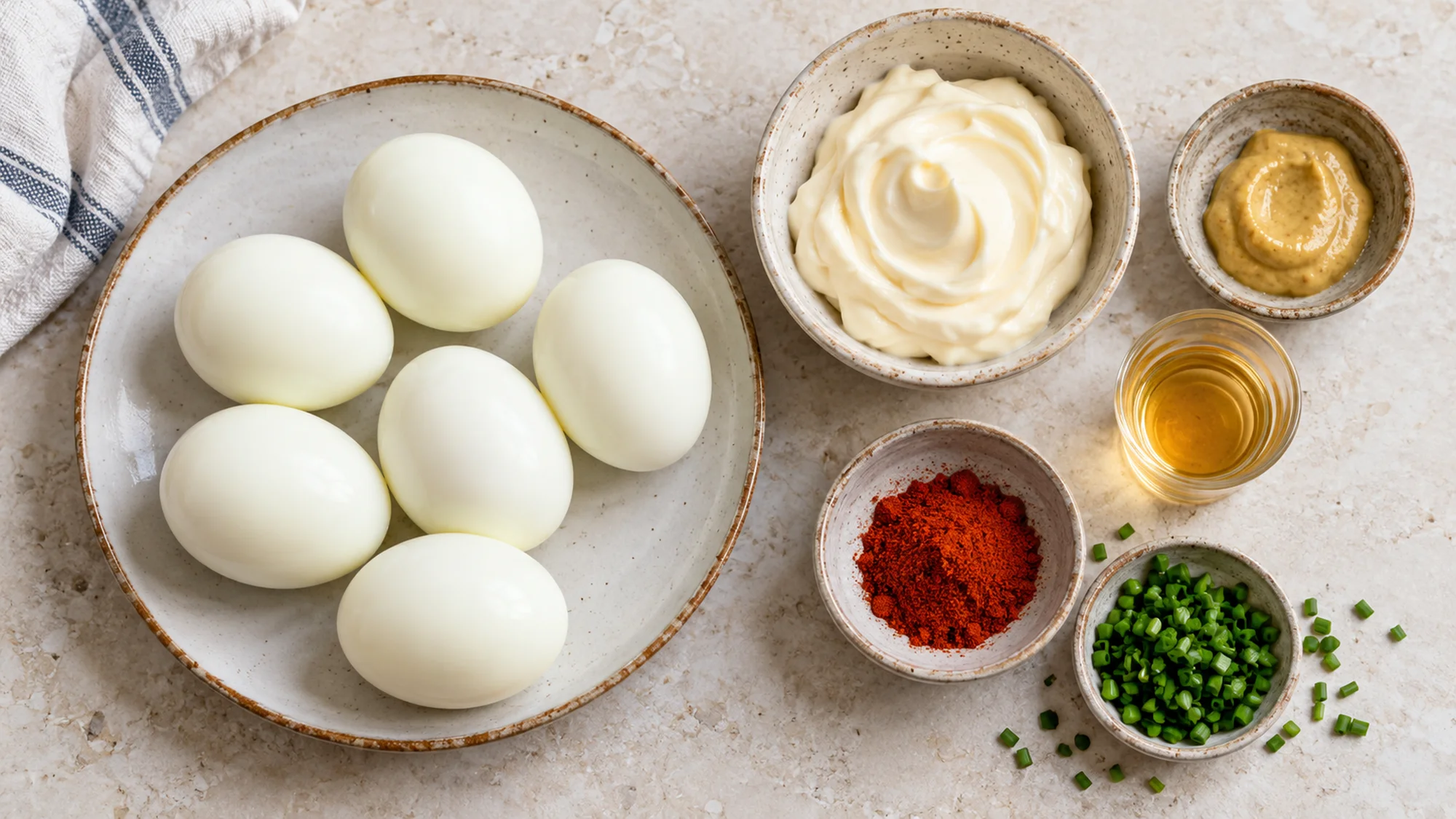
- 6 large eggs about 50 g edible egg each
- 3 tablespoons commercial mayonnaise 45 g
- 2 teaspoons Dijon mustard 10 g
- 1 teaspoon apple cider vinegar 5 ml
- 1/8 teaspoon fine salt 0.75 g
- 1/4 teaspoon sweet paprika
- 1 teaspoon finely snipped chives
Equipment
- Saucepan with lid
- Bowl of fresh ice water
- Mixing bowl
- Fork or fine sieve
- Two teaspoons or piping bag
Instructions
- Place the eggs in a single layer in a saucepan and cover with cool water by about 1 inch (2.5 cm). Bring to a full boil, cover, remove from heat and let stand for 12 minutes for large eggs. The whites and yolks must be firm; add cooking time if necessary.
- Transfer promptly to fresh ice water for about 10 minutes until cool enough to peel. Peel gently and pat dry.
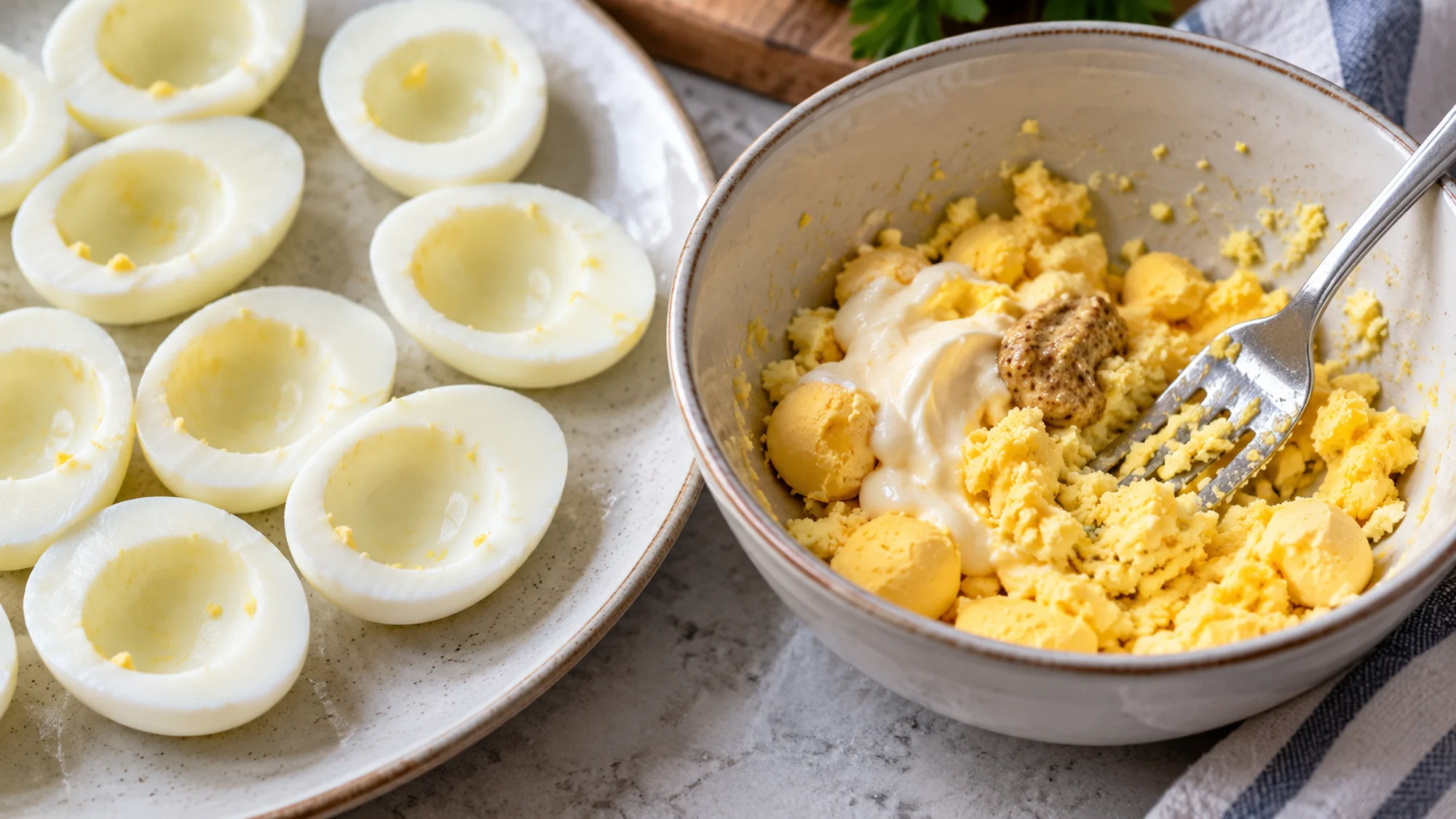
- Halve the eggs lengthwise and lift the yolks into a bowl. Arrange the whites cut-side up on a covered platter.
- Mash the yolks finely with a fork, or press through a sieve. Mix in the mayonnaise, Dijon, vinegar and measured salt until smooth and thick.
- Spoon or pipe the filling evenly into the 12 white halves. Dust lightly with paprika and scatter with chives. Refrigerate, covered, until serving; serve 2 halves per portion.
Nutrition
Video
Notes
Tried this recipe?
Let us know how it turned out!Hi, I’m Emily Pocker! I share recipes and food guides here at Recipes360 to help you find everyday meal inspiration and feel more confident in the kitchen. My goal is to make cooking approachable, enjoyable, and full of flavor.