
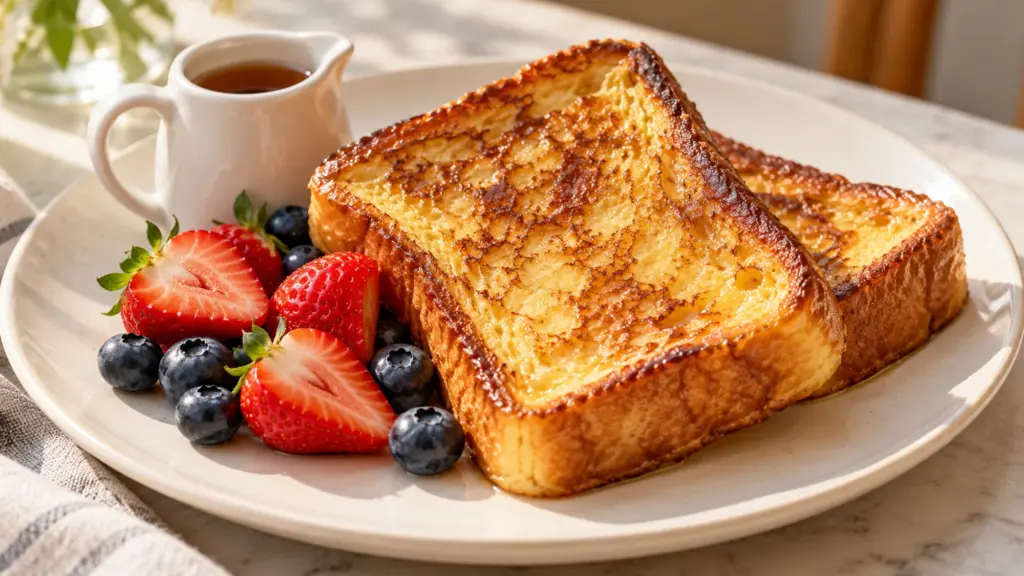
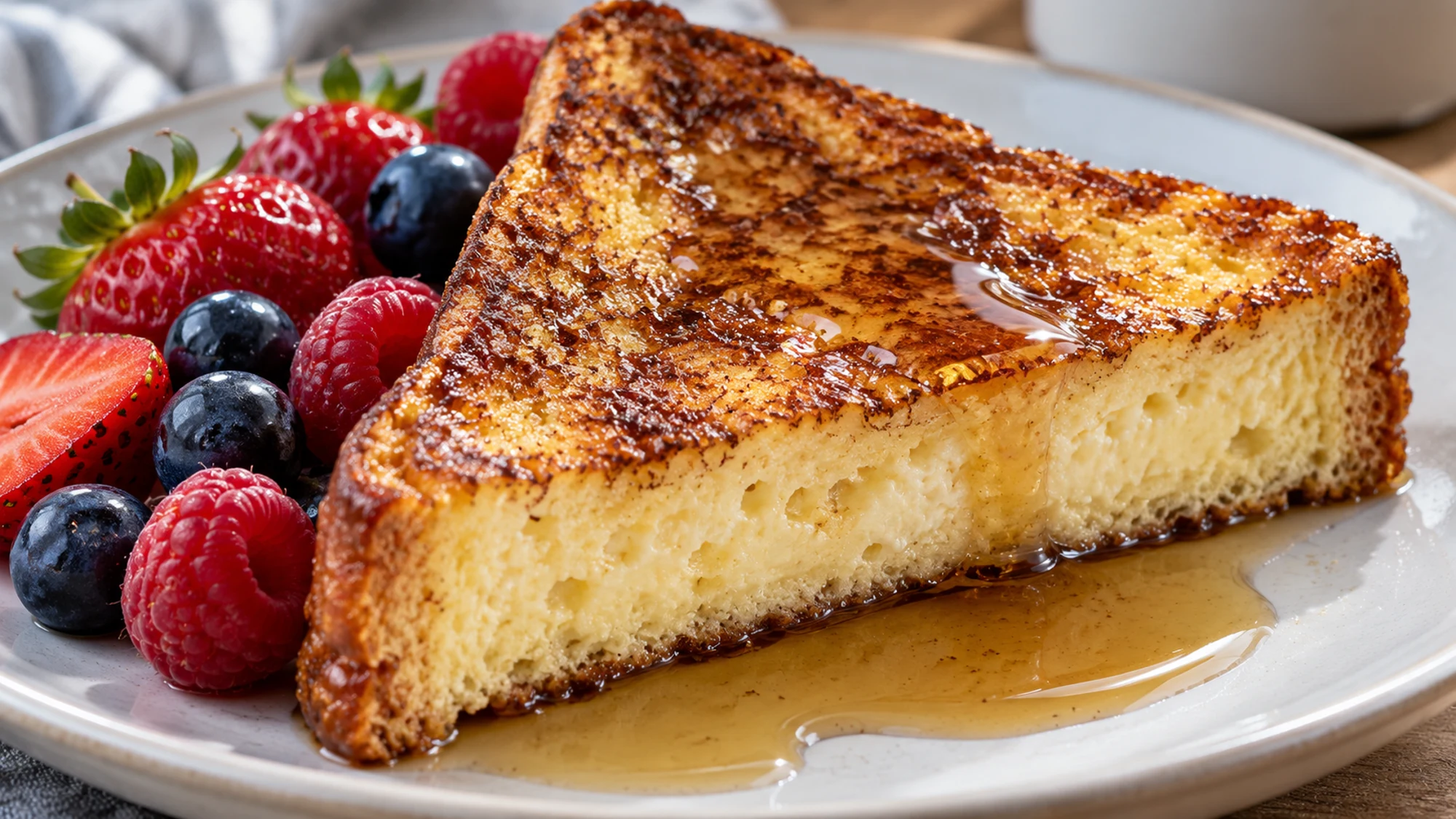
A slice that looks deeply golden can still be wet in the middle. French toast needs enough time for its egg custard to set, not just enough heat to color the bread. This version uses thick brioche, vanilla, and cinnamon, with a short dip and steady skillet heat for a tender center and lightly crisp edges.

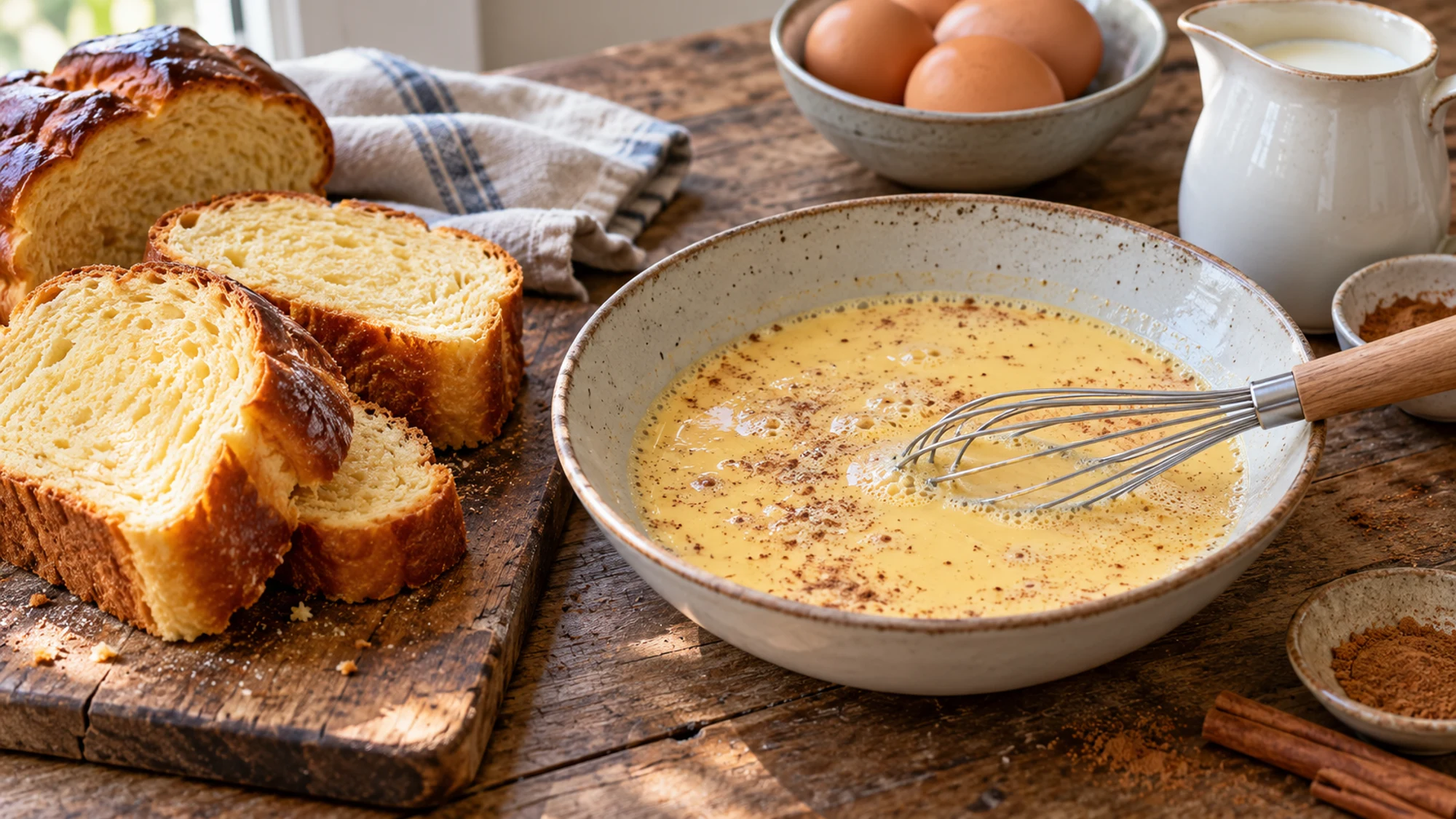
Whisk the custard smooth, dip the bread just before cooking, and keep the heat moderate. If the outside darkens before the center sets, lower the heat rather than racing through the next batch.
I’d rather give a slice another minute over gentler heat than cover a soggy center with syrup. Thick bread offers room for a soft interior, but it still needs careful handling after dipping. Slightly dry brioche is easier to lift than a very soft fresh slice; bread that is moldy should always be discarded, not repurposed.
Serving Suggestions for French Toast
Serve the toast as each batch finishes, or keep the first slices briefly in a warm oven on a rack over a baking sheet. The rack leaves space underneath for moisture to escape. Stacking hot slices on a plate traps steam, so save the tidy pile for the table rather than the waiting area.
| Topping | Serving idea |
|---|---|
| Fresh berries | Add after cooking for a cool, juicy contrast. |
| Maple syrup | Serve alongside so each person can choose an amount. |
| Plain yogurt | Spoon on the plate just before eating for a tangy accompaniment. |
For a breakfast table with different preferences, offer this apple cinnamon baked oatmeal as another option. I’d keep the French toast toppings separate rather than dress every plate in advance. That preserves the edges and makes it easier to account for syrup, butter, or yogurt in an individual serving.
- Cook only as many slices as fit without touching, so there is room to turn them cleanly.
- Use a thin spatula and support the whole slice after soaking; the middle is more fragile before it cooks.
- For leftovers, refrigerate within two hours in a covered container and use within three to four days, following safe leftover handling guidance. Reheat to 165°F (74°C).
Keep finished slices in a single layer, and put fruit, syrup, or yogurt on the plate only when you are ready to eat.
French Toast Variations
Bread changes the result more than an extra pinch of cinnamon. Brioche is tender and already enriched; challah is another soft option. A denser country loaf needs a different soaking time, while thin sandwich bread becomes fragile quickly. Use the card’s brioche thickness as the starting point rather than treating every loaf as interchangeable.
- For citrus fragrance, add a little finely grated orange zest to the custard. Avoid pouring in juice, which changes its liquid balance.
- For a quieter spice flavor, reduce or omit the cinnamon and let the vanilla stand out.
- For dairy-free cooking, use an unsweetened plant drink and a suitable cooking fat, then check the bread label. Brioche commonly contains milk or butter, and the recipe still contains eggs.
- For less sweetness, leave the small amount of sugar out of the custard and serve syrup separately. The bread itself may still contain sugar.
Rewhisk the custard between batches because cinnamon tends to collect in patches. Use a wide, shallow dish so the bread contacts the mixture evenly. A brief dip should moisten both faces without leaving the slice collapsing in your fingers; transfer it straight to the pan rather than soaking a whole tray ahead.
Choose the bread first, then adjust the dip to its texture. Change flavorings gently without adding a lot of extra liquid.

Health Benefits and Breakfast Balance
Eggs and milk contribute protein, while bread supplies much of the carbohydrate in this breakfast. Brioche, butter, sugar, and optional toppings also contribute energy. For cooking safety, FoodSafety.gov gives 160°F (71°C) for egg dishes; a golden surface alone does not confirm that the center is cooked.
- The nutrition estimate covers two slices and all measured custard and cooking butter. It excludes fruit, syrup, and extra toppings.
- Bread slices differ substantially in weight. Use the stated bread weight when comparing the estimate with your own loaf.
- The standard recipe contains wheat, eggs, and milk. Check labels and cooking surfaces when preparing food for someone with an allergy.
Build the rest of breakfast around your appetite and preferences, and keep the toppings visible rather than hiding their contribution to the meal.
Bottom Line
French toast works best when browning and cooking through happen together. Keep the custard smooth, dip one batch at a time, and adjust the pan heat as needed. Serve promptly for the clearest contrast between a soft middle and golden edges.
French Toast Recipe


Ingredients
- 8 thick slices brioche 400 g total; about 3/4 inch (2 cm) thick, slightly dry
- 3 large eggs
- 3/4 cup whole milk 180 ml
- 1 tablespoon granulated sugar 12 g
- 2 teaspoons vanilla extract
- 1/2 teaspoon ground cinnamon
- 1/8 teaspoon fine salt
- 2 tablespoons unsalted butter 28 g, divided for cooking
- fresh berries optional, for serving
- maple syrup optional, for serving
Equipment
- 1 Wide shallow bowl
- 1 Whisk
- 1 Large skillet or griddle
- 1 Thin spatula
- 1 Food thermometer
- 1 Wire rack and baking sheet
Instructions
- Whisk eggs, milk, sugar, vanilla, cinnamon and salt in a wide shallow bowl until smooth with no streaks of egg white. If holding finished slices briefly, heat oven to 200°F (95°C) and set a rack over a baking sheet.
- Heat a large skillet over medium heat. Add a portion of the butter and swirl to coat. It should foam without turning dark immediately. Lower the heat if it browns too quickly.
- Dip only the slices that fit in the skillet, about 3–5 seconds per side for soft brioche. Lift gently and let excess custard drip off. Place straight in the skillet without crowding. Rewhisk custard between batches.
- Cook about 2–4 minutes per side, adjusting heat so both sides brown while the center sets. The center should be tender with no liquid egg custard and reach 160°F (71°C). If the outside darkens early, lower the heat and continue gently. Add the remaining butter between batches as needed.
- Serve promptly with optional berries or syrup. Keep finished slices in a single layer on the rack in the warm oven only while completing the batch; avoid stacking. Refrigerate leftovers within 2 hours and use within 3–4 days, reheating to 165°F (74°C).
Nutrition
Video
Notes
Tried this recipe?
Let us know how it turned out!Hi, I’m Emily Pocker! I share recipes and food guides here at Recipes360 to help you find everyday meal inspiration and feel more confident in the kitchen. My goal is to make cooking approachable, enjoyable, and full of flavor.