
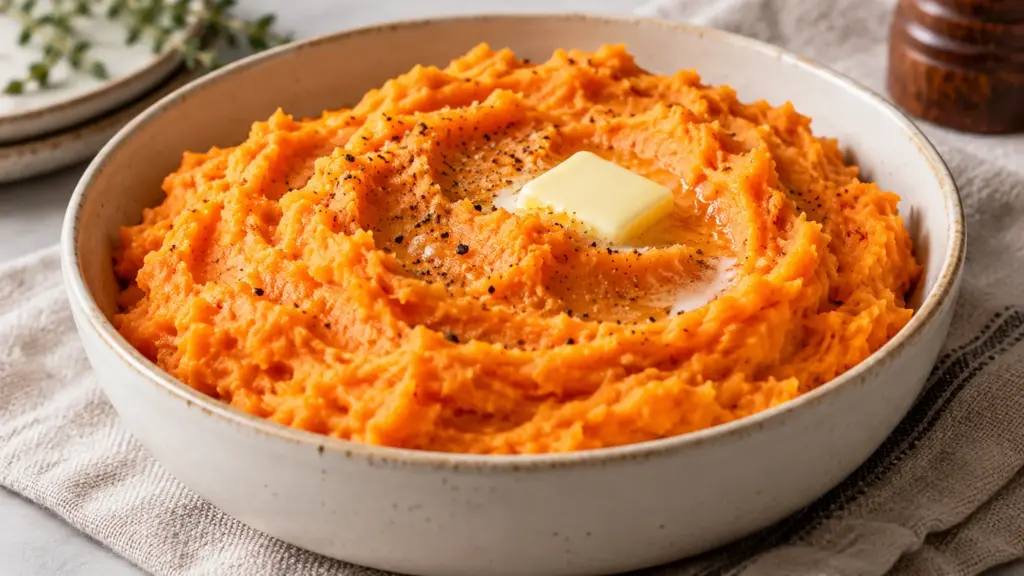
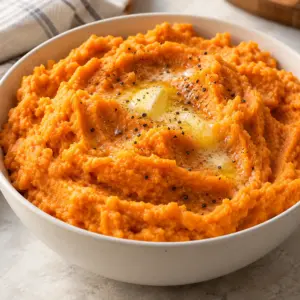
Mashed sweet potatoes bring a soft, buttery side to the table without needing a layer of marshmallows or a spoonful of syrup. Their own sweetness does the work. This version keeps the seasoning savory and the texture gently rustic, with enough milk to loosen the mash rather than turn it into a purée.
The best bowl is creamy enough to settle around your fork, but still tastes unmistakably like sweet potatoes.
Orange-fleshed sweet potatoes are a reliable choice here. Aim for evenly sized pieces and cook them until the centers yield easily; firm pieces do not become smooth just because you mash harder. Letting excess moisture escape after draining is equally useful. That small pause keeps the finished side from tasting watery.
The complete quantities and stovetop directions are in the recipe card below. You do not need a food processor, and a little texture is welcome. I’d choose a hand masher: it gives you control without turning a simple vegetable side into another appliance-cleaning project.
Serving Suggestions for Mashed sweet potatoes
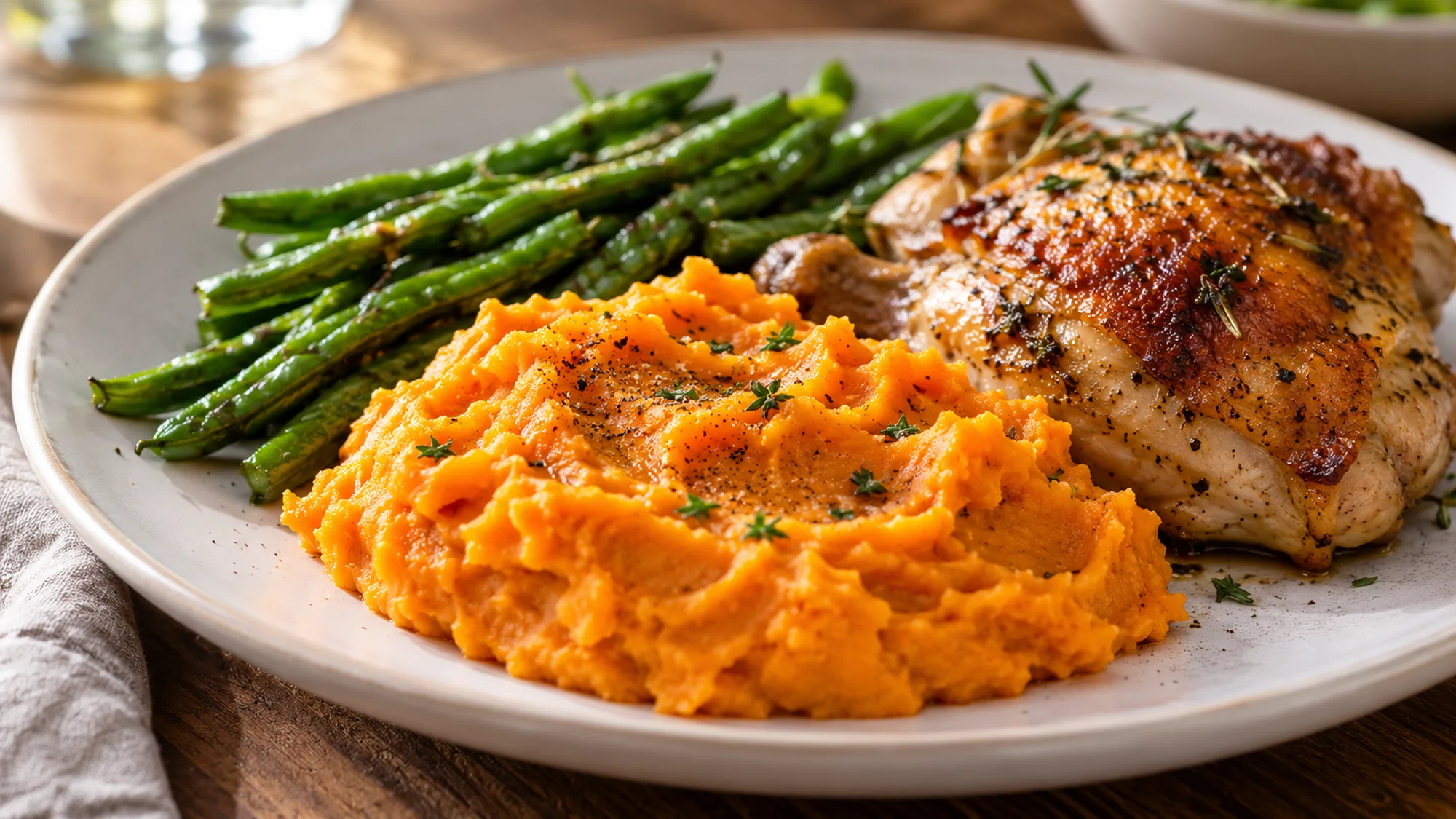
Pair a warm scoop with roast chicken and a green vegetable, or spoon it beside beans and sautéed greens for a meatless plate. I like the idea of something crisp or tangy here; it makes a useful contrast to the softness: a cabbage salad, lemony asparagus, or a few chopped toasted nuts all change the feel of the meal.
For a holiday table, keep portions modest when several other sides are involved. On a quiet weeknight, a larger scoop can anchor the plate. The same batch makes six side servings; it is not intended to be six complete meals.
Serve from a warmed bowl if the rest of dinner is still coming together. A shallow serving dish loses heat faster than a deeper bowl. Rather than leaving the mash on the counter for hours, refrigerate it promptly and reheat when needed.
| Pairing | What it adds |
|---|---|
| Chicken and asparagus | Savory flavor and a greener plate |
| Beans and cabbage salad | A meatless option with crunch |
| A small spoonful of toasted pecans | A crisp contrast; avoid for nut allergies |
Balance the soft mash with something crisp, green, or tangy.
Mashed sweet potatoes Variations
Keep the basic mash plain the first time, then choose one direction. Smoked paprika adds a savory edge, while chopped chives bring a fresh onion note. Cinnamon pushes the flavor sweeter even without added sugar. Add these sparingly and taste before reaching for more.
For a dairy-free version, use olive oil or a dairy-free butter alternative and a little unsweetened plant milk. Choose an unflavored option: vanilla milk can dominate an otherwise savory bowl. These substitutions change both flavor and the nutrition estimate.
If the mash seems stiff, loosen it gradually. If it seems loose, additional liquid will not help; gentle uncovered heat and stirring can let some moisture escape. For a traditional potato alternative, see how to make mashed potatoes, which uses a different base vegetable.
Choose one flavor variation rather than adding every seasoning at once.
Health Benefits and Nutrition
Sweet potatoes contribute fiber and naturally occurring carotenoids. The NIH Office of Dietary Supplements explains that the body can convert beta-carotene into vitamin A, a nutrient involved in normal vision and immune function. That is a reason to enjoy variety in vegetables, not a promise that one side dish treats illness.
The butter and milk add flavor along with saturated fat, and added salt affects sodium. The card’s nutrition numbers are estimates for one-sixth of the batch, not a laboratory analysis. Different brands, portion sizes, or dairy substitutions will change them.
Food safety matters after dinner, too. Refrigerate leftovers in a shallow covered container within two hours and use within three to four days. University of Illinois Extension recommends reheating leftovers to 165°F; stir this mash as it warms so the center heats evenly.
Enjoy the vegetable variety, and refrigerate leftovers promptly.
Bottom Line
Good mashed sweet potatoes do not need elaborate additions. Start with a tender vegetable, keep excess water out, and adjust the final texture in small steps. The result belongs just as comfortably beside a weekday dinner as it does on a bigger seasonal table.
Choose your accompaniments, keep the seasoning balanced, and make enough to enjoy without leaving a large pot sitting out. A simple side is most useful when it is easy to serve and straightforward to store.
Keep the texture soft, the seasoning simple, and the portion suited to the meal.
Mashed Sweet Potatoes Recipe

Ingredients
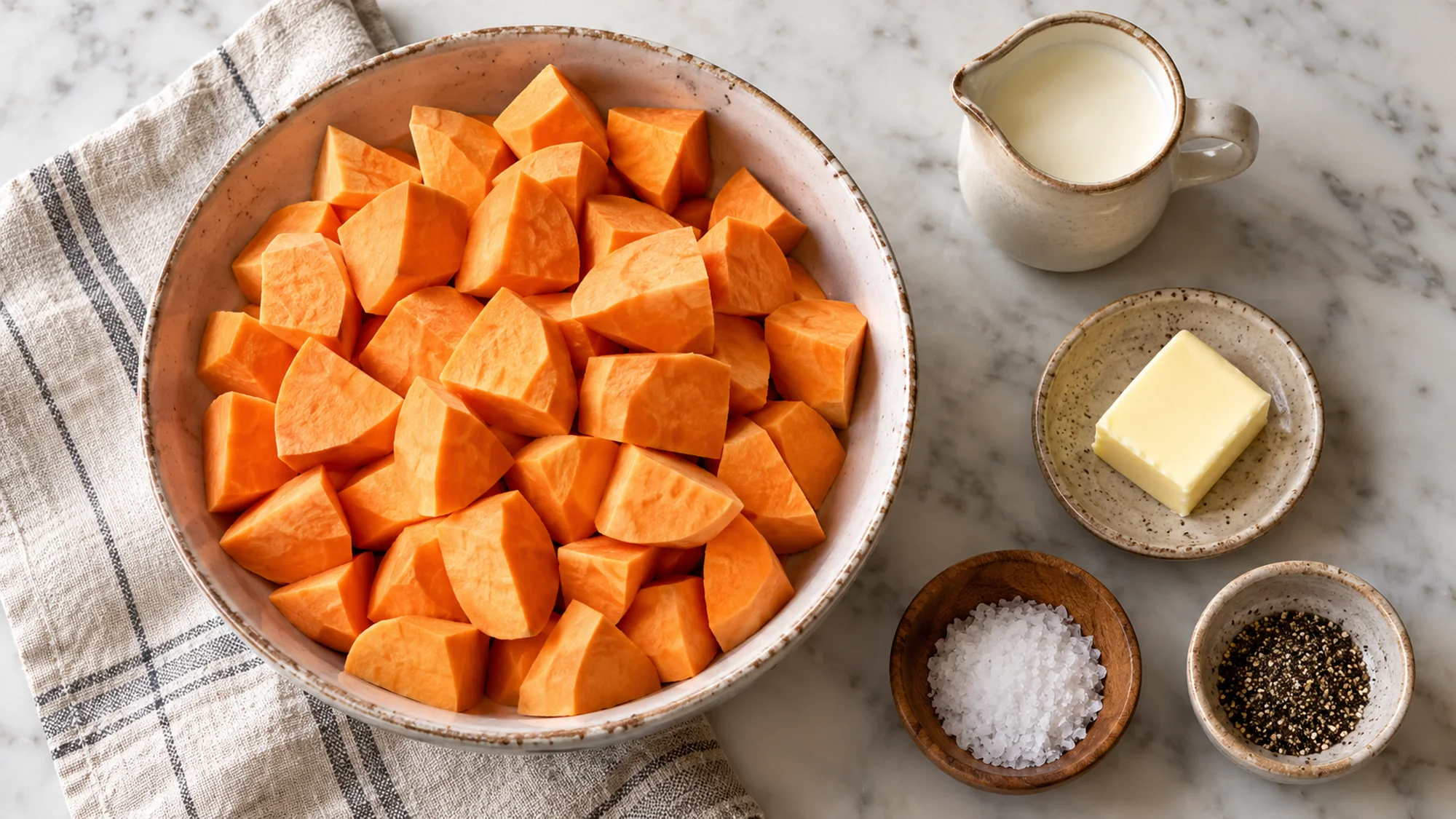
- 2 lb orange-fleshed sweet potatoes 900 g peeled weight; cut into roughly 1-inch pieces
- 2 tablespoons unsalted butter 28 g
- 1/4 cup whole milk 60 ml; warmed
- 1/2 teaspoon fine salt adjust to taste
- 1/4 teaspoon ground black pepper
Equipment
- Large saucepan
- Colander
- Hand potato masher
- Small microwave-safe jug
Instructions
- Place the peeled, evenly cut sweet potatoes in a large saucepan and cover with cold water by about 1 inch. Bring to a boil, then reduce to a steady simmer.
- Simmer for about 15–20 minutes, until a fork slides easily through the centers. Start checking smaller pieces earlier. Allow about 25 minutes total stove time, including bringing the water to a boil.
- Drain well in a colander. Return the potatoes to the warm empty saucepan over low heat for 1–2 minutes, stirring gently so excess moisture evaporates without scorching.
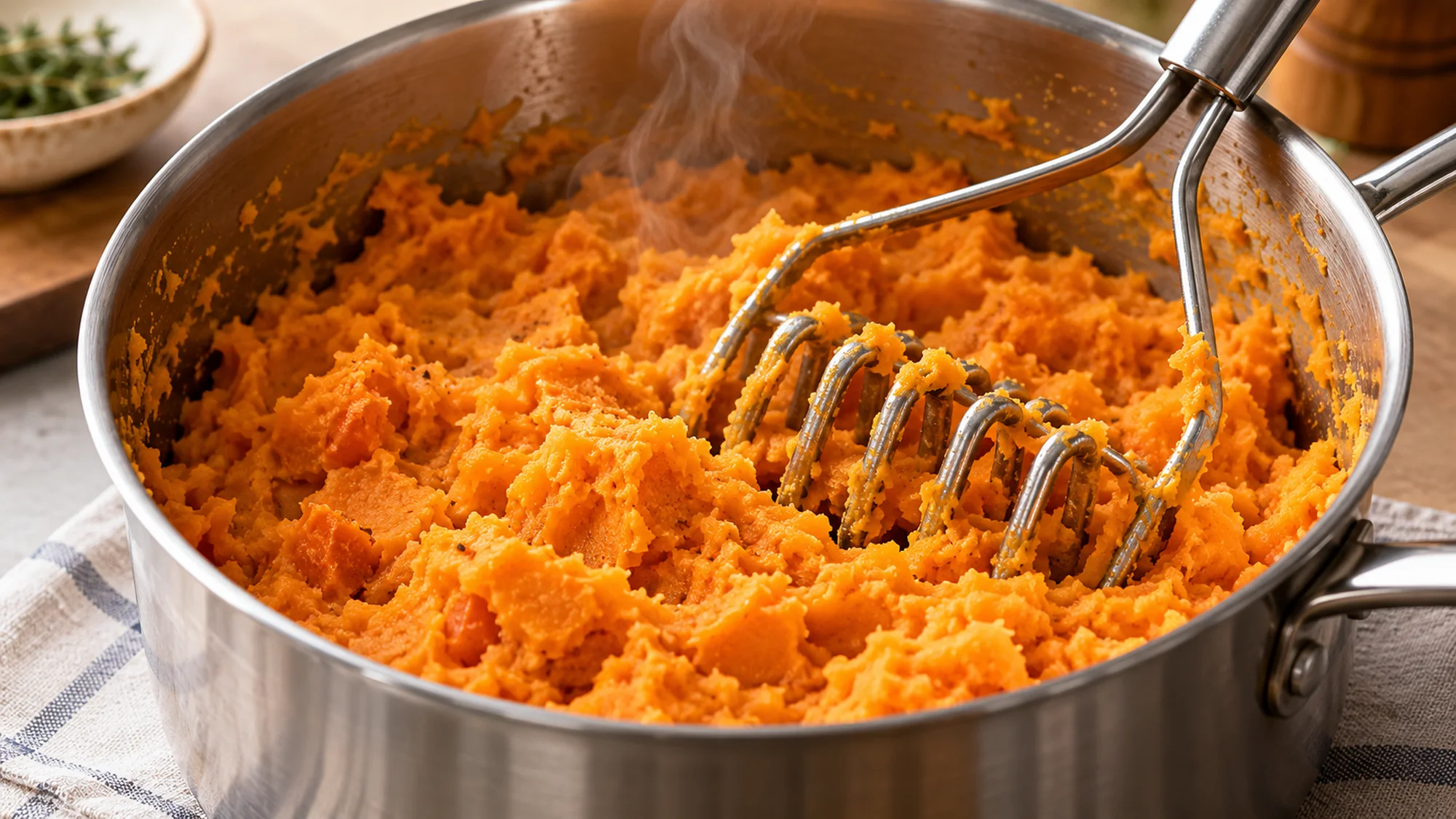
- Remove from the heat. Add the butter, salt and pepper and mash by hand. Stir in the warmed milk a little at a time until soft and creamy; you may need slightly less depending on moisture in the potatoes. Taste and adjust seasoning.
- Serve warm. Refrigerate leftovers in a shallow covered container within 2 hours, or within 1 hour when the surroundings are above 90°F/32°C. Keep at 40°F/4°C or colder, use within 3–4 days, and reheat to 165°F/74°C, stirring for even heating.
Nutrition
Video
Notes
Tried this recipe?
Let us know how it turned out!Hi, I’m Emily Pocker! I share recipes and food guides here at Recipes360 to help you find everyday meal inspiration and feel more confident in the kitchen. My goal is to make cooking approachable, enjoyable, and full of flavor.