
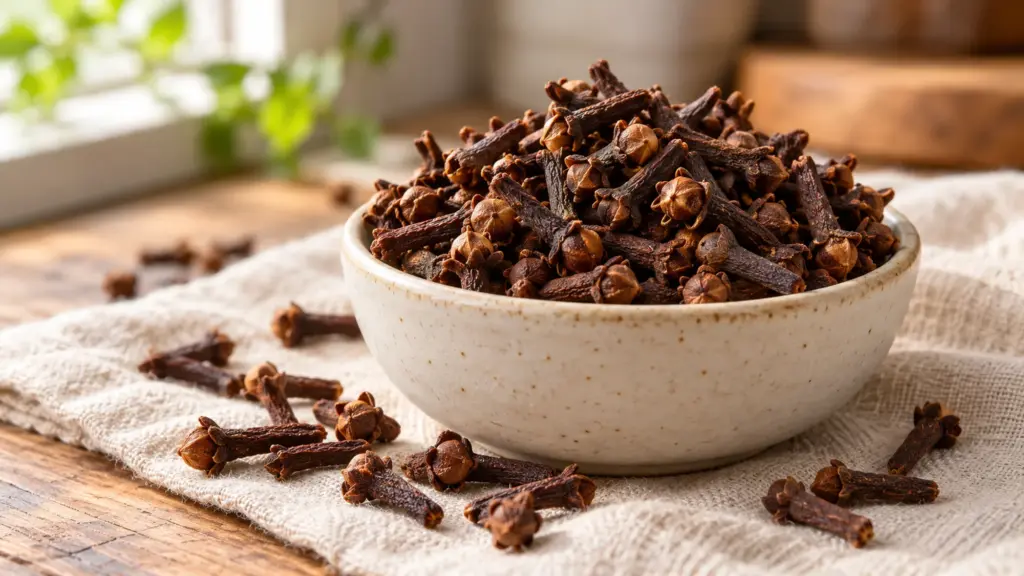
Open a jar of cloves and the warm, almost peppery fragrance does most of the talking. When it comes to cloves benefits, the clearest everyday payoff is culinary: a little spice gives tea, fruit and savory dishes remarkable depth, while health claims need a much more careful reading.
Cloves contain aromatic plant compounds, including eugenol, but eating the spice is not a proven treatment for diabetes, infections or other diseases. Use ordinary cooking amounts for flavor; concentrated clove oil is a different product and can be dangerous if swallowed.
I would buy cloves for a good cup of chai before buying them for a wellness promise. That distinction helps you enjoy a useful pantry ingredient without turning a pinch of seasoning into a prescription.
Cloves Benefits: What the Research Actually Shows
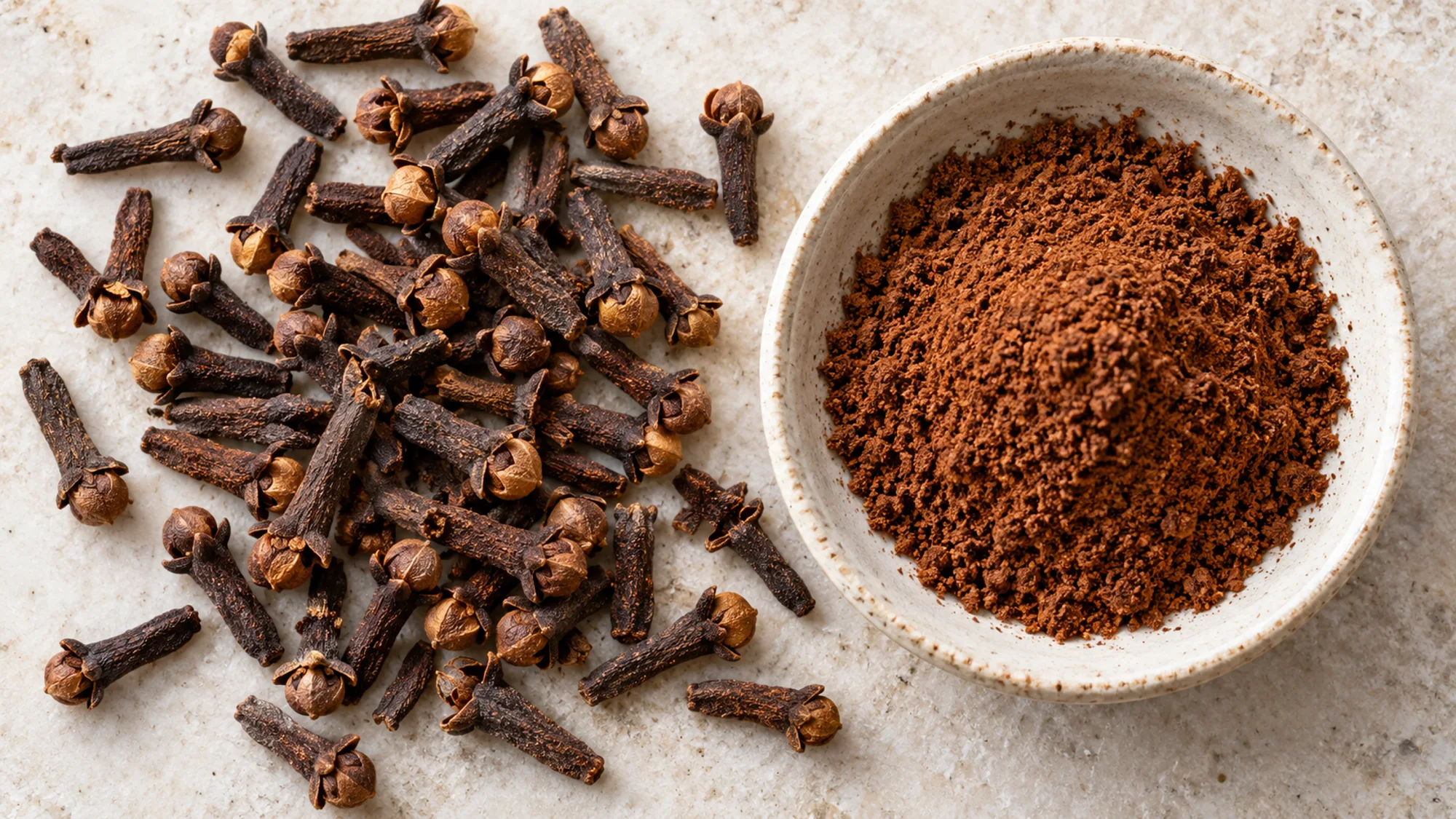
Cloves are dried flower buds, and their characteristic aroma comes partly from eugenol. NIH LiverTox describes eugenol as the major component of clove oil; whole buds and ground spice should not be confused with that concentrated oil.
A 2019 pilot study followed 13 volunteers taking a standardized clove extract for 30 days and reported lower blood-glucose measurements. It was small, open-label and lacked a placebo comparison, so it cannot establish that sprinkling cloves on breakfast treats diabetes.
- Laboratory findings about plant compounds can suggest research questions; they do not establish a benefit from a normal serving.
- An extract study does not tell you an equivalent number of whole cloves to eat.
- No result here justifies replacing prescribed treatment or increasing a supplement dose.
- The useful question is not whether a spice contains interesting compounds, but whether good human trials show a meaningful outcome.
Whole Cloves, Ground Spice and Oil Are Not Interchangeable
The form matters both at the stove and when reading a label. Whole cloves release their flavor into liquids and can be removed; ground cloves disperse through a dish and are harder to correct once you have added too much.
| Form | Useful kitchen role | Important distinction |
|---|---|---|
| Whole cloves | Infuse tea, poaching liquid or a stew | Count them in and remove them before serving |
| Ground cloves | Season batters, fruit or spice blends | Begin with the recipe’s small measured amount |
| Clove oil or extracts | Not a swap for a jar of spice | Concentration and risks differ; do not self-dose |
I prefer whole cloves when a dish gives me a clear opportunity to strain them out. Their woody texture is not a pleasant surprise in a spoonful of pudding, and a strong aroma does not mean that a larger quantity makes a better meal.
How to Enjoy the Flavor Without Overdoing It
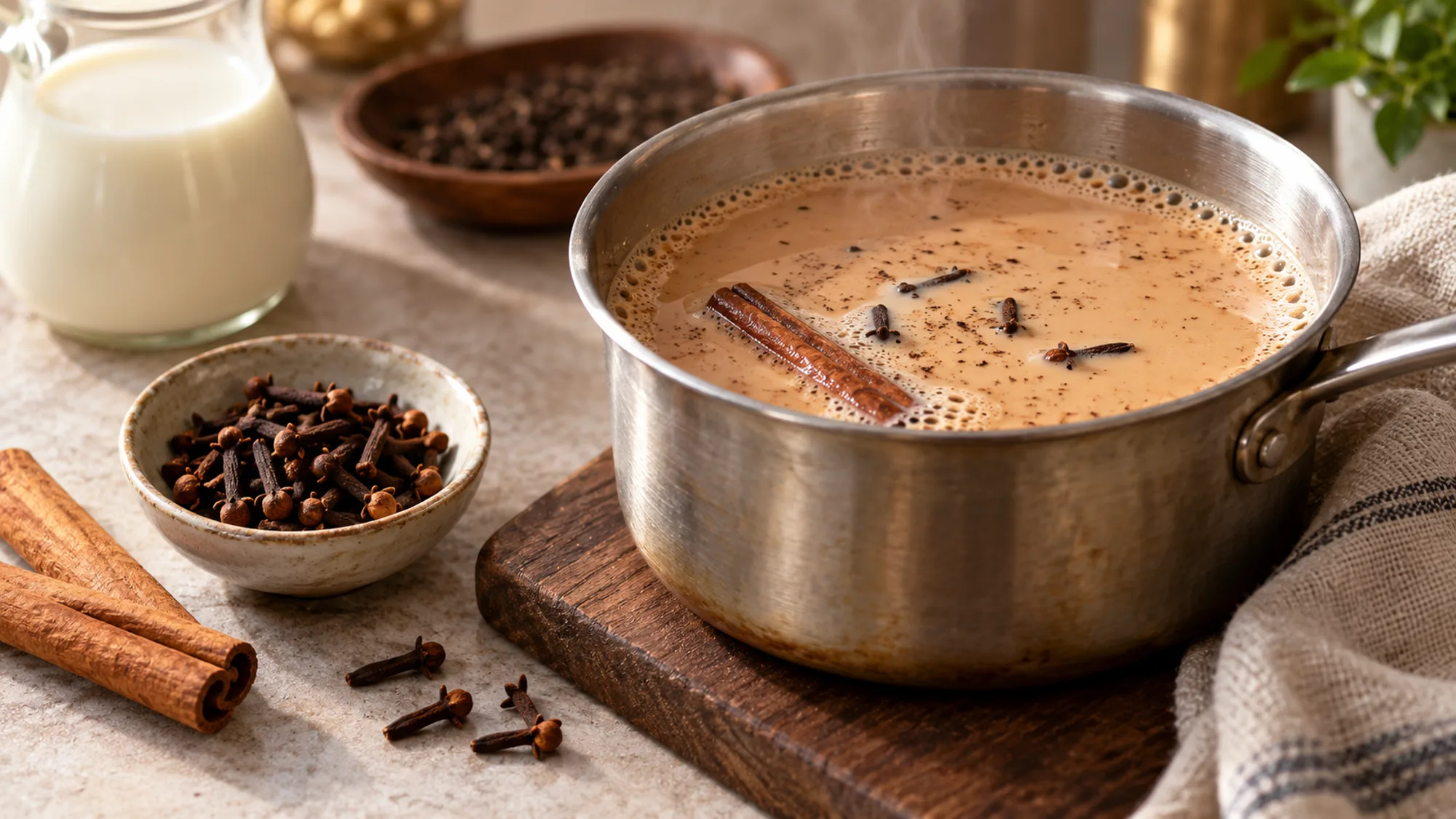
Think of cloves as an accent rather than the entire spice section. Their warming flavor pairs naturally with cinnamon, ginger, apples and rich savory sauces; our chai latte with fresh ginger and whole spices shows one familiar way to use them in a drink.
- Follow a tested recipe’s amount first, especially with ground cloves; you can adjust a future batch more easily than rescue an overpowering one.
- For a warm drink, strain out every whole clove before pouring. A normal beverage is not a detox or medical treatment.
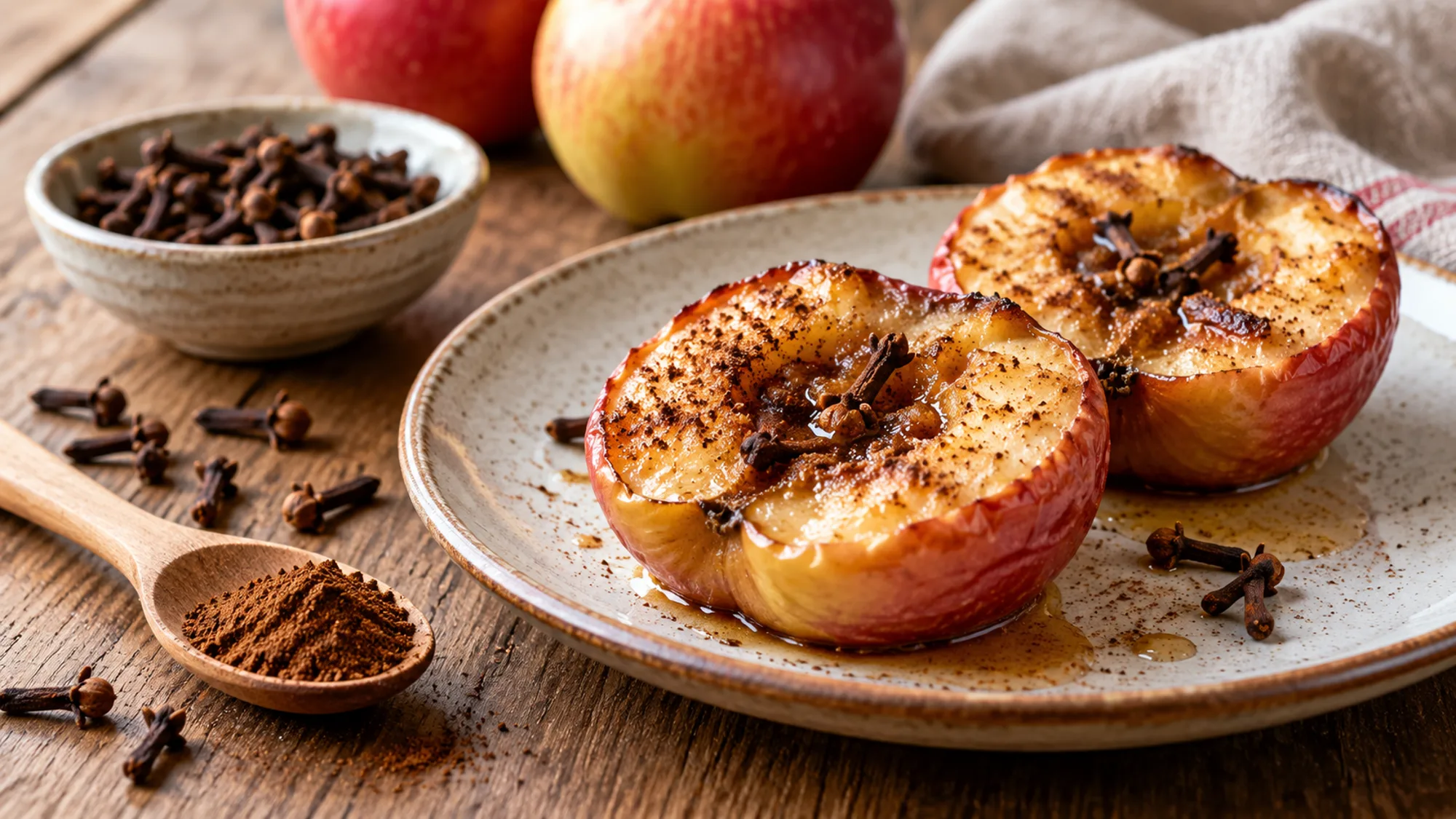
- For fruit, use a restrained amount of ground spice, or remove whole cloves used during cooking before eating.
- Measure ground spice into a spoon away from steam so the jar stays dry.
- Store the tightly closed jar in a cool, dark cupboard and replace spice that has lost its useful aroma rather than compensating with a huge quantity.
My practical rule is simple: the apple should still taste like apple, and the tea should still taste like tea. If cloves dominate everything else, reduce them next time instead of assuming that intensity signals extra health value.
When Cloves Need Extra Caution
Concentrated oil is the main safety distinction. MedlinePlus explains that eugenol-oil overdose can cause serious poisoning, including breathing problems and liver failure; keep it away from children and do not add essential oil to water as a homemade supplement.
If clove oil is swallowed accidentally, get poison-control or emergency advice promptly rather than trying a kitchen remedy. Mouth irritation or a reaction to cloves is also a reason to stop using the product, not to push through discomfort for an imagined benefit.
- Discuss clove supplements with a pharmacist or clinician if you take medicines, are pregnant or breastfeeding, or are preparing for surgery.
- Do not use clove oil on a child’s gums or treat a persistent toothache with homemade preparations; seek dental advice.
- Ordinary culinary use and repeated medicinal dosing are different decisions. This guide recommends the former, not the latter.
Bottom Line
Enjoy cloves for their bold aroma and the variety they bring to everyday cooking. The research is interesting, but neither a small extract study nor an antioxidant claim turns the spice into a treatment; a measured pinch and sensible food choices are the more useful starting point.
For a look at cloves as an ingredient rather than a supplement, Poorna – The nature girl shares a culinary video featuring clove harvesting and cooking.
Sources

Hi, I’m Emily Pocker! I share recipes and food guides here at Recipes360 to help you find everyday meal inspiration and feel more confident in the kitchen. My goal is to make cooking approachable, enjoyable, and full of flavor.