
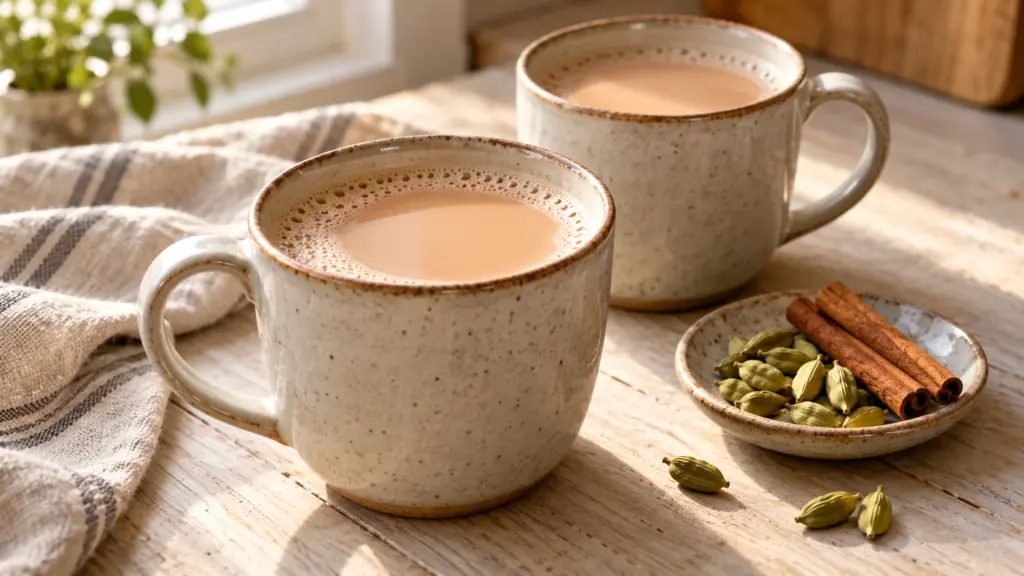
The smell of cardamom and ginger can make a plain saucepan feel like the right place to pause. This chai latte starts with whole spices and black tea, then adds warm milk for a creamy drink with a modest amount of sugar. There is no bottled concentrate to buy.

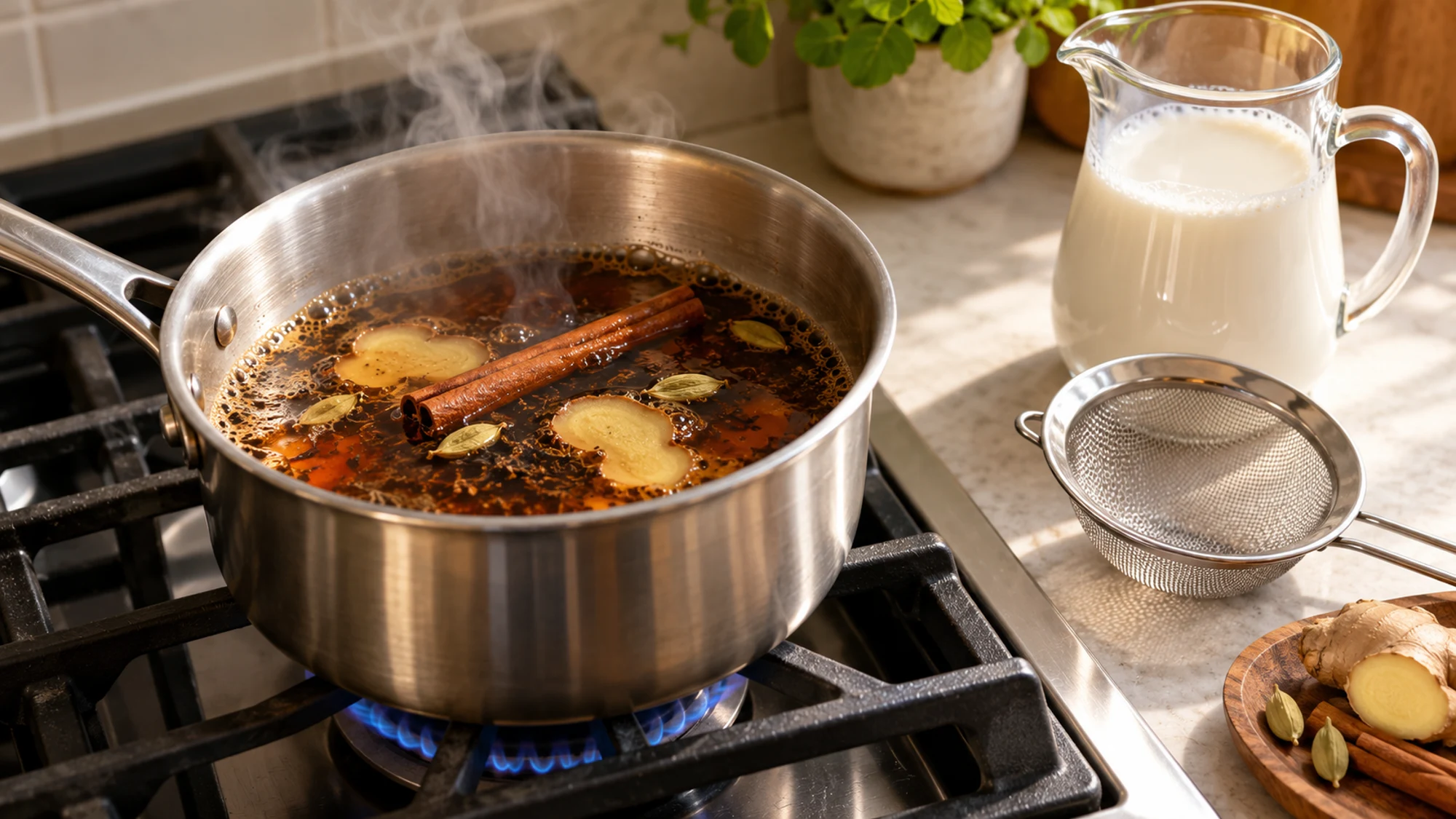
Simmer the spices in water first, steep the tea briefly, then warm the milk gently. Strain into mugs and add a little foam if you like a café-style finish.
Chai means tea, and masala chai is spiced tea with many household variations across South Asia. Here, chai latte describes a homemade, milk-forward version with optional foam. I’d keep that distinction in mind rather than promising one universal formula. This recipe makes two large mugs, with cinnamon, cardamom, cloves and fresh ginger carrying the spice flavor.
Serving suggestions for chai latte
Serve while comfortably warm, after straining out the tea leaves and whole spices. A small pitcher makes it easier to divide the drink evenly between mugs. If you add foam, spoon it over both cups after pouring the tea so one person does not get all the froth.
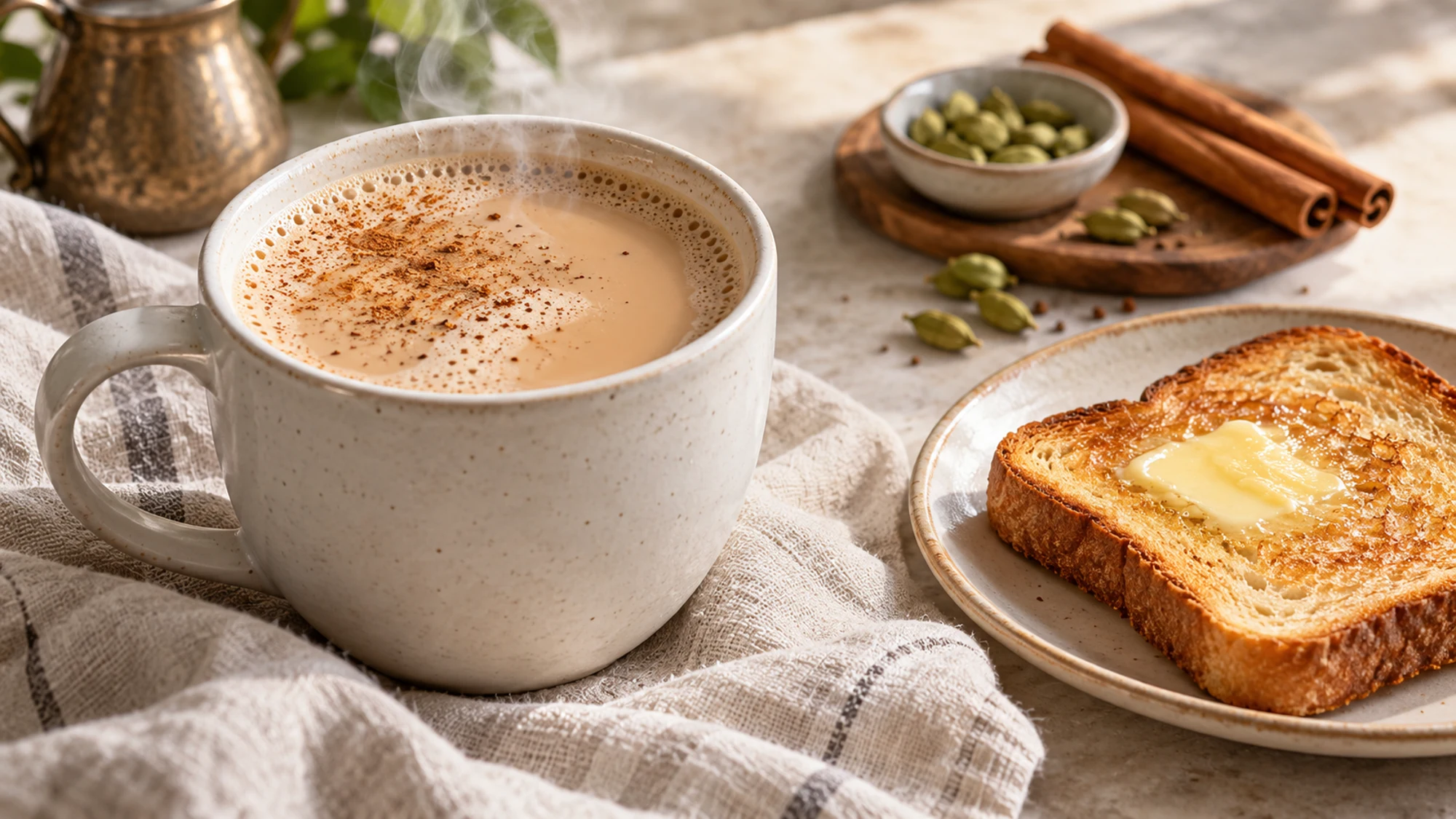
- With breakfast: pair it with toast, eggs or oatmeal. The drink can be gently sweet without turning the whole meal into a sugar project.
- With dessert: serve a smaller cup beside apple crumble with golden butter crumbs. The cinnamon connects the two, so you may want less sugar in the mug.
- For a quiet break: serve it on its own. Cardamom is aromatic enough that an elaborate garnish is unnecessary.
I prefer a clean rim and a few visible bubbles to a heavy dusting of powdered spice. Ground cinnamon on top does not dissolve neatly and can feel gritty. The whole stick already contributes flavor during brewing; a garnish can stay on the saucer.
Strain thoroughly and divide the drink before adding foam, keeping the finish simple and comfortable to sip.
Variations and better brewing choices
Whole spices give you a useful way to adjust the next batch. Crush the cardamom just enough to open the pods, and slice the ginger thinly. The spices need time in hot water; the tea needs a shorter steep. Keeping those stages separate helps you build aroma without leaving tea leaves in the pot indefinitely.
| Choice | What to try | What changes |
|---|---|---|
| Lighter dairy milk | Replace whole milk with the same volume | Less richness and different nutrition |
| Unsweetened soy beverage | Use the same volume and warm gently | A plant-based option; check fortification |
| Decaf black tea | Use a comparable amount | Less caffeine, but not necessarily none |
| Less sweetness | Start with half the sugar | The tea and spices taste more prominent |
- Too bitter? Shorten the tea steep next time rather than covering the bitterness with extra sugar.
- Too mild? Give the spices another minute or two before adding the tea. More tea alone changes a different part of the drink.
- No milk frother? Whisk the warm milk briefly in a deep bowl, or simply serve without foam. Do not shake hot milk in a sealed jar.
For iced chai, cool the strained drink promptly in the refrigerator, then pour over ice. Ice dilutes the flavor, so begin with a smaller glass and add more drink as needed. Keep the milk-based mixture refrigerated rather than leaving a pitcher on the counter.
Adjust spice time, tea time and sweetness separately; each solves a different flavor problem.
Health benefits and what the mug contains
Milk contributes protein and calcium. The NIH calcium guide identifies dairy foods and some fortified alternatives as food sources. Plant beverages differ, so an equal-volume substitution does not automatically provide the same nutrients.
- Added sugar: the card uses about 8 grams per mug. Milk also contains naturally occurring sugar.
- Caffeine: black tea contains it, and amounts vary with the tea and brewing. The FDA caffeine guide explains why individual sensitivity matters.
- Spices: bring aroma and flavor here. Culinary quantities do not establish a treatment or detox effect.
The card estimates nutrition using whole milk and the measured sugar, excluding strained tea leaves and whole spices. Sweetened plant drinks, larger portions and extra syrup change that estimate. I’d decide on the milk and sweetness together, because both affect how rich the finished cup feels.
Enjoy chai latte for its warmth and flavor while counting the milk, sugar and caffeine as ordinary parts of your day.
Bottom Line
For a fragrant chai latte, give the whole spices their own simmer, limit the tea steep and warm the milk gently. Strain well, sweeten thoughtfully and make the next batch suit your taste.
Chai Latte Recipe


Ingredients
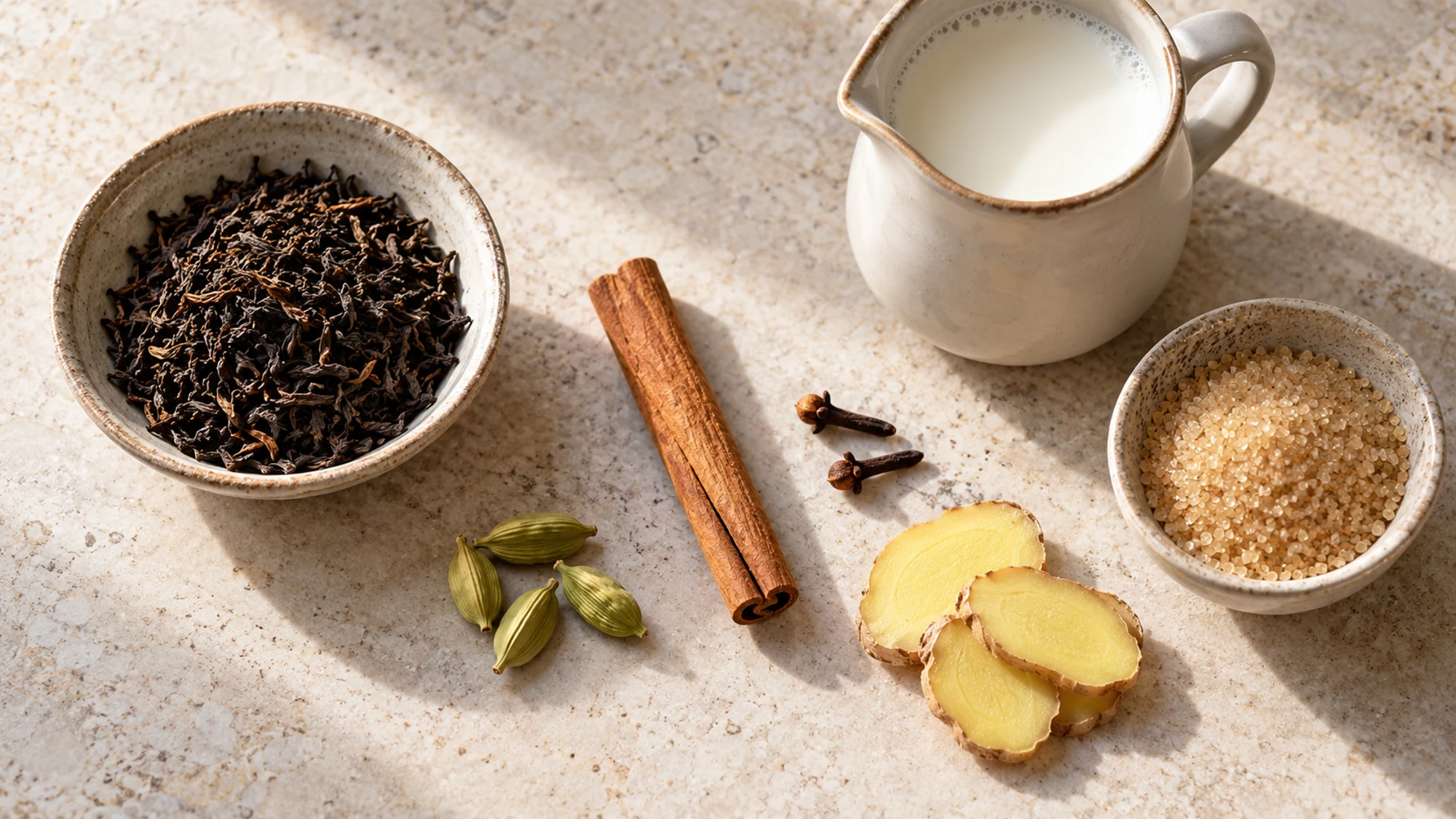
- 1 cup water 240 ml
- 4 green cardamom pods lightly crushed
- 1 cinnamon stick about 3 inches
- 2 whole cloves
- 10 g fresh ginger thinly sliced
- 4 teaspoons loose Assam black tea about 8 g; adjust for the tea brand
- 2 cups whole milk 480 ml
- 4 teaspoons granulated sugar 16 g; adjust to taste
Equipment
- Small saucepan
- Fine-mesh strainer
- Measuring jug
- Whisk or milk frother optional for foam
- 2 large mugs
Instructions
- Put the water, crushed cardamom, cinnamon, cloves and ginger in a small saucepan. Bring to a gentle boil, reduce the heat and simmer for 5 minutes.
- Add the black tea, turn the heat to low and steep for 3 minutes. Avoid extending the tea steep to strengthen the spices; a longer tea steep can add bitterness.
- Add the milk and sugar. Warm over medium-low heat for 3–4 minutes, stirring, until steaming and the sugar dissolves. Watch closely and do not let the pan boil over.
- Strain into a heatproof jug, discarding the leaves and whole spices. For optional light foam, whisk or froth some of the strained warm drink, then divide everything between two large mugs. Let cool to a comfortable drinking temperature.
Nutrition
Video
Notes
Tried this recipe?
Let us know how it turned out!Hi, I’m Emily Pocker! I share recipes and food guides here at Recipes360 to help you find everyday meal inspiration and feel more confident in the kitchen. My goal is to make cooking approachable, enjoyable, and full of flavor.