
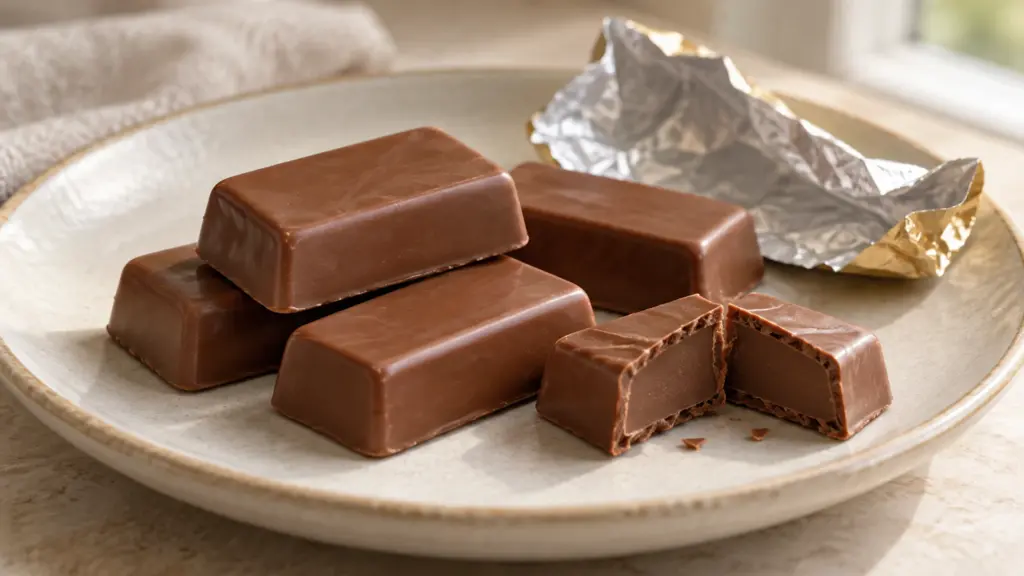
The words “sugar free” on a chocolate bag answer one question, but they leave several others open. What sweetens it? How much carbohydrate is in a serving? And will the ingredients agree with you? A quick look at the whole label is more useful than judging the front of the wrapper.
Sugar free chocolate can still contain calories, carbohydrate, saturated fat and milk allergens. Check the serving size, total carbohydrate and sweeteners; sugar alcohols can cause digestive symptoms in some people.
What Sugar Free Chocolate Actually Promises
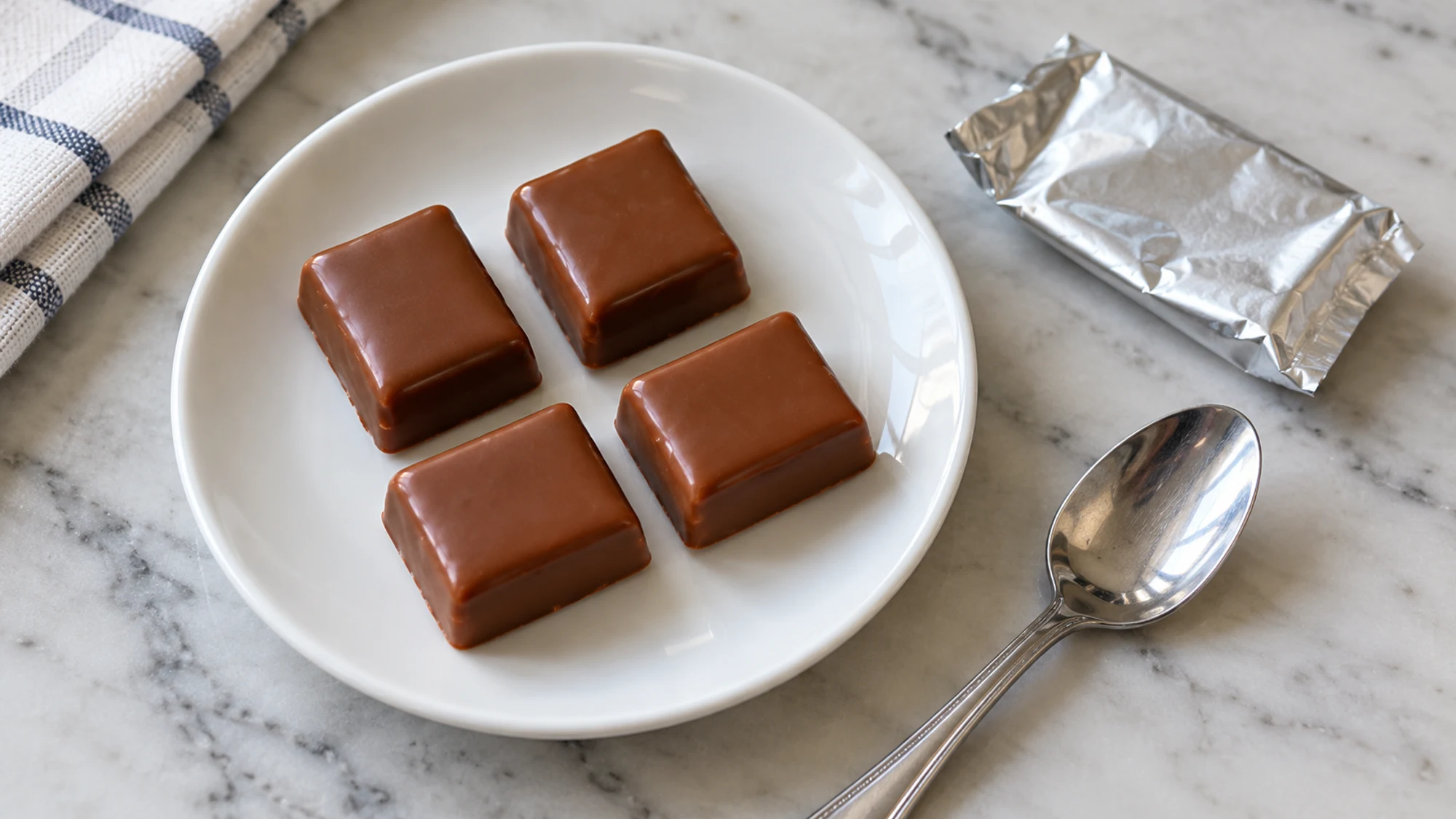
In U.S. labeling, FDA defines the sugar-free claim using less than 0.5 gram of sugars per reference amount customarily consumed and per labeled serving, along with other conditions. It is not a promise that the food has no calories or no carbohydrate.
I’d treat the claim as the beginning of a comparison. If your goal is less sugar, that line matters; if your goal involves carbohydrate, calories or an allergy, those parts of the label need their own check. One reassuring word cannot do all those jobs.
- Sugar-free: a specific sugar-content claim.
- No added sugar: describes the addition of sugars during processing, not necessarily the absence of all sugars.
- Unsweetened: a different product description; do not assume it will taste like sweetened candy.
Read a Real Candy Label From Top to Bottom
The U.S. label for HERSHEY’S Zero Sugar Chocolate Candy, 5.1-ounce bag gives this example. It illustrates why zero total sugars does not make the remaining nutrition lines disappear. Recheck the package because formulations and sizes can change.
| Label entry | Per 4 pieces (32 g) | What it tells you |
|---|---|---|
| Calories | 130 | The candy still provides energy |
| Total carbohydrate | 20 g | Not a carbohydrate-free food |
| Total sugars | 0 g | Separate from total carbohydrate |
| Sugar alcohols | 16 g | Read the sweetener ingredients |
| Saturated fat | 6 g | Still relevant to comparison |
| Allergens | Milk and soy | Not dairy-free |
Maltitol appears first on that ingredient list, and the product also contains milk-derived ingredients. I’d compare a few labels side by side before buying a large bag. A plain-looking chocolate square gives no dependable clue about its sweetener, allergen content or serving size.
Understand Sugar Alcohols and Digestive Tolerance
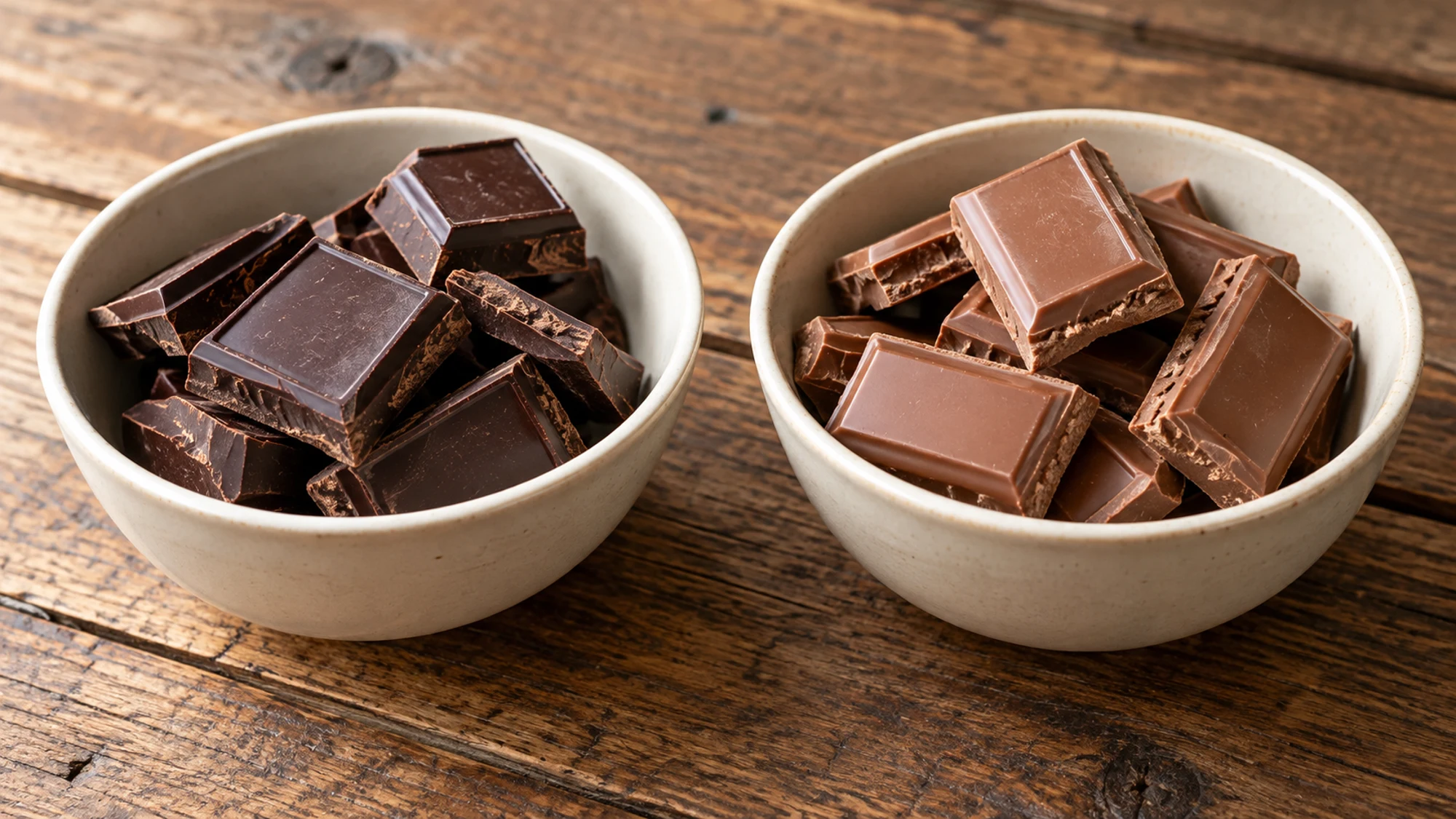
Sugar alcohols are a type of carbohydrate used as sweeteners; they do not contain the beverage alcohol found in wine or beer. FDA’s sugar-alcohol guide lists examples including maltitol, sorbitol, erythritol and xylitol. Products can use different sweeteners or combinations, so one brand is not a template for the whole category.
- Some sugar alcohols are incompletely absorbed and can cause gas, bloating or diarrhea in some people.
- Tolerance varies; do not assume someone else’s comfortable portion will suit you.
- Check ingredients in other sugar-free foods you are eating as well, rather than considering each candy in isolation.
- If symptoms persist or you need help managing a condition, seek individualized advice rather than repeatedly switching products.
There is no need to turn a treat into a tolerance challenge. I’d choose a modest portion first and pay attention to the actual ingredient list. “More” does not make a label claim work better.
Use Serving Size and the Whole Nutrition Panel
A package can hold more than one serving. FDA explains that serving sizes reflect typical consumption, not a recommendation for how much to eat. If you eat a different amount, adjust your comparison accordingly.
- Compare equal amounts: grams can be more useful than pieces when candy sizes differ.
- Keep carbohydrate visible: if you count carbs, use the plan your healthcare team recommends rather than automatically treating sugar-free candy as zero.
- Read allergens independently: less sugar does not remove milk, soy or nuts from a formulation.
- Choose for the intended use: a snack candy and an unsweetened baking ingredient are different purchases.
For a broader comparison of front-of-package promises, the site’s healthy ice cream guide uses the same whole-label approach. The useful question is whether the particular product fits your preferences and needs, not whether its name sounds more virtuous.
Bottom Line
Choose sugar free chocolate by the full label: serving size, total carbohydrate, sweeteners, saturated fat and allergens. Enjoyment still matters, and a sugar claim does not guarantee digestive comfort or suitability for a medical diet.
The U.S. Food and Drug Administration’s Nutrition Facts video explains the label layout used in these comparisons. It is general label-reading guidance rather than a chocolate endorsement.
Sources
- FDA: Sugar-Free Claims
- Hershey: Zero Sugar Chocolate Candy Label
- FDA: Sugar Alcohols
- FDA: Serving Sizes
- FDA: Sugar and No-Added-Sugar Claim Reference

Hi, I’m Emily Pocker! I share recipes and food guides here at Recipes360 to help you find everyday meal inspiration and feel more confident in the kitchen. My goal is to make cooking approachable, enjoyable, and full of flavor.