
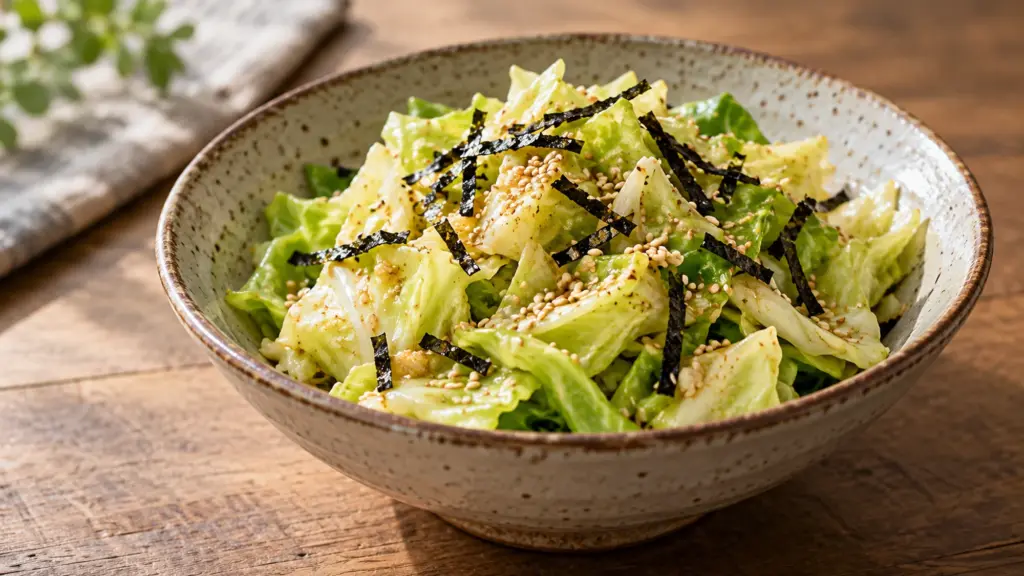
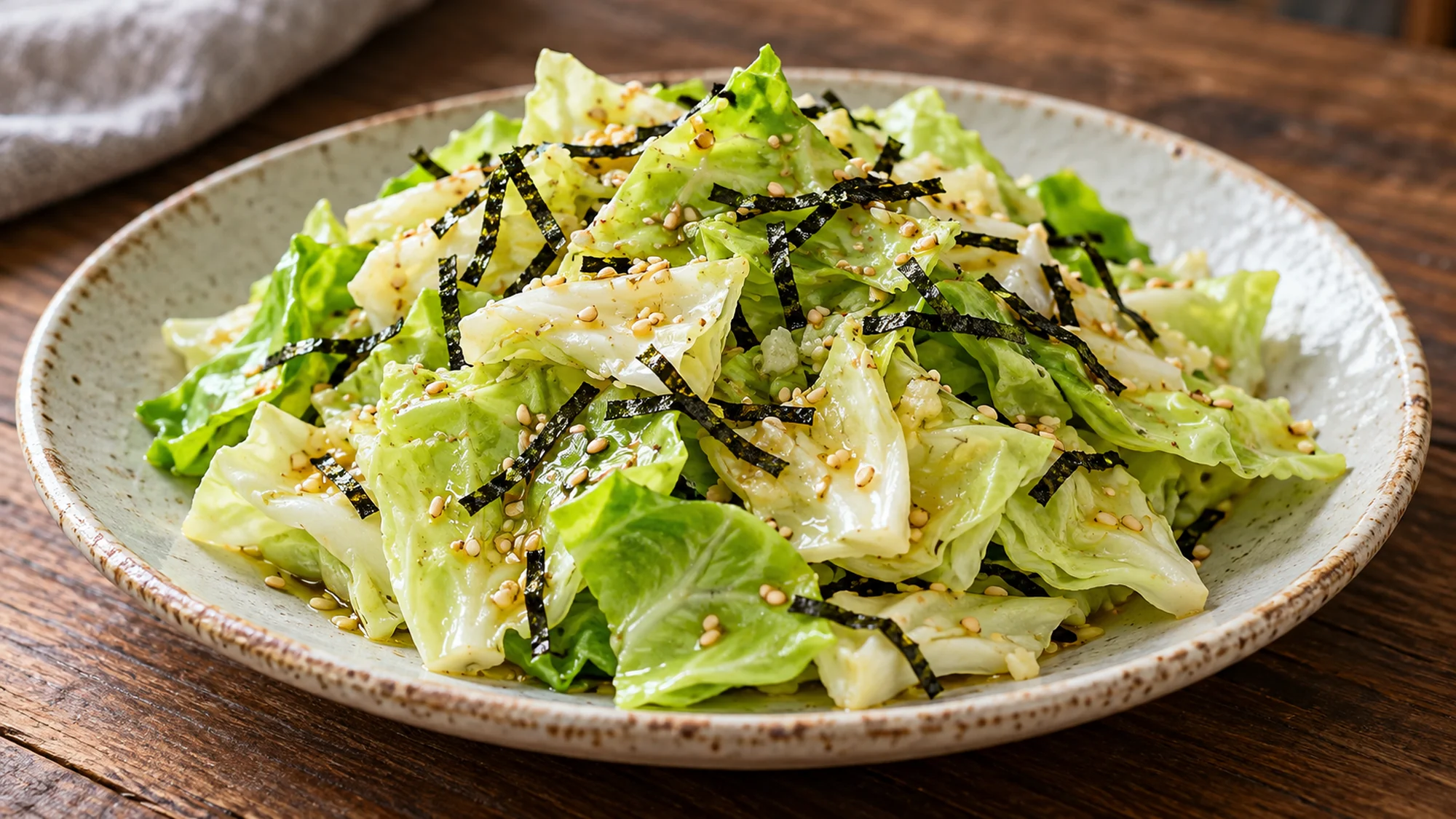
Yamitsuki cabbage is a crisp Japanese-style side built around cabbage and a punchy sesame seasoning. This version pairs tender raw leaves with garlic, soy sauce and toasted sesame, then finishes with fine strips of nori. A small touch of rice vinegar keeps the dressing lively without making the leaves taste pickled.
For crisp yamitsuki cabbage, tear tender leaves into comfortable bites, dry them well and coat them lightly. Add nori at the last moment so it keeps some texture instead of becoming wet before serving.
I like the contrast between broad cabbage pieces and tiny sesame seeds. Finely shredding everything would make a different salad, while crushing the leaves hard would lose their snap. This is an original soy-and-nori variation inspired by the dish’s sesame-garlic character; it does not use chicken bouillon powder.
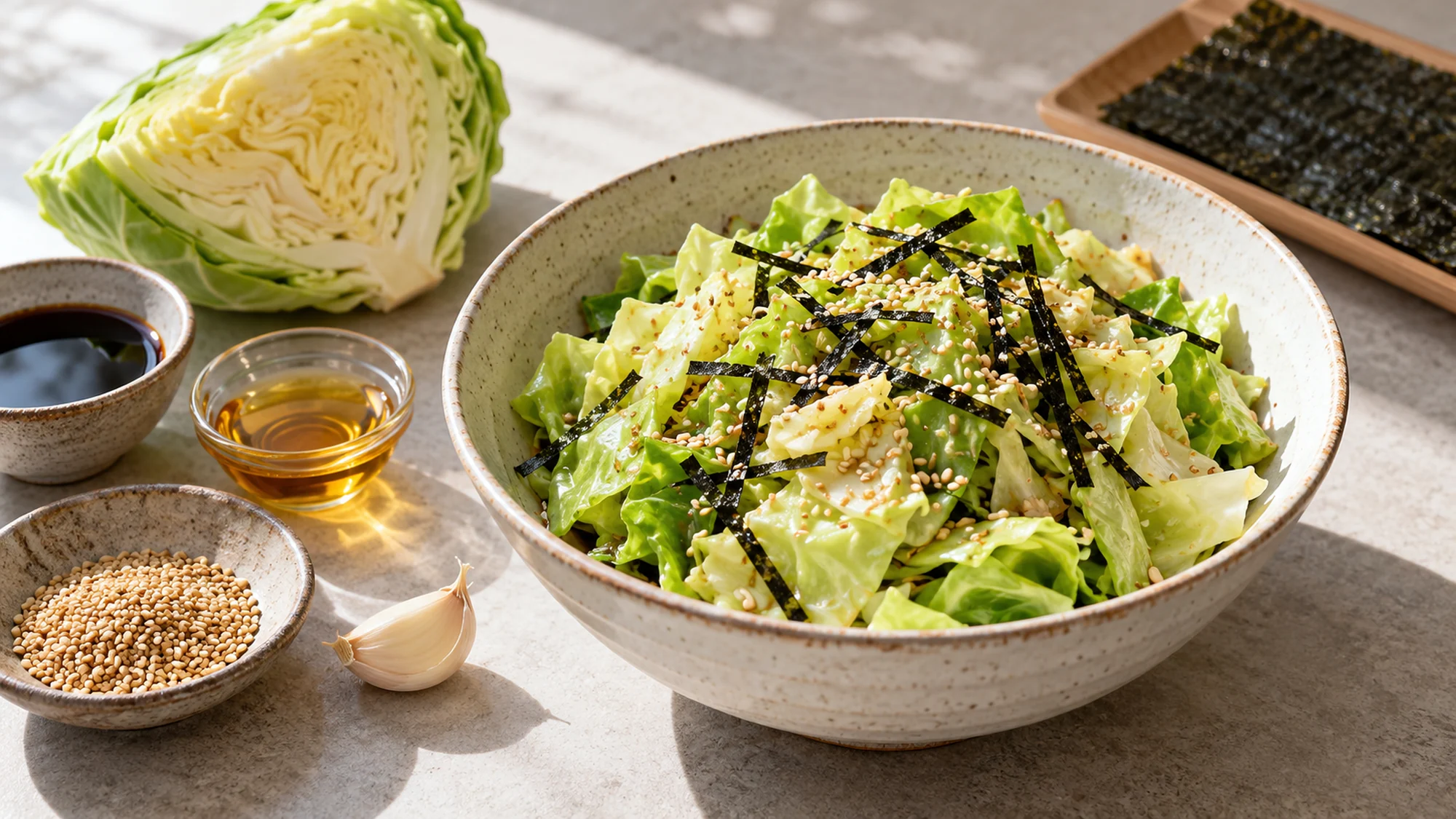
Serving Suggestions for Yamitsuki Cabbage
Serve a small bowl alongside rice, grilled fish, tofu or skewered vegetables. The cabbage gives a cool, crunchy counterpoint to warm food. It is particularly useful when the rest of the plate is soft, because each loose leaf holds a little dressing without becoming a heavy salad.
If you prefer a finely chopped, creamy cabbage side, green goddess cabbage salad takes that different direction. For this dish, I would keep the plate simple and let the sesame aroma carry the seasoning. Extra sauces can quickly overwhelm tender raw cabbage.
| Cabbage choice | Preparation adjustment |
|---|---|
| Tender spring or sweetheart | Tear leaves; trim the firm core |
| Dense green cabbage | Cut thicker ribs more finely |
| Very wet washed leaves | Dry thoroughly before seasoning |
- Choose a bowl with enough room to toss the leaves gently. Pieces that are roughly bite-sized are easier to pick up than long strips trailing over the edge.
- Keep the dressing at the bottom moving through the cabbage, rather than adding more oil simply because the top leaves look dry.
Use the cabbage as a crisp side and keep the dressing light enough to coat, not soak, the leaves.
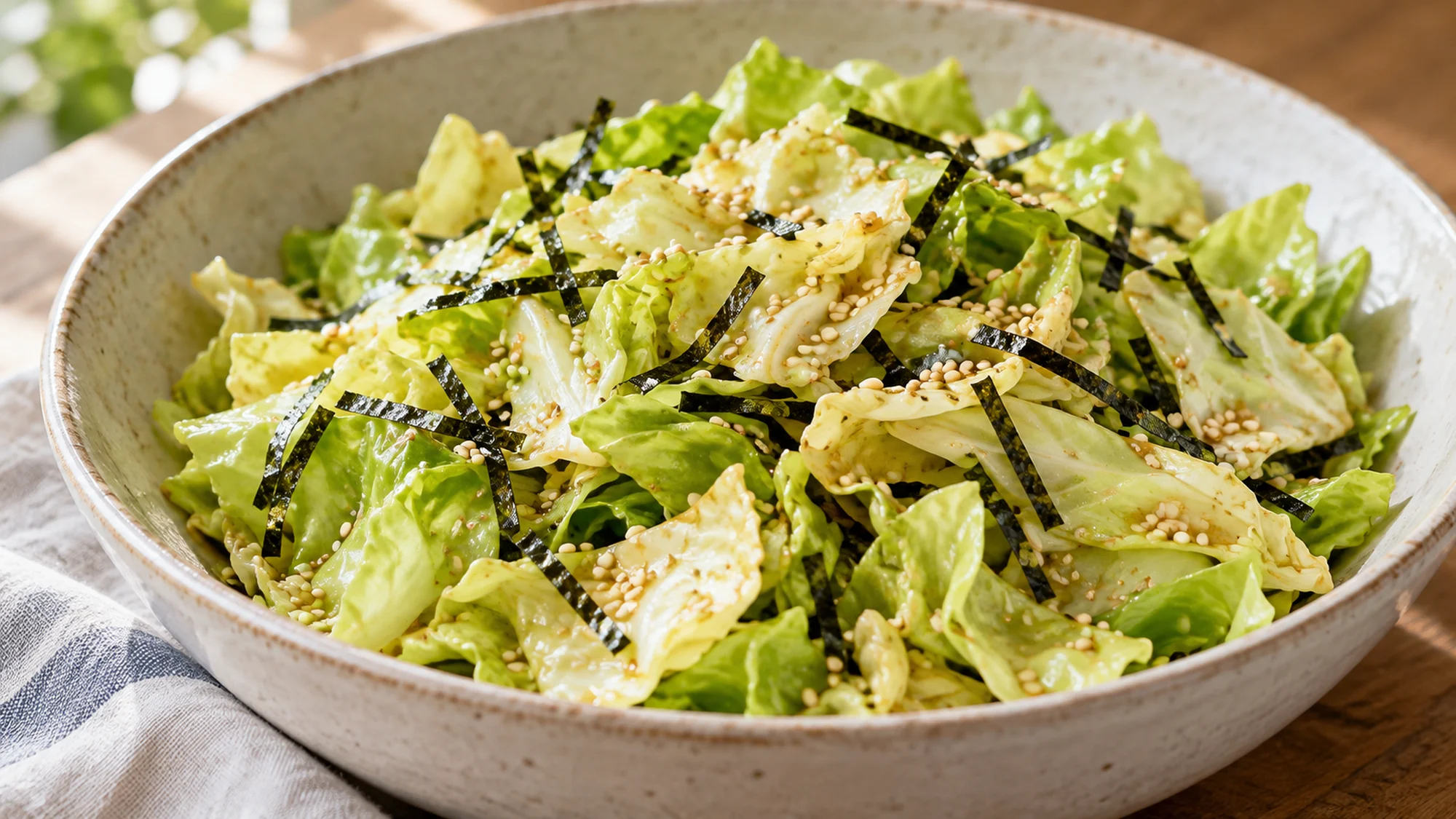
Variations
Tender spring or sweetheart cabbage needs the least work. A dense winter head is still usable, but its thick ribs may need thinner cutting than the leafy parts. Remove a hard core and damaged outer leaves.
The video in the card is credited to Sudachi and Yuto Omura. It demonstrates tearing and mixing cabbage for an izakaya-style side. That recipe uses a much higher oil-to-cabbage ratio, salt and bouillon; this version uses less oil per cabbage weight, soy, vinegar and nori.
- The soy-and-nori seasoning here supplies savory depth without bouillon. Some versions use salt and chicken seasoning instead; neither needs to be added on top of the measured soy.
- Choose certified gluten-free tamari for a gluten-free variation and verify the nori’s label for any added seasonings.
- A small squeeze of citrus can replace the rice vinegar if that is what you have. Keep the garlic modest because it stays raw.
- For a sesame-free adaptation, use a suitable neutral oil and omit the seeds, although the result will lose the dish’s characteristic toasted flavor.
- Napa cabbage is softer and releases water more quickly, so dress it immediately before eating.
Tender leaves and measured seasoning matter more than adding a long list of toppings.
Health Benefits
Cabbage contributes vegetables and fiber, while sesame oil and seeds add most of this small side’s fat. The serving estimate is one quarter of the batch. It is a useful accompaniment, but it does not supply enough protein or energy to stand in for a complete meal.
Follow FDA produce-cleaning advice: remove damaged outer leaves, rinse under running water and dry before preparation. Refrigerate leftovers promptly at 40°F/4°C or below, and use within two days for quality. The leaves soften and nori loses its crispness, so reserve extra nori separately.
- MyPlate’s vegetable guidance encourages a varied selection, rather than relying on one particular vegetable. This recipe is one practical way to include cabbage; it does not need claims about cleansing, immunity or weight loss to be worth making.
Enjoy a modest vegetable side with clear portions, recognizable ingredients and prompt refrigeration.
Bottom Line
Yamitsuki cabbage needs tender leaves, a light sesame-garlic coating and a last-minute nori finish. Keep the pieces easy to eat and serve promptly for the best crunch. The measured card below makes four small sides without relying on bouillon or a heavy dressing.
Yamitsuki Cabbage Recipe

Ingredients
- 300 g tender green cabbage spring or sweetheart cabbage; trimmed leaf weight
- 2 teaspoons toasted sesame oil 10 g
- 2 teaspoons soy sauce 10 ml
- 1 teaspoon unseasoned rice vinegar 5 ml
- 1/4 teaspoon finely grated garlic about 1 g
- 2 teaspoons toasted white sesame seeds about 6 g
- 1 g plain nori cut into thin strips, about half a sheet
Equipment
- Knife and cutting board
- Large mixing bowl
- Fine grater
- Kitchen scale and measuring spoons
Instructions
- Remove damaged outer leaves and the hard core. Rinse the cabbage under running water and dry thoroughly. Tear the tender leaves into roughly 4 cm pieces; cut thick ribs smaller so they are comfortable to eat. Weigh 300 g prepared cabbage.
- In a large bowl, stir the sesame oil, soy sauce, rice vinegar and garlic together. Add the cabbage and turn gently until the seasoning coats the leaves; do not knead hard or crush them.
- Fold in the sesame seeds. Add the nori strips just before serving, tossing only enough to distribute them. Divide into four small side portions and serve promptly while the cabbage is crisp.
Nutrition
Video
Notes
Tried this recipe?
Let us know how it turned out!Hi, I’m Emily Pocker! I share recipes and food guides here at Recipes360 to help you find everyday meal inspiration and feel more confident in the kitchen. My goal is to make cooking approachable, enjoyable, and full of flavor.