
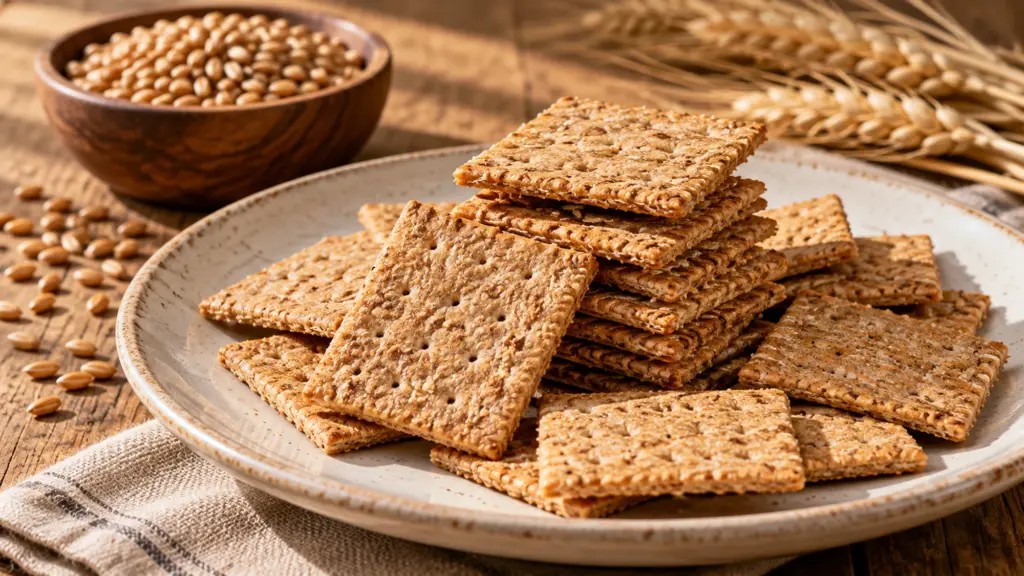
Two boxes of brown crackers can look equally wholesome, yet their ingredient lists tell different stories. Whole grain crackers can be a convenient way to include whole grains, but color, seeds and rustic packaging do not establish what is inside. Turn the box over before letting the front make the decision.
Look for clearly named whole grains, compare Nutrition Facts at similar serving sizes, and choose a cracker you enjoy eating. Whole grain is one useful feature, not the entire nutrition story.
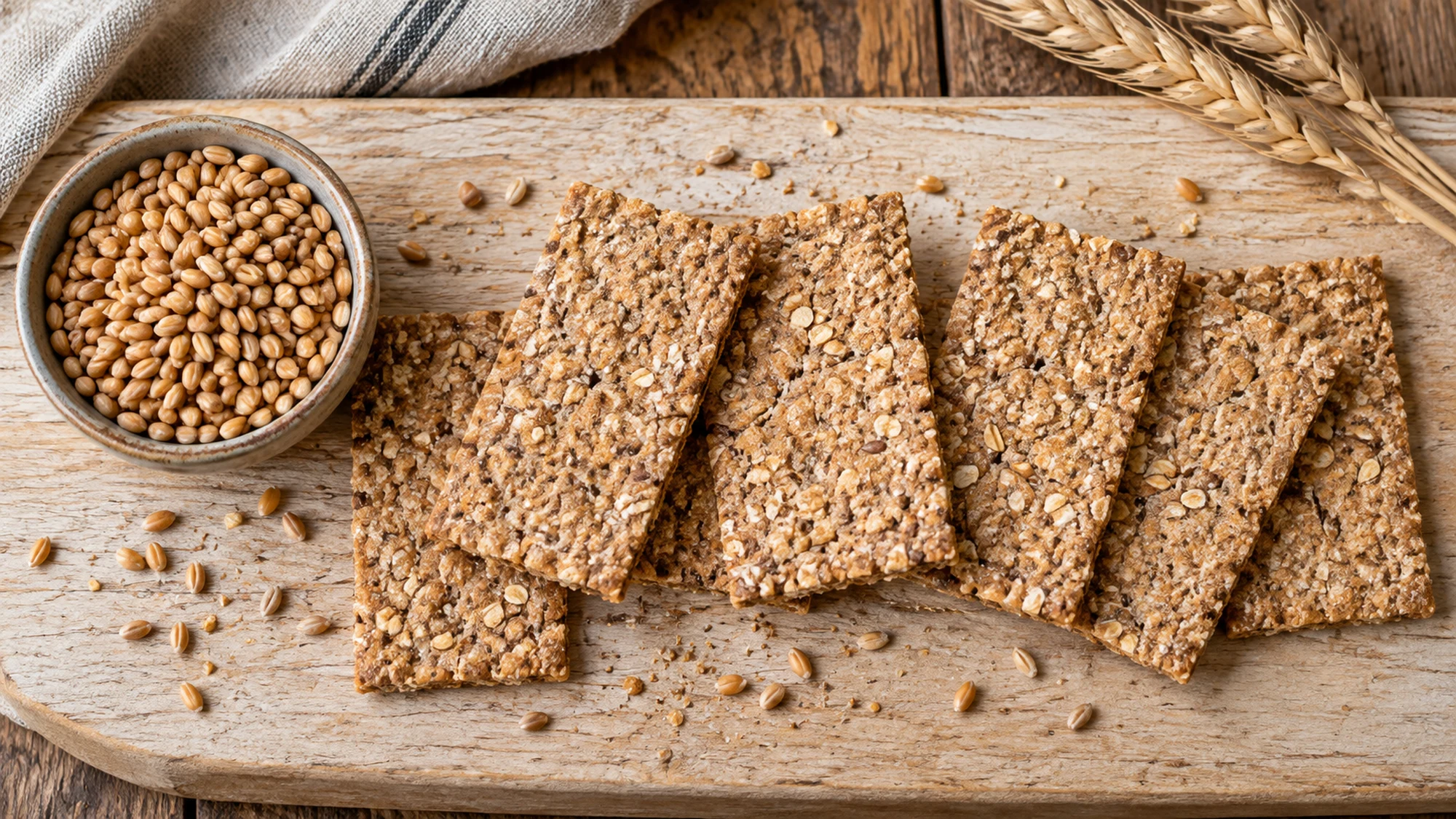
How to identify whole grain crackers
The Whole Grains Council’s label guide explains why terms such as multigrain, wheat and stoneground are not enough on their own. Multigrain describes more than one grain; it does not tell you that those grains are whole.
Look for specific ingredients such as whole wheat flour or whole oats. A whole grain listed first is a useful clue, but it does not necessarily mean every grain ingredient is whole. A clear 100 percent whole-grain statement can make that distinction easier; still read the full list for other ingredients and allergens.
| Package wording | What it tells you | Next check |
|---|---|---|
| Whole wheat flour | A named whole-grain ingredient | Its position and other grain ingredients |
| Multigrain | More than one grain is used | Whether each is described as whole |
| Wheat flour | Wheat is present | Whether the word whole appears |
| Seeds or brown color | Appearance or added ingredients | The grain ingredients themselves |
| 100% whole grain | A clearer whole-grain claim | Nutrition Facts and allergens |
I’d spend a few seconds on that list before comparing anything else. It is a more useful starting point than counting visible seeds through the package window.
Compare the numbers on the same basis
The FDA’s Nutrition Facts guide recommends using serving sizes and percent Daily Value to put nutrients in context. As a general guide, 5 percent DV or less is low and 20 percent or more is high. Those terms refer to the listed nutrient, not a verdict on the whole food.
- Start with serving weight: cracker sizes differ, so a count of six versus ten may not be a fair comparison.
- Look at fiber: compare the actual amount rather than assuming whole-grain wording guarantees a particular number.
- Check sodium: consider it alongside salty cheese, dips or other toppings you plan to add.
- Notice saturated fat and added sugars: products with similar grain claims can have different formulations.
- Use your own priorities: a nutrition label is a decision aid, not a requirement to find the highest or lowest number in every column.
Build the snack around what you need
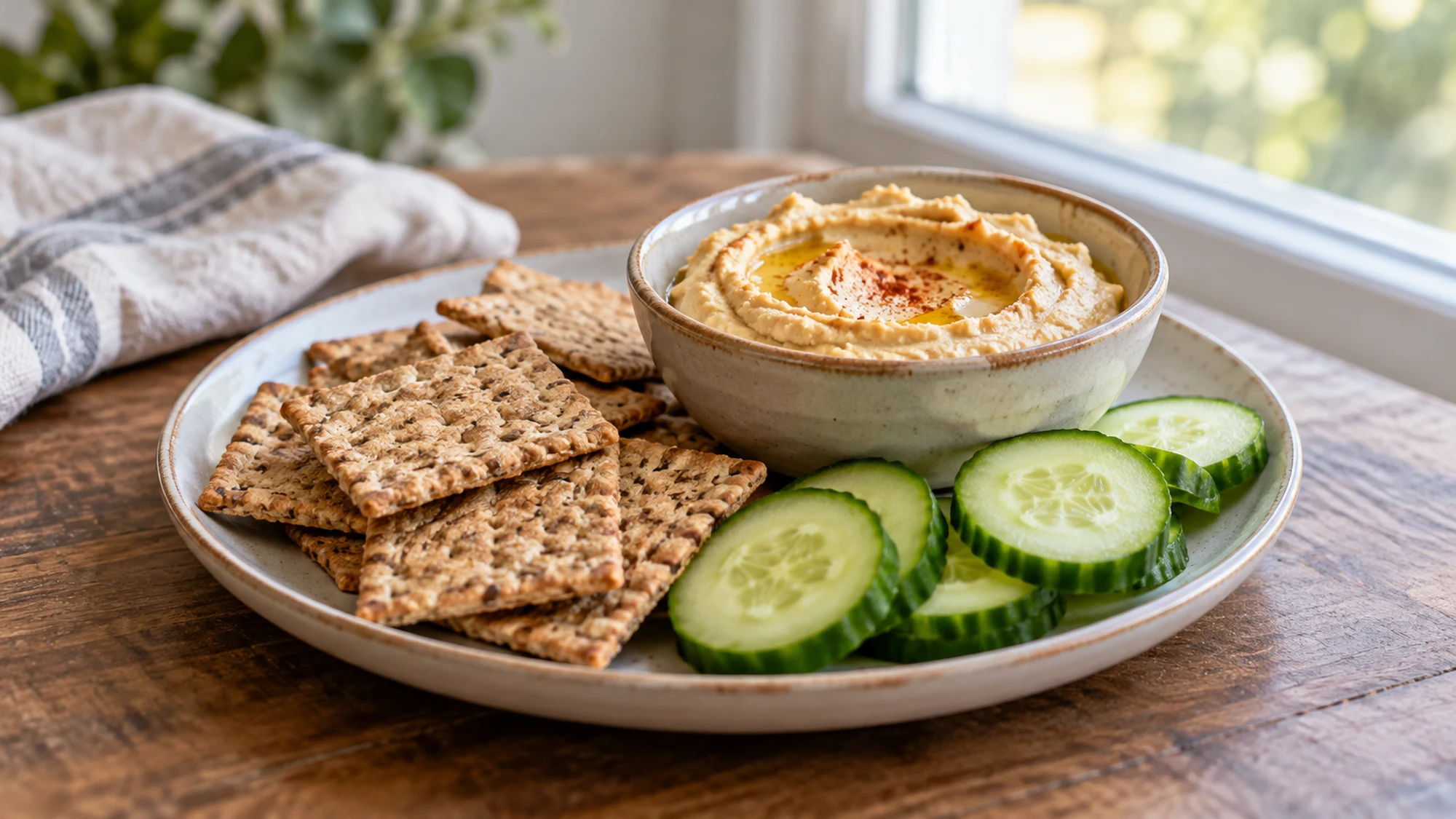
A cracker can be a crunchy base rather than the entire snack. Hummus with cucumber, cheese with tomato, or a suitable nut butter gives you different textures and flavors. Choose toppings around appetite, allergies and what you already have rather than adding ingredients just because a snack photograph looks elaborate.
I prefer a sturdy cracker for a thick spread and a thinner one beside a softer topping. That is a texture choice, not a health claim. Our easy snack ideas for kids offer more combinations when you are planning for a household, with age-appropriate preparation still important.
- For a quick plate: put crackers and toppings together so you can see the whole snack.
- For packing: keep wet toppings separate to preserve crunch, and follow refrigeration needs for perishable foods.
- For a lighter appetite: serve a smaller amount first and add more if needed.
- For a shared table: keep ingredient labels available when allergies or dietary restrictions matter.
Serving size is a reference, not a rule
The FDA explains that labeled serving sizes reflect amounts people typically consume, not a recommended amount you must eat. If you eat two labeled servings, the listed calories and nutrients generally double. A handful is convenient, but it is not a consistent measuring tool.
Whole grain also does not mean gluten-free. Wheat-based crackers are unsuitable for someone who must avoid wheat or gluten; a separate gluten-free claim and appropriate ingredient checks are needed for that choice. Do not assume a seed-heavy appearance changes the grain underneath.
- Check how many servings the package contains before treating it as one snack.
- Use the label’s weight or cracker count when you want to understand a portion.
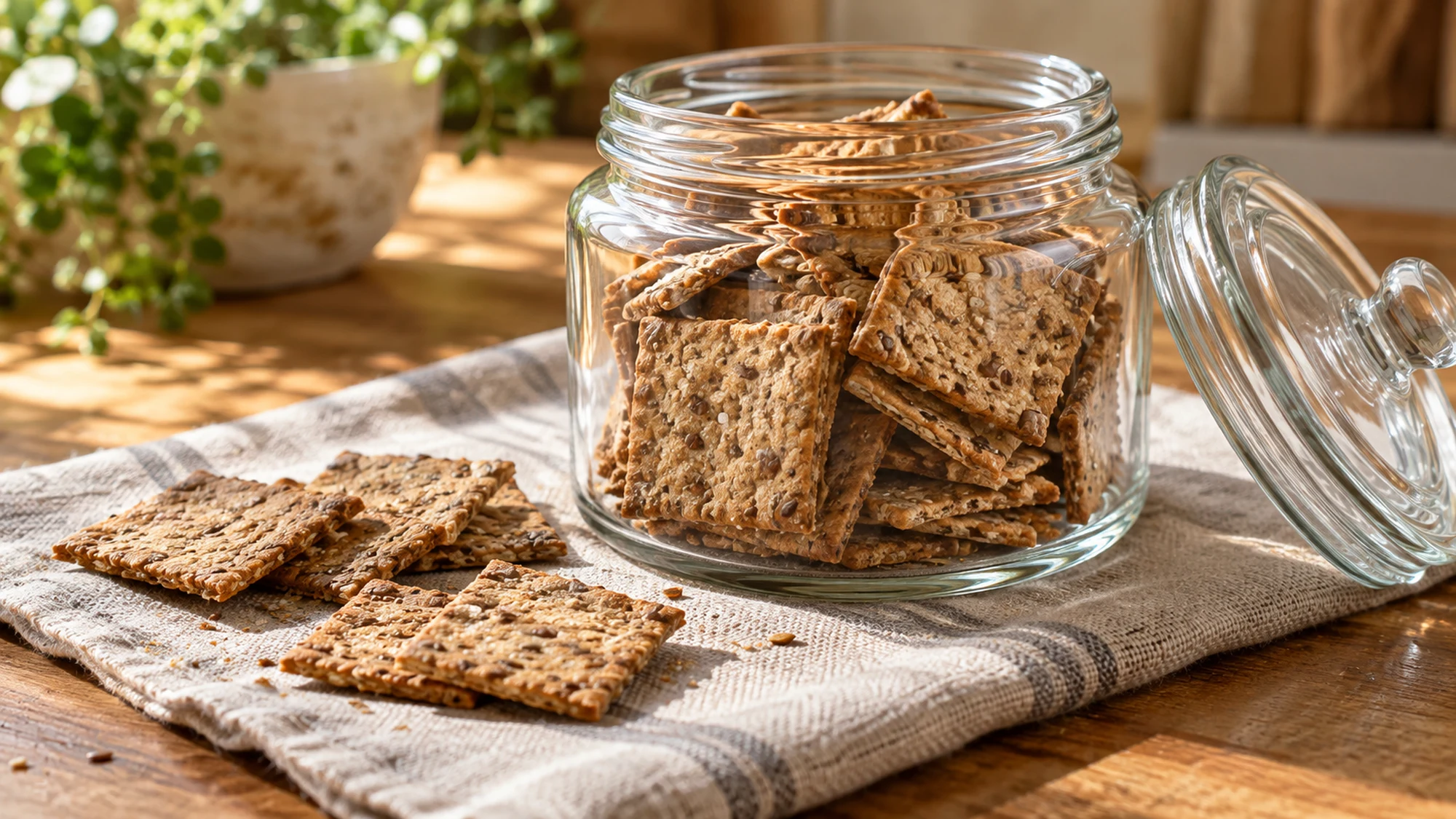
- Close the inner bag or use a suitable airtight container after opening.
- Keep crackers away from moisture and follow the manufacturer’s storage advice.
- Discard products with mold, pests or damaged packaging rather than trying to rescue them with toppings.
Bottom Line
Whole grain crackers are easiest to choose when you separate three questions: what grains are used, what the Nutrition Facts show and how you plan to eat them. A brown color cannot answer those questions, and one front-of-box claim cannot replace the rest of the label.
I’d choose a clearly labeled whole-grain option that tastes good, works with the topping and fits the portion you want. The best box is one you can understand as well as enjoy.
Sources
- Whole Grains Council: Identifying whole-grain products
- FDA: How to understand and use Nutrition Facts
- FDA: Serving size on the Nutrition Facts label

Hi, I’m Emily Pocker! I share recipes and food guides here at Recipes360 to help you find everyday meal inspiration and feel more confident in the kitchen. My goal is to make cooking approachable, enjoyable, and full of flavor.