
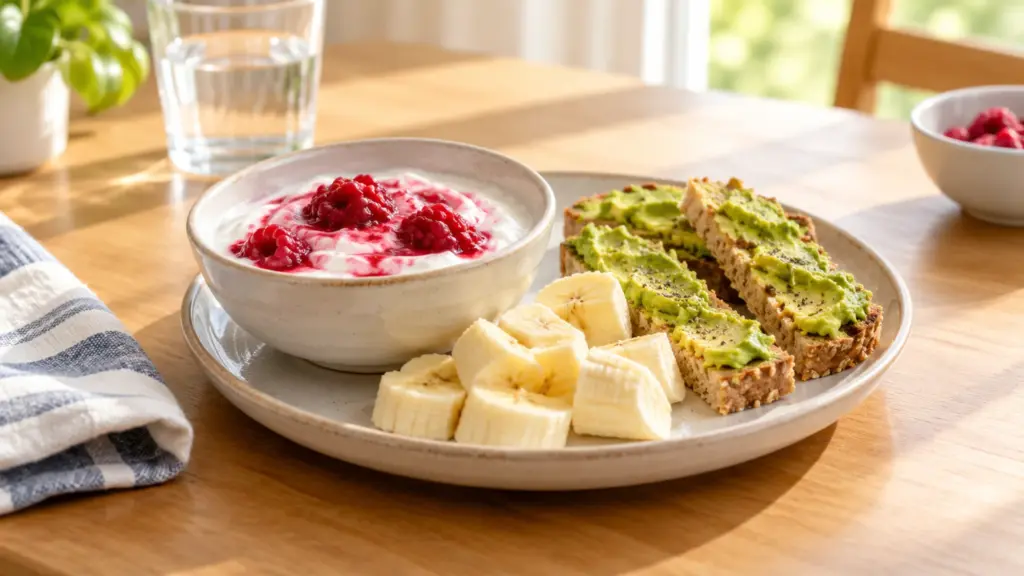
The school bag lands by the door, dinner is still an hour away, and someone is already asking what there is to eat. Easy snacks for kids work best when they are familiar, simple to assemble, and substantial enough to bridge that gap without becoming a second dinner.
Pair two everyday foods, such as yogurt and soft fruit or toast and a thin spread. Start with a small serving, offer more when a child is hungry, and adapt every texture to the child’s age and chewing skills.
Build a Small Snack, Not a Perfect Plate
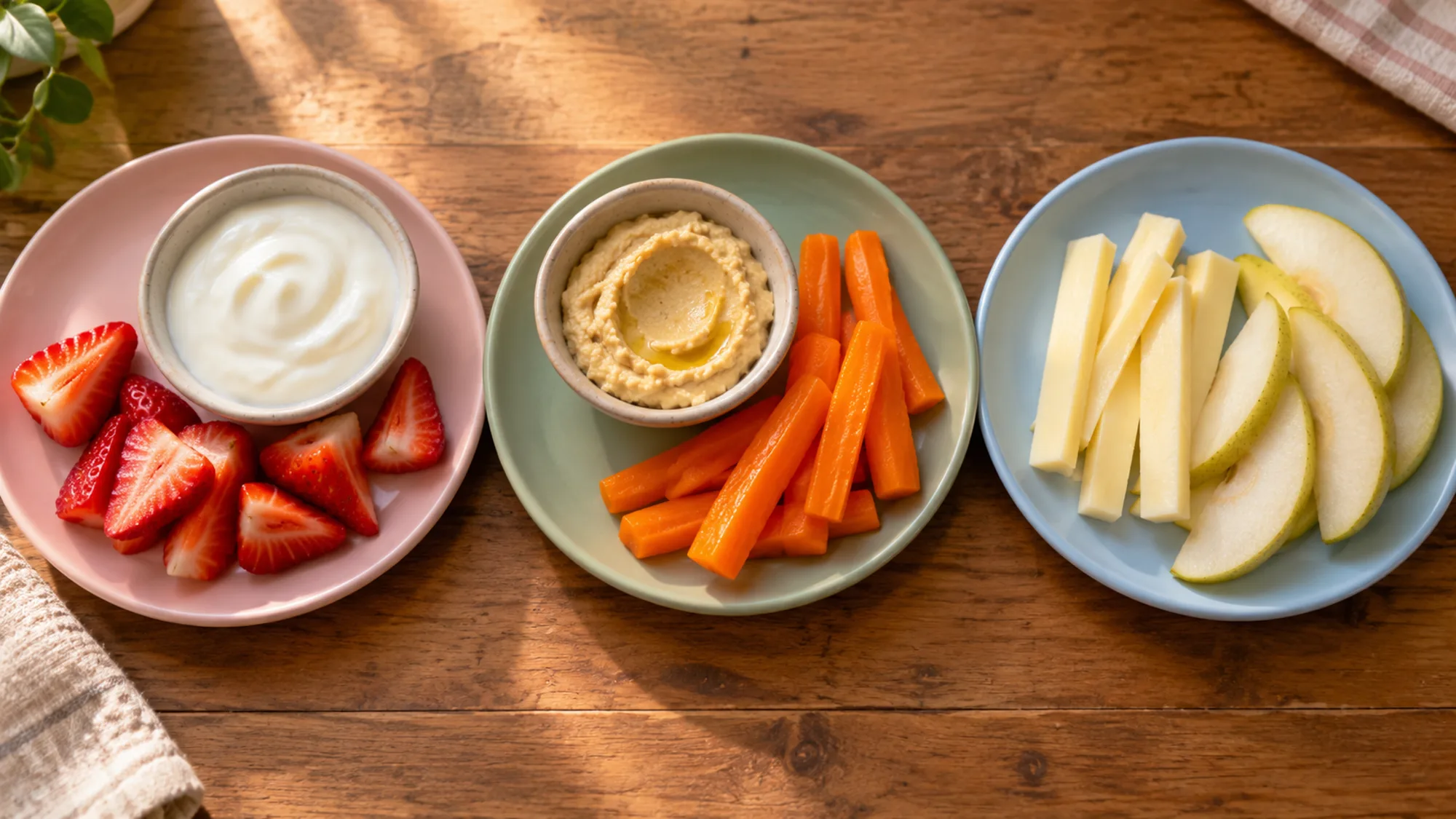
Think in pairs rather than recipes. A fruit or vegetable brings variety; yogurt, cheese, hummus, or another suitable protein food gives the snack a different texture and more staying power. Whole-grain toast or crackers can also be part of the mix. USDA MyPlate recommends combining food groups rather than relying on one kind of snack every time.
These are starting points for school-age children, not a fixed menu for toddlers. You do not need special snack products, a decorative lunch box, or a new ingredient every afternoon. Keep one familiar option and vary the partner when it suits your household.
Appetite changes with growth, activity, and the time since the last meal. Avoid a universal calorie target or insisting on a clean plate. If feeding is consistently difficult, or a child has a medical condition affecting food, ask their pediatric care team for individual guidance.
Five Combinations Worth Keeping Handy
Use this short list as a cupboard-and-fridge check. Choose foods your child can manage comfortably and adjust the serving size rather than treating the amounts in a photograph as a prescription. Serve water alongside when wanted.
| Pairing | What makes it practical | Texture check |
|---|---|---|
| Plain yogurt + banana | Spoon together just before eating | Mash or cut fruit for the child’s skills |
| Toast + avocado | Uses a small amount of ripe avocado | Choose a manageable bread texture |
| Hummus + soft cooked carrot | Can be prepared ahead | Carrot should not be hard or raw for young children |
| Cheese + ripe pear | Simple savory-and-sweet pairing | Avoid large cheese chunks; soften or adapt fruit |
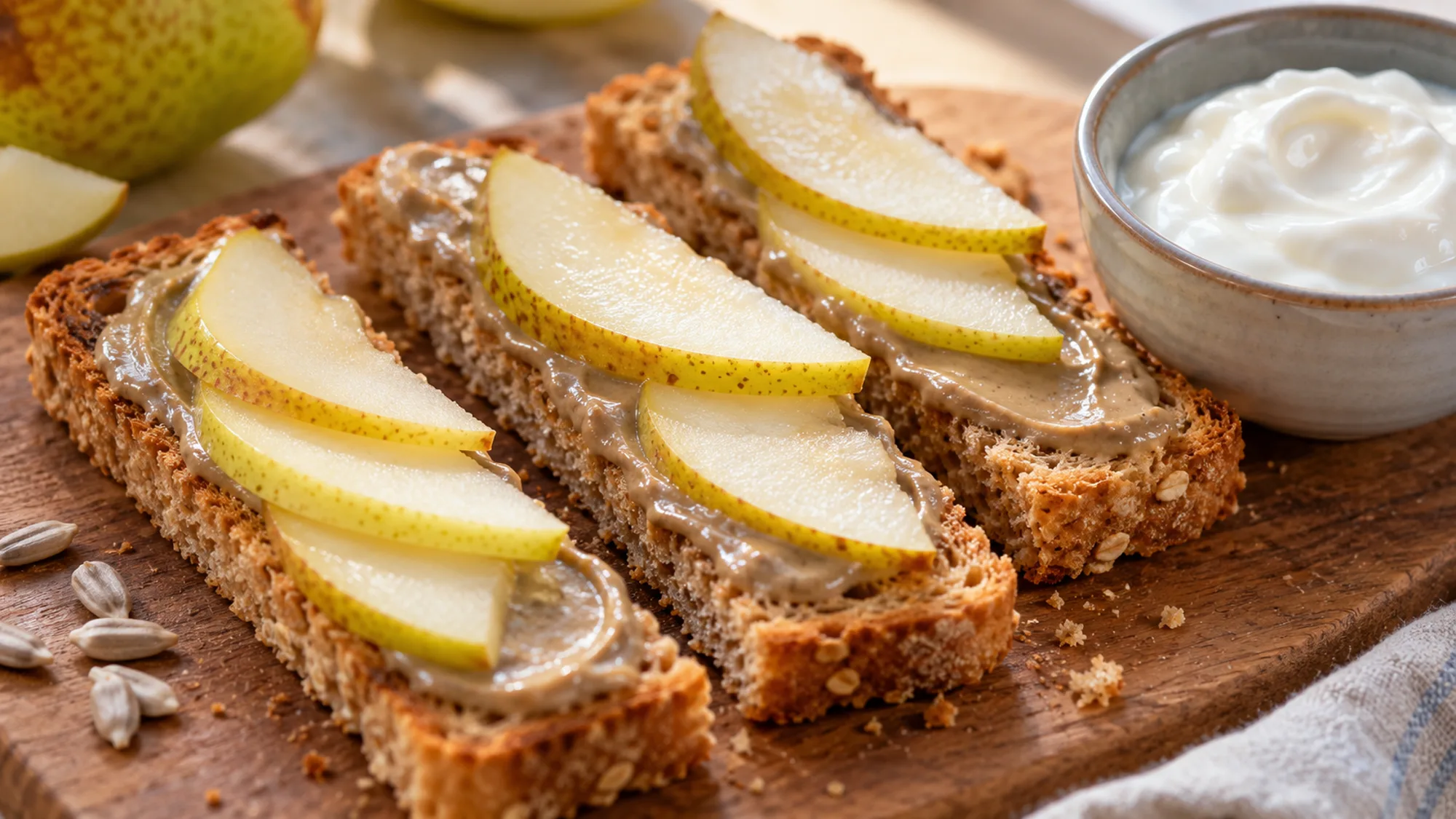
| Toast + thin seed butter | A cupboard option when suitable | No thick spoonfuls; check allergies and school rules |
Let the child choose between two available combinations rather than opening an endless negotiation. Keeping components separate can help children who dislike mixed textures. A rejected ingredient can return another day without pressure or a reward for eating it.
Make Tomorrow’s Snack Easier
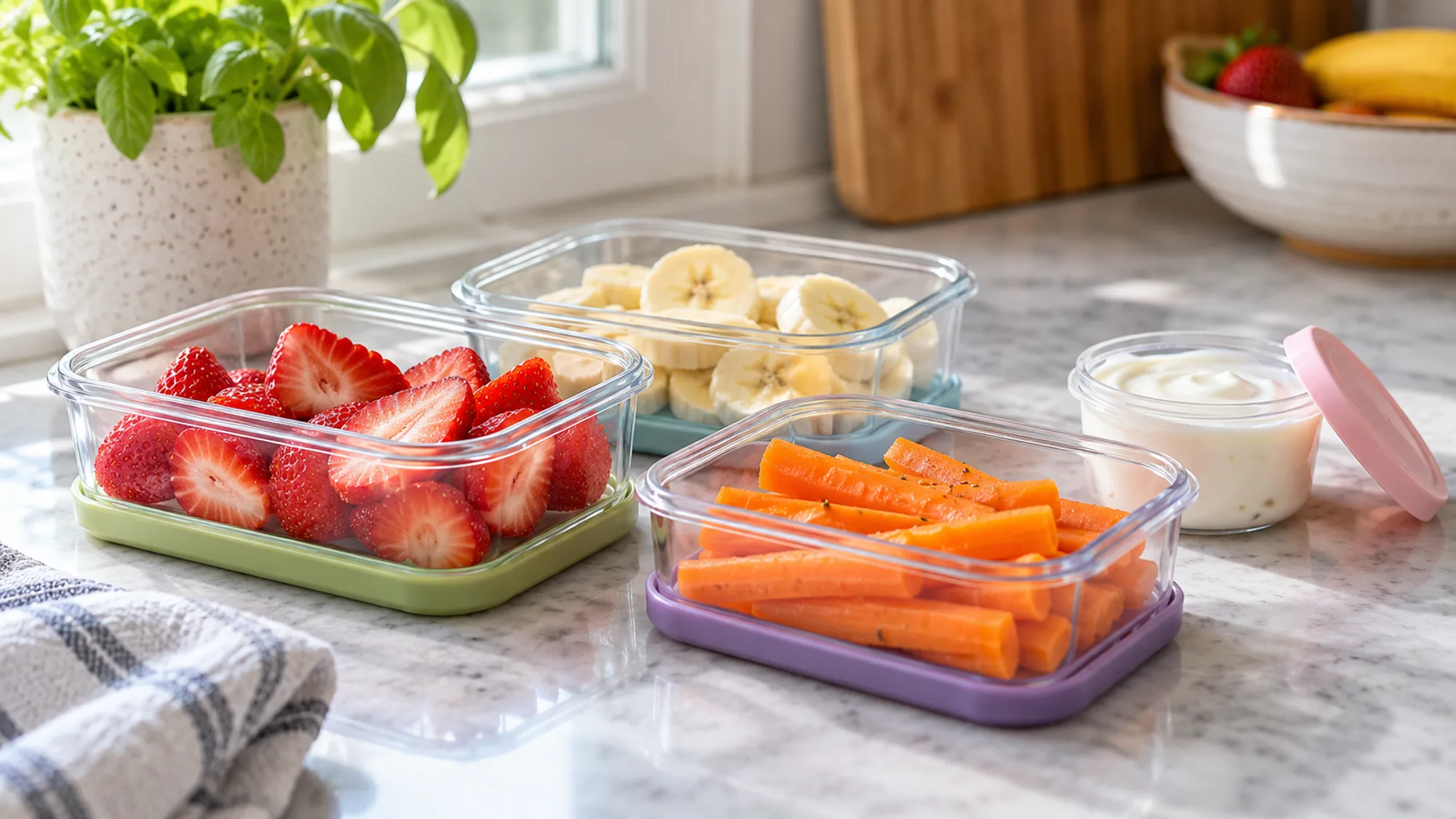
After shopping, wash and prepare only what you can use while it stays fresh. Put suitable fruit portions in covered containers and keep yogurt, dips, and cheese refrigerated according to their labels. Pack perishables with effective cold packs when they will not go straight into a refrigerator.
Johns Hopkins Medicine suggests keeping prepared food-group options available. A small choice of two fruits, one spread, and one grain is often easier to maintain than a long weekly snack calendar.
Use the same components in different ways: banana with yogurt one day, banana beside toast another. Keep wet and crisp foods separate until serving. For another make-ahead option, our apple cinnamon baked oatmeal can be divided into portions appropriate for your family; check its ingredients and texture before offering it to a young child.
Check Choking Risks and Allergies First
Age matters more than a snack’s healthy-sounding name. The CDC choking guidance identifies whole nuts, hard raw vegetables, whole grapes, large cheese pieces, and thick spoonfuls of nut butter among hazards for young children. A school-age snack is not automatically suitable for a toddler.
Have children sit upright and stay with them while they eat. Prepare food for their developmental abilities; simply cutting something into a smaller hard piece does not always remove the risk. Use softer textures and thinly spread smooth butters where appropriate, and ask a clinician about persistent swallowing difficulties.
Check labels every time when food allergies are involved, including dips, seed spreads, and packaged bread. Follow the child’s allergy plan and school requirements. Nut-free wording does not mean that every child can eat a product, and swapping peanut butter for another nut is not an allergy-safe substitution.
Bottom Line
The easiest routine is a small rotation that your family actually uses. Pair two suitable foods, keep preparation manageable, and let appetite guide whether more is needed. Safety and a calm eating moment matter more than making every snack look impressive.
Related video: Johns Hopkins All Children’s Hospital — 25 Healthy Snacks.
Sources
USDA MyPlate: Healthy Snacking
Johns Hopkins Medicine: Healthy Snacks for Kids
CDC: Choking Hazards

Hi, I’m Emily Pocker! I share recipes and food guides here at Recipes360 to help you find everyday meal inspiration and feel more confident in the kitchen. My goal is to make cooking approachable, enjoyable, and full of flavor.