
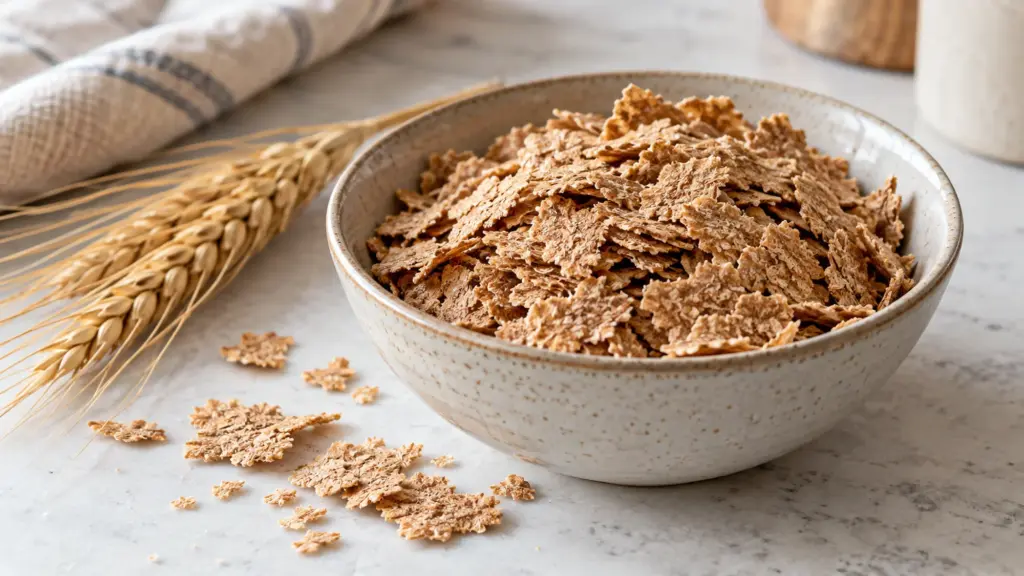
Wheat bran is the fiber-rich outer portion of the wheat kernel, separated during milling. It is commonly sold as loose brown flakes for cooked cereals and baking. It is different from wheat germ, whole-wheat flour and a boxed bran cereal, so checking which product you have is the first step toward using it well.
Choose wheat bran when you want the outer, fiber-rich part of wheat. It contains wheat and is unsuitable for a gluten-free diet. Increase fiber gradually, follow the package’s cooking directions and check whether a product is ready-to-eat before adding it to cold food.
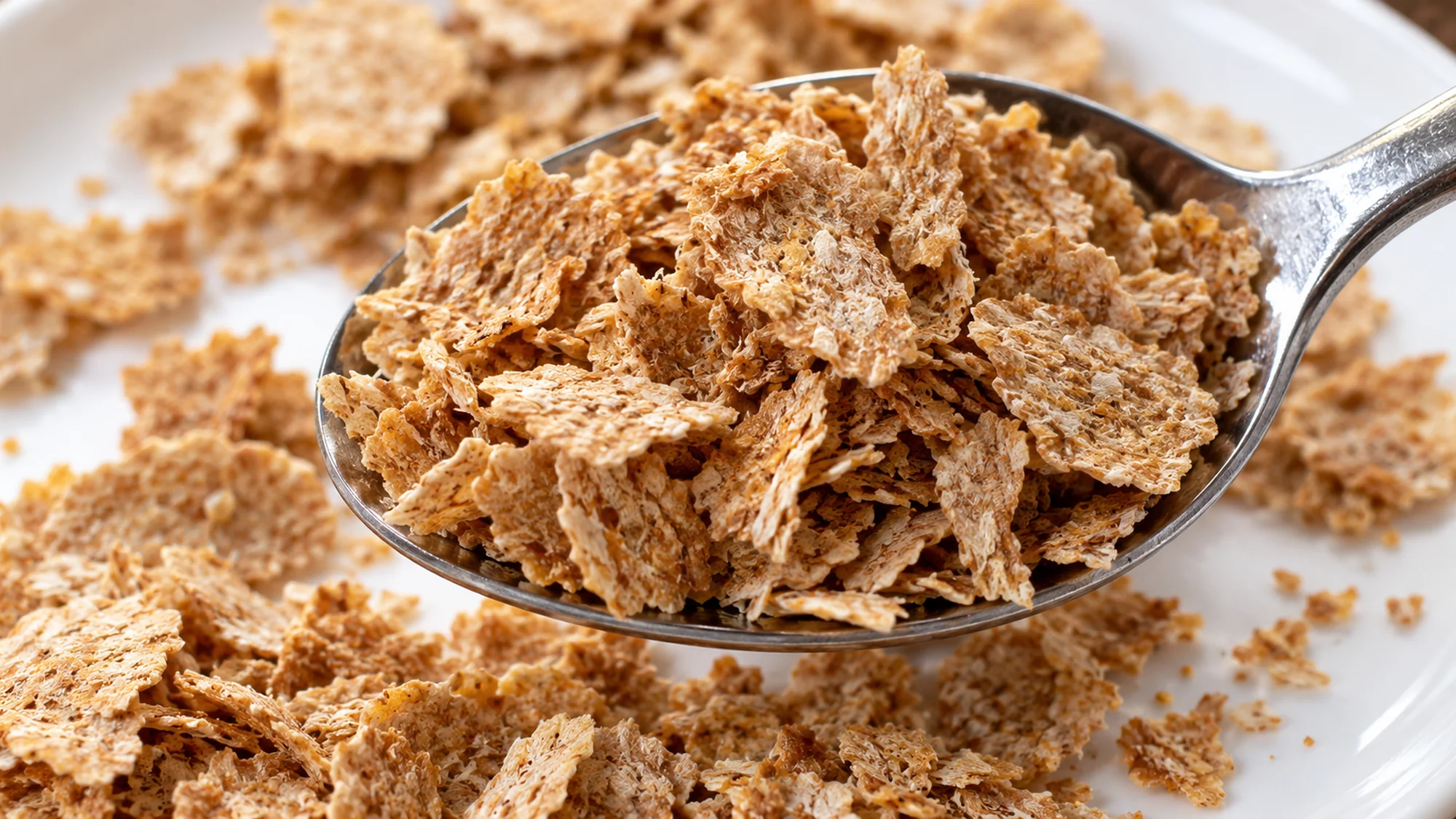
Bran, germ and whole wheat are different
The Whole Grains Council explains that an edible grain kernel contains bran, germ and endosperm. Bran forms its outer layers. Germ is the embryo, and the endosperm is the larger, starchy portion that supplies the developing plant.
| Product | What it is | Why it matters in the kitchen |
|---|---|---|
| Wheat bran | Outer portion of the wheat kernel | Adds coarse texture and fiber |
| Wheat germ | Embryo portion of the kernel | Different composition; not the same ingredient |
| Whole-wheat flour | Milled wheat retaining all three kernel parts | A flour, rather than loose bran flakes |
| Bran breakfast cereal | A manufactured cereal with its own recipe | May include other grains, sweeteners and added nutrients |
Bran alone is not a whole grain. USDA’s Food Buying Guide distinguishes isolated bran and germ from whole grains. Adding a spoonful of bran to a food does not automatically make that food a whole-grain product.
This is also why a box of ready-to-eat bran cereal cannot be substituted blindly for loose wheat bran in baking. The cereal may already be cooked and formed into flakes or strands, with other ingredients that change sweetness, texture and the amount of fiber in a serving.
Read nutrition in the right serving size
Wheat bran is particularly useful as a fiber-containing ingredient, but the serving matters. As one label example, Bob’s Red Mill wheat bran lists 45 calories and 5 grams of dietary fiber per dry ¼ cup, weighing 13 grams. Those figures describe that product before milk, yogurt, sugar or other additions.
Use your own package for the portion you actually eat. A spoonful of bran, a bowl of bran cereal and a bran muffin are not comparable servings. In a muffin, flour, fat, sweetener and the size of the finished portion all affect the nutrition.
Fiber does not need to come from a single ingredient. Our high-fiber foods guide includes other food categories. Keeping a range of grains, beans, vegetables, fruit, nuts and seeds in view is more useful than treating a large serving of bran as a complete dietary solution.
Use the right preparation for the product
Loose wheat bran can go into a recipe designed for it, such as a cooked cereal or a baked item. Follow the product and recipe directions rather than replacing all the flour with bran. Bran is not flour, and a major substitution can change how a batter holds together.
Check food safety before sprinkling it on cold food. Rogers Foods states that its wheat bran is not ready-to-eat and is intended to be cooked, baked or toasted as directed. Soaking alone does not replace cooking. Do not assume another brand’s loose bran is ready-to-eat either.
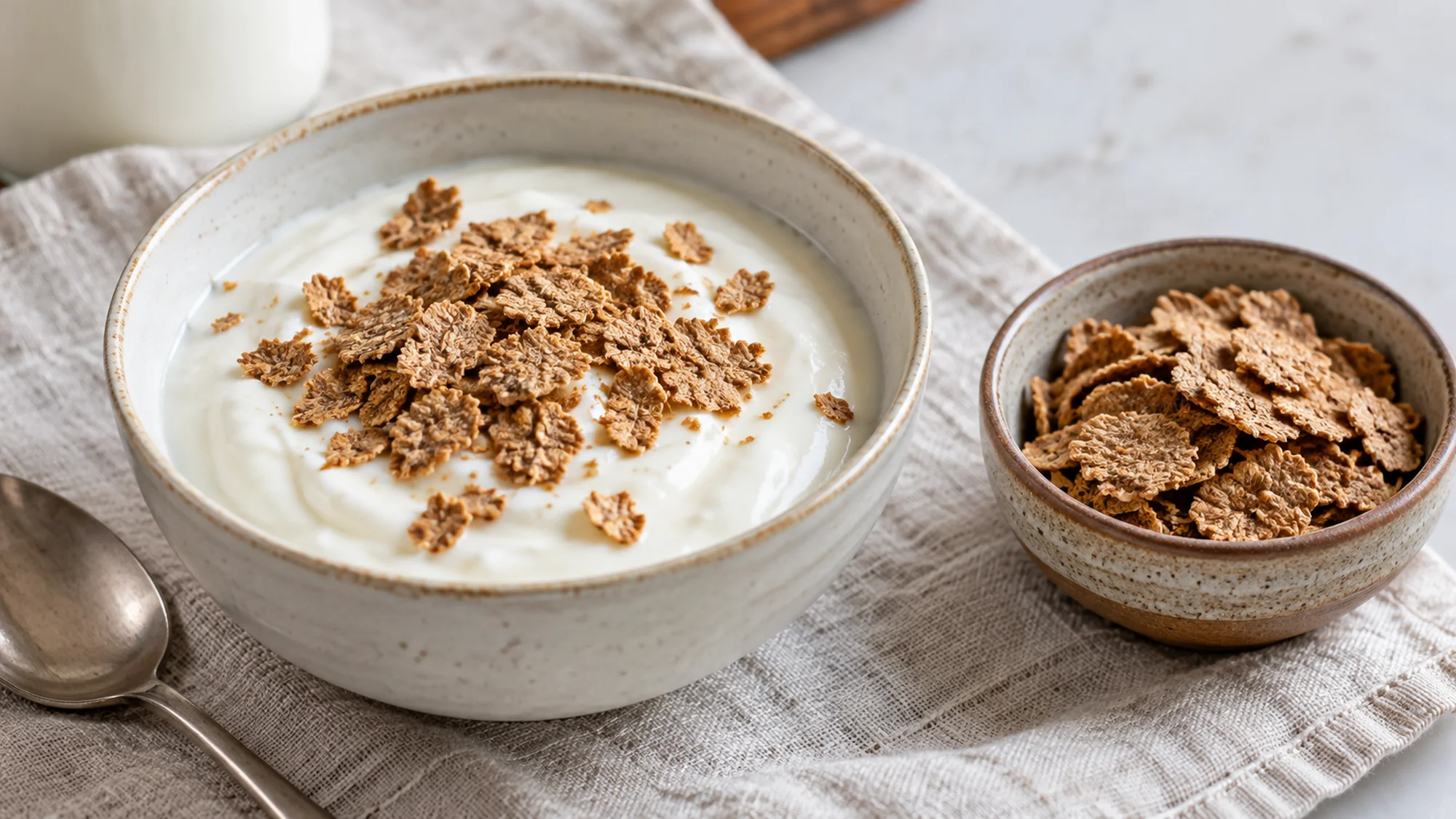
For yogurt or another cold serving, use bran explicitly sold ready-to-eat, or prepare it according to the manufacturer’s directions before adding it. The illustration shows a serving option, not a way to tell whether dry flakes are safe. Keep uncooked grain ingredients and their utensils away from ready-to-eat foods.
Tolerance, gluten and storage
Wheat bran contains wheat; it is not suitable for celiac disease or a wheat allergy. For increasing fiber, the NIDDK recommends gradual changes and enough liquids to help fiber work. A sudden large increase is not the best starting point, especially if it causes discomfort.
If you have a prescribed low-fiber diet, persistent digestive symptoms or questions about what fits your treatment, ask your clinician or dietitian before adding bran. More is not automatically better. Bran is a food ingredient, not a guaranteed cure for constipation or a substitute for evaluating ongoing symptoms.
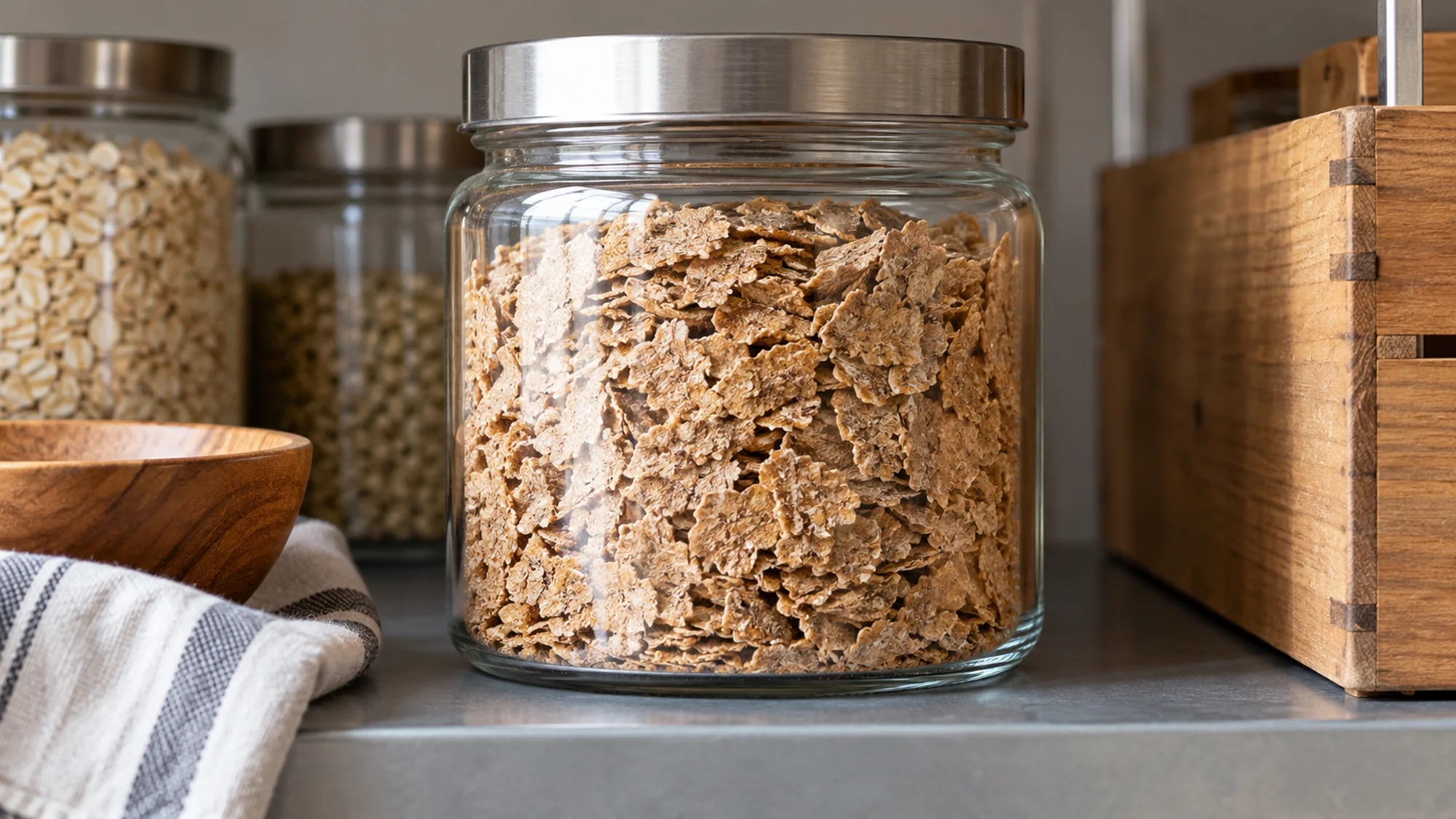
Keep the package closed and follow its storage directions. Bob’s Red Mill recommends refrigeration or a vacuum-sealed container for freshness for its wheat bran. Retain the date and cooking information if you transfer it into a jar, and protect it from moisture and pantry pests.
Bottom Line
Wheat bran is the outer part of wheat, useful for adding fiber and a coarse, nutty character to suitable foods. Buy the ingredient your recipe calls for, compare nutrition at the stated serving size and follow cooking and storage directions. Keep fiber changes gradual and choose another option when wheat or gluten must be avoided.
Chef Dez explains how wheat bran differs from wheat germ and where it is commonly sold.
Sources
- Whole Grains Council: Grain Anatomy
- USDA: Bran and Whole Grains
- Bob’s Red Mill: Wheat Bran Label and Storage
- Rogers Foods: Cooking and Ready-to-Eat Status
- NIDDK: Fiber and Liquids

Hi, I’m Emily Pocker! I share recipes and food guides here at Recipes360 to help you find everyday meal inspiration and feel more confident in the kitchen. My goal is to make cooking approachable, enjoyable, and full of flavor.