
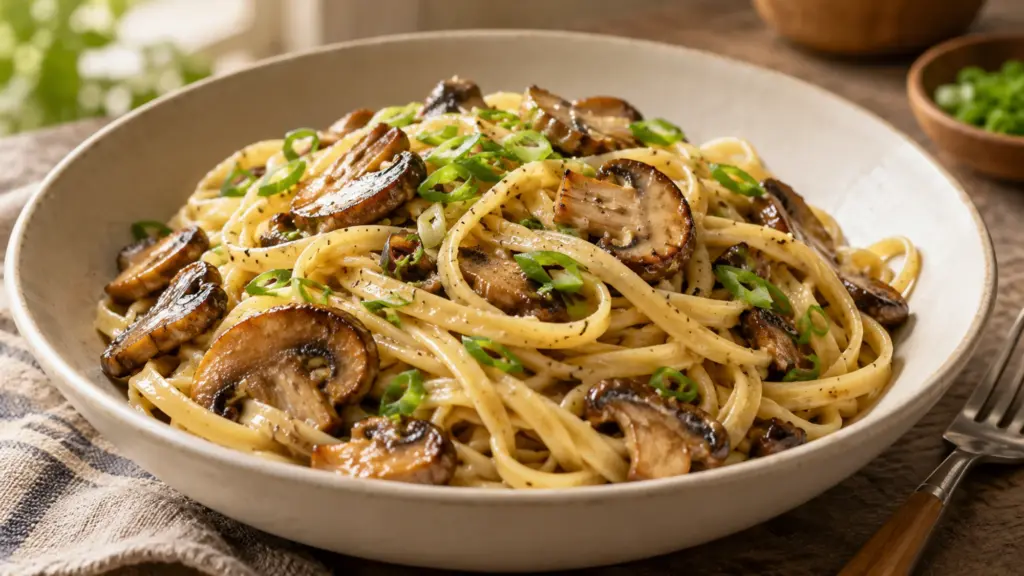
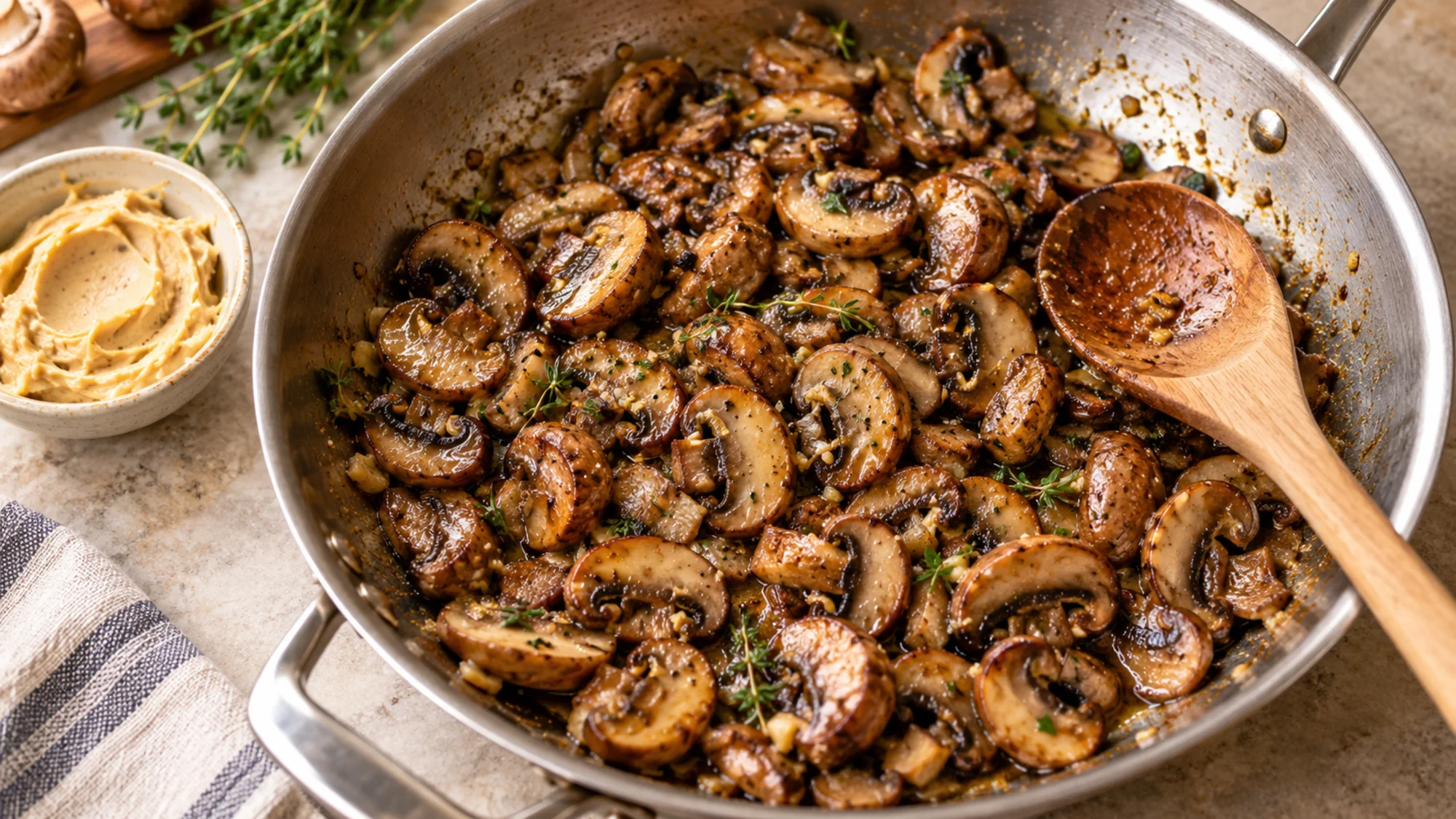
A pan of mushrooms can smell wonderfully savory while the pasta beside it still seems destined for an ordinary butter sauce. Miso mushroom pasta brings those two parts together: browned cremini mushrooms, a small spoonful of white miso and starchy cooking water become a glossy coating for linguine. The useful trick is to brown the mushrooms before adding anything wet.
For glossy miso mushroom pasta, give the mushrooms room to brown, loosen the miso separately, and toss the noodles over gentle heat. Pasta water builds the sauce without a pour of heavy cream.
White miso is a fermented soybean seasoning with a rounded, salty flavor. I’d start with a mild white variety here, because it lets the mushrooms remain recognizable rather than turning every bite into a mouthful of seasoning. Butter softens the edges, while lemon and scallions keep the finished bowl from feeling flat.
Miso Mushroom Pasta Recipe

Ingredients
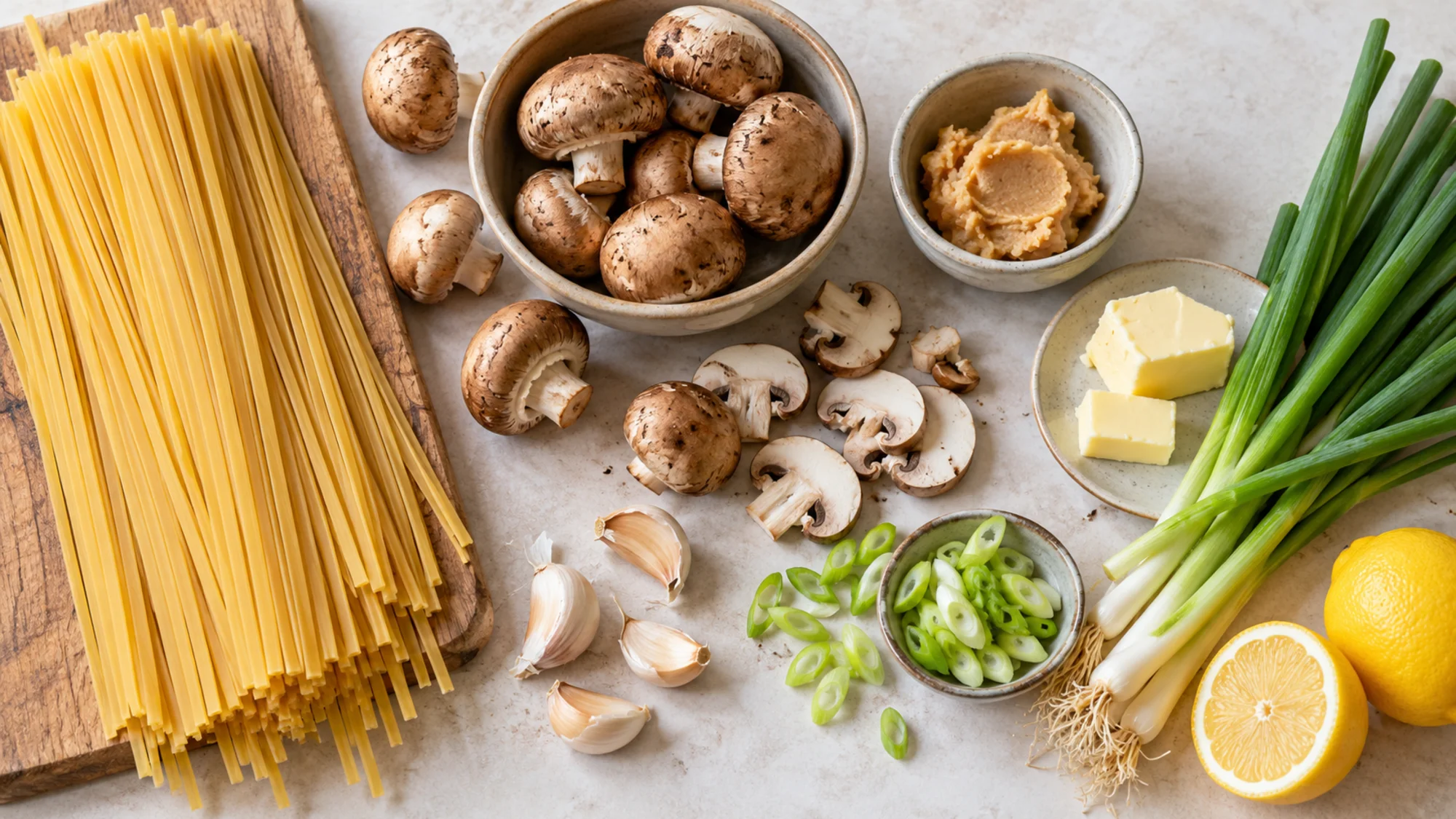
- 10 ounces dried linguine 280 g
- 1 pound cremini mushrooms 450 g, cleaned and sliced
- 1 tablespoon olive oil
- 3 tablespoons unsalted butter 42 g, divided
- 3 cloves garlic finely chopped
- 2 tablespoons white miso 36 g
- 1 cup reserved pasta cooking water add gradually; you may not need it all
- 1 tablespoon lemon juice
- 2 scallions thinly sliced
- 1/4 teaspoon black pepper
- 1/2 teaspoon fresh thyme leaves optional
- 1 teaspoon toasted sesame seeds optional garnish
- salt for the pasta water, optional and to taste
Equipment
- 1 Large pot
- 1 Wide skillet
- 1 Tongs
- 1 Measuring cup
Instructions
- Bring a large pot of water to a boil. Salt lightly if desired because the miso adds salt. Cook the linguine until just short of the package’s al dente time. Before draining, reserve 1 cup of the cooking water.
- Meanwhile heat the olive oil and 1 tablespoon butter in a wide skillet over medium-high heat. Add the mushrooms in two batches if necessary. Cook for 8–12 minutes, stirring occasionally, until their released liquid has evaporated and the surfaces are golden brown. Lower the heat if the pan starts to scorch.
- Reduce the heat to medium-low. Stir the garlic, pepper and optional thyme into the mushrooms and cook for about 30 seconds until fragrant.
- In a small bowl whisk the miso with 1/3 cup hot pasta water until smooth. Add it to the skillet with the remaining 2 tablespoons butter. Stir gently over low heat; do not boil vigorously.
- Add the drained pasta and toss for 1–2 minutes, adding reserved water a tablespoon at a time until the sauce coats the noodles lightly and they separate easily. Remove from the heat. Add lemon juice and scallions. Taste before adding any salt. Finish with optional sesame and serve immediately.
Nutrition
Video
Notes
Tried this recipe?
Let us know how it turned out!Serving Miso Mushroom Pasta While the Sauce Is Glossy
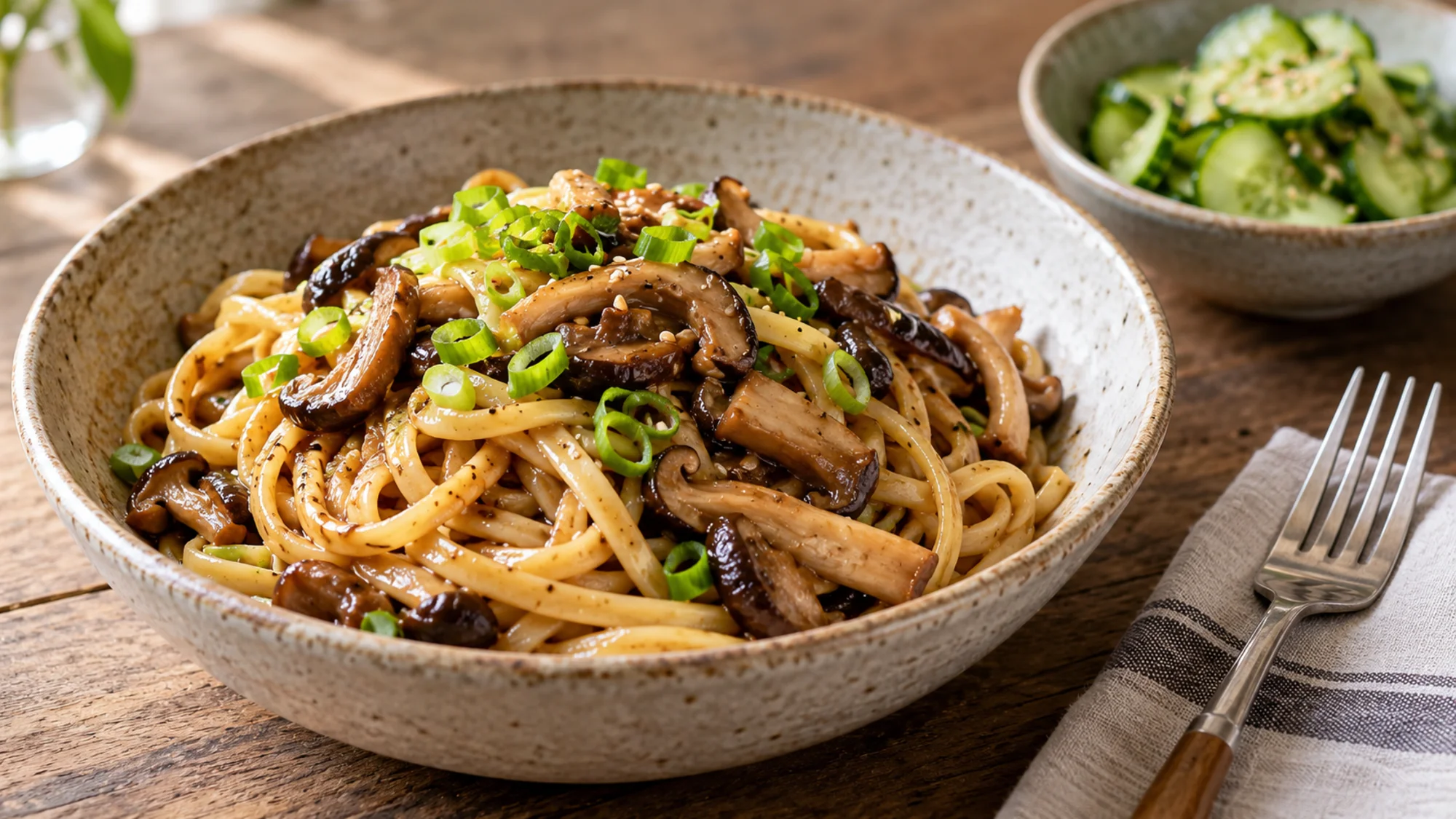
Have the bowls ready before the noodles finish. This sauce continues to tighten as the pasta sits, so a final splash of cooking water is more useful than extra butter. You want the strands to slide apart with a gentle shake of the pan, not cling together in one determined bundle.
- Serve with cucumber salad or simply dressed greens for a cool, crisp contrast.
- Add cooked white beans or tofu alongside if you want a more substantial meal, adjusting the serving size accordingly.
- Keep the garnish modest: scallion greens, black pepper and a little lemon zest are enough.
- For a separate vegetable dish, the lemony dressing in this quinoa salad offers a brighter direction.
Refrigerate leftovers promptly in shallow covered containers. USDA guidance recommends refrigeration within two hours and using cooked leftovers within three to four days. Reheat with a splash of water, stirring until the entire portion reaches 165°F; the noodles will be softer than they were at first serving.
The best serving adjustment is usually a spoonful of water, not another spoonful of miso. Restore the sauce’s flow before deciding whether the seasoning needs changing.
Miso Mushroom Pasta Variations That Keep the Balance
Cremini mushrooms are a practical starting point, but the shape and moisture of another mushroom will change the cooking. Thin oyster-mushroom strips brown differently from thick king-oyster pieces. Cook to the visual cue of golden surfaces and reduced moisture rather than treating the clock as a promise.
| Change | What to expect | Useful adjustment |
|---|---|---|
| Spaghetti for linguine | A narrower strand with the same basic method | Reserve cooking water before draining. |
| Mixed mushrooms | Different pieces finish at different speeds | Slice to similar thickness and cook in batches. |
| Plant-based butter | Flavor and salt vary by brand | Choose an unsalted product and check its label. |
| Whole-wheat pasta | A firmer bite and nuttier flavor | Follow its cooking time and add water gradually. |
- For heat, add a small pinch of chili flakes with the garlic; keep the miso amount unchanged.
- For a greener bowl, fold in a handful of baby spinach just before adding the noodles.
- If using red miso, begin with less, then taste. Different products are not identical in saltiness.
- Choose certified gluten-free noodles and miso if needed; ordinary wheat linguine is not gluten-free.
Change one strong flavor at a time. Miso, lemon and mushrooms already give the bowl plenty to say.
Health Benefits and Nutrition in Context
This is a vegetable-rich pasta dish, not a high-protein claim or a low-sodium recipe. Mushrooms add texture and volume; pasta supplies much of the energy, and butter contributes saturated fat. A serving with vegetables and a separate protein can fit a varied meal without asking one bowl to do every job.
Miso deserves a measured hand. For example, Hikari’s white miso label lists 820 milligrams of sodium per tablespoon, although brands differ. This recipe divides two tablespoons across four servings and uses unsalted butter; salt in the pasta water adds an uncertain amount, so the nutrition estimate cannot capture it precisely.
- Contains wheat, soy and milk as written. Check every replacement for your own allergy needs.
- Fermentation does not make this cooked sauce a guaranteed source of live probiotic cultures.
- Treat the card’s nutrition as an estimate, especially when changing pasta, miso or portion size.
I’d judge this meal by its portions and the rest of the plate, not by attaching a health halo to miso.
Bottom Line
Brown the mushrooms patiently, keep the miso sauce loose, and finish the pasta gently. Those choices give you a savory, silky bowl with clear mushroom flavor and no need for heavy cream.
Hi, I’m Emily Pocker! I share recipes and food guides here at Recipes360 to help you find everyday meal inspiration and feel more confident in the kitchen. My goal is to make cooking approachable, enjoyable, and full of flavor.