
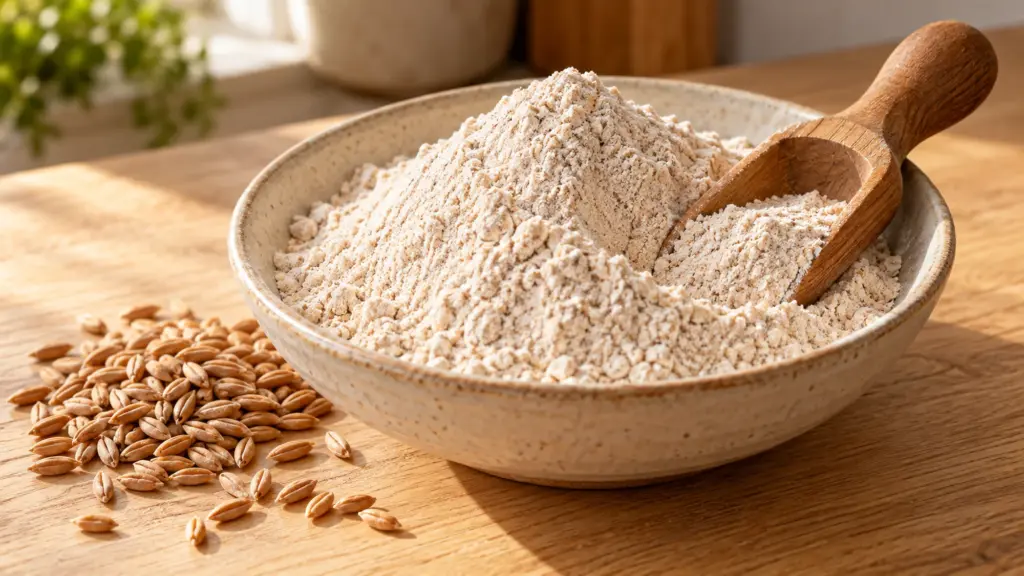
The bag says spelt flour, and the muffin recipe says all-purpose. Can you make the swap? Often you can adapt a bake, but spelt is a type of wheat, not a gluten-free shortcut, and wholemeal and white versions behave differently.
Choose spelt flour for its gentle nutty flavor, then match the flour type to the recipe. Wholemeal and white spelt are not interchangeable in every bake, and neither is suitable for a gluten-free diet.
I would start with a recipe written for the bag you have rather than gamble an entire celebration cake on a last-minute substitution. A little label reading is less exciting than frosting, but it is considerably easier than rescuing a collapsed sponge.
What Spelt Flour Actually Is
Spelt belongs to the wheat family. King Arthur Baking describes its flavor as mildly sweet and nutty, with a more delicate gluten structure than familiar bread wheat. That matters when you want a tall loaf: a protein percentage alone does not tell you how strongly a dough will hold its shape.
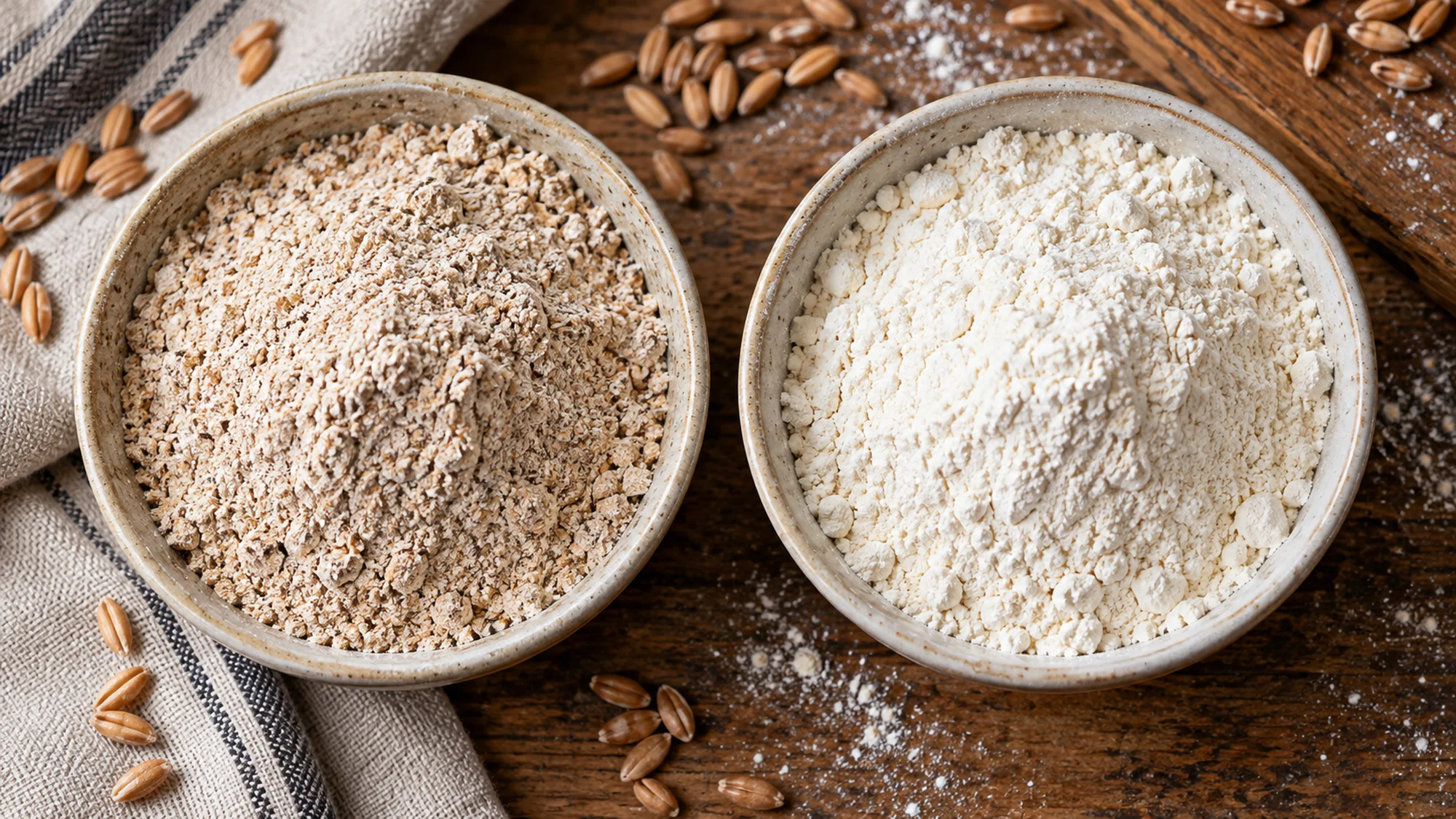
- Wholemeal or whole-grain spelt: retains the bran and germ, bringing more grain texture and a darker appearance.
- White spelt: has been sifted to remove much of the bran, giving a lighter flour for more delicate baking.
- Spelt berries: are the intact grains, not a spoon-for-spoon substitute for flour. They require their own preparation.
Look at the ingredient list as well as the front of the bag. A blend containing spelt is not necessarily entirely spelt, and the words organic, stone-ground and ancient describe different things. None of them tells you whether the flour is white or wholemeal.
Choosing Spelt Flour for Your Bake
Match the kind of bake to the flour before deciding on a substitution. This is a practical starting point, not a guarantee that any recipe will work unchanged.
| Flour or bake | What to consider | Useful starting choice |
|---|---|---|
| White spelt | Lighter texture; still contains wheat gluten | A recipe specifying white spelt |
| Wholemeal spelt | Bran changes texture and water needs | A wholemeal spelt loaf or muffin |
| Yeast bread | Delicate dough structure needs attention | Follow a spelt-specific mixing method |
| Delicate cake | A full flour swap can change the crumb | Use a tested formula for that flour |
I would choose a small batch for a first experiment, and change only the flour rather than the flour, sweetener and fat together. If the result differs, you will have a much clearer idea of what caused it. For another naming trap, our corn flour guide explains why the same-looking powder can do a different job.
Mix Gently and Follow the Dough
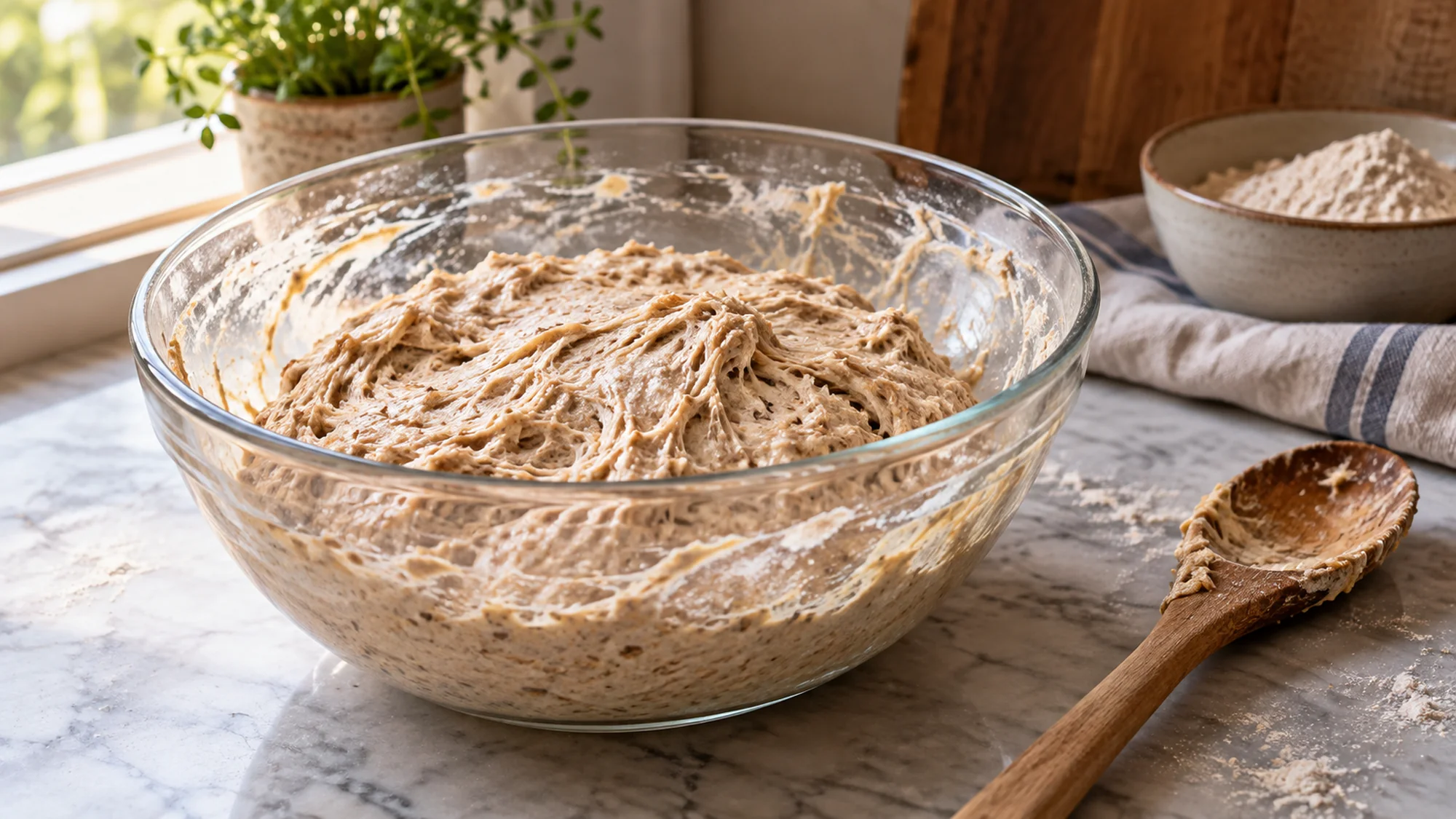
There is no single liquid adjustment that fits every bag of spelt flour. In Elly Emmett’s whole-spelt sourdough demonstration, she notes that flour differences change the water needed; her specific formula is an example, not a universal conversion rule.
- Weigh what you use. Record the flour brand and whether it is wholemeal or white, so a good result can be repeated.
- Follow the recipe’s texture cues. Sticky bread dough is not automatically a request for another cup of flour.
- Respect the mixing method. Do not assume a long, vigorous knead improves every spelt dough.
- Keep expectations realistic. A softer or closer crumb can be part of the flour’s character rather than a failure.
My preference is to learn one suitable recipe before improvising. That gives you a useful reference for the dough’s feel and the finished crumb, without pretending that every flour needs the same treatment.
Gluten, Labels and Safe Handling
Spelt is not safe for celiac disease: the American College of Gastroenterology lists it among gluten-containing grains to avoid. It is also wheat, so do not treat it as a safe workaround for a wheat allergy. Individual medical advice matters more than claims that an ancient grain is easier to tolerate.
- Compare like with like. Check wholemeal against wholemeal, and compare the same serving size on nutrition labels; do not assume every spelt product has more fiber.
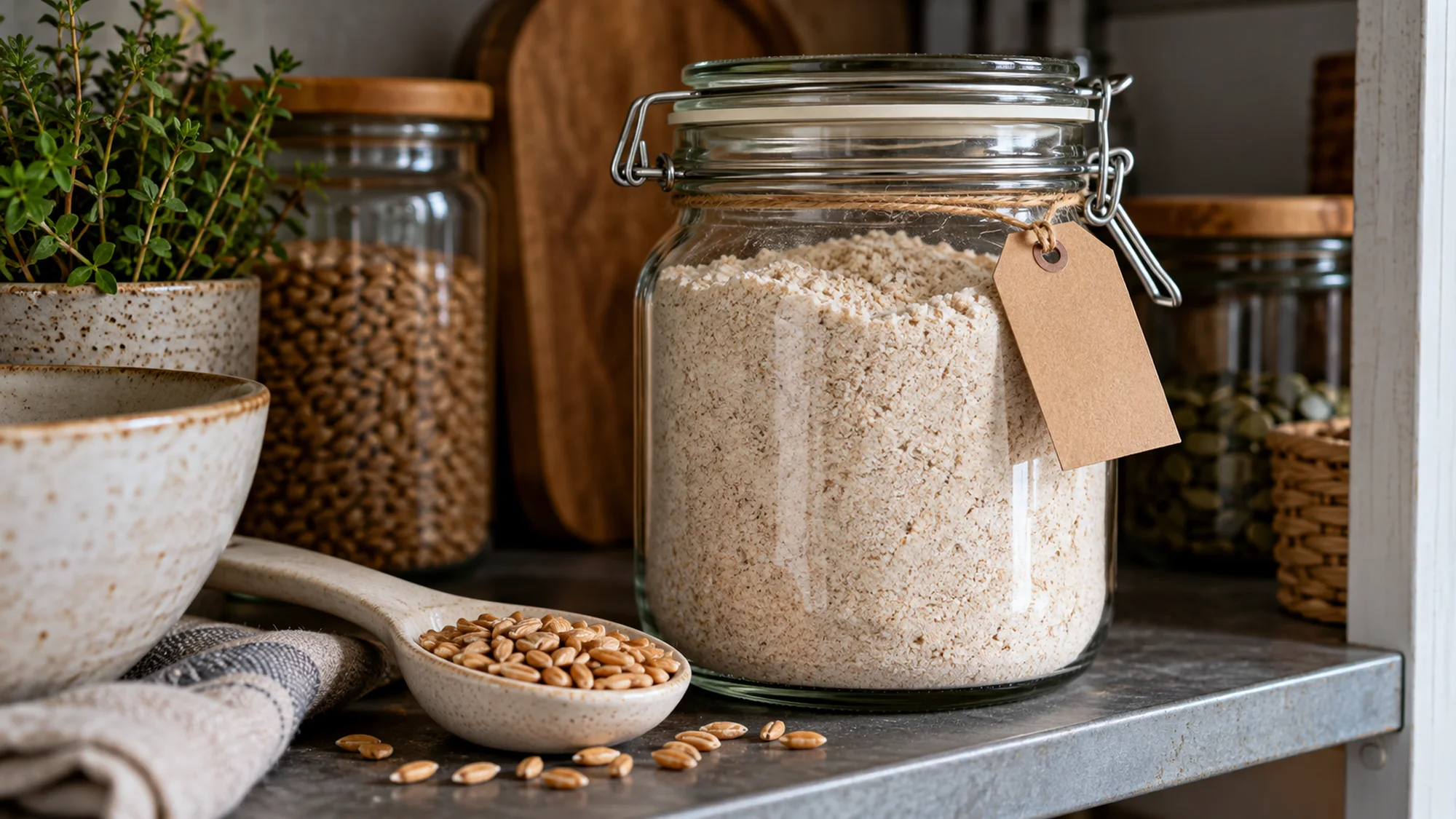
- Keep the label. If transferring flour to a sealed container, retain its identity, best-before information and storage directions.
- Keep it dry and protected. Follow the package’s storage instructions and keep the container away from kitchen moisture.
Flour is generally raw, including spelt flour. FDA advises against tasting raw flour, batter or dough; cook as directed and clean utensils and work surfaces after handling it.
Bottom Line
Spelt flour is a useful baking choice, not a universal upgrade. Read the bag, choose a matching recipe, handle the dough thoughtfully and keep gluten safety non-negotiable.
For a visual example of gentle handling, Elly’s Everyday demonstrates a whole-spelt sourdough loaf below. It is a bread-specific technique demonstration, not a gluten-free recipe.
Sources
- King Arthur Baking: whole-grain baking guide
- American College of Gastroenterology: celiac disease
- FDA: handling flour safely
- Elly’s Everyday: whole-spelt dough technique

Hi, I’m Emily Pocker! I share recipes and food guides here at Recipes360 to help you find everyday meal inspiration and feel more confident in the kitchen. My goal is to make cooking approachable, enjoyable, and full of flavor.